

Ocean-Based Carbon Capture for Commercial Vessels
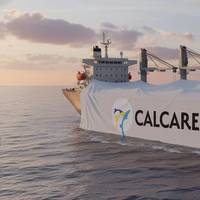
CALCAREA Inc. and AURELIA Design B.V. entered into a collaboration to bring ocean-based carbon capture technology to the maritime sector. The partnership combines CALCAREA’s unique carbon removal process with AURELIA’s experience in green ship design and e-systems integration.At the heart of the collaboration is CALCAREA’s limestone weathering technology — a system that accelerates a natural process where carbon dioxide (CO₂) reacts with limestone and seawater, transforming it into stable bicarbonates safely stored in the ocean.
Stillstrom Introduces New Hires, Technology Advances

Stillstrom by Maersk, a marine technology leader delivering offshore power and charging solutions, has strengthened its leadership team with key senior appointments in Copenhagen and Aberdeen.Nikolaj Stald has joined as Chief Commercial Officer (CCO) at the company’s HQ in Copenhagen. Nikolaj brings over 15 years’ offshore wind experience and will lead the commercial strategy to drive adoption of offshore charging as a cost-effective decarbonization pathway. Prior to Stillstrom…
US Coast Guard: Safety for Lithium-Ion Battery System Installations

An integrated Li-ion battery bank recently caught fire onboard an inspected passenger vessel when loosely crimped lugs overheated. While no one was injured and the vessel sustained minimal damage, this casualty highlights safety hazards unique to Li-ion batteries. All integrated (installations used for propulsion and electrical power) Li-ion battery systems on inspected vessels must undergo engineering plan review, be fitted with supporting safety systems, be tested and inspected at installation and periodically afterward…
INSIGHTS: Timo Vesala, ABB Marine & Ports
Timo Vesala, Account Manager, Americas, at ABB Marine & Ports, is responsible for newbuild sales in the Americas market. Since joining ABB in 2018, he has gathered extensive experience in the marine industry with a focus on electrification and propulsion systems. He holds a Master’s Degree in Mechanical Engineering from Aalto University, Finland, and has a passion for clean technology and maritime decarbonization. This month, in our annual Power & Propulsion edition, he weighs…
When it Comes to Workboat Engines, the Future is Flexible
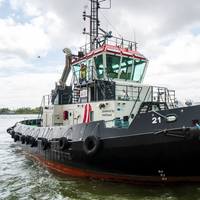
Vessel owners are making new fuel choices, but increasingly, they have options to help reduce the risk of doing so.The latest engine developments aim to make it easier for owners to avoid the chicken-and-egg fuel price and availability risks of new fuels.As Roger Holm, President of Wärtsilä Marine and Executive Vice President at Wärtsilä Corporation recently pointed out, the challenge is that owners won’t commit to a fuel today that is expensive, only produced in small quantities and may be usurped by another fuel that scales faster and more affordably.
Eye on Design: Hybrid Blood, Sweat, and Tears

In earlier columns, I have discussed various approaches and issues with Hybrid Propulsion.I have now had the pleasure of a number of years of experience with the design, operation, upgrade, modification, and maintenance of ship (and car) hybrid propulsion systems and may be able to make a claim of gradually becoming a little less confused.It is still not easy, but at the same time, I am starting to see a few shortcuts that make it less likely that a beautiful vision of marine efficiency ends up being beached somewhere.In essence, they are variants of the KISS (Keep It Simple Stupid) principle.
Vigor Wins Repair Contract for Hospital Ship USNS Mercy
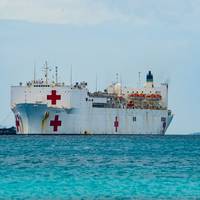
Vigor Marine has been awarded a contract for a 93-calendar day shipyard availability for a mid-term availability of Military Sealift Command’s (MSC) hospital ship USNS Mercy (T-AH 19).The $21,198,656 firm-fixed-price contract includes a base period and options, which if exercised, would bring the cumulative value of this contract to $21,711,746. Vigor was the sole bidder for the project.Work will be performed in Portland, Ore., beginning March 15, 2024, and is expected to be completed by June 15…
Connecting the Dots: From Remote Operations to Full Autonomy
Realizing the full value of digital solutions far exceeds the capability of technology. The technology exists today to help offshore energy and maritime operators radically improve efficiency and cut costs in equal measure. The real trick to driving efficiencies is to take advantage of the latest technologies while at the same time negotiating the necessary culture change within individual organizations, to really reap the benefits.Harvest Technology Group is a relatively young and small Australian company that has caught the attention of a number of offshore and subsea industry heavyweights…
Op/Ed: Technology Manufacturers’ Input More Critical than ever for Effective Maritime Regulations

Next year marks a crucial milestone for the International Maritime Organization’s (IMO) Ballast Water Management (BWM) Convention, with all ships required to meet the D2 standard for ballast water management by 8 September 2024. D2 specifies the maximum number of viable organisms allowed to be discharged. In most cases, it requires the installation of a ballast water management system (BWMS) on board the vessel.2024 will be a pivotal moment for the ballast water market and while it is true that the retrofit market will diminish and leave behind only a small newbuild market…
Philly Shipyard Wins Contract for Hospital Ship Design Study
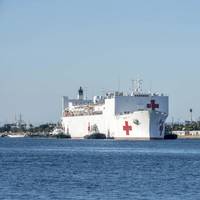
U.S. shipbuilder Philly Shipyard announced it has been awarded a contract to develop preliminary designs for vessels to replace the U.S. Navy's two current Mercy-class hospital ships.The T-AH(X) Hospital Ship Feasibility Study contract was awarded by Gibbs and Cox, a Leidos Inc. company. Philly Shipyard said it will subcontract to Vard Marine Inc. to provide engineering and technical services for the six-month design study, and that the pair would leverage design work performed as part of a special study completed for the U.S.
HyBlend - Chickens and Eggs in Technology Adoption

I will readily confess that 20 years ago I was not convinced that EV’s were the answer to sustainable energy. Instead, I had long been a fan of hydrogen. I was well aware that there were technical issues associated with hydrogen, but was equally aware that, for total sustainable energy, a transportable fuel is needed and hydrogen seemed to be the way to go.I envisioned hydrogen generation from sustainable sources (wind, solar, etc) and the use of hydrogen with fuel cells in cars, ships and with gas turbines in airplanes.
New Autonomous Hydrographic Survey Vessel Design Unveiled
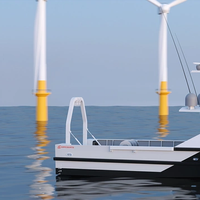
Boatbuilder SAFE Boats International on Monday introduced Merlin, a new 23-meter semi-displacement monohull autonomous hydrographic survey vessel design developed in collaboration with Mythos AI, Echo81, and World Marine Design.SAFE Boats has exclusive rights to build the design at its Tacoma, Wash. large-craft production facility. Merlin will be a Jones Act-compliant all-aluminum hull powered by a twin Volvo Penta D13 Hybrid-ready System with IPS. For a zero-emission power package, the Merlin can accommodate forward-thinking hydrogen technology supplied by Zero Emission Industries (ZEI).
Green Marine: Electrification is the Power behind ‘Future-Proofing’
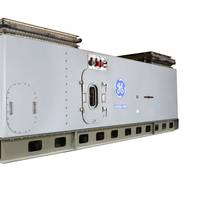
There's an “electrification of the seas” happening for navies around the world.Whether it's to achieve greater military capabilities, operational economics and efficiencies or to be better stewards of the environment.There's a trend moving from direct mechanical drives towards more flexible electrical propulsion systems. Ships can still have the same propellers and engines, but they now have a much more flexible power system architecture that benefits design, operations and sustainment.“With an electric propulsion system, we can connect to the same gas turbine or diesel.
Offshore Wind: Empire Wind Taps Maersk to Build Wind Turbine Installation Vessel (VIDEO)
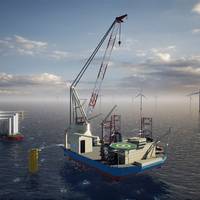
Empire Offshore Wind, a joint venture between Equinor and bp, awarded a contract to Maersk Supply Service for charter of its newbuild wind installation vessel (WIV). This vessel, together with US constructed barges and tugs built and operated by Kirby Offshore Wind, will be used for the installation of the project’s Vestas V236-15MW turbines.The newbuild offshore wind turbine installation vessel is planned to be ready for operation for Empire Wind I and II in the mid-2020s. Maersk…
Cost a Major Hurdle for Onboard Carbon Capture
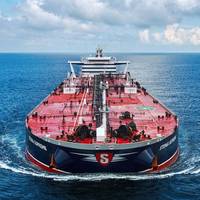
Cost hurdles likely to slow the deployment of stationary carbon capture and storage (CCS) technologies on board ships in the near and medium term could be diminished as technology advances, clearing CCS could be a persuasive option for the industry’s decarbonization trajectory, a recent study found.Tanker shipping company Stena Bulk announced the results of its partnership with the Oil and Gas Climate Initiative (OGCI) to study and explore the potential of capturing carbon at…
Need a Survey? There’s a USV for That
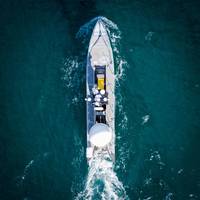
While the adoption of unmanned/uncrewed surfaces vessels (USVs) was initially in defence, use of these low footprint systems has spread into other sectors, not least survey, and now the race is on for greater capability, endurance and autonomy. Elaine Maslin reports.After starting small, in inland waterways, use of USVs for survey operations has moved into coastal and now offshore waters. Given the extensive amount of seabed and rapid growth in offshore wind, there’s plenty of work out there for them to do.With the travel restrictions posed by Covid and increasing awareness of climate change…
Wärtsilä to Test Marine Scrubbers for Carbon Capture

Wärtsilä Exhaust Treatment said exhaust gas abatement systems, also known as scrubbers, may soon be used to directly tackle maritime carbon dioxide (CO2) emissions as technology advances enable manufacturers to design and upgrade scrubbers to capture carbon at the point of exhaust.Wärtsilä said it has found carbon capture and storage (CCS) can be developed and scaled for ships, and that the solution is technically viable for the sector to pursue among a range of solutions helping to drive decarbonization in shipping…
Booming Offshore Wind Market Faces Shortage of Installation Vessels
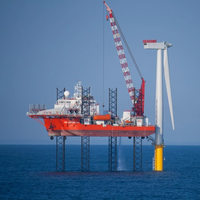
Offshore wind is expanding rapidly, and as turbine and project sizes grow, demand for specialized installation vessels will soar, Rystad Energy said Thursday, however, warning that the boom might lead to a shortage of offshore wind installation vessels."The market for vessels capable of installing large offshore wind components is quickly being outpaced by growing demand from the global development pipeline, a Rystad Energy analysis shows. The global fleet will be insufficient to meet demand after 2025…
Interview: Rear Admiral John Okon, Commander, Naval Meteorology and Oceanography Command, US Navy
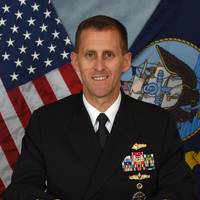
Insights on technology advances with Rear Admiral John Okon, Commander, Naval Meteorology and Oceanography Command.Rear Admiral Okon never started out to have a career in Oceanography, rather in Broadcast Meteorology. “At NY Maritime College, I studied both Meteorology and Oceanography and became equally passionate about Oceanography. Thanks to the U.S. Navy, we have a career field in both.”By its very nature, the U.S. Navy operates in one of the most discussed and disected environments on earth, the oceans.“The ocean is critical to National and Global Security.
The Future of Maritime Navigation
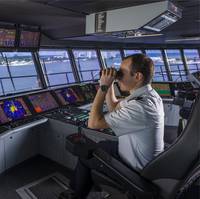
It is 70 years since the launch of the first radar under the Decca brand and today’s Sperry Marine is marking the anniversary by looking to a future that would have been hard to imagine in 1949 – or even as little as 10 years ago.Yet the changes of the last decade will be eclipsed by the transformation in the decades to come, which will accelerate as the shipping industry embraces greater digitalization and moves towards an era of smart and connected operations.In the course of 70 years…
ABS Calls for New Tech in Marine Fuels
ABS Chairman, President and CEO, Christopher J. Wiernicki, mapped out the future of marine fuels, indicating that the 2050 targets will require technology beyond today’s state-of-the-art.“Technology advances of the next decade may entirely change our view of the future, but based on what we see today we can identify three developmental pathways for future fuels distinguished by the onboard technologies they require. These are: the LNG or light gas pathway, the bio/synthetic pathway and the alcohol and heavy gas pathway,” he said.“Within each of these pathways are many variables related to energy content, the state of storage or containment technology…
California Launches Offshore Wind Coalition
A group of offshore wind industry members that includes Equinor, Magellan Wind and Principle Power have launched an offshore wind group in California.The Offshore Wind California (OWC) said it is committed to providing industry expertise, innovative solutions, and a dedicated voice for offshore wind in California.OWC is poised to lead the promotion of responsible and sustainable deployment of offshore wind power in the state's energy system.California is well-positioned to break out as the next investment hot spot for America's booming offshore wind industry, which is taking off with more than 22 gigawatts (GW) in commitments by East Coast states and $70 billion in supply chain spending by 2030…
2018 Maritime Risk Symposium – Energy and Maritime Risk
Energy.It seems that energy touches every aspect of our lives from heating our homes to ensuring that fresh produce is available at grocery stores. It powers our cars and allows industry to move products around the world. The connection between energy and risk to the maritime environment has been a growing area of discussion, research and analysis. The United Kingdom’s Royal Navy, within its Joint Doctrine Publication (JDOP 0-10) 5th edition UK Maritime Power, captured this issue superbly: “Fossil fuels and minerals are an important resource in the maritime environment. New deposits of oil and gas, as well as mineral wealth, are discovered under the seabed each year, and improvements in technology will facilitate future exploitation.



