
Insights: Captain Steve Jones, Gateway Clipper Fleet, President of PVA (2025)

Captain Steve Jones is President of the Passenger Vessel Association for 2025. As his term comes to a close in February at the PVA Annual Convention at MariTrends 2026 in Covington, KY, Captain Jones has achieved several long-sought-after successes during his term and set in motion other important association undertakings intended to deliver noteworthy benefits to PVA members in the coming year and beyond. Captain Jones has been with the Gateway Clipper Fleet since 1987. The Gateway Clipper Fleet…
Unwinding the Morass that is U.S. Offshore Wind
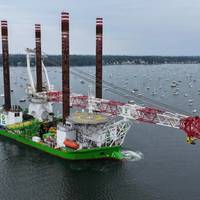
In the last decade, changing U.S. Administrations have become increasingly tumultuous, as the swings in priorities and directives have a real, material impact on business. Read on for insights on the current and future of U.S. Offshore Wind.In the weeks preceding his late January inauguration, then President-elect Donald Trump referred to wind turbines (both onshore and offshore) as “garbage in a field” and described electric power produced through offshore wind as “…the most expensive energy ever…”In the same briefing…
AWO at 80: Looking Back, Looking Forward on Safety, Security & Sustainability
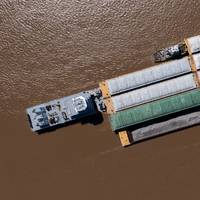
This year, AWO marks its 80th anniversary as the tugboat, towboat and barge industry’s advocate, resource and united voice for safe, sustainable and efficient transportation on America’s waterways, oceans and coasts. As we celebrate this milestone, we not only recognize and reflect on 80 years of advocacy for our industry as a key driver of the U.S. economy, but also 80 years of vital work as a safety and sustainability leader and security partner – protecting mariners, communities and our waterways from harm.At a time when the men and women of America’s essential workforce…
America’s Ports: A New Awakening [?]

Washington comes to grips with the reality that the domestic intermodal equation includes four modes. One of them is by water. It’s about time.One of the great things about spending five years in retirement (I mean, aside from being blissfully idle while you toiled) is that, when you do come back to work, you enjoy a truly fresh perspective in all aspects of your job. Not only does this provide new energy, more importantly, a half decade of change is much easier to discern. Nowhere…
US Coast Guard Proposes New TWIC Delay
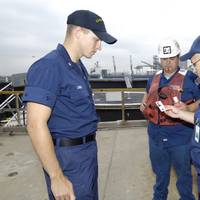
The U.S. Coast Guard announced in the Federal Register that it proposes to further delay the effective date for certain facilities affected by the final rule entitled “Transportation Worker Identification Credential (TWIC)—Reader Requirements,” published in the Federal Register on August 23, 2016.The current effective date for the final rule is May 8, 2023. The Coast Guard proposes delaying the effective date for: facilities that handle certain dangerous cargoes in bulk, but do not transfer those cargoes to or from a vessel…
TWIC Renewals Now Available Online
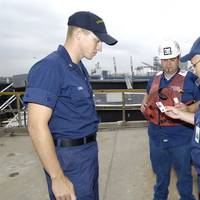
Mariners and other transport workers seeking to renew their Transportation Worker Identification Credential (TWIC) will now be able to do so online following recent changes enacted by the U.S. Transportation Security Administration (TSA).Starting August 11, 2022, current TWIC holders are able to renew their credentials online, which eliminates the need to go to an enrollment center for most applicants, including U.S. citizens, nationals and lawful permanent residents, and makes…
Looking for a Good Deal? Learn to Take Advantage of Interns

For the future of the industry, hire interns, both college and high schoolers. And pay them: none of that silly privileged unpaid intern crap that occurs in non-maritime industries.I generally wait until I receive the printed issue to read Maritime Reporter and Engineering News, and when I read the August edition, I was both delighted and frustrated, mostly because of the two articles on shipbuilding workforce development.There is so much STEM wheel spinning and to see reports…
Safeguarding the Maritime Transportation System During the COVID-19 Pandemic
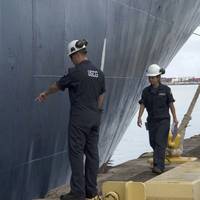
The marine transportation system (MTS) is critical to both our national security and economic prosperity. The U.S. Coast Guard has an enduring responsibility to safeguard the MTS and enable the uninterrupted flow of maritime commerce. While Coast Guard Prevention missions normally address the systemic risks to the MTS through a variety of regulatory and compliance activities on a day-to-day basis, the COVID-19 response demands a flexible approach to prevent an undue backlog from causing MTS delays today and in the near term.
Regulatory Reform: Good Ideas … Ready to Start?
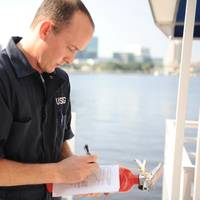
Regulatory reform is one of President Trump’s priority agenda items. Upon taking office, the President issued a number of Executive Orders focusing attention and demanding action on the myriad of regulations impacting American businesses.Last May, the reform spotlight fell on maritime regulations when the White House Office of Management and Budget (OMB), published a Request for Information (RFI) on how the government should “prudently manage regulatory costs imposed on the maritime sector.” OMB…
U.S. Coast Guard Clarifies U.S. Citizenship Requirement for U.S. Flag Vessels

Rules regarding 'Employment of Non-U.S. Credentialed Personnel On board Certain U.S.-Documented Vessels' defined.An analysis of recent arrival notifications has revealed several cases of U.S.-documented vessels calling on U.S. ports with non-U.S. credentialed personnel in lieu of U.S. citizens. The intent of this MSIB is to provide information and guidance regarding the provisions for employment of non-U.S. credentialed personnel on board certain U.S. documented vessels. Please…
Interview: Terry MacRae - CEO, HMS Global Maritime

Terry MacRae founded Hornblower Yachts, LLC (doing business as Hornblower Cruises & Events) in 1980, and serves as Chief Executive Officer, the President and is also its owner. MacRae is the Co-founder of HMS Global Maritime and the American Queen Steamboat Company, and serves as Chief Executive Officer of Alcatraz Cruises, LLC, Statue Cruises, LLC, Hornblower Canada Co., Hornblower Cable Cars, Inc. and HNY Ferry, LLC (doing business as NYC Ferry). He leads one of the largest and fastest growing charter, dining cruise, and ferry operating companies in the nation.
Top Regulatory Concerns on the US Commercial Waterfront
A top 10 list of regulatory concerns is by no means all-inclusive, but it does bring to light the full weight of the regulatory hammer on the collective domestic commercial waterfront. “It was the best of times, it was the worst of times, it was the age of wisdom, it was the age of foolishness, it was the epoch of belief, it was the epoch of incredulity, it was the season of Light, it was the season of Darkness, it was the spring of hope, it was the winter of despair, we had everything before us...” – Charles Dickens, A Tale of Two Cities, 1859.
Insights: Margo Marks -President, Beaver Island Boat Company

Margo S. Marks is President/General Manager of Beaver Island Boat Company, Beaver Island, Mich. The company has provided passenger, vehicle and freight services, between Beaver Island and Charlevoix, Mich. since 1984. The first ferry service to the island began in 1890. B.I. Boat Company operates two subchapter K vessels with a capacity of up to 294 passengers and 16 vehicles on the larger vessel, and 172 passengers and 9 vehicles on the smaller vessel. Notably, Margo has deep roots in the Gresat Lakes community and graduated from the Great Lakes Maritime Academy in 1983…
US Coast Guard Announces Final TWIC Rule
The U.S. Coast Guard announced Tuesday the publication of the final rule concerning Transportation Worker Identification Credential (TWIC) reader requirements. The rule requires owners and operators of certain vessels and facilities regulated by the Coast Guard to conduct electronic inspections of TWICs as an access control measure. The final rule also implements recordkeeping requirements and security plan amendments that will incorporate these requirements. The TWIC program is a component of the Coast Guard's multi-layered system of access control requirements designed to enhance maritime security.
Interview: Dave Anderson, President, Passenger Vessel Association
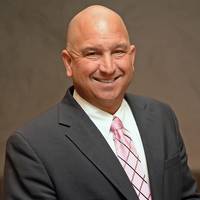
Dave Anderson is the President of the Passenger Vessel Association (PVA). He also serves as General Manager/Director of Operations of Fire Island Ferries, Inc., Bay Shore, N.Y. on Long Island. The company has provided passenger service, freight service and water taxi service to Fire Island communities since 1948. The firm operates 23 subchapter T and K vessels ranging from six to 400 passengers. Anderson, an honors graduate from CW Post Long Island University where he earned his BA in Communication Arts in 1984, also holds a 100 ton Masters license which he earned in 1983.
Shore Leave: Re-think on Balancing Security, Seafarer Rights

Before port states became hyper-sensitive to security issues, shore leave was natural part of a seafarer’s life. You worked long and hard hours at sea, often for extended periods of time on long voyages. When the ship reached port, you went ashore and decompressed, connecting with family and friends. That and much more changed after the terrorist attacks of 11 September 2001. The IMO adopted the International Ship and Port Facility Security (ISPS) Code mandating enhanced security onboard vessels subject to the SOLAS Convention.
Avoiding Pitfalls on the Water
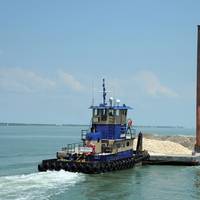
When a land-based contractor decides to work on water, risk can arise from unexpected places. It doesn’t have to be that way. In the past, companies involved in the marine industry, whether they were vessel operators, riggers, longshoremen, ship builders, repairers, or construction companies were, by and large, specialized and most companies focused on one niche aspect of the industry. Fast forward to 2015 and it is clear that our industry has changed. Today, there are fewer companies in the market with each company often doing business in multiple areas of specialty.
AWO Praises Simplification of TWIC Process
Last week, the Transportation Security Administration began nationwide implementation of a program that reforms the burdensome process by which mariners and other transportation workers receive required Transportation Worker Identification Credentials (TWIC). The TWIC OneVisit program eliminates the requirement that workers make two trips to a TWIC enrollment center to pick up and then activate their TWIC. Under the new, streamlined process, a mariner can apply for a TWIC at an enrollment center and opt to receive the credential by mail.
15 Minutes with OMSA’s Jim Adams
A tumultuous three years for the U.S. Gulf of Mexico, starting with the disastrous Macondo Oil Spill in April of 2010, has come full circle, arriving at a buoyant period for Gulf Cost boat builders, oil & gas developers and the maritime professionals who make it all happen. At the center of all of it is the Offshore Marine Service Association (OMSA) and its President and CEO, Jim Adams. OMSA bills itself as the leading national association of, and spokesman for, the offshore marine transportation service industry. As a central tenet of its existence, OMSA vigorously defends the cabotage laws of the United States and encourages and promotes high standards of safety training and environmental protection.
TWIC’s Last Hurdle is Scaled
Card reader technology is tested, proven and in use, nationwide. While the maritime industry awaits the Fed’s edict on MTSA, the solution already exists. The Maritime Transportation Security Act (MTSA) requires that individuals needing unescorted access to MTSA-regulated Facilities and Vessels must first obtain a TWIC. To obtain a TWIC Card, an individual must meet certain eligibility requirements and pass a security threat assessment conducted by the Transportation Security Administration (TSA). Individuals are then issued a tamper-resistant credential containing the cardholders biometric fingerprint data, which provides a conclusive link between the card and the individual cardholder. To date, more than 2 million of these credentials have been issued.
Insights: Dennis L. Bryant, Bryant’s Maritime Consulting
Dennis L. Bryant retired from the U.S. Coast Guard with the rank of Captain after 27 years active duty. His billets included serving on the icebreaker NORTHWIND for several years including in 1969 when it escorted the tanker MANHATTAN through the Northwest Passage (this was back in the old days, when there was real ice in the Arctic). He also spent various tours as a law specialist, including an assignment as the Coast Guard’s Law of the Sea officer. He also served a tour in the…
Offshore Insights from OMSA's Ben Billings

Ben Billings serves as President & CEO of the Offshore Marine Service Association (OMSA), a nationwide trade association headquartered in New Orleans that represents more than 200 member companies. OMSA’s membership includes approximately 100 firms operating more than 1,200 vessels that provide transportation services to the offshore oil and gas industry in the Gulf of Mexico and around the world. It’s arguably a very good time to be at the helm of OMSA, with a resurgent U.S.
USCG Proposes New Rules for Maritime Facilities Access
Notice of proposed rulemaking by U.S. On Monday, the U.S. Federal Register published a notice of proposed rulemaking by the U.S. Coast Guard (USCG) to implement section 811 of the Coast Guard Authorization Act of 2010 (Pub. L. 111-281) which would provide clear regulatory requirements for each facility owner or operator to provide seafarers associated with a vessel moored at the facility, and other individuals, access between the vessel and facility gate without unreasonable delay, and at no cost to the seafarer or other individual. Generally, transiting through a facility is the only way that a seafarer or other individual can egress to shore beyond the facility to access basic shoreside businesses and services…