
Insights: Captain Steve Jones, Gateway Clipper Fleet, President of PVA (2025)

Captain Steve Jones is President of the Passenger Vessel Association for 2025. As his term comes to a close in February at the PVA Annual Convention at MariTrends 2026 in Covington, KY, Captain Jones has achieved several long-sought-after successes during his term and set in motion other important association undertakings intended to deliver noteworthy benefits to PVA members in the coming year and beyond.
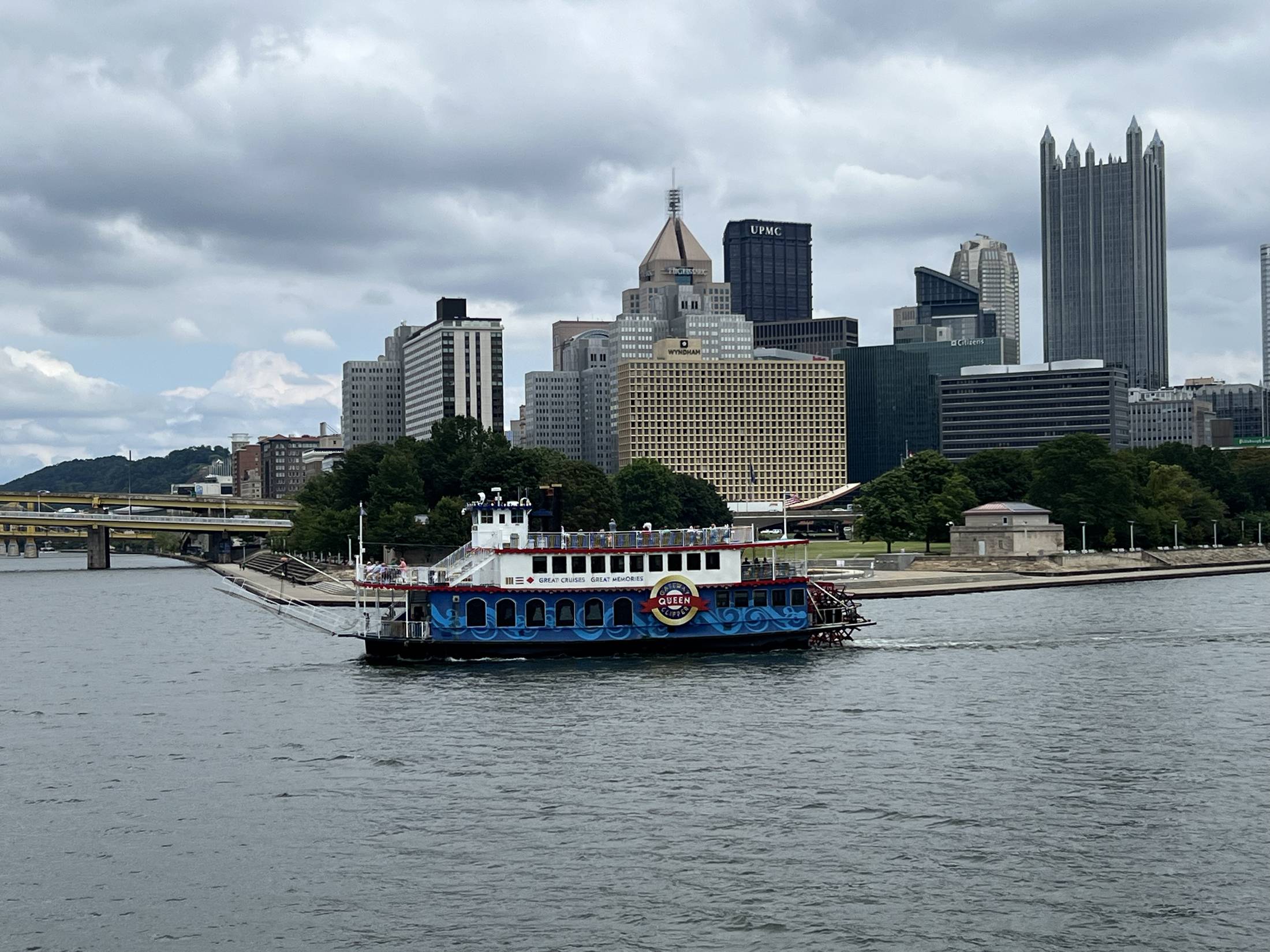
Captain Jones has been with the Gateway Clipper Fleet since 1987. The Gateway Clipper Fleet, in Pittsburgh, Pennsylvania, sails five classic riverboat-style vessels offering a variety of sightseeing, dining, and private event cruises. He currently holds the position of Captain/Port Operations with a 1600 Ton Masters License/Inland Waters and a Master of Towing Vessels/Inland Waters and Western Rivers.
Captain Jones has been an active member of the Passenger Vessel Association since 2008. He has been a member of the PVA Board of Directors since 2018, serving as Secretary- Treasurer and Vice President. Captain Jones also was the Chairperson of the PVA Regulatory Committee from 2018-2025 and served on the PVA Safety and Security Committee from 2008-2017. He played an active role in the development of Flagship, which is PVA’s Safety Management System and was the Chairperson of PVA Rivers Region from 2013-2025.
Captain Jones is involved in many Western Pennsylvania charities devoting many hours raising money for the American Cancer Society, The Mario Lemieux Foundation, and the Western Pennsylvania Chapter of the ALS Association. He holds a Bachelor’s Degree in Business Administration/Finance from Robert Morris University in Pittsburgh.
The Gateway Clipper Fleet began in 1958, when Pittsburgh entrepreneur John E. Connelly launched a single-deck, 89-passenger riverboat to showcase the city’s three rivers. Today, the company has grown to become one of the largest inland riverboat fleets in the country with five vessels including the Empress, Princess, Duchess, Three Rivers Queen and Countess. The family business is celebrating more than 65 years on the Pittsburgh waterfront. “One enduring, yet important, priority in 2026 will be to continue our work to eliminate unnecessary federal regulatory burdens on PVA members. In early 2025, PVA quickly responded to a direct request from the new Trump Administration to identify burdensome regulations that should be eliminated. PVA submitted a list of ten regulations which contained everything from eliminating TWIC and TWIC readers for passenger vessel operators to extending the five-year drydock interval regulation to changing the required interval to service Inflatable Buoyant Apparatus to once every two years or more.”
-Captain Steve Jones, Gateway Clipper Fleet, President of PVA (2025)
Heading into 2026, what are PVA’s Priorities for its membership?
The U.S. passenger vessel industry is well positioned as it enters 2026. A solid 2025 business climate allowed U.S. passenger vessel operators to finish seasonal operations in stronger than expected financial positions; promoting optimism for overall business operations in the coming year. As a result of this positive situation many operators were in a position to make needed capital improvements in vessels and facilities. The dinner boat and excursion vessel markets have experienced steady growth since COVID and are expected to continue on a conservative, positive trajectory. The ferry industry in most urban markets has rebounded and is constructing new vessels to meet expected demand. In addition, there appears to be a significant amount of refurbishing of passenger vessels occurring nationwide. Nonetheless, there will be challenges relating to increasing operating costs, and absorbing certain cost increases related to continuing tariffs, yet the industry generally expects ridership and group travel numbers to increase in most markets.
There are several issues topping the list of PVA priorities going into 2026. These issues include regulatory relief, legislative oversight and funding programs, critical drug testing program changes, mariner licensing improvements, cyber security training, and expansion of illegal charters enforcement to name just a few.
What about ‘burdensome’ regulations?
One enduring, yet important, priority in 2026 will be to continue our work to eliminate unnecessary federal regulatory burdens on PVA members. In early 2025, PVA quickly responded to a direct request from the new Trump Administration to identify burdensome regulations that should be eliminated. PVA submitted a list of ten regulations which contained everything from eliminating TWIC and TWIC readers for passenger vessel operators to extending the five-year drydock interval regulation to changing the required interval to service Inflatable Buoyant Apparatus to once every two years or more.
New Cybersecurity rules for all of maritime loom large in 2026. How do they, and the requirements to train and document, impact PVA member?
In December, PVA released a new Cybersecurity Training Program to assist PVA members meet the Coast Guard’s regulatory cybersecurity training requirement by January 12, 2026. This 11th hour Coast Guard deadline was of concern to many PVA members who were struggling to come up with their own cybersecurity training in time to meet this looming deadline. To assist its members, PVA quickly assembled a working group, from PVA’s Safety and Security Committee, which swung into action. This group promptly developed an excellent PVA Cybersecurity Training Program that PVA members could easily implement to not only meet the deadline but also that would fully meet the Coast Guard’s regulatory requirements. The PVA Cybersecurity Training Program can be accessed via the PVA Member Resource section at, www.passengervessel.com
Discuss if you will PVA’s parterniship with the U.S. Coast Guard.
PVA’s affiliation with the Coast Guard, from a regulatory and vessel inspection standpoint, spans more than 50 years.
This impressive relationship has evolved and progressed as our two organizations have expanded in size and breadth of business and professional involvements. While the passenger vessel industry is generally considered to be small-scale by international standards, more than 6,000 passenger vessels currently fall under Coast Guard regulatory authority. These vessels are located in virtually every port in the nation and are diverse in their activities and physical characteristics. Because of this diversity there was a need to come together to promote safety by discussing important passenger vessel issues in an open, non-regulatory forum. In 1996, a charter agreement was signed that established today’s PVA/Coast Guard Quality Partnership (QP).
Held twice a year, these meetings involve PVA and Coast Guard leaders. This past fall, RADM Wayne Arguin briefed PVA leaders on the Coast Guard’s Force Design 2028 initiative which is taking steps to modernize the Coast Guard to improve capabilities and readiness. This was clearly an important topic to discuss as it impacts every aspect of or industry. Other issues covered during the QP included PVA’s deregulatory efforts, mariner credentialling issues, cybersecurity regulations, illegal charters, slips, trips, and falls reporting, firefighter training, and safety management systems updates.
That our two organizations can meet twice a year to have open discussions about issues of common concern in a non-regulatory environment allows us to work together to solve problems before they become serious. The benefits to PVA members of this type of collaboration are immeasurable.
Illegal Charters have been a problem for passenger vessel owner operators for years. Are we making any headway?
PVA has raised safety concerns about illegal charter operators with the Coast Guard and Congress for many years. While Coast Guard enforcement has increased in many ports there still remains room for much improvement. PVA members who participated in the 2025 PVA Congressional Fly-In played a key role in advocating for the need for greater enforcement when they raised the issue of illegal charters in every Congressional office they visited, speaking directly with Members of Congress and staff about the dangers illegal charter operations pose to the general public. PVA’s Congressional Fly-In message was so impactful that the Chairman and the Ranking Member of the House Transportation and Infrastructure Committee sent a letter to Government Accountability Office (GAO) requesting a careful review of the threats from illegal charter operations. As a result, GAO will conduct a study to define the scale of the problem and highlight where enforcement resources should be focused and support evidence-based recommendations to Congress for fixing the problem.
The forthcoming GAO study establishes a critical milestone in combating the growing problem of illegal charters operations in the United States. It will focus necessary Congressional attention on the need for broader enforcement to protect the safety of the American public.
What about PVA support for small U.S. shipyards?
PVA’s legislative agenda will include advocating for full and sustained funding for MARAD’s Small Shipyard Grant Program, which plays a critical role in maintaining domestic shipbuilding and repair capacity. Continued investment supports U.S. shipyards that build, repair, and maintain passenger vessels, strengthens the maritime workforce, and reinforces national maritime industrial base priorities.
Funding season in Washington, DC is always an adventure. What’s happening in Surface Transportation Reauthorization?
PVA will work with Congress to ensure robust and predictable funding for ferry programs in upcoming surface transportation authorization legislation. Full funding is essential to support vessel construction, fleet modernization, terminal upgrades, and reliable ferry service for communities that depend on waterborne transportation.
Finding and keeping mariners across all of maritime is a pervasive issue. What’s being done to remove Barriers to Mariner Credentialing?
Unlike other sectors of the maritime community, passenger vessel operators and their employees have been struggling with current Coast Guard rules relating as to what qualifies as sea service and the accrual of service time aboard both small and large passenger vessels. This confusion has stifled the ability of employees as they seek mariner credentials while serving aboard passenger vessels due to short sailing durations—some cruises are as short as one hour—and a lack of clarity about what qualifies as actual sea service. In a letter sent to the Commandant of the Coast Guard in August, PVA urged the Coast Guard to make immediate policy clarifications and changes to give half-day credit for at least four hours on board a passenger vessel and consider all activities aboard the vessel, whether underway or dockside, to be considered as sea service.
These changes will help employees of PVA members seeking mariner licenses and will help to remove misunderstanding and barriers in the mariner credentialing program as well as helping to increase the domestic maritime workforce.
Speaking of mariners, what’s the Future for oral fluid drug testing?
Andrew Sargis, of Wendella Sightseeing Boats, Chicago, IL, who is PVA’s incoming PVA President for 2026 has for several years strenuously argued that oral fluid drug testing is a viable and cost-effective alternative to traditional drug and alcohol testing methods. Unfortunately, the Department of Health and Human Services (HHS) has yet to approve laboratories to analyze test results, which is a major barrier to adoption. In July, PVA sent a letter to HHS Secretary Robert F. Kennedy, Jr. urging him to take the necessary steps that would approve laboratories and allow adoption of oral fluid testing as an accepted alternative. The flexibility afforded by oral fluid testing and the projected lower costs will benefit both vessel operators and crew. Every collection directly observed will eliminate the need for private rooms and same-gender collectors. The net effect is to improve compliance with the national drug testing program and, of course, safety.
Passenger vessel safety is pervasive and ongoing. What is PVA doing for its members in this regard?
The passenger vessel industry carries tremendous responsibility for the safety of its passengers and crew. While regulations and technological advancements play crucial roles, a strong safety culture is arguably the most vital ingredient in ensuring safe operations and preventing maritime casualties. As operators we pride ourselves on having a superior safety record and for working tirelessly to ensure that we promote continuous improvement. PVA is equally committed to promoting safety and has developed an ever-expanding library of crew training and safety programs for PVA members to use directly in their companies to enhance their risk management programs. In addition, PVA has developed FLAGSHIP which is a voluntary Safety Management System for PVA members to use in taking their risk management programs to the next level. The Coast Guard has recognized Flagship as an acceptable method for developing and implementing a company-specific safety management system.
PVA Annual Convention at MariTrends 2026, January 22-25, Covington, KY
The PVA Annual Convention at MariTrends 2026 is scheduled February 22-25 in Covington, KY. More than 60 education sessions, featuring approximately 90 professional speakers will be featured. The MariTrends 2026 exhibit floor will showcase the products and services of approximately 100 companies.