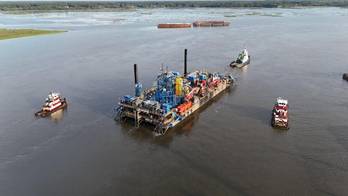
The Third Proviso: Transportation Strategies & Jones Act Compliance

The Jones Act at 46 U.S.C. § 55102 forms the basis of U.S. domestic waterborne commerce by limiting the transportation of merchandise between U.S. points to vessels that are U.S.-built, U.S.-owned, U.S.-crewed, and U.S.-flagged. The Jones Act contains a limited exception known as the “Third Proviso” that permits certain domestic shipments to move through Canada using multimodal transportation without breaching the statute.Purpose and Limits of the Third Proviso.The Third Proviso to 46 U.S.C. § 55102 exempts from Jones Act restrictions the transportation of cargo between U.S.
Kongsberg Maritime Unveils New Mooring Installation Solution for OSVCs
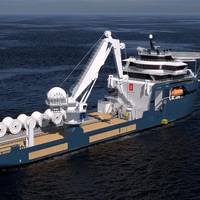
Kongsberg Maritime has developed a mooring capable solution for Offshore Construction Vessels (OSCVs), expanding the capabilities of construction vessels to make them suitable for pre-laying of mooring lines.By integrating a purpose designed anchor handling winch, shark jaws and stern rollers into the design of OSCVs at the newbuild stage, vessel owners can now equip their ships to perform a broader range of mooring operations, Kongsberg Maritime said.This advancement allows OSCVs to handle more tasks independently…
Greece to House Europe’s First XR Ship’s Bridge Simulator for Maritime Training
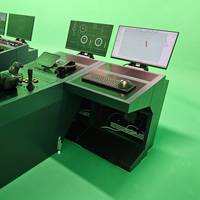
Capital Ship Management Corp and FORCE Technology have partnered up to create Europe’s first Extended Reality (XR) Full Mission Bridge simulator, designed to support maritime training.The simulator will be housed at Capital Group’s state-of-the-art training facility at the port of Chios Island in Greece, which is slated to open in 2025.Designed to enhance seafarers' skills, this modern center of excellence reinforces Capital Group’s dedication to innovation, sustainability, and…
The Baltimore Bridge Incident Challenges the Future of Maritime Law
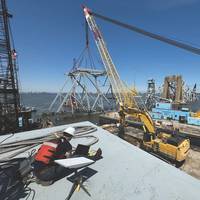
On March 26, 2024, the Dali container ship crashed into Baltimore's Francis Scott Key Bridge, resulting in the loss of six lives. In June, the federal government announced that it had spent approximately $100 million to remove the wreckage and reopen the Fort McHenry Shipping Channel, which had been closed for nearly three months.In response, the Department of Justice has filed a $100 million lawsuit against the ship's owners, Grace Ocean Private Limited and Synergy Marine Private Limited, accusing them of gross negligence.
Greece Drops Criminal Charges Against Aid Workers Who Rescued Migrants at Sea
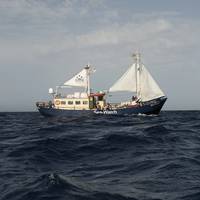
Greece has dropped criminal charges against dozens of international aid workers, ranging from spying to facilitating what authorities had called illegal entry into the country through the island of Lesbos, court documents showed on Tuesday.Most of the 35 people, accused in 2020 of setting up a criminal organization and providing support to traffickers ferrying migrants, were German nationals. The rest included people from Norway, Austria, France, Spain, Switzerland and Bulgaria.
FINLAND: ‘A Birthplace for Icebreakers’
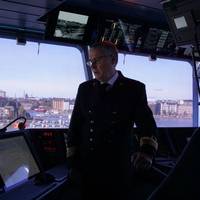
Finnish companies have designed about 80 percent of the world’s icebreakers, and about 60 percent of them have been built by Finnish shipyards.Finland is home to a strong and vibrant maritime cluster, with a mix of large, medium and small shipyards, as well as a deep pool of marine engineering expertise and a broad network of vessel equipment suppliers.As one of the world’s northernmost countries, Finland is also home to a fleet of icebreakers that keep imports and exports flowing through its harbors, even during the coldest winter months.
BV Debuts Cyber Health Check Report Tool

Bureau Veritas (BV) launched its new Cyber Health Analysis Report Tool (CHART), designed to help shipowners gain a better understanding of their ships’ digital architecture (OT/IT), specific vulnerabilities and level of preparedness to potential cyber threats.The aim is to offer a comprehensive technical assessment of a vessel’s cyber resilience at specific moments in its lifetime, responding to the need to constantly review, maintain and update systems in the face of evolving cyber threats.The tool aims to provide a comprehensive audit of the vessel’s equipment…
Frontiers Extend as Developers Eye Floating Wind Potential
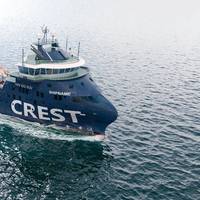
America may have only entered the offshore wind sector recently, but it is wasting no time in playing catch-up. The White House has set targets of 30 GW of offshore wind capacity by 2030 and 110 GW by 2050. The focus so far has centred on bottom-fixed installations, but the prospect of higher energy yields in deeper waters where the wind blows stronger and longer now beckon. The White House has also set a floating wind deployment target of 15 GW by 2035.From a standing start, there are immense challenges in America’s offshore wind development.
Jones Act Uncertainties Persist in US Offshore Wind
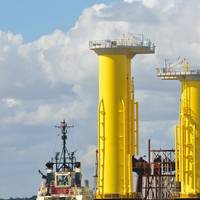
The Jones Act is a single sentence long, and yet somehow that reservation of U.S. domestic maritime commerce to qualified U.S.-flag vessels has spawned numerous complications with respect to offshore wind energy projects. Although not supported by prior experience, maybe 2023 will bring some clarity.U.S. Customs and Border Protection (CBP) is the primary source of guidance for how the Jones Act applies. CBP issued its first two offshore wind rulings in May 2010 and February 2011 in the heady early days of U.S. offshore wind.
Campbell Shipping Extents Contract with Inmarsat
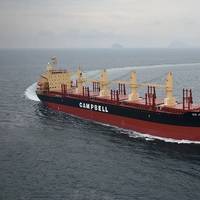
Bahamas-based ship-management group Campbell Shipping has extended its relationship with mobile satellite communications company Inmarsat with an agreement that adds Fleet Care and Fleet Secure Endpoint to its existing 12-vessel Fleet Xpress solution. Campbell Shipping will now be able to carry out remote maintenance, support and repairs, and comprehensive network protection, on top of fast, reliable and extensive global coverage already provided by Fleet Xpress.These performance…
New Ship Repair Cluster Coming to Russia’s Far East
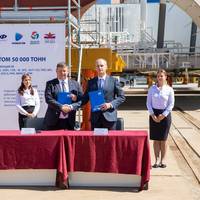
A group of Russian maritime stakeholders have agreed to develop ship repair cluster in the country’s Far East.The trilateral agreement between PAO Sovcomflot, SMART LNG (a joint venture between PAO Sovcomflot and PAO NOVATEK) and Far Eastern Shipbuilding and Ship Repair Center (FESRC, a subsidiary of Rosneft) was signed by: Andrey Shishkin, CEO of FESRC and Vice-President for Energy, Localization and Innovation of Rosneft; Igor Tonkovidov, President and Chief Executive Officer of Sovcomflot, and Sergey Frank, Chairman of the Board of Directors of SMART LNG.
Tech File: SOLID

Commercial vessel operators are increasingly leveraging high-tech sensors and the data they provide to achieve greater efficiency and better their bottom line. A condition-based monitoring system offered by Fincantieri Marine Systems N.A. (FMSNA) is engineered to contribute toward both objectives.“FMSNA decided to develop and launch the SOLID because we wanted to help customers save money by avoiding unnecessary maintenance and repair costs,” said Simone Scafetti, technical director and business development manager at FMSNA.
Sea Machines' Wireless Helm System in Use on Two ATBS
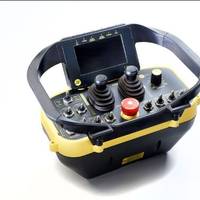
Boston-based Sea Machines Robotics revealed on Wednesday that its SM200 wireless helm system has been installed and is being used aboard two sister U.S.-flag articulated tug-barge (ATB) tugboats.Sea Machines said its dealer Rio Controls & Hydraulics, of Houston, managed the installations and technology integrations at a U.S. Gulf of Mexico shipyard. In the coming months, Rio and Sea Machines will continue to work together to install additional SM200 systems on at least five more ATB tugboats by the same owner.Sea Machines’ wireless helm system introduces flexible control for mariners…
Allseas' Subsea Mining Ship Project is Moving Forward
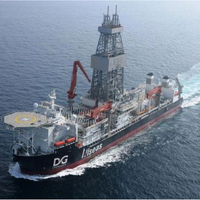
Swiss-based Allseas has awarded Dutch subsea technology company Seatools the contract for the delivery of the complete electrical, hydraulic and control system for Allseas’ deep-sea mining nodule collector.Driven by the green energy transition, the interest in high-grade seafloor polymetallic nodule deposits has risen in the past few years due to the depleting terrestrial deposits for metals such as copper, nickel, manganese and cobalt. Nevertheless, subsea mining does not take place on a commercial scale yet as current technology readiness levels fall short.Last year…
Wärtsilä Translink Receives DNV GL, IEC Certificates

The technology group Wärtsilä said it has been awarded a DNV GL type-approval certificate and cyber security certification by the International Electrotechnical Commission (IEC) for its Translink solution, part of the company’s connected ECDIS concept. The cyber security verification has been issued according to the updated DNV GL rules and the internationally recognized standard for cyber security for bridge and navigation systems, IEC61162-460. Translink is a system that comprises the hardware, router, and software components.
The Good, the Bad and the Undeniably Ugly

The end of 2019 promises to be a busy, and potentially discordant, legislative and regulatory period for the United States maritime industry as both Congress and the Executive Branch look to take decisive action, with both positive and negative potential impacts depending on your perspective. With appropriation and authorization bills still pending, and various open regulatory actions, there are significant opportunities for maritime stakeholders to influence policy outcomes.Funding Fights Continue in CongressOn October 31…
USCG, ABS Approve Wireless Helm System for ATBs
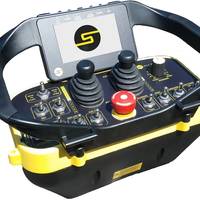
U.S.-based autonomous marine systems developer Sea Machines announced on Tuesday that it has received class and regulatory approval to install its commercial wireless helm system aboard a class of U.S.-flag tugboats that support articulated tug-barge (ATB) sets, marking an industry first in wireless vessel control.The U.S. Coast Guard (USCG) and American Bureau of Shipping (ABS) approval for Sea Machines’ SM200 follows a review of the Boston-based company’s technology and the system’s applications aboard ATB tugs, deeming the system satisfactory for shipboard installation and trials.
LNG-Ship Orders to Dominate Newbuilds in 2025
About 60.3 percent of the world’s ship orders are projected to be for liquefied natural gas (LNG)-fueled vessels by 2025."Ships powered by LNG are expected to account for six out of 10 new vessel orders in six years due to toughened environmental standards," said a report in Pulse News.A study report released by Korea Development Bank and Korea Trade-Investment Promotion Agency said that that as many as 1,962 new LNG carriers would be built by 2025. It also expected demand for LNG bunkering vessels to jump more than tenfold, from 313,000 tons in 2016 to 3.2 million tons in 2030.On condition that Korean shipbuilders would be responsible for building more than 60 percent of the world’s large LNG-fueled vessels…
Damen Completes Maintenance on Fugro Mercator
Damen Shiprepair Harlingen (DSHL) has completed maintenance and repair works on the Fugro Mercator, a twin-hulled survey vessel operated by Fugro.Fugro Mercator is a 42.35-metre survey vessel deployed in some of the most challenging locations by Fugro for bathymetric and geophysical surveys, cable and pipeline route surveys. The vessel’s visit to DSHL was a scheduled docking for maintenance and repair works.The yard’s planned work sheet included overhauling most of the vessel’s equipment as well as upgrading its accommodation areas. This consisted of work on the main and auxiliary engines, thrusters and winches, and refitting the kitchen and dining areas.During the docking it was decided to upgrade the hull in order to extend the life of the vessel for the time to come.
Zvezda Shipyard to Build an Advanced Ice Class Tanker for Rosneft
AO Rosnefteflot, a subsidiary of Rosneft, and Zvezda shipyard signed a contract during the St. Petersburg International Economic Forum for the construction of a shuttle tanker Arc6 with a deadweight of 69,000 tons. The contract provides for an option to build a second similar vessel. At the same time, a 20-year charter agreement was signed between Rosneft and Rosnefteflot. The tanker will be used for safe export of oil and petroleum products from Trebsa and Titova fields. Arc6 ice class tankers are designed for operations where ice thickness is up to 1.5 m and ambient temperature is down to -45 degrees Co. The maximum length of the tanker is 257 meters, its width is 34 meters, draft is 14 meters, height is 21 meters, speed is 15.5 knots.
US Navy to Survey Downed Aircraft in the Philippine Sea
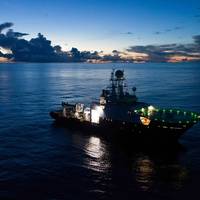
The U.S. Navy said it has contracted a research vessel owned by Microsoft co-founder Paul G. Allen to survey the location of a downed C-2A Greyhound plane before attempts are made to recover the aircraft from 18,500 feet below the surface in the Philippine Sea. The C-2A Greyhound was transporting 11 crew and passengers when it crashed into the ocean on November 22, 2017, killing three. On December 29, A Navy team using a towed pinger locator (TPL-25) system discovered the aircraft resting on the seafloor at a depth of 18,500 feet, an unprecedented depth for the salvage of an aircraft.
A New Breed of Tug
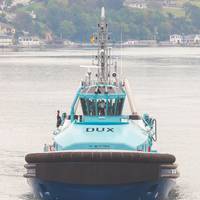
When markets expand niches are created, goes the logic. For builders of tugs, that market is “floating gas” and the expanding use of liquefied natural gas, or LNG, as a fuel. In support of LNG, there’ll be more oceangoing tug duty — the new floating storage and regasification units, or FSRUs, mean busier LNG carriers, and LNG cargo owners have an interest in tug escorts that share their “carbon footprint”. Still, new emissions rules offer ways to keep using refinery products, and the work of master tug designers suggests the new breeds of tugs are about more than fuel.
Rosneft Orders Ten More Arctic Shuttle Tankers at Zvezda
Rosnefteflot, a subsidiary of Russia’s petroleum company Rosneft, has inked agreements with compatriot Zvezda Shipbuilding Complex for construction of ten Arctic shuttle tankers. At the same time Rosnefteflot and Taimyrneftegaz signed an agreement for 20 year time chartering of these tankers. Each tankers will be with 42,000 t deadweight each. ARC7 ice class tankers are designed for operations in the conditions with ice thickness up to 1.8 m and ambient temperature of down to 45 degrees. The new series of tankers is to be used for transportation of crude produced at Paiyakhskoe field from the mouth of Enisey river along the Northern Sea Route both in the western and eastern directions.