

MARTAC T38 USV Completes 8-Day Autonomous Mission Offshore

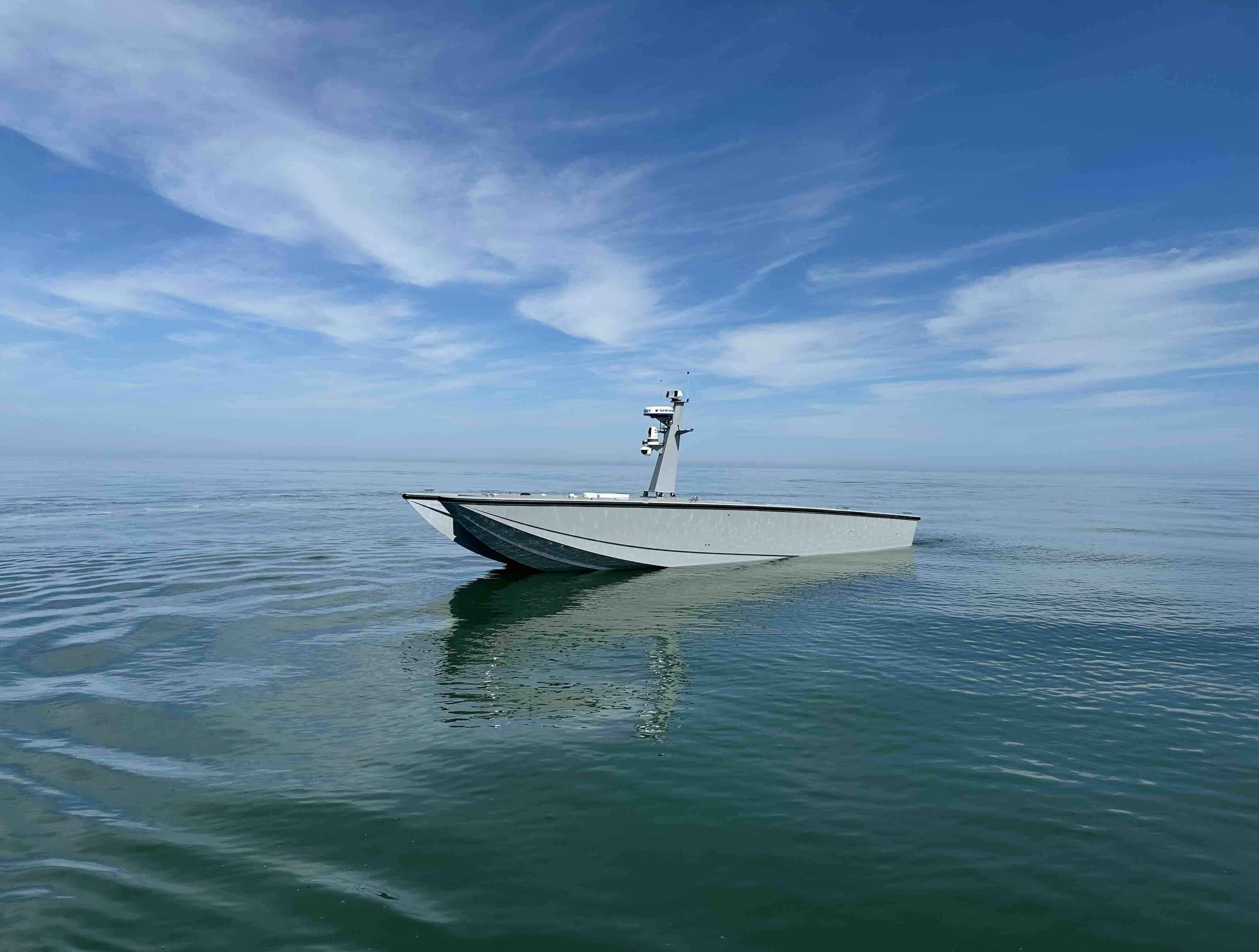
Maritime Tactical Systems, Inc. (MARTAC) announced that its T38 Devil Ray unmanned surface vessel (USV) has completed a record-setting 8-day, completely autonomous mission off the coast of California, demonstrating a level of endurance, reliability and operational control not previously achieved in its class.
The USV, owned and operated by Naval Air Warfare Center Weapons Division’s (NAWCWD) Point Mugu Sea Range through its Future Capabilities Office’s Blue Water Instrumentation (BWI), successfully demonstrated extended autonomous operations in open-ocean conditions. This is critical to BWI’s goal of advancing the Navy’s ability to conduct test and evaluation programs in challenging maritime environments where traditional, fixed position instrumentation is unavailable.
The demonstration highlighted the T38’s ability to operate autonomously for extended periods, maintain station in dynamic sea states, and support a range of mission profiles.
Unique from scripted government sponsored events, no chase boats or escorts were involved in the operation that mirrored real-world operational requirements. The T38 safely navigated around multiple static and mobile contacts during the underway period, further demonstrating that its autonomy stack is compliant with the International Regulations for Preventing Collisions at Sea 1972 (COLREG).
The mission emphasized persistence over speed, with the vessel averaging just over 4 knots per hour, validating its role as a long-endurance, forward-deployed asset capable of sustained presence rather than short-duration sprint operations. In short intervals where burst speed was required, the vessel demonstrated a capability of 50+ knots per hour.
A defining element of the mission was a deliberate two-day alternating single-engine operational period conducted approximately 400 nautical miles offshore. This was not a failure scenario; it was an intentional maneuver to extend loiter time and evaluate endurance under reduced propulsion conditions. During this period, the T38 autonomously maintained its designated station, continued data collection, and executed mission objectives without degradation, reinforcing the platform’s efficiency, control logic and mission flexibility.
Sea conditions averaged Sea State 3, a slight sea condition with wave heights between 1.5 to 4 feet, with the vessel experiencing conditions up to Sea State 5 and wave heights reaching 10 feet, further stressing the platform across propulsion, autonomy and hull performance envelopes.
Critically, performance in these conditions underscored the inherent stability advantages of the T38’s catamaran hull design. The twin engine, twin-hull configuration provides a wide beam and reduced roll, enabling the platform to remain steady in higher sea states. This stability directly translates to improved mission effectiveness, whether collecting high-fidelity sensor data, maintaining precise station-keeping or supporting targeting and firing solutions where platform stability is essential.
The mission also validated extended range performance, confirming that the T38, when operating at 100% fuel capacity, is capable of exceeding 2,400 nautical miles of operational range under endurance-focused profiles.
This milestone establishes a new benchmark for persistent unmanned maritime operations, particularly in scenarios requiring extended loiter, distributed presence and reduced logistics dependency. The ability to sustain operations for over a week, and to intentionally modulate propulsion to extend mission duration, directly supports the emerging need for solutions in contested and remote maritime environments.
The carbon fiber T38 Devil Ray, a 38-foot autonomous surface vessel, is designed for intelligence, surveillance and reconnaissance (ISR), maritime domain awareness, logistics support and distributed fleet operations. Built on MARTAC’s open-architecture autonomy framework, the platform supports modular payloads and resilient communications, enabling mission execution in denied or degraded conditions.


