USCG Commandant Outlines Investments at Senate Hearing

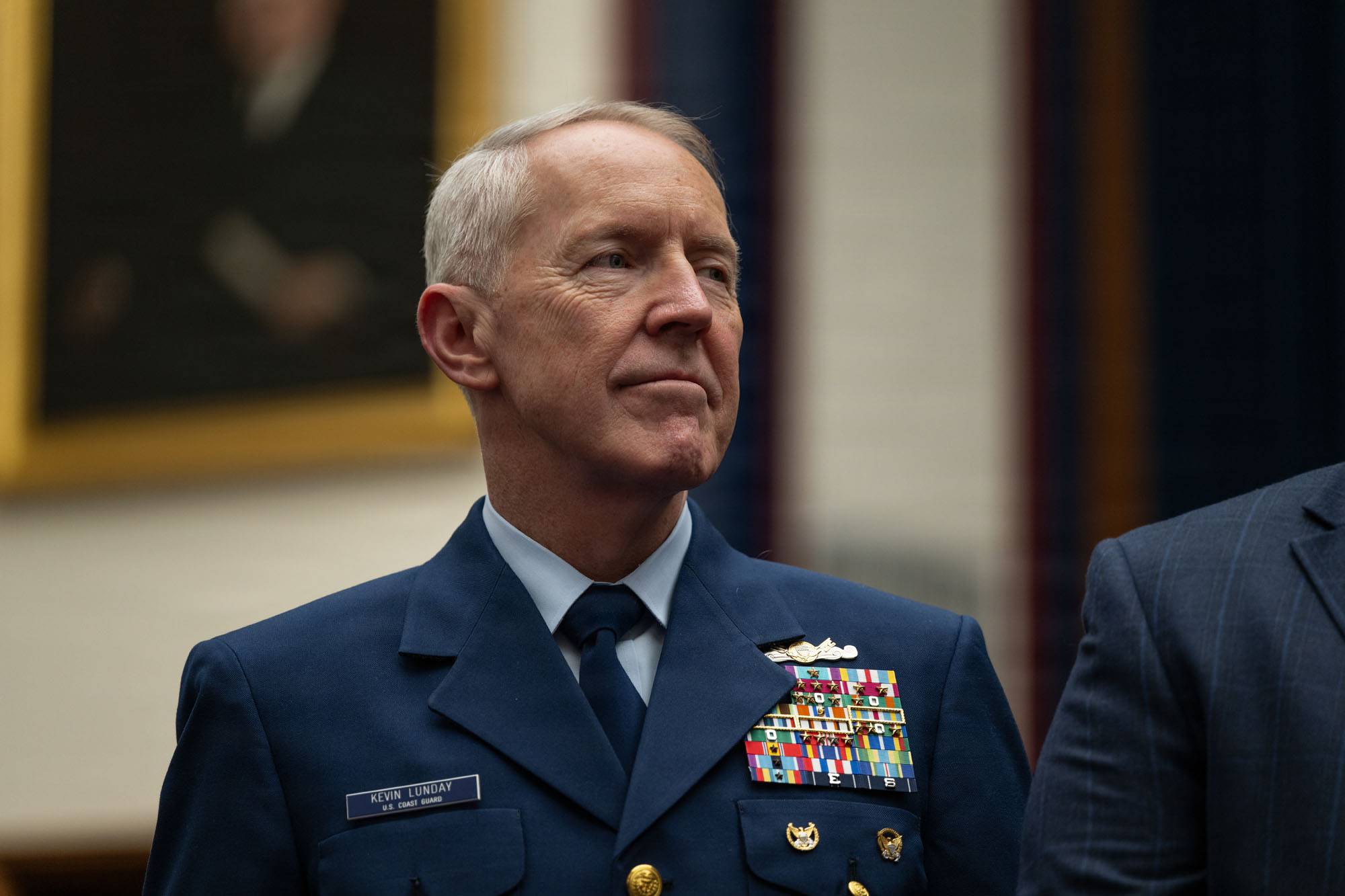
The U.S. Coast Guard is accelerating long-term investments in cutters, aviation assets and autonomous systems following what service leaders described as a historic infusion of funding from Congress in 2025, according to testimony before the Senate Commerce Committee.
During the hearing, Senator Roger Wicker (R-Miss.) pressed Admiral Kevin Lunday, Commandant of the United States Coast Guard, on how the service is translating recent budget increases into operational capability, particularly in the Indo-Pacific.
Adm. Lunday said the Coast Guard has already expanded its cutter presence in the region, adding nine vessels and permanently shifting a medium-endurance cutter to the Pacific. Congress has also funded two additional fast-response cutters for Guam, further strengthening forward presence. A pending FY2026 appropriation would add $116 million in operating funds to support training, engagement teams across Pacific Island nations, and enhanced national security operations.
“The Indo-Pacific is not just somewhere overseas,” Adm. Lunday said. “Because of Hawaii and our territories, it is also the U.S. homeland.”
While praising the impact of recent “plus-ups,” he emphasized that one-time reconciliation funding must be followed by steady annual appropriations to fully capitalize and operate new assets. “These assets are badly needed,” he said, “but it’s the crews that operate them that make the Coast Guard able to do what it does.”
Wicker agreed, noting that maintaining a stable topline budget is critical as the service modernizes.
Adm. Lunday also announced that Coast Guard Station Pascagoula will return to full-mission response status in 2026. The station had been downgraded in 2023 due to personnel shortages, but recent recruiting gains have put the service in a position to restore full operations.
Autonomous Systems Expand Reach
Autonomous platforms are emerging as another pillar of Coast Guard modernization. Adm. Lunday said the service has already obligated about $800 million for short- and medium-range autonomous systems across air, surface and subsurface domains. These systems are providing new surveillance and operational capabilities, particularly in vast maritime regions where crewed assets are stretched thin. Funding is also in place for long-range unmanned aircraft systems, with procurement expected to follow.
Summing up the exchange, Wicker characterized the Coast Guard’s progress as “a good start,” while Lunday agreed more work lies ahead. “We’ve made a good start,” the commandant said, “but we have much more to do to strengthen our fleet, our people and our presence—especially in the Indo-Pacific.”