
Wasaline Posts Solid 2025

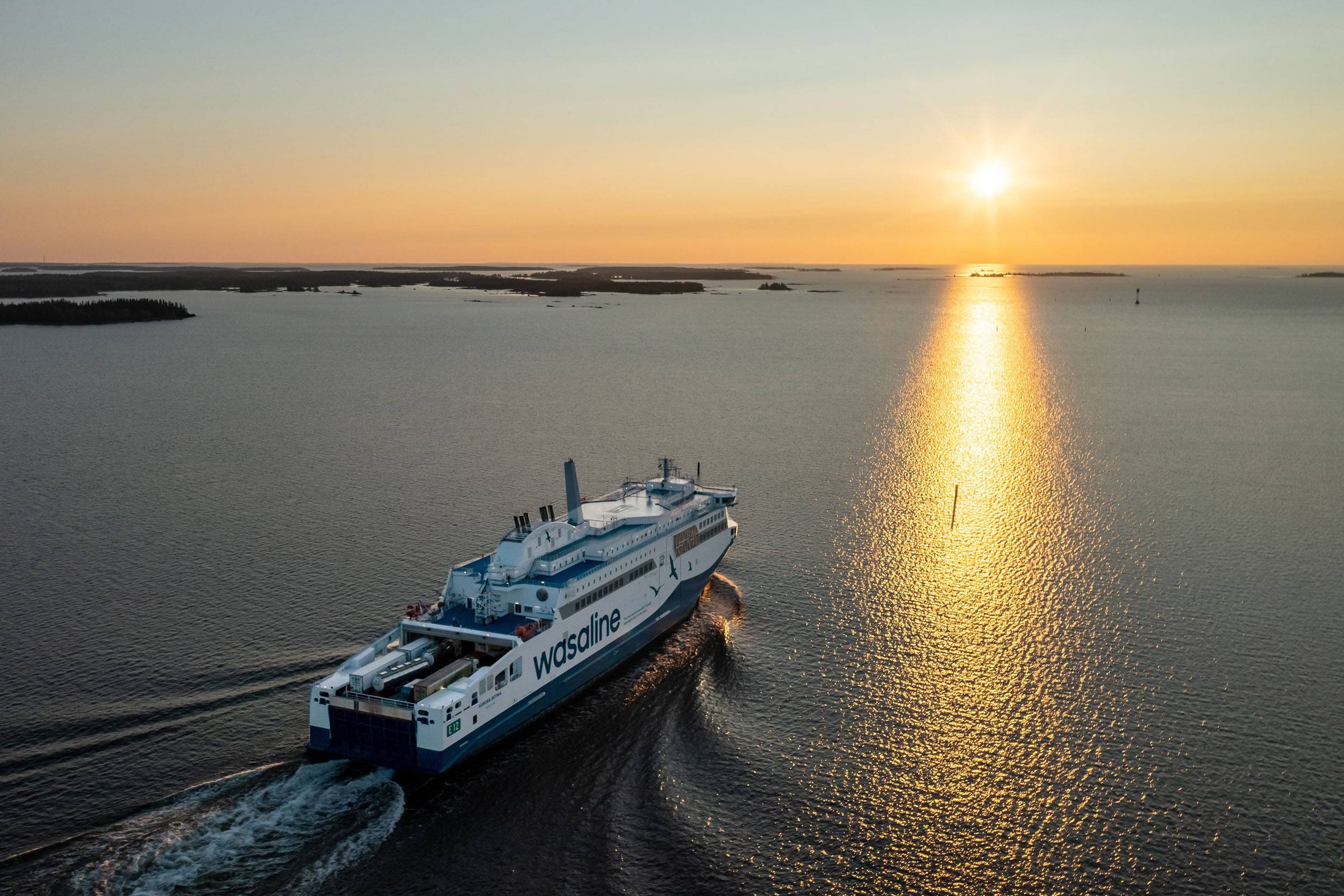
Finnish–Swedish ferry operator Wasaline reported a strong performance in 2025, delivering passenger growth, higher revenues and a major reduction in emissions, despite a more challenging freight market.
Passenger volumes rose by 2.6% to 259,769, even though the company’s ROPAX vessel Aurora Botnia was out of service during the final week of December for scheduled dry-docking. Freight volumes declined slightly year-on-year, reflecting the broader economic downturn in the region, postponed construction projects, reduced paper trade and the bankruptcy of battery manufacturer Northvolt. Nevertheless, Wasaline said it gained freight market share, underlining the resilience of its logistics offering.
Turnover increased by 2.7% to EUR 28.8 million, while emissions were reduced by 85.3%, primarily due to the company’s transition to biogas operations in August 2025.
“Despite the economic slowdown, we see our passenger numbers continuing to grow,” said Peter Ståhlberg, CEO of Wasaline. “We have new segments from Central Europe interested in winter cruises when there is ice in the Kvarken area. These are mainly tourist groups from Germany, but we are also seeing bookings from other European countries.”
While Finnish and Swedish travelers still make up the bulk of passengers, Wasaline expects further growth in intermodal freight transport in 2026. According to Ståhlberg, interest from freight customers has increased as a result of the company’s low-emission operations and focus on minimizing climate impact.
Aurora Botnia returned to service on January 11 following a yard stay in Naantali, where maintenance work was carried out on the bow thrusters and azipods, along with five-year inspections by DNV, all completed without remarks. Passenger spaces were upgraded, the car deck repainted, and a major technical milestone achieved with the installation of new batteries.
With a total battery capacity of 12.6 MWh, Aurora Botnia now features the largest battery installation on any ROPAX vessel, further strengthening Wasaline’s position as a frontrunner in sustainable short-sea ferry operations.