

Accelerator Chooses Six Companies for New York Wind Advances
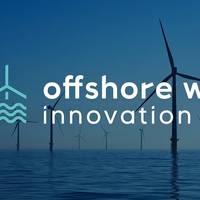
NYU Tandon School of Engineering, in partnership with Equinor, National Offshore Wind R&D Consortium (NOWRDC) and New York City Economic Development Corporation (NYCEDC), announced its selection of the 2025 annual cohort of companies that will receive support to further develop their ideas and advance offshore wind’s potential in New York.Six companies were selected from a pool of 53 applicants based on the novelty and potential of their solutions. Among the focus areas was identifying…
Fincantieri Presents Underwater Segment, Revenue Expected to Reach 920 Million in 2027

During the DEEPDIVE - Analyst and Investor Underwater Day held in Milan, Fincantieri presented its long-term strategic vision for the development of its underwater segment to the financial community.Accounting for about 4% of Group revenue in 2024, the segment is set to double in 2027, reaching 8%, with expected revenue of approximately USD$920 million (820 million euros) and estimated EBITDA of USD$170 million (152 million euros), with an EBITDA margin approaching 19%. Forecast results for 2025 and 2026 confirm the strength of this trend…
Shipbuilding RFP Issued to Build Hydrogen-Hybrid Research Vessel
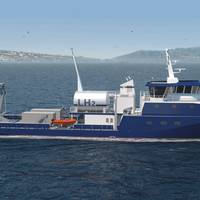
UC San Diego’s Scripps Institution of Oceanography issued a request for proposals (RFP) to select a shipyard for the final design and construction of its new 163-ft. Coastal Class Research Vessel (CCRV), reportedly the first oceanographic research ship to primarily operate on renewable fuels.The vessel will feature a dual-powered hydrogen fuel cell and diesel-electric propulsion system, capable of conducting 75% of its missions using only liquid hydrogen. When running on hydrogen…
RRS Sir David Attenborough Gearing Up for First Antarctic Science Cruise
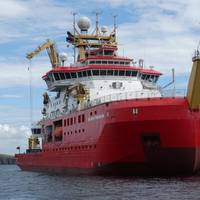
Britain's high-tech polar research ship RRS Sir David Attenborough is gearing up for its first Antarctic science cruise.Over the coming weeks, the crew and scientists on board the vessel will be carrying out a range of trials to test the ship's science equipment in both deep and shallow water around the Scottish coast. Among the tech to be tested are the vessel's moonpool, coring equipment and the ship’s workboat Erebus, all of which are critical elements of upcoming science missions.Erebus will be put through its paces with new equipment…
Newport News Authenticates Keel for US Navy Sub Arkansas
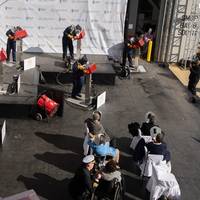
HII’s (NYSE: HII) Newport News Shipbuilding (NNS) division hosted a keel authentication ceremony for Virginia-class submarine Arkansas (SSN 800).The ship’s sponsors are the six women of the historic group known as the Little Rock Nine, the first African American students to attend all-white Central High School in Little Rock, Arkansas during desegregation. NNS honored all nine members, including the three men, during Saturday’s ceremony.The Little Rock Nine made history in 1957 with their response to the Supreme Court ruling in Brown v.
Interview: Tim Leach, Glosten, Discusses Efficient Refit by Design
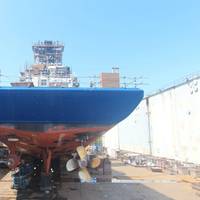
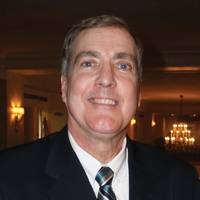
From 3D laser scanning to Computational Fluid Dynamics, an efficient and successful major mid-life refit such as the one completed on the RV Roger Revelle requires intricate advance design planning, an updated technical toolbelt, as well as the personal touch. Tim Leach, Principal, Naval Architect (Glosten), walks us through the process.Tim Leach, Principal, Naval Architect, Glosten. Image courtesy GlostenWhat work was completed by Glosten on the RV Roger Revelle midlife refit?Glosten has a long history of working with Scripps (SIO) and the Revelle.
Measuring the Hostile Ocean Beneath Hurricanes
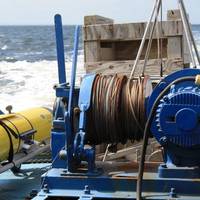
Unmanned Vehicles Collect Data for Improving Storm ForecastsThe influences of ocean conditions and currents on living environments are now more widely appreciated—from the Earth’s climate and severe weather conditions to fisheries and biodiversity. Sustained and widespread measurements are needed to provide essential clues for understanding the oceans, for effective monitoring of environmental changes, and for helping to clarify the long-term effects of global warming.To meet this challenge, ocean researchers have invented various types of unmanned observing platforms.
Interview: Dr. Catherine Warner, Director, NATO CMRE

At CMRE, it’s not just about the science. It’s about building trust and confidence in resilient systems. An interview with Dr. Catherine Warner, Director, NATO Center for Maritime Research and Experimentation, La Spezia, ItalyTell us a little about yourself and CMRE. What does CMRE do, and how do you see your mission evolving?I came here from the Pentagon, where I was the science advisor for the director of operational test and evaluation. My experience has been working with operators on systems that they’re getting ready to field.
Export Licensing: Tips U.S. Exporters Shouldn’t Overlook
Export Control Lists Include Key Marine Tech Categories Each year, the U.S. Department of Commerce receives thousands of inquiries from businesses looking to export, many of which involve licensing questions. The Commerce Department’s Bureau of Industry and Security (BIS), together with other USG agencies, is responsible for export licensing and controls. BIS export licenses may be required for items (commodities, software, or technology) with proliferation, military, or terrorist uses, or which warrant control for other reasons.
Export Licensing: Tips U.S. Exporters Shouldn’t Overlook
Each year, the U.S. Department of Commerce receives thousands of inquiries from businesses looking to export, many of which involve licensing questions. The Commerce Department’s Bureau of Industry and Security (BIS), together with other USG agencies, is responsible for export licensing and controls. BIS export licenses may be required for items (commodities, software, or technology) with proliferation, military, or terrorist uses, or which warrant control for other reasons. Export licensing requirements can apply to a wide array of products, including marine technologies.
Will Naval Operations Heat up in the Arctic?
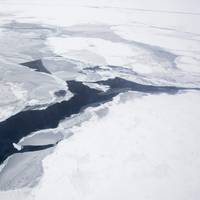
As diminishing sea ice in the Arctic Ocean expands navigable waters, scientists sponsored by the Office of Naval Research have traveled to the region to study the changing environment and provide new tools to help the U.S. Navy operate in a once-inaccessible area. "This changing environment is opening the Arctic for expanded maritime and naval activity," said Rear Adm. Mat Winter, chief of naval research. A recent announcement from the National Snow and Ice Data Center revealed…
GD Bluefin-21 AUV Launches Bluefin SandShark Micro-Underwater Vehicle
The General Dynamics Bluefin-21 autonomous underwater vehicle (AUV) successfully launched multiple Bluefin SandShark micro-autonomous underwater vehicles (M-AUV) Underwater vehicle (M-AUV as part of several capability demonstrations at the U.S. Navy sponsored 2016 Annual Naval Technology Exercises (ANTX) in Newport, R.I. Through several ANTX demonstrations, the Bluefin SandShark M-AUVs surfaced and functioned independent of the heavyweight-class Bluefin-21. In one mission scenario, the Bluefin-21 simulated data collection and transfer of target imagery and other information to two Bluefin SandSharks. Those Bluefin SandSharks then surfaced to communicate with a Blackwing unmanned aerial vehicle.
Research Vessel Neil Armstrong Joins WHOI Fleet
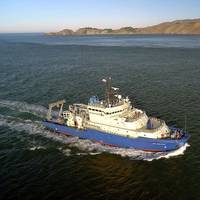
I woke up the first night out of Anacortes, Washington, when the ship dropped out from under me and I levitated off my bunk. Then came the sound of shuffleboard in the conference room one deck above. The only trouble was, there's no shuffleboard on the research vessel Neil Armstrong. It was Halloween 2015 in the Northeast Pacific. We were in the first hours of the first voyage of the newest ship in the U.S. academic research fleet, and we were already plowing through 15-foot waves. But the ship’s motion made it feel more like we were facing much heavier seas.
Krill Installs VFMMS on FRV Reuben Lasker
Krill Systems Inc., leader in advanced Vessel Fuel Measurement and Monitoring Systems (VFMMS), installated and conducted sea trial on-board the NOAA Ship Reuben Lasker. The NOAA Ship Reuben Lasker is the fifth in a series of Fishery Survey Vessels (FSV) and one of the most technologically advanced fisheries vessels in the world. Funded under the American Recovery and Reinvestment Act and built by Marinette Marine Corporation in Wisconsin, the ship’s primary objective is to support fish, marine mammal, and turtle surveys off the U.S. West Coast and in the eastern tropical Pacific Ocean. Reuben Lasker is classed as a Fishery Survey Vessel (FSV). All FSVs are American Bureau of Shipping (ABS) Ice Classed "C0".
Harris Receives $15 Million Contract to Provide Acoustic Sensors
Harris Corp received a $15 million, 4 year follow-on contract to provide acoustic sensors for installation on the U.S. Navy’s Virginia-class submarines. The sensors are designed to facilitate data sharing between the LWWAA system and the submarine’s combat platform for monitoring of ships and other vessels. Jim Brunelle, director of undersea systems business at Harris, said the 10 new systems will accompany the 18 acoustic assemblies Harris has already delivered to the Navy for use on its submarines. "These latest systems will join the 18 ship sets the company has already supplied for the Navy's newest and most capable submarines," said Jim Brunelle, director, Harris Undersea Systems business.
Navy Autonomous Underwater Vehicle Delivery Milestone
Commander, Submarine Development Squadron 5 (CSDS 5), Detachment UUV, informs of the delivery of Large Training Vehicle 38 (LTV 38), an unmanned undersea vehicle (UUV), which makes LTV 38 the first UUV to join the vehicle inventory used by detachment UUV at Naval Undersea Warfare Center Keyport. LTV 38 is able to perform at a maximum depth of 1,000 meters for up to 72 hours. It is designed as a full-pressure hull vehicle, capable of both line of sight and over the horizon communications, and can also conduct limited autonomous contact avoidance maneuvers via acoustic sensors while anchored and such missions are conducted and controlled remotely.
Threat Detection and Recognition
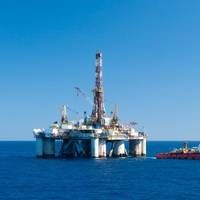
Trucks, trains, ships and oil rigs are all potential targets for criminal organizations. Organizations that own, use or transport high value assets recognise the need to protect their goods and employees, especially when they are at their most vulnerable - when in remote or isolated situations, at night and when operating alone. By their very nature, trucks, trains, ships and oil rigs are all potential targets for criminal organisations. Furthermore, monitoring systems, early warning and deterrent technology have not been available to address this need at a remotely affordable cost.
US Navy Adds New Research Vessel
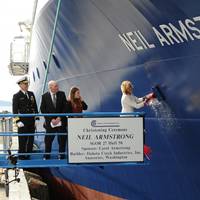
Yesterday marked the christening of the U.S. Navy’s new state-of-the-art Auxiliary General Oceanographic Research (AGOR) scientific research vessel R/V Neil Armstrong (AGOR 27) at the Dakota Creek Industries shipyard in Anacortes, Washington. According to the Office of Naval Research (ONR), the newest research vessel will join its six-vessel research fleet next year. Each vesselis assigned to a U.S. oceanographic institution or university, and is operated by a 20-person university crew (up to 24 scientists can be accommodated on Neil Armstrong for research missions lasting up to a month).
Teledyne Completes Acquisition of RESON
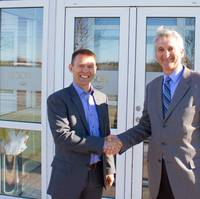
Teledyne Technologies Incorporated announced today that it has completed the acquisition of RESON. RESON, headquartered in Slangerup, Denmark, provides high-resolution marine acoustic imaging and measurement solutions. The acquired company will operate under the name Teledyne RESON. Terms of the transaction were not disclosed. With more than 30 years of experience and approximately 1,400 RESON echosounders sold worldwide, RESON is a provider of multibeam sonar systems and specialty acoustic sensors for hydrography, global marine infrastructure and offshore energy operations.
R/V Sikuliaq
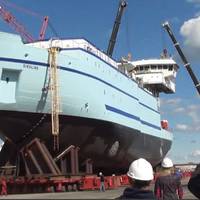
The 3,800-ton Alaska Region Research Vessel (ARRV) R/V Sikuliaq was launched on Oct. 13, 2012, at Marinette Marine in Marinette, Wis. Sikuliaq (pronounced see-KOO-lee-ack) will be operated by the University of Alaska Fairbanks (UAF) School of Fisheries and Ocean Sciences for the National Science Foundation as part of the University-National Oceanographic Laboratory System (UNOLS) fleet. The 261-foot global class ice-capable research vessel R/V Sikuliaq was designed by Glosten Associates. "R/V Sikuliaq is one of the most advanced research vessels in the world," said NSF Director Subra Suresh.
NSRP: U.S. Navy, Industry Partner for Research
Navy, Industry partner for research; sharing costs, risks, and rewards to reduce total ownership costs . America’s shipyards are fierce competitors, but they can also be close collaborators. The National Shipbuilding Research Program (NSRP) is a cooperative effort for American shipbuilders and the U.S. Navy, with the aim of improving efficiency and economy to reduce the cost of Navy ship construction and repair in American shipyards. According to the Navy’s NSRP program manager Connie Bowling of the Naval Sea Systems Command…
Bay Electronics NOAA Vessel Subcontract Award
Bay Electronics Inc. announced they have been awarded a subcontract from Fincantieri's Marinette Marine Corporation shipyard in Wisconsin. Bay Electronics Inc. will provide design services, equipment and technical support for an Integrated Bridge System, Navigation System, Radio Communication System and Master Clock System. Bay Electronics was one of three Suppliers that competed for this project in the construction of a new fisheries survey vessel. This $1.3 million dollar contract is for the National Oceanic and Atmospheric Administration (NOAA) Hull FSV-6, currently under construction at the Marinette Marine Shipyard. The ships mission is to provide scientific data from weather forecasts and climate monitoring, to fisheries management, and to support marine commerce.
Bay Wins NOAA RV Deal
Bay Electronics Inc. announced they have been awarded a subcontract from Fincantieri's Marinette Marine Corp. shipyard in Wisconsin. The company will provide design services, equipment and technical support for an Integrated Bridge System, Navigation System, Radio Communication System and Master Clock System. Bay Electronics was one of three Suppliers that competed for this project in the construction of a new fisheries survey vessel. This $1.3 million dollar contract is for the National Oceanic and Atmospheric Administration (NOAA) Hull FSV-6, currently under construction at the Marinette Marine Shipyard. The ships mission is to provide scientific data from weather forecasts and climate monitoring, to fisheries management, and to support marine commerce.