Fishing Vessel Facing $41,000 Fine for AIS Violation
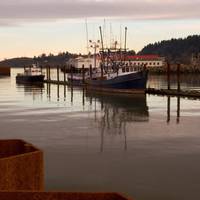
A commercial fishing vessel is facing a potential $41,093 fine after allegedly violating automated identification system (AIS) regulations near the mouth of the Columbia River Dec. 3, 202, the U.S. Coast Guard said.The U.S. Coast Guard said it is pursuing a civil penalty against a commercial fishing vessel after its Sector Columbia River detected the vessel deactivate its AIS while underway near the mouth of the Columbia River in violation of 33 Code of Federal Regulations 164.46(d)(2).The captain declined to accept the Notice of Violation, issued for $5,000.
VIDA & BWMS Reform

On December 4, President Trump signed into law the Frank LoBiondo Coast Guard Authorization Act of 2018 (S. 140). Title IX of the legislation is the Vessel Incidental Discharge Act of 2018 (VIDA). VIDA will largely cut through a morass of conflicting and confusing requirements that have developed over a number of years relating to discharges into US waters. This purpose of this new legislation is to: (1) provide for the establishment of uniform and environmentally sound standards and requirements for the management of discharges incidental to the normal operation of a vessel…
The USCG RDC & Electronic Aids To Navigation
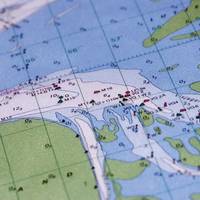
To recreational boaters, Aids to Navigation (ATON) are the familiar red and green buoys (and day markers) that line our inland waterways. What they might not be aware of is that buoys have been around since the days of the Roman and Egyptian empires. In the decades following the creation of our country, buoys in every shape and color began appearing in our waterways. It wasn’t until 1850 that Congress harmonized their deployment, thereby encouraging the familiar “Red, Right, Returning” mantra.
Luxury Yacht Seized in Money Laundering Probe
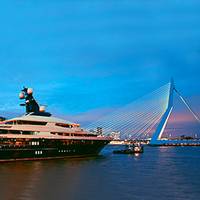
Indonesian police on Thursday questioned the captain and crew of a luxury yacht in Bali at the request of U.S. authorities, probing alleged money laundering at a Malaysian state fund, they said. The yacht was impounded in Bali on Wednesday amid a multi-billion dollar corruption investigation launched by the U.S. Department of Justice (DOJ) and tied to Malaysian state fund 1Malaysia Development Berhad (1MDB). Police seized the yacht, Equanimity, after receiving a letter on Feb. 21 from the U.S.
USV Deployed for 22 Days in South China Sea
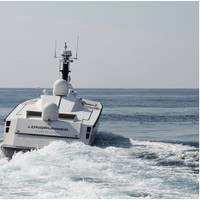
A Singapore based designer and manufacturer of unmanned surface vessels (USVs) said one of its vehicles was recently deployed for more than three weeks in the South China Sea. The 22-day continuous deployment marks the longest ever for Zycraft’s wholly developed Vigilant class 17-meter independent unmanned surface vessel (IUSV), which traveled a total distance of 1,900 nautical miles South China Sea. Command and control of the IUSV was done using satellite communications from Singapore at Zycraft’s command center.
New Unmanned Surface Vessel Takes Shape off Singapore
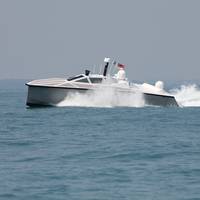
Zycraft Pte. Ltd. (Zycraft) hsaid it completed Phase 1 development of the Vigilant Class Independent Unmanned Surface Vessel. A lead vessel named the LongRunner has already completed over 24 months of inwater testing in Singapore waters and traveled a total of 2000 nautical miles. During this period, the vessel also participated in several Fleet Battle Experiments and demonstrated continuous unmanned operations exceeding 48 hours and traveled 100 nautical miles into the South China Sea.
Ship Identification: JIB Antennas Added to Canada's RADARSAT Constellation

Small, lightweight JIB antennas from Northrop Grumman Corporation's Astro Aerospace business unit will help provide a new maritime identification capability for Canada's three RADARSAT Constellation Mission (RCM) Earth observation satellites planned for launch in 2018. Astro Aerospace will provide 13 self-deploying, monopole JIB antennas as part of an Automated Identification System (AIS) being added to the identical radar-imaging satellites under a contract from RCM prime contractor MacDonald, Dettwiler and Associates Ltd.
Coast Guard Commandant Delivers Annual SoCG Address
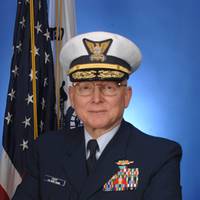
Coast Guard Commandant Adm. Bob Papp delivers State of the Coast Guard Address. U.S. Coast Guard Commandant Adm. Bob Papp delivered the 2013 State of the Coast Guard Address at the National Defense University at Fort Lesley J. McNair in Washington, D.C., Wednesday. The Commandant highlighted the Coast Guard’s response to Hurricane Sandy, emphasizing the preparedness of Coast Guard Captains of the Ports working with U.S. Department of Homeland Security components and industry in advance of the storm.
Canadian Radar Satellite Contract for MDA
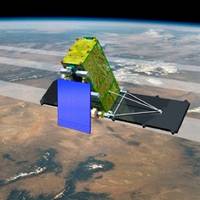
MacDonald, Dettwiler & Associates Ltd. win Canadian Space Agency $706 million contract to build, launch & provide initial operations for the RADARSAT Constellation Mission (RCM). The RCM is designed for three main uses: maritime surveillance (ice, wind, oil pollution and ship monitoring); disaster management (mitigation, warning, response and recovery) and ecosystem monitoring (forestry, agriculture, wetlands and coastal change monitoring). The contract is expected to extend over a period of seven years and brings MDA’s current backlog to approximately $2.9 billion.
PortVision: A Helping Hand in the Deepwater Horizon Response
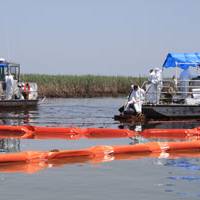
MarineNews spoke with Dean Rosenberg, CEO of PortVision, about the company’s role in the coordination of the Deepwater Horizon spill response in the Gulf of Mexico. PortVision is a web-based service that uses data from the Automated Identification System (AIS), mandated by the IMO and the U.S. Coast Guard, to provide shore-side users with real-time vessel tracking as well as historical reporting. “The main purpose for AIS, why it was mandated, is for collision avoidance,” Rosenberg said.
Waterways – Intelligent Transportation System
The Port of Pittsburgh Commission has applied for a $35.21m USDOT TIGER Grant to deploy two communications technologies at 200 "Hot-zones" throughout the inland waterway system to create a Waterways – Intelligent Transportation System. The technologies include the Automated Identification System (AIS), which the USCG has deployed at major U.S. seaports and Wireless Broadband (WB), which, with greater bandwidth, can accommodate more business as well as governmental communication uses. The application received the backing of the U.S. Army Corps of Engineers and the American Waterway Operators, but also has applications for maritime equipment manufacturers and river terminals. Announcement of the awards by DOT is expected between mid-December and mid-February.
HSRP Meeting
The Hydrographic Services Review Panel (HSRP) will be meeting November 19-20. The NOAA Hydrographic Services Review Panel (HSRP) is a Federal Advisory Committee that advises the NOAA Administrator on topics relating to operations, research and development, and dissemination of data pertaining to: hydrographic surveying; nautical charting; water level measurements; current measurements; geodetic measurements; and geospatial measurements. The HSRP will hold its next meeting in Tampa, Florida to discuss NOAA’s Navigation Services programs. The HSRP will hear from maritime interests and non-navigation users about connections to NOAA’s Navigation Services and Climate during two Stakeholder Panels. The agenda also includes a discussion of the Integration of PORTS® Data Into the U.S.
Maritime Exchange VP Elected to Head MISNA
At their fall meeting, members of Maritime Information Service of North America (MISNA), a non-profit association dedicated to promoting safe, secure, efficient and environmentally sound maritime operations, elected Lisa B. Himber, vice president of the Maritime Exchange for the Delaware River and Bay, to serve as the organization's president for 2004. Other officers include: Immediate Past President - Liz Wainwright, Merchants Exchange of Portland, OR; Vice President - Ed Page, Marine Exchange of Alaska; Lynn Korwatch, Marine Exchange of San Francisco Bay; and Alastair MacNab, Marine Exchange of the West Gulf. The Maritime Exchange…
Public Hearing Held on AIS Requirements
The Coast Guard is seeking additional public input on expanding requirements for the Automated Identification System (AIS) at a public meeting. Currently, Coast Guard regulations require AIS be installed on commercial vessels that are on international voyages. Other commercial vessels are also required to have AIS when they are operating in U.S. waters that have Vessel Traffic Systems or Vessel Movement Reporting Systems. The deadline for installation of this equipment is either July 1, 2004, or Dec. 31, 2004, depending on the vessel. The Coast Guard asks the public to comment on the expansion of the AIS requirement to other vessels and waterways. The Maritime Transportation Security Act of 2002 specifies requirements for vessels to use AIS.
Balancing Security, Safety and Commerce
By Thomas H. Collins, Admiral, U.S. By any measure, 2003 was a turning point in the 213-year history of the U.S. Coast Guard. Beginning with the introduction of a new Maritime Strategy for Homeland Security early in the new year and continuing with its realignment under the Department of Homeland Security in March as part of the largest reorganization of the federal government since the post-World War II era, the scope and scale of the Coast Guard's maritime, multi-mission, and military operations during the past year were nothing short of extraordinary. Coast Guard men and women rose to the challenge, bolstered by the largest mobilization of reservists in our history. Collectively, they fought the Global War on Terrorism at home as well as overseas.
Legal Matters
Senator Slade Gorton (R-Wash.) introduced the "States Prevention of Oil Tanker Spills Act" (S. 2506), which seeks to reinstate Washington state oil tanker safety laws overturned by the Supreme Court in Intertanko v. Locke and United States v. Locke. In a press release, Senator Gorton said, "I disagree with the Court's decision, because I believe Washington State should be allowed to protect its shores as it sees fit." The Gorton legislation would reinstate the right of all states to adopt additional standards beyond existing federal requirements governing the operation, maintenance, equipment, personnel and manning of oil tankers. While the legislation would apply to all coastal states, Gorton's interest is focused on recently overturned Washington statutes.
Canada to get Tough on Marine Polluters
Transport Minister Jean-C. Lapierre announced the purchase of new marine pollution aerial surveillance equipment that will significantly strengthen Transport Canada's National Aerial Surveillance Program. The $2.3 million contract will cover the purchase of the equipment, as well as the on-board crew training. "The Government of Canada is committed to preventing pollution from ships and to continuously enhancing the protection of our marine environment," said Mr. Lapierre. Transport Canada conducts aerial surveillance to detect marine pollution from ships. When such pollution is detected, charges may be laid under the Canada Shipping Act.
Legal Notes
President George Bush has signed into law legislation repealing a four year old rule imposing a 50% duty on the cost of routine repairs and maintenance carried out by U.S. merchant mariners while their vessel is at sea. The elimination of the duty, which customs authorities have levied on US-flag carriers since April 2001, represents a victory for the domestic shipowning community. The community has lobbied hard against it since its introduction. President Bush signed into law the Intelligence Reform and Terrorism Prevention Act of 2004 (S. 2845). The major emphasis of the legislation is reform of the U.S. intelligence organization. Other measures, though, may impact the maritime community.
USCG Establishes New AIS site in Unimak Pass
The Coast Guard in partnership with the Marine Exchange of Alaska has established an Automated Identification System (AIS) site in the Unimak pass to assist with maritime domain awareness. AIS is a shipboard broadcast system that acts like a transponder, operating in the VHF maritime band. The system allows a shipboard radar to display a mark for every significant ship within radio range. Each mark displays the corresponding ship's speed, heading, name, size, call sign, registration number, classification and other information. AIS has the same range-limiting factors of radio broadcasts however, the system's coverage area can be expanded by shore based repeaters. The system's range at sea is approximately 20 nautical miles.
Coast Guard to Participate in Small Vessel Security Summit
The U.S. Coast Guard announced today it will participate in the first-ever Department of Homeland Security-sponsored small vessel security summit to be held in June to discuss ideas for improving security for vessels not covered by the Maritime Transportation Security Act of 2002. Secretary of Homeland Security Michael Chertoff is expected to deliver the keynote address. Details on the location, dates and time of the summit will be announced once finalized. “We want to hear ideas from the people who regularly use our ports and waterways to determine how we can better structure new safety and security regimes that will have a minimal impact on those who rely on our waterways for their livelihood as well as recreation,” said Adm. Thad Allen, commandant of the Coast Guard.
UTT to Get Kongsberg Simulators
The University of Trinidad and Tobago(UTT) has issued a contract to Kongsberg Maritime for the delivery of a Full Mission Ship Handling Simulator and a Full Mission Engine Room Simulator configured to DNV Class A standards. In addition to the Full Mission Ship Handling Simulator, the delivery will include three secondary interactive tug bridges for certification of Mariners in accordance with competency requirements established by the International Maritime Organization(IMO). These bridges will utilize the latest ARPA Radars, IMO Type Approved Electronic Chart Display Information Systems (ECDIS), and Automated Identification System (AIS) training.
Submersible Retrieves Data, Takes Video from Sunken Ferry
An underwater video released Tuesday by B.C.'s Transportation Safety Board shows images from inside the sunken Queen of the North ferry during a dive by a remote-controlled submersible last month. The video shows the submersible's manipulator arms clearing the ferry deck of debris, breaking a bridge window to gain access and taking images of the controls. It also shows the submersible retrieving bridge computerized electronic systems that could shed light on what led to the fatal accident. The images from inside the vessel, which came to rest on the ocean floor a little over 1,400 feet were taken during a two-day dive by a submersible called an ROPOS (remotely operated platform for ocean science) operated by a Vancouver Island company, the Canadian Scientific Submersible Facility.
Port Security Questions Remain
According to the Homeland Security Department, between 2004 and 2007 it will have spent $10 billion on maritime security investments. However, industry and government officials say much remains to be done. One of the key concerns remains the Transportation Workers Identification Card, a program to provide a single biometric credential to be used at U.S. seaports, allowing transportation workers and seaport users to get just one security clearance and to be checked against terrorism databases anywhere nationwide. Begun in 2003 in a pilot effort, the program has been repeatedly delayed and has experienced cost overruns. Regulations for the program were initially due in 2004, but now are not likely until late in 2006.