

ABS Consulting Paper Supports USGC Maritime Cyber Compliance

ABSG Consulting Inc. (ABS Consulting), a leader in safety, risk and asset integrity management, has released a paper to support vessel and facility owners and operators in meeting compliance with the U.S. Coast Guard’s (USCG) Maritime Cyber Rule. This paper outlines practical steps to meet the first cybersecurity training deadline of January 12, 2026.Titled From Final Rule to Fully Trained: Practical Direction for Meeting the U.S. Coast Guard’s Maritime Cybersecurity Requirements…
U.S. Court of Appeals Issues Decision in Case on Demurrage, Detention Billing Practices

On February 23, 2024, the FMC issued its Final Rule on Detention and Demurrage Billing Practices, as required by Congress under the Ocean Shipping Reform Act of 2022. The rule went into effect on May 28, 2024. After the Final Rule was issued, the World Shipping Council, a trade association for vessel-operating common carriers organized under an FMC-filed agreement, appealed the Rule to the U.S. Court of Appeals for the D.C. Circuit, seeking to have it overturned.On September 23, 2025, the court issued its decision in that case, setting aside just one section of the Rule – 46 C.F.R.
For Commercial Vessels, VIDA Will Usher in New Era of Uniformity

With everything going on around the maritime industry these days — from a Presidential Executive Order to Make U.S. Maritime Great Again, to bipartisan legislation in Congress to boost our shipyards and merchant marine, to the import tariff rollercoaster ride we’re all on — it’s easy to forget some other important U.S. maritime policy initiatives whose benefits are just over the horizon. One such initiative we mustn’t lose sight of is the effort by the U.S. Coast Guard and the U.S.
Ransomwar Tops Maritime Cyber Risks, Role-based Training a Priority

Maritime operations run on tight schedules and thin margins, and as ships, terminals and supply chains connect systems for visibility and efficiency, attackers gain paths to entry. Cyber risk has become an operational reliability and safety concern, not just an IT issue. “Whether we are looking at this challenge through an operational or organizational safety lens, cyber risk is a critical business risk. An incident will impact everyone,” says Michael DeVolld, Senior Director…
BOEM Rescinds Offshore Renewable Energy Leasing Schedule

The US Bureau of Ocean Energy Management (BOEM) has announced a direct final rule rescinding a section of its regulations that outlined the renewable energy lease sale schedule.Under the rescinded regulation, BOEM required the Secretary of the Interior to publish a five-year schedule of anticipated offshore renewable energy lease sales at least every two years.After reviewing this regulation, the Department of the Interior has determined this provision is not mandated under the…
Top Five Essentials for U.S. Coast Guard Cyber Compliance

Vessel operators must embed cybersecurity into their operational procedures to meet USCG 33 CFR Part 104, writes Nicolas Furgé, President, Cyber, MarlinkAs cyber threats continue to grow in both scale and complexity, maritime stakeholders, from shipowners and operators to port facilities are facing new regulatory demands to improve cyber resilience.The latest cybersecurity rules from the United States Coast Guard (USCG), amending parts 101, 104, 105 and 106 of 33 CFR Sub-chapter F, represent a major shift in how cybersecurity is addressed by U.S.-flagged vessels and U.S.
US Delays Rule on Gulf of Mexico Whale Protection

U.S. President Donald Trump's administration will delay by two years a final rule designating protections for the endangered Rice's whale in the oil and gas drilling region of the Gulf of Mexico, according to an agreement with environmental groups filed in a federal court.The U.S. Commerce Department's National Marine Fisheries Service agreed with green group Natural Resources Defense Council to finalize by July 15, 2027 the geographic area deemed critical for the Rice's whale survival. The previous deadline had been Tuesday, July 15, of this year.The agreement filed in the U.S.
Charting Key Regulatory Change Across Maritime Law in 2025 and Beyond

A tidal wave of new regulations is set to hit the global maritime sector this year, representing fresh, highly-complex compliance challenges. From environmental performance to evolving security and safety standards, the shipping industry faces a raft of new rules intended to ensure safe operations and reduce greenhouse gas (GHG) emissions. In this article, Stamatis Fradelos, Vice President of Regulatory Affairs at the American Bureau of Shipping, explains what the flood of new regulations really means…
Sea Change in Cybersecurity: USCG's New Maritime Reg Set to Transform Digital Safety at Sea

The $5.4 trillion global maritime industry faces a perfect storm of cyber vulnerabilities, and a new government regulation aims to be the lighthouse guiding stakeholders to safer digital harbors.On January 17, 2025, the US Coast Guard (USCG) published a final rule titled “Cybersecurity in the Marine Transportation System,” aiming to bolster the cybersecurity posture of the nation’s marine transportation system (MTS). This rule introduces mandatory cybersecurity measures for US-flagged vessels…
New Rules for Containerized Cargo Start March 1

Starting March 1, 2025, ocean common carriers of containerized cargo are expected to file documented export strategies with the US Federal Maritime Commission (FMC) on an annual basis.The increased obligation is one of several notable developments on the horizon for the ocean shipping industry in 2025, says the Venable LLP international trade team.As Venable explains in its latest advisory on expected trade laws in 2025, these expected changes will impact operations across a wide range of stakeholders…
Marine Cybersecurity: Key Takeaways from the Coast Guard's Final Rule
The U.S. Coast Guard (USCG) published a final rule on January 17, 2025, addressing Cybersecurity in the Marine Transportation System (the “Final Rule”), which seeks to minimize cybersecurity-related transportation security incidents (“TSIs”) within the maritime transportation system (“MTS”) by establishing requirements to enhance the detection, response, and recovery from cybersecurity risks. Effective July 16, 2025, the Final Rule will apply to U.S.-flagged vessels, Outer Continental Shelf, and onshore facilities subject to the Maritime Transportation Security Act of 2002 (“MTSA”).
US Coast Guard Publishes Final Rule on Cybersecurity

The US Coast Guard has published a final rule in the Federal Register to update cybersecurity requirements for U.S.-flagged vessels, outer continental shelf facilities and facilities subject to Maritime Transportation Security Act of 2002 (MTSA).The rule addresses current and emerging cybersecurity threats in the marine transportation system by adding minimum cybersecurity requirements to help detect risks and respond to and recover from cybersecurity incidents. These requirements include developing and maintaining a cybersecurity plan…
BOEM Boosts Monetary Penalties for Oil & Gas firms

Today, the Bureau of Ocean Energy Management (BOEM) announced a final rule that implements the 2025 inflation adjustments for the maximum daily civil monetary penalties contained in BOEM regulations in accordance with Federal law.The Federal Civil Penalties Inflation Adjustment Act Improvements Act (FCPIAA Improvements Act) of 2015 requires Federal agencies to adjust the level of civil monetary penalties for inflation annually. These adjustments are intended to maintain the deterrent…
FMC Announces Export Strategies Deadline
Deadline Announced for Required Filing of Annual Export Strategies at FMC December 31, 2024 Ocean common carriers must file documented export strategies with the Federal Maritime Commission beginning March 1, 2025, and at least annually every following year.Filings must include information on services offered, markets served, pricing strategies, and equipment provisioning. The submissions must be prospective in nature, providing clear information to the Commission about how ocean carriers will serve the U.S. export market. Multiple filings in a year are permitted if circumstances warrant.The final rule "Definition of Unreasonable Refusal to Deal or Negotiate with Respect to Vessel Space Accommodations Provided by an Ocean Common Carrier…
NOAA Unveils FLA Keys Marine Sanctuary Restoration Blueprint

After more than a decade of collaboration with cooperating agencies, community experts and public input, NOAA today released the final management plan and environmental impact statement for Florida Keys National Marine Sanctuary.The documents outline NOAA’s regulatory recommendations and mark a critical milestone in the most comprehensive public process to restore the Florida Keys’ delicate ecosystem.The first management plan update since 2007 — crafted with extensive collaboration among NOAA…
US DOT Publishes Final Testing Rule, Amends Oral Fluid Drug Testing
Final Rule is Effective Today, 5 November.Today, November 5, 2024, the Department of Transportation (DOT) published a final rule in the Federal Register to provide temporary qualification requirements for mock oral fluid monitors, provide for consistent requirements by identifying which individuals may be present during an oral fluid collection, and clarify how collectors are to document that a sufficient volume of oral fluid was collected. To learn more about this final rule, view the rule at https://www.transportation.gov/odapc/frpubs.
Federal Maritime Commission Publishes Final Rule on Unreasonable Refusal to Deal

The United States' Federal Maritime Commission on Monday published its final rule concerning “Definition of Unreasonable Refusal to Deal or Negotiate with Respect to Vessel Space Accommodations”.The rule establishes the necessary elements for the Commission to apply 46 U.S.C. 41104(a)(3) with respect to refusals of cargo space accommodations when available, and 46 U.S.C. 41104(a)(10) with respect to refusals of vessel space accommodations.Where an alleged refusal by an ocean common carrier takes place during the “negotiation” phase of a transaction, 46 U.S.C. 41104(a)(10) would apply.
Final Rule on Demurrage & Detention Cleared to Take Full Effect May 28

The final rule on Demurrage and Detention Billing Practices is clear to take full effect on May 28, 2024, following recent actions by the Office of the Management and Budget (OMB) and the Federal Maritime Commission (FMC).The FMC issued its final rule on Detention and Demurrage Billing Practices on February 23, 2024, and gave notice of the May effective date except for the “Contents of Invoice” section 541.6. That provision of the rule contains an information collection under the Paperwork Reduction Act and required OMB review and approval.
US Interior Department Finalizes Offshore Renewable Energy Rule

US Secretary of the Interior Deb Haaland has announced that the Bureau of Ocean Energy Management (BOEM) and the Bureau of Safety and Environmental Enforcement (BSEE) have finalized updated regulations for renewable energy development on the U.S. Outer Continental Shelf. The final rule increases certainty and reduces the costs associated with the deployment of offshore wind projects by modernizing regulations, streamlining overly complex processes and removing unnecessary ones…
All FMC Statutes & Regulations in Full Effect Following Baltimore Bridge Collapse
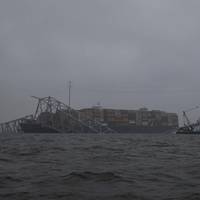
The U.S. Federal Maritime Commission (FMC) on Friday issued a notice reminding regulated entities that all statutes administered by the agency remain in effect while disruption to regular service at the Port of Baltimore is causing many shippers to adjust supply chain operations.Common carriers and marine terminal operators (MTOs) must continue to comply with all statutory and regulatory requirements governing their operations, the FMC said.Demurrage and detention fees must be reasonable.
MARAD’s Title XI Changes: Good News for Offshore Wind?

The U.S. Department of Transportation's Maritime Administration (MARAD) in December issued a final rule updating its financial requirements for the Federal Ship Financing Program, commonly referred to as Title XI. While the move applies to the U.S. maritime industry as a whole, it is seen as especially helpful for players looking to serve the U.S. offshore wind sector.Designed to promote the growth and modernization of the U.S. merchant marine and U.S. shipyards, Title XI provides for a full faith and credit guarantee by the U.S. government. The program essentially aims to encourage U.S.
Congressmen Urge FMC to Finalize OSRA Provisions

Two U.S. Congressmen are urging the Federal Maritime Commission (FMC) to finalize the rule on demurrage and detention billing requirements required in their Ocean Shipping Reform Act that became law in 2022.The Ocean Shipping Reform Act was signed into law on June 16, 2022 and provides authority to the FMC to investigate ocean carriers’ business practices and apply enforcement measures following the unreasonable refusal of American exports throughout the COVID-19 pandemic.In January 2023, U.S.
Ask What Your Government Can Do For Your Industry (A 2023 Retrospective)

John F. Kennedy’s famous locution, “Ask not what your country can do for you, but you can do for your country” remains the rallying call for civic action and public leadership. The message remains foundational to the success of the United States, particularly as we head into an election year that once again appears to be filled with divisiveness and vitriol. That said, before we flip the calendar, it is important to set JFK’s message aside for a moment and reflect upon what our political leadership in Washington…