VPS Updates Digital Decarbonization Platform
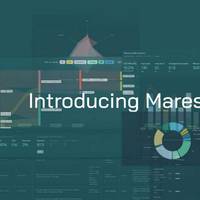
Marine decarbonization testing and advisory services company VPS has launched the latest update of its digital data-driven decarbonization platform, Maress 2.0.Maress monitors main engine and emissions equipment performance for offshore vessels. With powerful new analytics, high-resolution vessel insights and an intelligent data validation engine, Maress 2.0 helps its users sail smarter, improve their vessel and fleet performance and trust their data like never before.Maress 2.0 is designed to give users actionable insights at every level…
Op/Ed: It’s Human Nature to Have an Opinion – About LNG
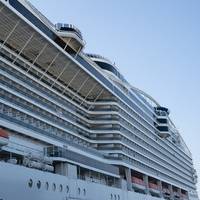
Back in August 2024, in its blog Fact from Fiction: Methane Slip, the industry group SEA-LNG stated: “It’s human nature to have an opinion. And everyone is entitled to one. What’s potentially damaging is when emotive opinions with limited substance are heralded as fact.”This week MSC Cruises had to reconsider what it was saying about LNG.NGO Opportunity Green reports that, following a complaint it made in March 2024, the UK Advertising Standards Authority has resolved an issue regarding claims MSC Cruises was making about LNG.
Collision: Neither Skipper Kept Watch Properly
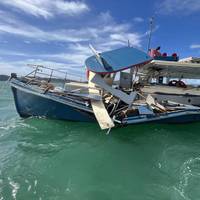
New Zealand’s Transport Accident Investigation Commission (TAIC) has released its report into the collision between the passenger ferry Waitere and the recreational vessel Onepoto in Paihia, Bay of Islands, on April 13, 2023.The Onepoto collided with the passenger ferry Waitere, known locally as the Blue Ferry, while the ferry was on its way from Russel to Paihia.The TAIC report describes catastrophic damage to the Waitere, which later sank. The Waitere's master was seriously injured, but its 19 passengers were largely uninjured.
NTSB Issues 10 Safety Recommendations Following Dredging Pipeline Strike
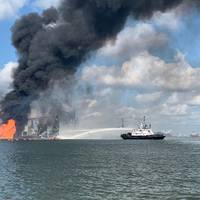
The National Transportation Safety Board issued 10 safety recommendations Tuesday during a public board meeting held to determine the probable cause of the fatal August 21, 2020, hazardous liquid pipeline strike and subsequent explosion and fire aboard the dredging vessel Waymon Boyd.The Waymon Boyd struck a submerged 16-inch hazardous liquid pipeline carrying propane during dredging operations in Corpus Christi, Texas. A geyser of propane gas and water erupted adjacent to the vessel. Shortly thereafter, propane gas engulfed the dredge and an explosion occurred.
Gothenburg Cuts Quay Crane Waiting Times
APM Terminals Gothenburg has managed to cut quay crane waiting times by as much as 90% by implementing new standard operational procedures for container lashing. This translates to a reduction from 38 minutes to just four.Using ‘Lean’ methodology, which is being adopted across all of the company’s terminals around the world, a Transformation Team at APM Terminals Gothenburg identified the root cause of the time delay – inaccurate information provided to the vessel crew.As a result, the team has implemented a revised process to ensure that the information sent out to each vessel call is clear, accurate and standardized.Vessel crews now commence unlashing in the order and sequence required to optimize the operation.
Report: FBI Falls Short On Port Threat Assessment

The Federal Bureau of Investigation is not taking appropriate steps to review and assess potential maritime terrorism risks facing U.S. sea ports, the Justice Department's internal watchdog has found.The audit, released on Thursday by Inspector General Michael Horowitz, found that while top FBI officials believe the country faces a low maritime terrorism threat, that view is actually based on "incomplete and potentially inaccurate information."Moreover, the audit found that the FBI had not conducted its own formal assessment of the matter.In a letter to Horowitz dated Aug.
Summer Wind, Miss Susan Tow Collision Report
This is a synopsis from the National Transportation Safety Board's (NTSB) report and does not include the Board’s rationale for the conclusions, probable cause, and safety recommendations. NTSB staff is currently making final revisions to the report from which the attached conclusions and safety recommendations have been extracted. The final report and pertinent safety recommendation letters will be distributed to recommendation recipients as soon as possible. to further review and editing. Houston Ship Channel, Lower Galveston Bay, Texas. The visibility was restricted at the time due to fog. The bulk carrier was inbound to Houston, traveling in a north direction. The tow was bound for Port Bolivar on the east side of the Houston Ship Channel, traveling in an east direction.
Reminder Stresses Importance of Accurate Clearance Information
The Captain of the Port, New York-New Jersey, has issued a reminder about the importance of providing accurate clearance information, and warns that civil penalties may be pursued against any vessel owner, master or person in charge that provides inaccurate information that contributes to a bridge strike, GAC said in its daily Hot Port News alert. The Coast Guard Sector New York Marine Safety Information Bulletin 01-14 states, “The Bayonne Bridge is undergoing a two-year construction project to raise the roadway an average of 65 feet. The associated demolition activities and work platforms outside of the navigable channel present serious safety considerations for mariners. Despite previous Coast Guard advisories, the Bayonne Bridge has been struck twice within the past four months.
Air Draft Alert: Bayonne Bridge Struck Twice this Year
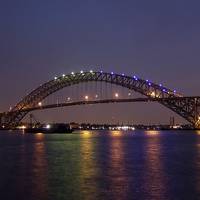
The Bayonne Bridge is undergoing a two-year construction project to raise the roadway an average of 65 feet. The Captain of the Port, New York-New Jersey says that it has been struck twice in the past 4 months. The Captain of the Port, New York-New Jersey, has issued a reminder about the importance of providing accurate information clearance information, and warns that civil penalties may be pursued against any vessel owner, master or person in charge that provides inaccurate information that contributes to a bridge strike.
Caution: Check Air Draft For Safe Passage Under NY's Bayonne Bridge
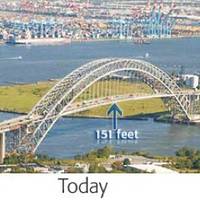
The Bayonne Bridge is undergoing a major construction project and special care is required to avoid ship allisions, including ship antenna strikes similar to those that occurred in the past, which may cause severe property damage or loss of life. It is imperative that ships transiting under the Bayonne Bridge know the distance from the ship’s keel to the highest point and provide accurate information to the Pilot and the ship’s agent for safe navigation. This information is required…
AMO Responds to Cruise Line Industry Criticisms
American Maritime Officers Association (AMO) president follows up on his recent appearance on FOX News Channel. The AMO president says his April 15 live appearance on FOX News Channel's segment, "Remembering Titanic 101 years Ago Today," which highlighted concerns about the rising tide of marine mishaps, has drawn undue criticism from the cruise ship industry's lobbying group, yet, has ignited overwhelming positive public and professional support of putting highly-trained AMO-member U.S. merchant mariners in command of more passenger vacation vessels. A few days after American Maritime Officers President Tom Bethel appeared on "FOX & Friends," the Cruise Lines International Association issued a news release in the form of an open letter from CEO Christine Duffy to Mr. Bethel.
Government Update: Continuous Synopsis Record
One of the numerous provisions in the December 2002 amendments to the International Convention on the Safety of Life at Sea (SOLAS Convention) requires ships subject to the Convention to maintain a continuous synopsis record as of July 1, 2004. All is not going smoothly though. Owners and operators should prepare to take individual action prior to the deadline. The continuous synopsis record is intended to provide an on-board record of the history of the ship. m. The date on which the ship ceased to be registered with that nation. Any changes relating to entries in the continuous synopsis record are to be made by the flag administration within three months and provided to the ship so that the information remains current.
AIS: Operator Feedback Analyzed
Seaways, the international journal of The Nautical Institute, reports this month that although most mariners seem generally satisfied with the operation of the new Automatic Identification System (AIS), current users have reported certain anomalies. The Institute’s Papers and Technical committee has now identified some key causes and recommendations. A common fault was that ships are transmitting inaccurate information such as incorrect heading (which may be due to poorly defined offset data) or inaccurate data pertaining to static, dynamic or voyage information (i.e. being underway whilst AIS signal is indicating being stationary).