
EBDG, Diversified Marine Team on the Electrified Truckable Tug
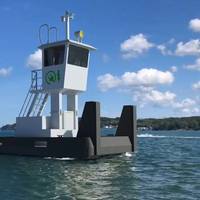
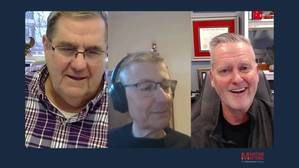
While in New Orleans, Maritime Reporter TV visited with Elliott Bay Design Group (EBDG) and Diversified Marine to discuss the Electrified Truckable Tug.Hitting tightening maritime emission targets will require innovation and collaboration across the sector, the type of teaming recently announced between Elliott Bay Design Group and Diversified Marine with the introduction of the electrical truckable tug.“This is a great collaboration with Diversified Marine; they had a tug design and they came to us to electrify it,” said Steve Carlson, Principal in Charge, EBDG.
Hudspeth Joins Elliott Bay Design Group as Director of Sales

Joe Hudspeth has joined Seattle-based naval architecture and marine engineering firm Elliott Bay Design Group as director of sales. He will be responsible for developing and maintaining relationships with existing clients, identifying and pursuing new business opportunities, and supporting strategic expansion and growth.Hudspeth brings to the role more than 20 years of commercial maritime industry experience, having most recently served as director of business development for global marine at BAE Systems. Before that, he was vice president of business development at Bellingham, Wash.
With HybriGen, BAE Systems Helps the Maritime Industry to Decarbonize
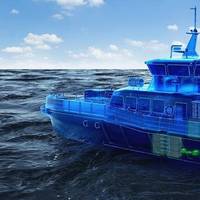
As the maritime industry continues along its emissions reduction journey, one company helping to lead the way is BAE Systems, a firm that’s been involved with electric and hybrid propulsion for over 25 years.“We’re all about helping maritime operators get to zero emissions, and it doesn’t matter if it’s all-electric, a hybrid application or even fuel cell. We have the technology to help operators achieve lower emissions and keep operating just as they’re used to with conventional based propulsion…
Electric Propulsion: The Dawn of a New Generation of Marine Power?
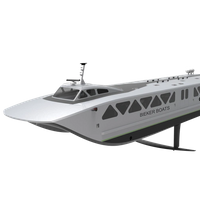
Technological advancement is opening new doors for hybrid and fully electric vessels.In mid-2020, the U.S. Navy accepted the delivery of the USS Zumwalt, the Navy’s first full-electric power and propulsion surface combatant. The ship’s new electric propulsion plant provides favorable efficiency coupled with a reduced total cost of ownership. The design is flexible and efficient to deliver power where it’s needed, when it’s needed. Its adoption is symbolic of a maritime future and what could be in store for other marine craft…
Interview: Joe Hudspeth, BAE Systems

Joe Hudspeth is the Director of Business Development for Global Marine at BAE Systems in Endicott, N.Y. BAE Systems offers complete, efficient propulsion and auxiliary power systems utilizing electric technology. Hudspeth has been involved with maritime sales, marketing and product development since 2000. He currently serves as a regional co-chairman for the Passenger Vessel Association, is a judge for the Worldwide Ferry Safety Association student design competition, and frequently speaks and writes on maritime and ferry related issues. Hudspeth lives in Bellingham, Wash.
A 'Ferry' Good Year
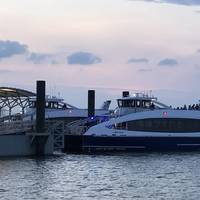
New routes, new challenges and plenty of newbuilding as 2017 gives way to the New Year. A year ago, the maritime industry could be found clinging to the edge of their seats to see what the coming year had in store. 2017 was set to be a telling year and indeed it was. With the elections finalized, the political impact, if any, was sure to be seen. While fuel prices have remained low and continuing to hamper the offshore workboat market, consumer confidence has held high and new vessel construction is strong – particularly in the ferry segment.
Marine Fuels: Unmasking Gas
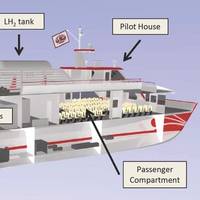
A primer on the way forward for alternative fuels for marine propulsion. By now, many of us have been passed by a garbage truck, taken a ride on an airport bus or hailed a taxi cab that is clearly labeled by their respective marketing departments that these vehicles are powered by clean burning natural gas. Even now in our own maritime industry, some trendy operators are looking to make the case for liquefied natural gas (LNG) propulsion systems, others are opting for hybrid-electric solutions, and some are even aiming for full electric configurations.
Ferry Tales: Having a Ferry Good Time
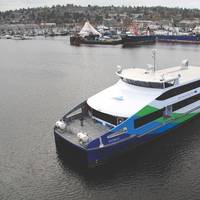
Despite of some of the lowest fuel prices experienced in the last eight years, demand for ferry construction is at a seemingly all time high. The focus on building new ferries kicked off in early 2013 and the sustained interest is the continued result of an unleashing of pent up demand. Fleets have been aging and infrastructure needs to be built up in order to accommodate the future demand for commuter ferry travel once fuel prices return to and surpass their once familiar norms.
Catching the Electric Vision
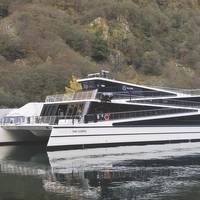
All bets would have been lost if one was to predict that I would never find one of the most advanced and modern workboats in the heart of the Norwegian Fjordlands. Sure enough, if you make the trek to Flam through nearly 50 tunnels in between the prominent towns of Bergen and Oslo, you will behold such a craft. The 40 meter Vision of the Fjords was recently constructed by Brødrene Aa shipyard in Norway and delivered to The Fjords AD earlier this year in June. The vessel is simply striking…
US Boatbuilding: Sink or Swim

Navigating interesting times has the nation’s shipbuilding industry searching in unusual places. The answers could be blowing in the wind. Conducting commerce and forecasting the future for shipyards is akin to setting out in uncharted waters. For some, the voyage might prove to be easy sailing with favorable winds. Other times, it can be a rough ride, forcing long and unprogressive diversions. In the worst cases, one might run aground temporarily, hit rock bottom, capsize belly up, or be forced to turn around and give up.
Ferry Conference: Technology Drives Vessel Advancements
On June 2-3, 2016, the Ferry Safety and Technology Conference will be held in downtown Manhattan. Throughout the world, the quickening pace of technological advances is impacting all sectors of the maritime business; ferries are no exception. The conference, now in its second year, will feature practical and affordable technologies already deployed in passenger transportation, or soon to be. Topics to be discussed will include Vessel Design; Landings – with a focus on their resiliency and Maritime Weather – with fresh information on timely fine scale marine weather detection. Information management and Communication applications will be center stage.
Boatbuilding Gone Bad

Owners, designers, builders and the crew can collaborate in a meaningful way to ensure that the delivered product meets everyone’s expectations. You can get there from here. We have all gone aboard or below decks on vessels and looked around with a myriad of instantaneous questions forming in our minds as to why the builder would construct a vessel in such a convoluted fashion. Builders will always get the bad rap for any eyesores and systems designs gone awry. It is true; some builders and designers are to blame and their list of faults should be clearly inscribed on the transom.
New Research Vessel for University of New Hampshire
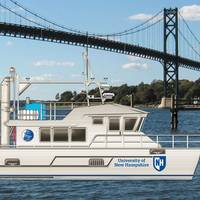
All American Marine, Inc. (AAM) has entered into a contract with the University of New Hampshire (UNH) for the design and construction of a new aluminum catamaran research vessel. AAM will build the 48’ x 17’ catamaran custom devised by Teknicraft Design, Ltd. of Auckland, New Zealand. The new vessel, funded through a grant from the National Oceanic and Atmospheric Administration (NOAA) will serve the Joint Hydrographic Center (JHC) at UNH. It will join UNH’s existing fleet and will complement capabilities by offering a highly complex multi-mission platform.
AAM, UNH in Vessel Design, Construction Pact
All American Marine, Inc.(AAM) together with the University of New Hampshire (UNH) are pleased to announce a contract for the design and construction of a new aluminum catamaran research vessel. All American Marine will build the 48’ x 17’ catamaran custom devised by Teknicraft Design, Ltd. of Auckland, New Zealand. The new vessel, funded through a grant from the National Oceanic and Atmospheric Administration (NOAA) will serve the Joint Hydrographic Center (JHC) at UNH. It will be joining the University’s existing fleet and will complement capabilities by offering a highly complex multi-mission platform. The aluminum hull will feature the Teknicraft Design signature hull shape with symmetrical bow, asymmetrical tunnel, and integrated wave piercer.
Shipyard Shakedown
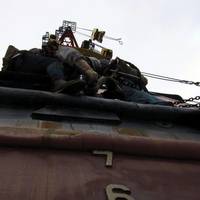
Shipyard selection, whether it involves newbuild or repair, can be a daunting task. It doesn’t have to be that way. Selecting a shipyard is a challenging proposition, an investment really, but how does one choose the right one? Location, capabilities, price, and availability are always among the first variable to consider. Equally important, but sometimes relegated to secondary concerns are craftsmanship, safety, integrity, and technology. On the other hand, some operators remain tied to the same yard forever, owing to a comfortable familiarity and/or simply due to a lack of consideration.
Ferry Fixation: The Good, the Bad and the Ugly
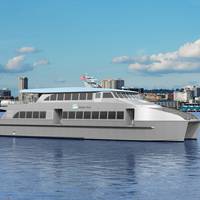
It all adds up to the global effort to strengthen bottom lines, safety margins and the collective environmental footprint. The future for ferries seems to be on fire; both in good ways and bad. The good is always a good place to start. And, that’s because it is ferry fabrication time. The most notable ferry routes in America are jumping into the construction queue for new vessels and soon the next generation of ferry vessels will be hitting the piers (not literally of course).
Shipbuilding Regulations: Cents and Sensibility
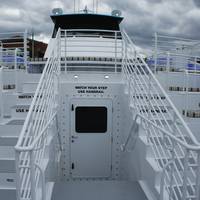
Addressing the Jones Act is just one aspect of an increasingly complicated boatbuilding environment. Stovepiped, poorly conceived regulations is another. The sting of the recession is fading, but the economic vitality of the marine industry is still in jeopardy. That’s because the current regulatory environment and the foreshadowing of its future is concerning. Boat builders and operators alike understand and accept that the premise of the rules is to promote safety, ensure security, protect the environment and sustain justice.
WFSA Ferry Design Competition: University Team Wins
The World Ferry Safety Association (WFSA) has announced the results of its Second Annual international student design competition for a Safe Affordable Ferry. The goal of the design competition is to elicit new approaches for ferry design in the developing world as well as to encourage designers to enter this arena for which there is a need and a developing market. Ms. Roberta Weisbrod, WFSA’s Executive Director, said: “The Sewol disaster reminds us that these are all our children. The top prize of $5,000 is to be awarded to the student team from the Memorial University of Newfoundland, Canada, which designed a double-hulled vessel using such standard and affordable features as mild (low carbon…
Maritime Propulsion: Select Your Engines Wisely
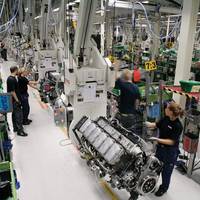
Advance Work on Engine Selection with the OEM pays handsome dividends when your vessel is delivered. Don’t skip this necessary step. It is hard to say why the phenomenon occurs, but with every new engine that arrives in any boat yard comes a sense of approval and appreciation. Heads turn and work even stops as the iron horsepower machines make their way onto the production floor. Such admiration is warranted; after all, the engines are the heart and life of the vessel – without them, the cliché becomes true and you are dead in the water.
Marine News July Editor's Note
I couldn’t possibly kick off this edition of MarineNews without first acknowledging – and applauding – the passage of the long-awaited, much needed Water Resources Reform and Development Act (WRRDA). Signed into law by the President on June 10th, the bill gives the domestic waterfront a much improved vehicle from which it can get onto the important business of rehabilitating the nation’s waterways and infrastructure. Beyond this, I can’t think of a single sector of our core readership that won’t eventually be impacted in a positive way by this news. That said; I’m not just going to leave you wondering how. Handicapping the ABC’s of marine infrastructure 101 in this edition is none other than St. Louis-based attorney James Kearns.
Get Your Motors Runnin’
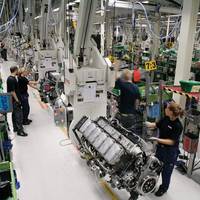
Advance Work on Engine Selection with the OEM pays handsome dividends when your vessel is delivered. Don’t skip this necessary step. It is hard to say why the phenomenon occurs, but with every new engine that arrives in any boat yard comes a sense of approval and appreciation. Heads turn and work even stops as the iron horsepower machines make their way onto the production floor. Such admiration is warranted; after all, the engines are the heart and life of the vessel – without them, the cliché becomes true and you are dead in the water.
New Teknicraft Wind Farm Support Vessel
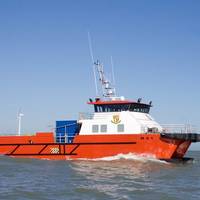
Teknicraft Design’s latest offshore support catamaran made a debut at the recent Oceanology 2014 conference held at the London ExCel Center in March. The MO1 was commissioned by Mainprize Offshore Ltd. of Scarborough, U.K. he 83’ aluminum catamaran features a new wave piercing hull shape and the vessel is fit with Teknicraft’s signature hydrofoil support system. MO1 was purpose built to support the offshore wind farm industry, but the vessel has multi-mission capability and can easily support divers, hydrographic surveys, and geophysical work.
Short Seas in the Long Run
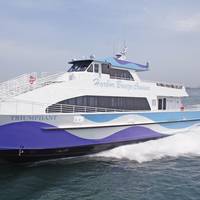
Building for the possibility of shortsea shipping involves many variables. The novel concept of rebirthing short sea shipping into what it once was or could be, may remain just that, a novelty. It would be paramount to overcome the “my way, on my terms” philosophy that so heavily drives traffic away from the seas and inland waterways and onto asphalt freeways that cannibalize natural resources. The plight of road warriors may even further drive coastal commuting straight into Davy’s Locker with the rapidly expanding development of non-marine-use shore side infrastructure.