

ABS Reflects on Technology, Innovation Growth in Southeast Asia

At the annual meeting of the ABS Southeast Asia Regional Committee, ABS Chairman and CEO John McDonald offered a message to maritime and offshore industry leaders from Singapore and across Southeast Asia.“Rapid technology innovation and autonomous systems are transforming shipping into a highly connected, data-driven industry. ABS is responding by investing in our technology capabilities and expanding the value we can bring across the entire maritime ecosystem," he said.“The shipping industry faces significant pressures from global economics…
Bae Systems Launches Incubator Program to Propel Technologies Beyond Defense

BAE Systems Launchpad is a new incubator program designed to take dual-use technologies beyond the defense sector and help innovations reach their full commercial potential.Launchpad directly addresses the challenge of moving defense technologies beyond prototype development by spinning them out into independent start-up businesses. This aligns with a key priority outlined in the UK’s Defence Industrial Strategy, which calls for “constant innovation at wartime pace” and highlights…
Energizing Naval & Coast Guard Missions
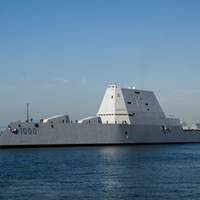
Moises DelToro at GE Vernova’s Power Conversion business, discusses how deploying a Ship’s Electric Grid is a flexible way to accommodate growing energy demands for naval and coast guard vessels.A new age of electrificationWe’re in a new naval era and it is reshaping views about fleet mixes and capabilities. Modern fleets need to be mission-configurable, highly capable for military advantage, adaptable for technology insertion, but still affordable. The growing demand for vessel power is increasingly an enabler for mission systems, not just for platform propulsion.
Global Offshore Wind Market Grows 30%
The global offshore wind market grew nearly 30% per year between 2010 and 2018, benefiting from rapid technology improvements and about 150 new offshore wind projects are in active development around the world.Europe in particular has fostered the technology’s development, led by the United Kingdom, Germany and Denmark, but China added more capacity than any other country in 2018, says 'Offshore Wind Outlook 2019', a report funded by the governments of Denmark and Germany.Yet today's offshore wind market doesn't even come close to tapping the full potential – with high-quality resources available in most major markets, offshore wind…
Hybrid Technology for Military and Commercial Vessels
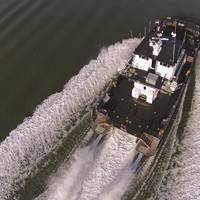
The marine industry is now recognizing the potential of utilizing hybrid power and innovative propulsion systems. Certain maritime sectors are potentially well suited to hybrid systems. These include ferries, pilot boats and workboats that have relatively consistent duty cycles. For military applications, hybrid systems are relevant for patrol, intercept and autonomous vessel duties. Submarines have utilized batteries and stored energy for many years. Diesel/electric systems have long been in use, but these are not hybrid systems.
3D-Simulator Generates Training, Expertise on Subs
A new diesel generator simulator has been delivered to Pearl Harbor naval facilities by the TechSolutions program at the Office of Naval Research (ONR), officials at ONR announced March 18. High-fidelity 3D software will allow Sailors to use 50-inch touch screens to see and access all parts of the massive generators aboard Virginia-class subs. The Navy's Virginia-class submarines are among the most technically advanced vessels ever built. But even these cutting-edge, fast-attack, nuclear-powered boats need emergency generators on hand and Sailors trained to operate and repair them. "This will be a big help for the fleet, getting Sailors more training time and providing potentially significant cost savings," said ONR Command Master Chief Jessie Thomas.
Lockheed Martin Opens Surface Navy Innovation Center
The Surface Navy Innovation Center (SNIC) has been opened by Lockheed Martin to support the development of new technologies for the U.S. Navy. The SNIC is a research, development and demonstration facility that brings together industry, government and academia to design the next generation of surface fleet capabilities. "The SNIC establishes a community space to promote rapid technology fielding that addresses the Navy's most pressing challenges," said Jim Sheridan, director of Aegis U.S. Navy programs. According to Lockheed Martin , the center will foster collaboration among key organizations to rapidly develop emerging technologies and quickly put them into service…
Navy Selects Mikros for New Shipboard Networks
Mikros Systems Corporation, announced that it was recently awarded two new U.S. Navy contracts. The contracts cover follow-on work based on Mikros' AIRchitect-EMC wireless network design tool, "interference-aware" network design software which allows the Navy to optimize shipboard network design while avoiding interference with critical radar and communications systems. AIRchitect-EMC was developed by Mikros and subcontractor Intelli-Check - Mobilisa, (Port Townsend, WA) for the Navy under a SBIR Phase II development contract to study Radar Wireless Spectral Efficiency (RWSE). The first program is a subcontract to the Classified Wireless Networks for Embedded Forces program…



