

INTERVIEW: Patrick Murphy, PVA President and President, Blue & Gold Fleet, LP
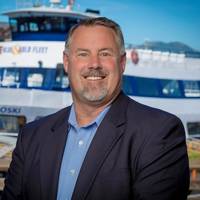
Patrick Murphy has been President of Blue & Gold Fleet, L.P., the San Francisco Bay Area’s largest and premier provider of Bay Cruises and ferry service, since 2016. Murphy grew up in the Maritime business. His father, Roger Murphy, founded Blue & Gold Fleet in 1979. Patrick Murphy began his career in 1982, working part-time in the Box Office and as a Deckhand before receiving his United States Coast Guard’s license in 1995 and was promoted to Captain in 1996. In 2005, Murphy advanced to Blue & Gold Fleet Operations Manager, and then to Director of Operations in 2009.
Japan and South Korea Join US Naval Drill
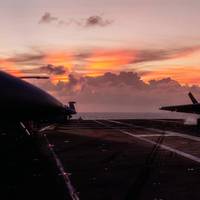
U.S., Japanese and South Korean naval forces exercised together in East Asian waters on Thursday in their most complex and final joint drills before President Joe Biden hands over one of his signature national security initiatives to Donald Trump.Led by the USS George Washington carrier and its jet fighters, the Freedom Edge naval exercise in waters south of the Korean peninsula and west of Japan's main islands comes after a pact brokered by Biden in 2023 in which Seoul and Tokyo…
The Maritime Industry Has Unique Cybersecurity Challenges

With supply chain attacks on the rise, and nation-state attackers constantly looking for new ways to disrupt national security and economic stability, one of the most vulnerable areas is the security around our maritime operations. The Biden-Harris Administration's recent Executive Order to fortify the cybersecurity of U.S. ports underscores this concern, spotlighting the urgency of addressing vulnerabilities in a sector that drives over $5.4 trillion in economic activity annually.
2023 a Record Setting Year for Singapore

Chee Hong Tat, Singapore’s Acting Minister for Transport, announced a record year in 2023 at a Singapore Maritime Foundation New Year Conversations event.The annual vessel arrival tonnage in the Port of Singapore crossed three billion gross tonnage (GT) for the first time, increasing by 9.4% over 2022 and setting a high of 3.09 billion GT in 2023. This reflects growth in all segments, including container ships, dry bulk carriers, liquid bulk and chemical tankers, ferries and specialised vessels…
Cyber Attacks On the Rise at US Ports and Terminals
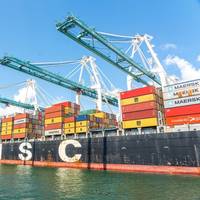
Cyber attack attempts are becoming more common at U.S. ports and terminals, according to findings published this week by law firm Jones Walker LLP.The firm publicly released the findings of its 2022 Ports and Terminals Cybersecurity Survey, examining cybersecurity preparedness in U.S.-based ports and terminals. The report outlining the results of the survey is authored by four of the firm’s attorneys and the findings was presented by two of them, Jim Kearns and Andy Lee, during the Inland Rivers…
Bureau Veritas Grants AiP for Innovative Ocean Clean-up Vessel
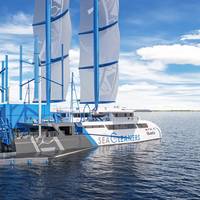
Bureau Veritas has awarded an Approval in Principle (AiP) to the MANTA, a vessel offering solutions for collecting and repurposing floating plastic waste in areas of high marine litter concentration, in the coastal waters of most affected countries, and near the estuaries of major rivers.The unique vessel, due to set sail at the end of 2025, was developed by MANTA INNOVATION, the integrated engineering design office of the NGO The SeaCleaners, with the support of naval architects at SHIP-ST and LMG MARIN.Waste-to-energy Conversion UnitA 56m long…
Demystifying Cyber Security

Recent cyber attacks to the US Government, the IMO, Maersk, amongst others has caused the world to pay attention to criminal cyber activities by foreign states, terrorists, and criminals. The cyber attack against CMA CGM shut down services for close on two weeks. Two days later, on October 30th the IMO was held hostage by a cyber attack. These attacks follow attacks earlier this year against MSC and COSCO.As of January 1, 2021 all vessels that have a safety management system must address cyber security in order to maintain ISM certification.
Bomb Threat Aboard Ferry in Juneau, Alaska
A suspect has been taken into custody following a bomb scare aboard a passenger car ferry in Juneau, Alaska, Wednesday morning.At 6:49 a.m., U.S. Coast Guard watchstanders received a call from the captain of the LeConte, reporting a bomb threat aboard the ferry scheduled to depart Juneau. Coast Guard law enforcement personnel conducted a security sweep of the vessel and found no credible threats.The suspect, who reportedly drove a vehicle onto the ferry and made the threats, has been apprehended by Juneau Police Department (JPD) and the vehicle was impounded without incident.The Coast Guard, which worked alongside Alaska Marine Highway System (AMHS) and JPD to ensure passenger safety and restore service…
IMO Condemns Tanker Attacks in Gulf
The Council of the International Maritime Organization (IMO) has condemned recent attacks on commercial shipping in the Strait of Hormuz and Sea of Oman.The Council of the UN body expressed its concern over the grave danger to life and the serious risks to navigational safety and the environment to which such incidents may give rise.The Council also emphasized the need for flag States and shipowners and operators to review the maritime security plans for their ships and implement necessary measures to address the heighted security risk to ships operating in the Strait of Hormuz and Sea of Oman.Addressing the IMO Council, Secretary-General Kitack Lim also emphasized his personal condemnation of the attacks…
MSCI Advisory: Regional Conflict and Piracy
2019-007-Red Sea, Gulf of Aden, Arabian Sea, Gulf of Oman, and Indian Ocean-Violence Due to Regional Conflict and PiracyDescription:This revised advisory cancels U.S. Maritime Advisory 2018-0151. References: (a) U.S. Maritime Alerts 2018-001A, 2018-002A, 2018-002B, 2018-005A, and 2018-007A2. Issues: Regional conflict and piracy threats continue to pose potential risks to commercial vessels operating in the above listed geographic areas.3. Conflict in Yemen continues to pose potential risk to U.S.
ABS Answers USCG Call for Port Cyber Security

New solution incorporates National Institute of Standards and Technology Cyber Security Framework (NIST CSF). ABS Advanced Solutions announced a first-of-its-kind cyber security solution to aid regulated maritime facilities in complying with US Coast Guard (USCG) guidance. The suite of services provides a turnkey solution for port and terminal facility operators responsible for maintaining USCG regulated Facility Security Plans (FSPs).In 2017, the USCG announced the intent that regulated maritime facilities in the United States address cyber security in their FSPs.
U.S. Government Shutdown: Assessing the Impact on Maritime

On December 22, 2018, a continuing resolution passed by Congress to fund a portion of the U.S. Government into the 2019 fiscal year expired and was not renewed resulting in a partial federal government shutdown. Among the affected Executive Departments are the Department of Homeland Security (which includes the Coast Guard and Customs and Border Protection), the Department of Transportation (which includes the Maritime Administration), the Department of Interior (which includes the Bureau of Environment and Enforcement (BSEE) and the Bureau of Ocean Energy Management (BOEM))…
Gulf of Guinea Boosts Maritime Security
Maritime security depends on the capacity of national authorities to develop effective port security plans and procedures and the ability to self-audit, says International Maritime Organization (IMO).A regional workshop for participants from a number of countries in the Gulf of Guinea, held in Tema, Ghana (13-16 November) has helped to build national capacity to enhance port security. Benin, Cameroon, Cote d’Ivoire, Equatorial Guinea, Gabon, Ghana, Nigeria, Sao Tome & Principe, Senegal, Sierra Leone and Togo participated in the workshop.The training focused on how to establish multi-agency port and port facility security and facilitation committees with specific terms of reference…
Maritime Industry's Slow Boat to Cyber Security

Ports making up for lost timeDespite the critical role the maritime transportation system plays in the economic health of the United States, and despite its fairly recent embrace of all things automated – cranes, vehicles, surveillance and even vessels – the sector has been slow to warm to the need to protect its digital systems and assets.Post 9/11, security concerns about the nation’s borders, air space and infrastructure, including ports, moved front and center for a brief moment before other concerns…
Martek Marine Calls for Urgent ISPS Review
Commercial shipping is waking up to the growing threat that drones pose to the safety & security of vessels. Terrorist use of drones deploying explosives is already well documented and the potential for a drone to deliver an explosive charge through the deck of an oil/gas tanker or on a passenger ship with potentially catastrophic results is a stark reality. Vessels in port, at anchor or on coastal transits are potential ‘sitting ducks’ and currently powerless to know if/when they’re going to be attacked, let alone be in a position to defend against the threat. The International Ship and Port Facility Security Code (ISPS Code) code Part A para 1.3.3 mandates requirements…
Aerial Drones a Threat to Shipping?
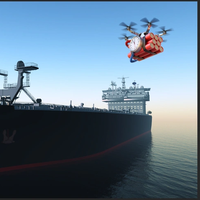
Aerial drones have made major advances in endurance, range and payload capacity over recent years while prices have continually plummeted, leading to a proliferation of drones expected to reach 12 million by 2020.This trend, some believe, means aerial drones will pose an even greater threat to the safety and security of commercial shipping vessels.To help combat this emerging threat, U.K. based Martek Marine has developed a maritime drone detection and defeat system called D-FENCE.As terrorist use of drones deploying explosives is well documented…
Port Security: Preventing Stowaways
Enhanced port security can help the in the facilitation of international maritime traffic and the prevention of stowaways. A national workshop in Freetown, Sierra Leone (6-10 November) is one of a series assisting ports with the highest number of stowaway incidents to address these issues. Meetings with key stakeholders responsible for maritime security and facilitation are being used to gauge knowledge of national legislation, port facility security plans, local organization of maritime security and facilitation, and inter-agency cooperation through security and facilitation committees. This is being followed up by port visits, to assess the physical security which is currently in place.
Cyber Shoal Waters

Over the past two months the world has been rocked by three major hacking events that have garnered international notice. These included the EQIFAX event in which 140 million individuals were reported to be possibly compromised, the WannaCry attack and the NotPeyta event. In the past two years the emphasis on the cyber security of the Marine Transportation System, a vital economic cog to the world has come under increasing scrutiny. In August, trade journals and major international…
USCG Releases Draft Cyber Guide for Maritime Facilities

Cyber risk has hit a critical peak within the maritime industry, and the significant impact of the Petya ransomware attack on scores of maritime entities only amplifies it. The attack effectively shut down major ocean carriers, including shipping conglomerate Maersk, and impacted marine terminal operations across the globe. Every maritime company, no matter the size or business function, is a potential target. The industry has seen a recent wave of guidelines and resolutions from maritime regulatory bodies related to maritime security and cyber risk mitigation.
A Case for Maritime Cyber Security Capability

As I waited for my daughter’s decision regarding the peanuts she was contemplating, an Economist magazine headline grabbed my attention: Why Computers Will Never be Safe. We were in one of those unexceptional airport newsstands waiting for our flight, returning to reality from vacation, and the subject was cyber security. It was April, and the subject had consumed me since the previous summer as our company developed a potentially disruptive cyber security management platform for the maritime industry.
Maritime Security in Western Indian Ocean
The key International Maritime Organization (IMO) instrument helping to repress piracy and armed robbery against ships in the Western Indian Ocean and the Gulf of Aden – the Djibouti Code of Conduct – is part of discussions at an international conference in Morocco. The West African Coastal Surveillance and Maritime Security Summit 2017 (AFSEC 17), being held in Casablanca (30 May – 1 June) has heard IMO’s Chris Trelawny present the latest developments of the Code, which is part of IMO’s on-going maritime security work. Mr. Trelawny gave an insight into the recently adopted Jeddah Amendment to the Djibouti Code. The Amendment includes measures for suppressing a range of illicit activities.
TSA Boosts Maritime Security in a Big Way

Though most visible to the general public for its work at America’s airports, the U.S. Transportation Security Administration (TSA) also helps to secure the country’s transportation network in a number of other ways, including assisting the U.S. Coast Guard in securing the nation’s critical maritime facilities, structures, systems, assets and services. America’s vast marine transportation system encompasses some 25,000 miles of navigable waterways, the Great Lakes and St. Lawrence Seaway…
Drones: Is the Maritime Industry Ready?
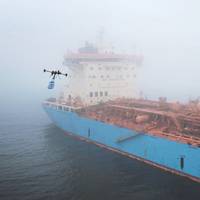
Unmanned aerial systems (UAS), or “drones” in common parlance, are not a part of the historical maritime vocabulary. At least not yet. While the term “drones” may conjure images from science fiction, the reality is that companies are designing commercial UAS for the private sector, and they are gradually permeating our daily life. Henry Ford is rumored to have opined on his invention of the automobile that if he had asked people what they wanted, they would have said “faster horses.” In the case of UAS…




