
Visual Estimate of Height Led to Crane Hitting Bridge
A captain and barge company managers not identifying the crane they were towing was too high to pass under the Mackinac Bridge near Mackinaw City, Michigan, led to the crane hitting the bridge, the US National Transportation Safety Board (NTSB) has concluded.On May 7, 2023, the towing vessel Nickelena was transiting the Straits of Mackinac, while towing a deck barge transporting a crawler crane, when the crane boom struck the main span of the Mackinac Bridge. The contact bent the crane boom backwards…
Obstructed Valve Sinks Towboat
An obstructed check valve on a bilge pump led to the flooding and partial sinking of a towing vessel last year while moored at a shipyard near New Orleans, the National Transportation Safety Board reports.Marquette Transportation's vessel Joanne Marie was found partially submerged a day and a half after being moored and deactivated at the Bollinger Quick Repair Shipyard on the Harvey Canal. The vessel was unattended at the time. No injuries were reported and damage to the vessel was over $176…
USCG Seeks 18 Members for National Towing Safety Advisory Committee
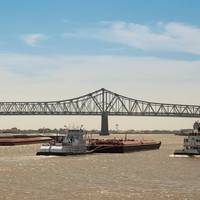
The U.S. Coast Guard said it is seeking to fill 18 vacancies on the National Towing Safety Advisory Committee, which advises the Secretary of Homeland Security, via the Commandant of the U.S. Coast Guard on matters relating to shallow-draft inland navigation, coastal waterway navigation, and towing safety.The Coast Guard said it will consider applications for the following 18 vacancies:Seven members to represent the barge and towing industry, reflecting a regional geographic balance.One…
Insights: Jennifer Carpenter, President & CEO, American Waterways Operators

Jennifer Carpenter joined The American Waterways Operators (AWO), the national trade association representing the inland and coastal tugboat, towboat and barge industry, in August 1990 and became its president and CEO in January 2020. She highlights some of the greatest focus areas for the 80-year-old trade group—simultaneously looking at both the present day and the road ahead.The towboat, tug and barge industry is in a period of rapid evolution. How is AWO—now in its 80th year…
USCG Eases Firefighting Training Requirements for Towboats
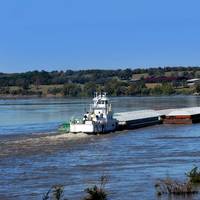
The U.S. Coast Guard has moved to ease firefighting training requirements for towing vessels operating on America's inland waterways.The agency this week issued a final rule revising the training requirements for national Merchant Mariner Credential endorsements as master of towing vessels (limited) or mate (pilot) of towing vessels on inland and western rivers routes, excluding the Great Lakes.Consistent with recommendations from the National Merchant Marine Personnel Advisory Committee (NMERPAC) and the National Towing Safety Advisory Committee (NTSAC)…
Subchapter M Phase-in Period Draws to a Close
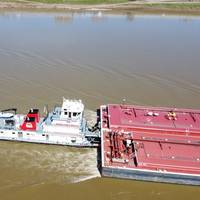
The U.S. Coast Guard on Tuesday marked the end of the four-year Subchapter M certificate of inspection (COI) phase-in period for U.S.-registered towing vessels. Subchapter M, the United States regulatory code dealing with towing vessels and requirements for towing vessel safety, has officially been in place since July 2016, when the U.S. Coast Guard finalized the long-awaited Sub M rulemaking. The first COIs were issued in 2018, and all of the more than 5,000 U.S. domestic towing vessels must have valid COIs on board by July 19…
Final Deadline for Subchapter M Phase-in Drawing Near
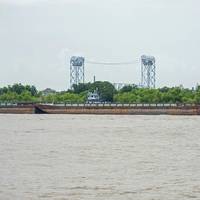
The U.S. Coast Guard on Monday issued a reminder to towing vessel owners and operators that the July 19, 2022 deadline for 100% Subchapter M phase-in is fast approaching. At that time, all towing vessels meeting the applicability criteria found in 46 CFR § 136.105 will be required to have on board a valid Certificate of Inspection (COI) issued by the Coast Guard.Per 46 CFR 136.202, towing vessel owners and operators are responsible for ensuring that all their towing vessels receive a Certificate of Inspection (COI) before July 19, 2022.
Expect the Unexpected on the Inland Waterways
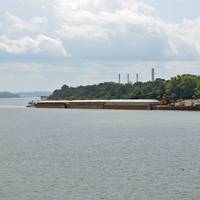
Among transportation planners, “resilience”, describing the ability to bounce back from adversities, both economic and other, has become a top consideration as we increasingly must “expect the unexpected.” The U.S. waterway system, covering the network of inland rivers and coastwise waterways, has seen a mix of good and not so good. As the 2020-2021 pandemic moves toward winding down, a recovery from the dismal 2020 is underway, but activity on the rivers is uneven. Ken Eriksen…
US National Towing Safety Advisory Committee Appoints New Members
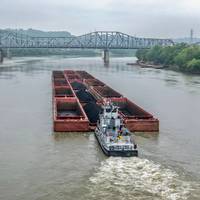
The U.S. Coast Guard announced 18 individuals have been appointed to serve as members of the National Towing Safety Advisory Committee (N-TSAC).The National Towing Safety Advisory Committee was established in December 2018 to advise the Secretary of Homeland Security on matters relating to shallow-draft inland navigation, coastal waterway navigation and towing safety. This advice also assists the Coast Guard in formulating regulations and policies as well as the position of the U.S.
Sub M Progress – an Update
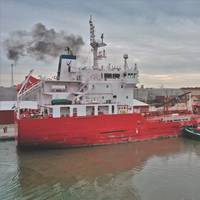
Subchapter M, the United States regulatory code dealing with towing vessels and requirements for towing vessel safety, has officially been in place since July 20, 2016, when the U.S. Coast Guard finalized Sub M rulemaking.Since the rules were finalized there have been a couple of important hammer dates. In spring and summer 2018 the first certificates of inspection (COI) were issued. COIs are central within the Sub M program. A vessel needs a COI to legally operate. (All vessels were required to comply with Sub M by July 20, 2018.
Insights: Jennifer Carpenter, AWO President & CEO

Jennifer A. Carpenter serves as President & CEO of The American Waterways Operators (AWO), the national trade association representing the inland and coastal tugboat, towboat and barge industry. Carpenter joined AWO in August 1990 and became President & CEO in January 2020. Before assuming her current position, she worked her way up the hawsepipe from Government Affairs Assistant to Executive Vice President & Chief Operating Officer, holding a series of progressively responsible positions including Manager-Regulatory Issues…
Vessel Inspections: It's All About Safety
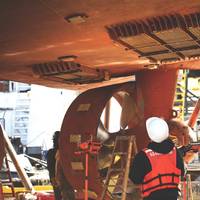
With the announcements that New York Waterway, a ferry operator running 32 boats around New York and New Jersey waters, had been largely shut down by the U.S. Coast Guard just prior to Thanksgiving, 2019, the reactions ranged from surprise to outright shock. There was also a great deal of grumbling, as commuters, the major customer group, endured delays on New York Waterway’s extensive network across the Hudson River, bringing New Jersey commuters into New York’s business districts.So, what happened?
The Top 10 Workboat Stories for 2019
Choosing the year’s ‘top stories’ is always a difficult task. Many compelling story threads played out, each dramatically impacting the North American waterfront, and in particular, the workboat sector – each in their own unique way.The Infrastructure Battle ContinuesThe EXECUTIVE SUMMARY H.R. 2396, the “Full Utilization of the Harbor Maintenance Trust Fund Act”, will ensure that the Harbor Maintenance Trust Fund is used for its intended purpose – maintaining Federally-authorized harbors. The legislation would allow the U.S. Army Corps of Engineers (Corps) to dredge all Federal harbors to their constructed widths and depths. Unfortunately, Washington continues in chaos with another continuing resolution on the budget; the next one expires on December 20th.
REGULATORY REVIEW: Subchapter M
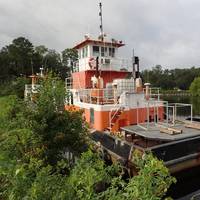
One Year In: Industry SME (Captain) Pat Folan weighs in from the front lines.It has been an interesting year for towing industry. As the new Subchapter M towboat rule rolled out, it didn’t take long to discover that the regulation wasn’t perfect. As stakeholders look ahead to what comes next, it is also helpful to take a look back at what went right, what didn’t, and more importantly – why.The U.S. Coast GuardThe US Coast Guard does not have the manpower to add more than 5,000 vessels to its workload.
SAFETY: Dollars & Sense
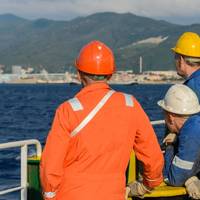
Make a Profit with a Safety Management System (SMS).Organizations in the maritime industry act no differently than any other successful global business unit. Major decisions are made with a certain underlying commitment – a commitment to customers, stakeholders and employees. That commitment can be oversimplified by stating the obvious, to generate revenue, but more specifically generate profits. Without profits, the company will not only fail to thrive, but will fail to survive.
Maritime Risk Symposium, Nov. 12-15 at SUNY Maritime
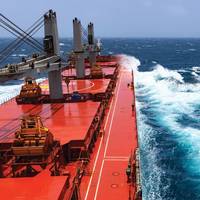
The State University of New York Maritime College, in collaboration with the U.S. Coast Guard, National Academy of Sciences, academic institutions, industry partners, and federal, state and local agencies, will host the 10th Annual Maritime Risk Symposium (MRS 2019) Nov. 13-15, 2019, at New York Maritime College located in the Bronx, New York.MRS 2019 will bring together academics, government and commercial entities to discuss the threats, challenges and risks associated with the Marine Transportation System with a focus on current and future marine transportation challenges and threats.
Summary of latest TSAC Meeting Available
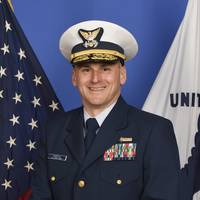
The Towing Safety Advisory Committee (TSAC) held its spring public meeting in Miami, Florida, March 13, 2019. Attendees represented the Coast Guard, the towing and barge industry, engineers, pilots/masters, port authorities, terminal operators, offshore operators, and the public.After welcoming remarks from Rear Adm. John Nadeau, assistant commandant for prevention policy, the committee deliberated on current tasks, discussed new business, and received public comments.Highlights from the meeting included:Capt.
SubM Deadlines Looming Large
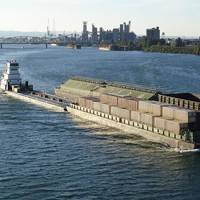
Subchapter M – Only a few days left to schedule inspections to meet July 22, 2019 compliance requirements. Rear Adm. John Nadeau, assistant commandant for prevention policy, weighs in on options and instructions.As of July 20, 2018, towing vessel owners and operators are responsible for ensuring that their vessels comply with the provisions of 46 CFR Subchapter M, even if they have not received a Certificate of Inspection (COI). Additionally, in accordance with 46 CFR 136.202…
The Top 10 Maritime Stories for 2018
Choosing the ‘top stories of 2018’ was, this year, a difficult task. Many compelling story threads played out, dramatically impacting the North American waterfront, and in particular, the workboat sector – each in their own unique way. Read on to find out how and why.Autonomous Vessels: Ready or Not, Here They ComeFuturistic, remote-controlled autonomous marine vehicles aren’t coming. They are here. As the pace of change quickens, autonomous vessels are already providing service and value on the water. Out ahead of the rulemaking process, autonomous technology providers already churn out not just prototypes and designs, but also countless workboats, many already in service.
SubM: The Coast Guard IS Still an Option
Not all towing vessel companies are choosing Third Party Organizations (TPOs) for their Subchapter M compliance option. One size does not fit all.Under Subchapter M, towing vessel companies may opt to use TPOs to conduct their audits and surveys instead of inspections by the Coast Guard. While many companies are going the TPO route, many are opting for traditional Coast Guard inspections.As a retired Coast Guard marine inspector, I have always advocated the Coast Guard option to our clients.
USCG: Two Subchapter M Work Instructions Published

The Office of Commercial Vessel Compliance (CG-CVC), recently published two Mission Management System (MMS) Work Instructions (WI):1. CVC-WI-013(2), Initial Towing Vessel COI Inspections Under TSMS Option2. CVC-WI-010(1), OCMI Guidance on Special Consideration for 46 CFR Subchapter M VesselsThese instructions provide guidance to both Coast Guard field offices and the maritime industry on the Coast Guard’s interpretations regarding the application and implementation of regulations…
Tug and Barge Solutions Passes 100 Vessel Milestone with Helm CONNECT
Alabama-based Tug and Barge Solutions (TBS) announced that more than 100 vessels now use Ivy Marine's Towing Safety Management System and audit services, powered by Helm CONNECT software.Founded in 2012 by tug captain turned ISM/ISO auditor Pat Folan and towing vessel operators Steve Wilson and Patrick Boles, TBS has been helping towing vessel operators achieve compliance with the US Coast Guard (USCG), International Safety Management (ISM), Tanker Management and Self-Assessment (TMSA) and other standards for more than five years.Starting with operators on the US Gulf Coast and along the Intracoastal Waterway, TBS has steadily expanded to serve vessel operators throughout the US.
Subchapter M Casts Off
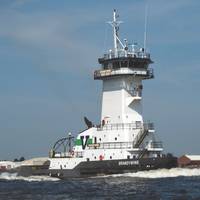
Initial reports show that the towing industry is adjusting well to the new normal on inland rivers. In fact, it is business as usual for most.July 20, 2018 was a critical date for tow boat operators. That was the deadline for all U.S.-flag towing vessels – over 26 feet, or less if used to assist with transport of oil or hazardous materials – to be in compliance with Subchapter M, the U.S. Coast Guard’s towing vessel safety regulations. It’s been a long time coming. As a regulatory program…