Decline in Confidence is Turning Shipowners Away from New Fuels
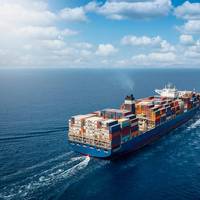
The ICS Maritime Barometer Report 2024-2025, launched by the International Chamber of Shipping (ICS), reveals a steady decline in confidence among global maritime leaders to manage the risks posed by increasing political instability, alongside a growing hesitance to adopt new fuels.Now in its fourth year, the ICS Maritime Barometer draws on comprehensive survey data to identify the key risk areas shaping the strategic priorities of C-suite level leaders, shipowners and operators worldwide.
New Lloyd’s Register Report Outlines Upcoming Regulatory Changes
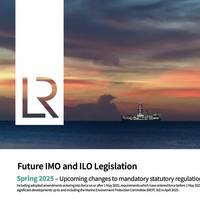
A new Lloyd's Register report outlines the upcoming changes to mandatory statutory regulations and instruments. A comprehensive suite of new International Maritime Organization (IMO) and International Labour Organization (ILO) regulations come into force over the next few months, reshaping environmental standards, safety protocols, and seafarer welfare. The changes outlined in Lloyd’s Register’s “Future IMO and ILO Legislation – Spring 2025” report highlight upcoming updates to mandatory statutory regulations and instruments, with effective dates on or after May 1, 2025.
RWE Drops Bubble Curtain to Silence Construction Noise at Sofia Offshore Wind Farm
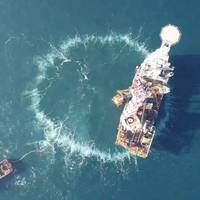
RWE has deployed a bubble curtain technology in the U.K. for the first time to protect marine life from the construction noise at its Sofia offshore wind farm.RWE has been working with Hydrotechnik Offshore to introduce an innovative underwater noise-abatement technology, known as a bubble curtain, for offshore wind farm construction in the U.K.The deployment at the Sofia offshore wind farm, located 195km off the coast of England, represents a significant step in protecting marine life from underwater noise generated during piling activities.The bubble curtain…
Industry Confidence Rising Despite Transformative Changes Underway

Data from the International Chamber of Shipping’s Barometer Report 2023-2024 indicates that improved clarity from governmental bodies such as the IMO has had a positive impact on the industry.Following a formal agreement at the IMO’s MEPC 80 to reach net zero GHG emissions by or around 2050, confidence is on the up. Almost 50% of C-suite maritime stakeholders responding to the ICS Barometer in 2023-2024 indicated improved willingness to invest in low and zero-carbon solutions following IMO agreement…
Carbon Capture @ Sea: Evergreen Ship Notches World First
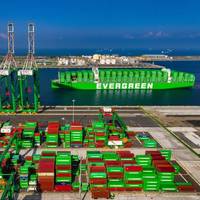
ClassNK has granted its SCCS-Full class notation to Evergreen’s Neopanamax container vessel Ever Top.Short for Shipboard Carbon dioxide Capture and Storage-Full, the SCCS-Full notation signifies that the vessel is now equipped with onboard CO2 capture and storage (CCS) systems.This also marks it as the world's first Neopanamax container vessel to be retrofitted with such systems, according to ClassNK.The CCS systems, designed and developed by Shanghai Marine Diesel Engine Research Institute…
Wärtsilä to Supply Scrubbers for Trasmed GLE S.L. RoPax Pair
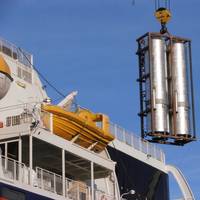
Wärtsilä Exhaust Treatment will install its open loop exhaust gas abatement technology on two roll-on/roll-off passenger ferries owned by Spanish company Trasmed GLE S.L., which is part of the multinational logistics company Grimaldi Group.Trasmed GLE S.L. has selected four of Wärtsilä’s I-SOx open loop scrubbers with exhaust de-plume systems for the RoPax vessels Volcan del Teide and Ciudad de Granada, which operate in the Mediterranean Sea. Each vessel will have four scrubbers installed, one on each main engine.
Baltic Exchange Adds LNG Powered Seaborne Gas Assessments
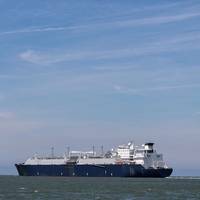
A new set of independent indices for the liquified natural gas (LNG) seaborne trade went live this week (2 March), based on the carriers burning LNG, rather than marine fuel oil or marine gas oil, as their primary fuel.Published twice weekly, the new indices have been given the acronym (BLNGg) and will be published alongside the current LNG indices which are based on LNG carriers burning Very Low Sulphur Fuel Oil (VLSFO). Historical data for the new indices will be available dating…
Wärtsilä to Equip KNOT's New Shuttle Tankers
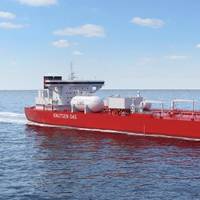
Wärtsilä said it secured an order to supply its emissions abating volatile organic compounds (VOC) recovery system, together with an liquefied natural gas (LNG) fuel gas supply system, for two new 124,000 DWT shuttle tankersordered by Knutsen NYK Offshore Tankers (KNOT), built at the Daewoo Shipbuilding & Marine yard in Korea. The order with Wärtsilä was placed in April.With this technology, the liquefied VOC is mixed with LNG and used as fuel for the main and auxiliary engines.
Bunker Delivery Note Amendments Enter into Force
Amendments to the bunker delivery note relating to the supply of marine fuel oil to ships which have fitted alternative mechanisms to address sulphur emission requirements entered into force on 1 January 2019.According to a press release from International Maritime Organization (IMO), the amendment enters into force as the shipping industry counts down to 1 January 2020, when the limit for sulphur in fuel oil will be reduced to 0.50% m/m outside emission control areas (ECAs), from 3.5% currently.The new limit under IMO's MARPOL treaty will have significant benefits for the environment and human health.In ECAS, the limit will remain at…
Singapore Port Readies for IMO 2020
The Maritime and Port Authority of Singapore (MPA) continues to prepare the Port of Singapore and Singapore-registered ships for the International Maritime Organization’s (IMO) 0.5 per cent fuel global limit for sulphur in fuel oil used on board ships, which will take effect from 1 January 2020.In his opening address at the Singapore Registry of Ships (SRS) Forum, Chief Executive of MPA, Andrew Tan, also announced initiatives by MPA to improve the delivery of its services.To prepare for the IMO 2020 0.5 per cent global emission limit for sulphur, MPA and the Singapore Shipping Association released two technical guidance booklets for…
Tech File: Fuel Monitoring Matters

Whether you choose distillates, liquefied natural gas (LNG) or scrubbers to meet the new International Maritime Organization (IMO) fuel regulations in 2020, it will be ever more critical to regularly monitor the condition of vital equipment to ensure there is no adverse affect on operational efficiency. Industry opinion ahead of the implementation of the 2020 global sulphur cap remains fragmented to say the least. With only a relatively short timeframe remaining before ship owners will be facing the reality of compliance…
IBIA Backs ICS, IMO Proposals on CO2 Emissions
Pressure is growing on the International Maritime Organization (IMO) to deliver specific commitments to reducing greenhouse gas emissions. A proposal from the International Chamber of Shipping (ICS) and other shipping organisations offers a possible way forward. International Bunker Industry Association (IBIA) explains what’s going on. IBIA believes in finding pragmatic and practical solutions to pursuing policy aims at the IMO, and what has been set out by ICS and others looks like a good compromise between the divergent positions we have seen. It also shows major shipping organisations taking a proactive stance. The proposed targets of maintaining international shipping’s annual total CO2 emissions below 2008 levels…
New Fuel Regs Drive Scrubber Business
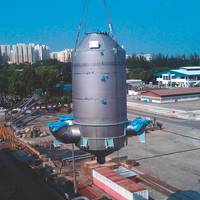
The Exhaust Gas Cleaning Systems Association and its members are preparing to meet higher demand for gas scrubbing systems to bring SOx emissions in line with the targets set by the IMO’s 2020 fuel sulfur content proposals. As previously reported by this correspondent in Maritime Reporter and Engineering News (December 2016 issue, page 24; January 2017 issue, page 28), the IMO has come in for some severe criticism over its proposals to introduce a global marine fuels sulfur content cap of 0.5 percent (mass/mass) by the year 2020.
Definitive Study On The Impact Of Global Sulphur Regulations
Marine Energy Consulting Ltd. (MECL) and 20|20 Marine Energy, two leading consultancies in this field, today announced that they will collaborate to produce a comprehensive evaluation of the impact of MARPOL Annex VI global sulphur regulations on the shipping industry. The study will include a detailed impact assessment of the regulations, as well as insights into compliance solutions, enabling recipients to make more informed decisions when developing strategies to both manage the transition, and the future. The regulations, which mandate the use of bunkers with a sulphur content of less than 0.5% on a global basis, will be implemented in either 2020 or 2025…
Transition to the 0.50% Global Sulphur Cap
The Marine Environment Protection Committee (MEPC) of the International Maritime Organization (IMO) is expected to decide on the timing of the global 0.50% sulphur cap for marine fuels in October this year, based on the result of a low sulphur fuel availability study required under MARPOL Annex VI. Regardless of whether the global 0.50% sulphur limit takes effect in 2020 or 2025, the change from the current 3.50% to a 0.50% sulphur limit is a seismic shift on an unprecedented scale in the history of refining and shipping. It seems unrealistic to expect to successfully achieve this shift overnight. Implementation of the global 0.50% sulphur…
Strategic location drives Gibdock booking surge
A surge in bookings by new and repeat customers into the first two quarters of 2016 suggest the strong performance registered by Gibdock in 2015 will continue next year. The Gibraltar-based repair and conversion yard enters its customary busy ferry season buoyed by repeat business from owners of a variety of ship types, and the completion of its first exhaust gas scrubber installation project. Dock 1, Gibdock’s largest drydock, is already fully booked until the end of February 2016. Customers new to Gibdock in 2015 are returning. Peter Döhle Schiffahrts recently followed up on its inaugural docking of the 1,730TEU capacity containership Amanda by booking two more - Cecilia and Xian.
Largest Underwater CO2 Release from Pipeline - DNV GL
Carbon capture, utilisation and storage (CCUS) is gaining momentum to meet stringent climate change goals and secure energy supplies for the future. To fully understand the environmental and safety implications associated with the development of CO2 pipelines, DNV GL is conducting the oil and gas industry’s largest ever controlled release of carbon dioxide from an underwater pipeline at its full-scale Spadeadam Testing and Research Centre, located in Cumbria, UK. The planned underwater release, scheduled to start in January, is part of an international Joint Industry Project (JIP) ‘Sub-C-O2’ to develop safety guidelines on the use of offshore CO2 pipelines.
Gibdock Wins Exhaust Scrubber Project
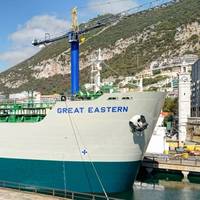
Gibdock has secured an exhaust gas scrubber retrofit project covering five vessels operated by ship management major Norbulk Shipping and owned by global shipping group Vroon. The contract represents a sizeable debut in specialized EGS work. With all five ships also undergoing special survey drydocking, the job is the Gibraltar yard’s largest single assignment in 2015. The landmark project is also the first ship-series SOx abatement technology retrofit win for any Southern European yard.
PureNOx Approved for MAN Diesel & Turbo EGR system
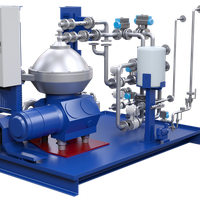
Alfa Laval has become the first company in the world to be approved by MAN Diesel & Turbo to supply a water treatment system, PureNOx, for MAN’s exhaust gas recirculation (EGR) scrubber. The approval comes with less than a year to go before the IMO Tier III NOx standards take effect on January 1, 2016. A comprehensive NOx abatement technology, the EGR will be used with the MAN’s two-stroke marine engines to reduce NOx emissions. The EGR is an alternative to selective catalytic reduction (SCR) technology; both EGR and SCR are compliant with the IMO NOx Technical Code.
Glasgow-Singapore Green Ship Deal On
A new research collaboration between A*STAR’s IHPC, Sembcorp Marine Ltd, University of Glasgow and UGS aims to make a ship’s voyage more smooth sailing by improving its hydrodynamics and energy efficiency. The four organizations today signed a memorandum of understanding (MoU) to collaborate and develop new hull designs for large ocean-going vessels and make them more environmentally friendly. Under the three-year MoU, IHPC, Sembcorp Marine Ltd, University of Glasgow and UGS will use computational modeling and visualization technologies to design vessels with improved hydrodynamics for better fuel efficiency. In addition, they will collaborate and innovate on features to reduce harmful exhaust emissions and discharges by enhancing the vessel’s scrubber and ballast treatment systems.
Marine Lubricants: New Year, New Emission Rules

January 1, 2015 is an important date for ship owner and operators to ensure that their vessels, when operating inside ECA zones, are doing so in compliance with strict new emission edicts concerning the emission of sulfur. – to discuss some of the technical and logistical matters you must consider. The move to low sulfur fuels is well recorded, but from your point of view, describe the situation that ship owners face regarding fuel selection and cylinder lubrication come January 1, 2015?
Pressurized EGR Boiler Ready For Testing
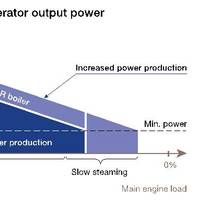
Exhaust Gas Recirculation (EGR) has firmly shown its ability to comply with Tier III NOx limits, which will enter into force in January 2016. Developed by MAN Diesel & Turbo, the EGR process already relies on Alfa Laval’s PureNOx, which provides the vital cleaning of the scrubber water. Now Alfa Laval is cooperating with MAN Diesel & Turbo to implement an EGR boiler, which could potentially add major energy benefits to the secure emission compliance. Over 1000 hours of EGR operation have now been achieved aboard the Maersk Cardiff, a container newbuild from A.P.
Ship Fuel of Choice to Remain Heavy Oil in 2030: New Analysis
A new study by Lloyds Register and University College, London, discusses the prospects of marine fuels in 'Global Marine Fuel Trends 2030', giving insights into future fuel demand for the containership, bulk carrier/general cargo and tanker sectors (which represent about 70% of the global shipping industry's fuel demands). Fuel oil remains the main fuel for deep sea shipping; LNG develops a deep sea bunker market share of 11%; low sulphur heavy fuel oil and hydrogen emerge as alternatives in certain scenarios.