

KUSPC: Commercial Shipbuilding’s New Partnership or an Outlet to Support Defense Acquisitions?

On July 23rd, 2026 Amtech, courtesy an invitation from the U.S. Department of Commerce, attended the Grand Opening of the Korea-U.S. Shipbuilding Partnership Center (KUSPC) in Washington DC, a Secretary level event with invitations provided to recognized leaders in the U.S. commercial and naval shipbuilding industry. Amtech has been working with Commerce from the initial release of the first Executive Order issued to recover and develop U.S. maritime dominance. And with that,…
BV Leverages AI on Next-Gen Augmented Surveyor 3D
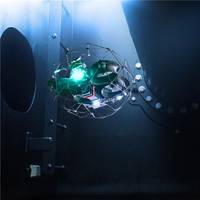
Bureau Veritas Marine & Offshore (BV) introduced its latest digital innovation, the Augmented Surveyor 3D (AGS 3D), an inspection tool that leverages artificial intelligence and machine learning to detect and localize structural anomalies on ships and offshore assets.The new solution was piloted successfully on a TotalEnergies-operated FPSO in West Africa. During the trial, drones captured extensive image and LiDAR data from two ballast tanks, which AGS 3D used to build a detailed 3D model, complete with AI-enhanced corrosion mapping.
Remote Inspection: DLS Sends in the Drones
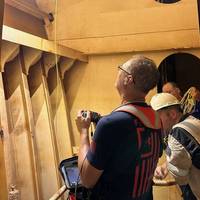
[ to deep, dark & confined spaces ]DLS Marine received approval from ABS for remote inspection, and it is leveraging advanced drone + software tech to make the process of tank inspection more efficient and less dangerous.DLS Marine is a long-tenured name in the U.S. maritime survey market, founded by Bob Stickney as Stickney Marine Surveying in New Orleans in 1968, with a pivotal moment coming in 1977 when Stickney hired Norman Dufour, future DLS Marine Partner, as an apprentice marine surveyor.
Increased Findings Expected with SIRE 2.0

As the new SIRE 2.0 inspection regime prepares for its official launch in the third quarter of 2024, the tanker industry is bracing for significant change. The updated digitized program is expected to increase the number of inspection findings, even for companies with historically strong performance, according to Fabian Fussek, Co-Founder and CEO of mobile-first ship inspection technology company Kaiko Systems.SIRE 2.0 places a much greater emphasis on Human Factors, acknowledging that their performance and knowledge are crucial for the overall efficiency and safety of vessels…
Three Questions: Matt Tremblay, VP, Global Offshore Markets, ABS

The American Bureau of Shipping dominates the global market in the classification of Floating Production. Offshore Engineer recently sat with Matt Tremblay, ABS’ Vice President of Global Offshore Markets, at American Bureau of Shipping HQ in Houston for his insights on market drivers and technical trends in this dynamic market.Matt, big picture, how do you see the Floating Production market developing in the coming years?At a macro level, I think we're going to be supply limited over the next five years.
Korean Register Grants AiP to K Shipbuilding and ForceTEC for Ship Cyber Resilience Design Technology
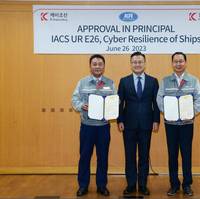
Korean Register (KR) has awarded Approval in Principle to K Shipbuilding and ForceTEC for their design technology focusing on ship cyber resilience in accordance with the International Association of Classification Societies (IACS) Unified Requirement (UR) E26.KR, K Shipbuilding, and ForceTEC in January embarked on a joint research project aimed at applying and validating the rules of ship cyber resilience, in a proactive response to the forthcoming adoption of IACS UR E26.IACS UR E26, introduced in April 2022, establishes unified requirements for cyber resilience in ships.
Large Offshore Wind Tower Manufacturing Plant to be Built at Port of Nigg, UK
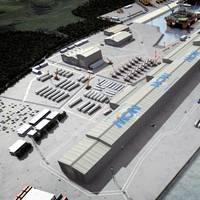
Global Energy Group (“GEG”), the Scottish-based energy services company has agreed on terms with offshore wind tower manufacturing specialist, Haizea Wind Group (“Haizea”), to build a £110m-plus (~$146 million) offshore wind tubular rolling facility at Port of Nigg, located in the Scottish Highlands. GEG said Friday that Nigg Offshore Wind (“NOW”) would be 450-meter-long, 38,000 m2 factory, capable of rolling steel plate to supply towers which will weigh in excess of 1,000 tonnes each and other products…
KR Completes Hull Survey Using Aerial and Crawler Drones

The Korean Register (KR) said it has completed its first hull inspection survey using both aerial and crawler drones for the intermediate survey of bulk carrier Pan Global.The survey, which was completed Tuesday with the assistance of POSSM Co, Korea’s largest ship management company, and HST Technology, who provided the remote inspection technology.KR’s surveyors have been using remote inspection technology such as drones for surveys since 2017. The equipment allows the surveyor to inspect the vessel without requiring direct access.
Digitizing Risk-based Integrity Management of FPSOs

Industries are adapting to an increasingly digitalized landscape. The floating production, storage and offloading (FPSO) industry is no different. As concerted efforts are made to improve project economics Matt Tremblay, ABS Senior Vice President, Global Offshore, discusses how digitalization can increase safety, reduce costs, and build robust technical and operational capabilities.No one could have predicted what a challenging year 2020 would become. Offshore production activity fluctuated dramatically with changing market economics and a global pandemic…
Guidelines for Non-destructive Inspection by Phased Array Ultrasonic Testing
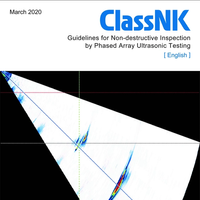
Classification Society ClassNK has released its “Guidelines for Non-destructive Inspection by Phased Array Ultrasonic Testing”.Phased array ultrasonic testing is an advanced non-destructive inspection technology that enables the visualizing of flaw detection results and the digitizing of the record-keeping process. It has higher detection performance for defects in materials and welded joints compared to conventional ultrasonic testing.In recent years, the application of phased array ultrasonic testing in various industrial fields has been increasing…
d’Amico to Trial Remote Ship Inspections
Shipowner d’Amico will trial remote inspection ship technology as the marine industry adjusts to the constraints placed on people’s movements imposed by national governments to limit the spread of COVID-19.Italian classification society RINA said its remote technology has been approved the Liberian International Ship & Corporate Registry (LISCR) for the inspections of Liberian flagged vessels, and it anticipates that the decision of LISCR could shortly be followed by other Flag Administrations.Alfonso Castillero…
Applus RTD Unveils Revolutionary NDT Technology

Applus RTD, a leader in the provision of integrity technology services, has unveiled its ultrasonic 3D inspection technology – the latest addition to its NDT3D technology range. The RTD IWEX (Inverse Wave Field Extrapolation) is an emerging Non Destructive Testing (NDT) technique that allows detailed inspection and mapping of defects within critical pieces of pipework. The system increases the probability of detection of defects within welds, as well as more accurately detailing the size, position and characterization of faults, Applus says.
Feature: Secure Seas, Open Ports
As new international and domestic regulations regarding shipping security enter force, the focus is not simply on security, but also on maintaining a healthy flow of commerce to keep the U.S. and world economy humming. U.S. Homeland Security Secretary Tom Ridge recently announced the implementation of new security measures designed to build upon the layers of security that are already in place at the nation's ports. The new measures, required by the Maritime Transportation Security Act, add additional security protections to every port in the United States. Port and vessel protection continues to remain one of the Department of Homeland Security's highest priorities.
House Hearing on U.S. Port Security
The Subcommittee on Crime, Terrorism, and Homeland Security of the House Committee on the Judiciary conducted an oversight hearing on U.S. port security. Representative Howard Coble (R-NC) stated that the purpose of the hearing was to focus on the operations and effectiveness of the agencies charged with inspecting ships and cargo entering U.S. ports and on methods used by the public and private sector to enhance the security of the ports. Jayson P. Ahern, Assistant Commissioner, Customs and Border Protection, testified regarding various activities utilized by the agency to target and inspect sea cargo, including the smart box initiative, non-intrusive inspection technology, and the automated targeting system.
APL Outlines Supply Chain Security Plan
On July 7, a supply chain security expert from global container carrier APL outlined practical steps that would help achieve an improvement in the safety of international trade at the Asia Pacific Economic Cooperation (APEC) Symposium. 5. Development of long-term security technology solutions through the collaboration of supply chain stakeholders. According to Agron, the public sector’s primary responsibility was to protect its citizens. However, the private sector owns and operates much of the supply chain infrastructure that could fall prey to terrorist attack. Agron pointed out that a balance must be struck between the need to secure the supply chain without bringing global trade to a halt.
Customs Implements Cargo Targeting at All U.S. Ports
U.S. Customs officials have announced the next step in the agency's multi-tiered program to protect international commerce from terrorist infiltration. Customs introduced on August 19 the Sea Cargo Targeting Initiative, an automated system that better identifies high-risk sea-going shipments into U.S. ports of entry and establishes new policies for dealing with these shipments. "The aim of this new initiative is to improve the way we address high-risk cargo," said Customs Commissioner Robert Bonner. "The challenge we face is constantly changing and our policies will evolve accordingly. · Adding new criteria to U.S. Customs automated systems that reflect the latest information about possible terrorist activities.
House Approves Appropriations for Department of Homeland Security
By a vote of 425-2, the U.S. House of Representatives approved the FY 2004 appropriations bill for the Department of Homeland Security (H.R. 2555).The measure was largely unchanged from that which was approved recently by the Appropriations Committee. The $29.4 billion measure includes $2 billion for Coast Guard homeland security missions, $2.611 billion for traditional Coast Guard missions, $530 million for the Deepwater acquisition project, $100 for port security grants, $129 million for cargo inspection technology, $61.7 million for the Container Security Initiative (CSI), and $12.1 million for the Customs-Trade Partnership Against Terrorism (C-TPAT).
Customs Announces CSI Deployment at Le Havre
U.S. Customs Commissioner Robert C. Bonner announced the deployment of four U.S. Customs officers to the French port of Le Havre, marking the latest step in the agency's Container Security Initiative (CSI). CSI is designed to prevent terrorists from infiltrating the world's sea cargo environment by improving security at key seaports worldwide. Under the program, U.S. Customs inspectors at foreign seaports target and pre-screen U.S.-bound cargo containers before they are shipped to America. Non-intrusive inspection technology is used to screen the containers for weapons of mass destruction, before the containers are loaded on ships bound for the United States. "I am grateful to the French Government for aggressively implementing CSI," said Commissioner Bonner of today's announcement.
The Risks of Cargo and Maritime Security
The U.S. Government, and particularly the U.S. Customs Service, has focused on cargo as a major risk factor with regard to the maritime security of the United States. The following is an outline of some of the measures being adopted or considered by the Customs Service in its efforts to enhance maritime security and the impacts of those measures on shippers, intermediaries, and carriers. By Dennis L. Bryant, Senior Maritime Counsel, Haight Gardner Holland & Knight, Washington, D.C. The measures can be grouped into three general categories: inspections, risk reduction, and container security. Inspections occur both in the United States and abroad and involve both use of technology and physical inspection.
Knutsen OAS Shipping Leads Gas Shipping Charge
Knutsen OAS Shipping of Haugesund, Norway, is no stranger to international shipping circles, with roots back to 1896 when the founder of the Knutsen company bought his first vessel. Today, the company operates one of the most sophisticated and modern fleets of purpose-built shuttle tankers, chemical carriers and product tankers in the world, and is presently operating the largest fleet of purpose-built DP class shuttle tankers in the world. The company has adhered to a hands-on strategy, based on the development of total projects from design to operation. The strategy has, throughout the last 10 years, been implemented with a program of 20 newbuildings worth more than $1 billion.
News: 2004 Budget Proposal Raises Inland Ire
The record $2.2 trillion U.S. budget proposal is out, and, predictably, the political posturing and positioning for additional dollars has begun in earnest. This year's budget from the President, with its heavy emphasis on defense and homeland security, has outraged a broad spectrum of the inland waterways industry, based on comments delivered by influential organizations in the immediate aftermath of its release. The $2.2 trillion budget includes $380 billion for the nation's military, a $15 billion (4.2%) increase. The new budget provides $41 billion for total homeland security spending. Excluding Department of Defense spending, the budget includes $35 billion for homeland security, a $2.5 billion or 7.6% increase that more than doubles funding over the past two years.



