
Schottel's SRP-D Efficiency Confirmed
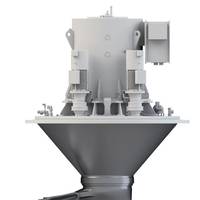
The increased performance of the SCHOTTEL RudderPropeller Dynamic SRP-D has once again been confirmed by external sources. At the request of the Dutch Damen Group, the Maritime Research Institute Netherlands (MARIN) carried out extensive research to demonstrate the added value of the SRP-D for Commissioning Service Operation Vessels (CSOV).While an earlier study had already demonstrated a reduced DP footprint and fuel savings, Damen’s latest research focused particularly on propulsion efficiency during thruster interactions.
Indian Register of Shipping Partners with MARIN
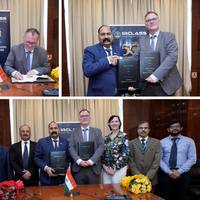
The Indian Register of Shipping (IRS) has signed a Memorandum of Understanding (MoU) with the Maritime Research Institute Netherlands (MARIN) for collaboration on hydrodynamic studies and model testing on ongoing new construction projects.The MoU provides for expanding this collaboration to all future projects classed by IRS for Indian shipyards.MARIN will contribute to the partnership by sharing scientific knowledge and providing hydrodynamic research services to IRS and its clients on a project-by-project basis.
Dutch Test Barriers to Prevent Ships from Hitting Wind Turbines
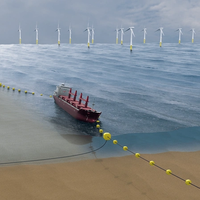
In research prompted by the incident in the Dutch North Sea in January when a drifting bulk carrier hit offshore wind facilities, Dutch maritime research institute MARIN this week, with industry partners, tested three innovative barriers aimed at averting collisions between ships and wind turbines.The drifting bulk carrier Julietta D initially collided with a tanker before hitting a transformer platform and a turbine foundation for the Hollandse Kust Zuid wind farm currently under…
Model Testing Complete for Delta Offshore Energy's 3.2GW LNG-to-Power Project
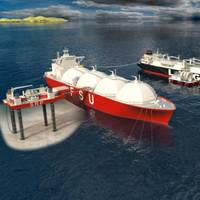
Delta Offshore Energy (DOE), a company working to develop the 3200 MW Bac Lieu LNG-to-Power Project in Vietnam, has said that model testing of the LNG receiving terminal technology has been successfully completed.As previously reported DOE Delta Offshore Energy (DOE) in September 2020 signed a technology license agreement with Stena Power & LNG Solutions, under which Stena agreed to grant DOE a license to use its Jetty-Less LNG receiving and regas technology for the offshore LNG…
Damen, Hydromaster Develop New Ferry Thruster
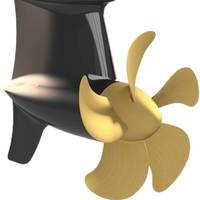
In 2020, Damen signed a contract with Blue Amigo for the delivery of nine passenger vessels to operate between Rotterdam and the Drecht cities in the Netherlands in a service known as the Waterbus. Damen identified that six of the vessels – hybrid carbon fiber water buses that will operate fast, inter-city routes – would require a unique thruster solution, a fully azimuthing, 360-degree thruster to make docking easy and propulsion fast.“It’s actually the kind of thruster you would expect to see on a pleasure craft,” says Damen design and proposal engineer Ferries Jan van Ooijen.
Damen Delivers Patol Boat to Mexican Navy
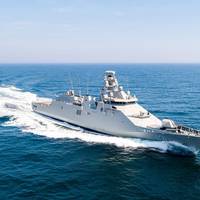
The Secretariat of the Navy of Mexico (SEMAR) has held a ceremony marking delivery of the Long Range Ocean Patrol (POLA) Class vessel ARM Reformador. The delivery ceremony was attended by Admiral José Rafael Ojeda Durán, Secretary of the Navy and High Command of the Mexican Navy, in the company of Mr. Juan Carlos Atecas Altamirano, Municipal President of Salina Cruz Oaxaca. Damen Shipyards Group was represented by Executive Board member René Berkvens, President of Damen Shipyards Mexico Horacio Delgado, and POLA Project Director Frank Verhelst.
Arctic (& Wind) Operations: Hands Across the Water
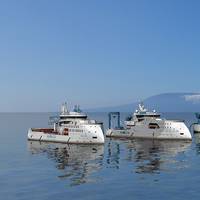
As the North American offshore wind model evolves, it is clear that fit-for-purpose, Jones Act compliant and Arctic ready tonnage will need to be part of the equation. If so, we’ve got that box checked, with a little help from Europe.As of September 2018, the Walney Extension off the United Kingdom is the largest offshore wind farm in the world at 659 megawatts. There are at least 70 major wind farms, each with hundreds of wind turbines, each generating as much as 10 megawatts in offshore England, the North Sea, Russia and China.
New Book on Ship Stability

To say this book is a collection of research would be an understatement. “Contemporary Ideas on Ship Stability: Risk of Capsizing” is more like a preservation of knowledge covering the last nine years.Dr. Vadim Belenky, a naval architect in the Simulations and Analysis Branch at Naval Surface Warfare Center, Carderock Division, was the editor in chief for the book, the chapters of which are papers from engineers, naval architects and professors from around the world. Belenky himself co-authored four of the papers…
Dutch Minister Visits Damen Shipyards
Netherlands Minister of infrastructure and water management Cora van Nieuwenhuizen visited Rotterdam on 28 January to meet Damen Shipyards Group and other Dutch maritime industry leaders.During the visit Minister of Nieuwenhuizen attended presentations on board a Damen ship, FCS 2610.The ship sailed from the head office of Hatenboer-Water in Schiedam, along the Nieuwe Maas, to the head office of Van Oord in Rotterdam.René Berkvens, CEO of the Damen Group, said: “We were happy to welcome Minister Van Nieuwenhuizen to Rotterdam, and we appreciate her continued interest in, and strong support of, our maritime sector. Face-to-face meetings like this help to inform the government policies…
Zero carbon at sea? Rotterdam port eyes a greener future
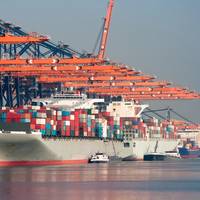
In Rotterdam, ships from around the world cruise in and out of Europe's busiest port, a bustling industrial hub that employs almost 200,000 people and produces 20 percent of the Netherlands' climate-changing gases.As Rotterdam tries to cut its emissions - in line with global goals to curb global warming - shipping emissions are a particular challenge, not least because many fall outside the targets set by the Paris Agreement to curb climate change.But the city's bustling port…
C-Job Designs Wind-assisted Flettner Freighter
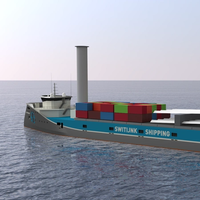
C-Job Naval Architects has delivered the design for a wind-assisted general cargo vessel to Dutch shipping company Switijnk Shipping. The 8,500 DWT vessel will be equipped with two Norsepower Rotor Sails that will supplement the main engines and is expected to achieve fuel savings of approximately 14 per cent. C-Job was approached by Switijnk Shipping following its involvement in the European Union Interreg project S@IL, for which C-Job developed the earlier design of a 4,500 DWT Flettner Freighter. C-Job designed this smaller vessel with four Rotor Sails.
Eye on Design: C-DRONE
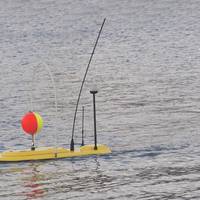
During trials the correct measurement of metocean conditions is crucial for reproducibility, performance prediction and to avoid disputes between different stakeholders. MARIN believes its new C-DRONE can make it much easier to obtain accurate measurement data. MARIN has several systems in use to measure wave height and period. The most direct and accurate way to measure the wave characteristics is the use of a wave buoy. Yet, a buoy is rarely requested during trials because the retrieval process requires a separate support boat that can easily manoeuvre and pick up the buoy.
Supporting Silent Ships
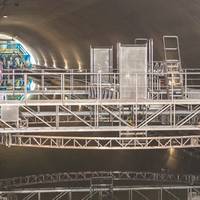
Have you ever had problems talking to someone in a noisy environment such as a busy restaurant? The same happens to marine animals, which use sound to sense and interact with their environment: for communication, navigation, finding prey and even for self-defence. High ambient noise levels, which include a contribution from shipping, have an adverse impact on marine life. The world’s oceans are becoming increasingly noisy. While the size of the global commercial fleet more than doubled since the 1960s, anthropogenic noise in the oceans has actually increased eightfold.
The Nautical Safety Profile
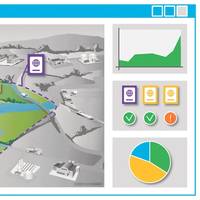
MARIN is working together with the industry to develop the Nautical Safety Profile for operations and risk management. Liquefied natural gas (LNG) is increasingly being used as an alternative fuel, both at sea and on land, to reduce pollution from transportation. In 2011 the first LNG carrier arrived at the Rotterdam Gate terminal, and last year the terminal was upgraded to facilitate the transfer of LNG to shuttle tankers. An extensive safety analysis was carried out prior to the development of the terminal and a dedicated harbor access policy has been defined.
Marine Hazards to Subsea Cables and Pipelines
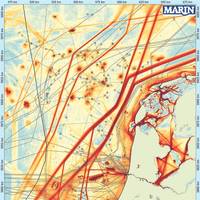
In February 1989 the RoRo vessel Vinca Gorthon ran into heavy weather and sank off the Dutch coast. She landed on an oil pipeline that was severely damaged. Although the probability of sinking on top of a pipeline is very small, the incident showed that it can happen. Shipping traffic can represent a potential hazard to subsea pipelines in various ways, such as sinking or grounding, lost containers or an anchor hooking onto a pipeline. Over the years MARIN has contributed to the…
Bilge Keel Damping from In-field Motion Measurements
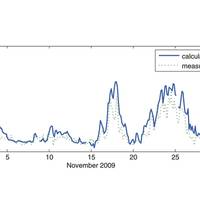
Chevron and MARIN worked together on a novel approach to characterize the actual damping for an FSPO in real world conditions. Results show that using damping from model tests means that roll decay in calm water is conservative and that natural roll periods are less sensitive to the FPSO draft than often considered in the design phase. Due to the resonance behavior of roll motions, roll damping is an important consideration for vessel motions and the associated extreme and fatigue loading on the hull, topsides and risers of an FPSO.
Naval Design: The Human Role
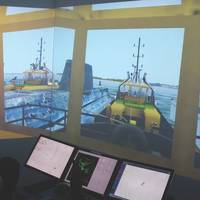
Many navy new building projects face a double challenge; the variety and complexity of operations are increasing, while at the same time, a reduction in manning is a prerequisite in order to lower building and operational costs. Therefore, it is important to identify the required number and type of crew and the supporting systems in the concept phase. For a long time the use of weapons and platform systems have relied on a high degree of integrated, multi-sensor data processing and decision support systems.
Ship Design: Monitoring and Analysis for Emissions Reduction
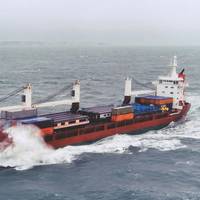
In April 2015, the European Union adopted a mandatory Monitoring, Reporting and Verification (MRV) regulation for CO2 emissions resulting from maritime transport. The MRV requires operators of large ships to monitor and annually report the verified amount of CO2 emitted on journeys to, from and between EU ports. Using basic input data (distance, fuel, time, cargo weight) and indicators the ship’s performance is determined and reported publicly. Over the past two years MARIN has…
Lifetime Assessment for Deepwater Moorings

Mooring integrity is an important concern in the offshore industry [1]. Mooring leg failures can have significant consequences, such as temporary shutdowns and require unplanned, thus expensive, repairs. On the other hand, an over dimensioned design leads to higher loads acting on the floating facilities and a large investment. Meanwhile, the development of deepwater projects has led to the discovery of the new fatigue mechanism of ‘Out of Plane Bending’ [2]. This means that the design of moorings requires more detailed analysis to ensure the integrity of the mooring system.
Measuring Noise Levels of Cavitating Propellers
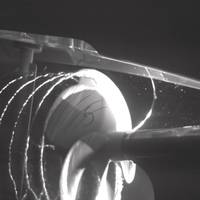
As underwater radiated noise levels in the oceans increases, MARIN has investigated just how much cavitating propellers are to blame. Traditionally, underwater radiated noise is mainly of interest for naval vessels and fishery research ships. Nowadays, however, there is a growing concern that marine life is affected by the rise in background noise levels in the oceans. Marine mammals and fish use sound to communicate and to sense their environment and this requires low background noise levels. The rise in noise levels is being caused by an increase in shipping, among other factors.
Navigation Simulation Suite Opens at Port of Milford Haven
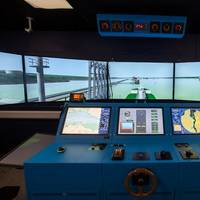
Safe navigation is a priority operating principle for the UK’s largest energy Port, the Port of Milford Haven. And earlier this week the Port demonstrated that commitment with the unveiling of its new, state of the art marine navigation simulator. Significant investment has been made in developing this new facility, and it is an exceptional tool. Built using MARIN’s latest software, DOLPHIN, the navigation suite is positioned to lead the market in training and exercise scenarios.
Floating Wind Power: A Semisubmersible Floating Turbine Foundation
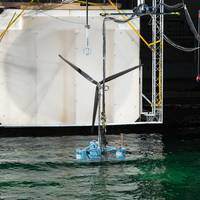
Floating foundations for wind turbines present some technical advantages, which is encouraging more and more industry players to develop new floaters. Firstly, they can be deployed in deep seas, independent of the soil conditions. Secondly, the installation and heavy maintenance can be done in sheltered areas, so that the whole OFWT can be towed directly to the wind farm’s location by conventional tugs. However, floating foundations also bring new constraints on the wind turbine due to their motions in waves and wind.
When Using CFD Simulations, an Analysis of Anti-Roll Tanks (ARTS)
In 2014, the behavior of anti-roll tanks was studied at MARIN by using ReFRESCO CFD simulations to fully understand the working principles. In 2014, the behavior of anti-roll tanks (ARTs) was studied at MARIN by using ReFRESCO CFD simulations to fully understand the working principles. The roll motion of ships operating in a seaway often limits operations. These limits could be due to the maximum acceleration, green water, capsize risk or just comfort, for example. Therefore, additional roll damping is often desired to improve the operability of ships.