
OPV P71 Delivered, New Flagship of Armed Forces of Malta
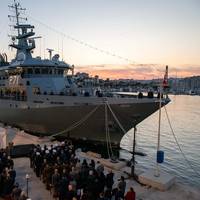
The flag of the Republic of Malta waves on the Offshore Patrol Vessel P71 to celebrate the entry into service of the new flagship of the Armed Forces of Malta built by Cantiere Navale Vittoria.At the AFM naval base in Floriana, Valletta, the official delivery ceremony was held for the largest patrol vessel ever built by Cantiere Navale Vittoria. The 75-m unit, built in Italy, will be used in coastal surveillance operations, extended patrolling on the high seas and Search and Rescue operations.OPV P71 is the result of an order with a total value of more than 50 million euros…
Saab Receives Order for Life Extension of Swedish Mine Countermeasures Ships

Saab has signed an agreement with FMV on the life extension of two Koster-class mine countermeasures ships. The order value is SEK 350 million. The contract also includes options for FMV to order measures regarding the remaining three ships in the Koster-class. The total value of the options are SEK 270 million.The contract with FMV means that Saab will carry out life extensions of two Koster-class mine countermeasures ships. The modernization involves an exchange of systems for life extension and enhanced capabilities to ensure continued operability.
246-ft. Offshore Patrol Vessel Delivered to Armed Forces of Malta
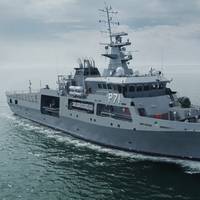
OPV P71, a new 246 ft. (75m), 50-million Euro flagship of the Armed Forces of Malta -- the largest patrol vessel ever built by Cantiere Navale Vittoria -- today entered the port of La Valletta to start its missions of surveillance, coastal and offshore surveillance and SAR operations in the Central Mediterranean.Measuring 74.8 x 13m with a draft of 3.8m and a full load displacement of over 2,000 tons, OPV P71 can accommodate a crew of nearly 50 and an additional 20 staff. The platform is characterized by an elevated bridge with 360-degree vision capabilities…
Miros Wavex Tapped to Support Saint Brieuc Offshore Wind Project

Miros’ dry-mounted Wavex was selected by EQUANS to collect operation-critical wave and current data on the offshore substation for the Saint-Brieuc Offshore Wind Farm, Iberdrola's first large-scale and flagship offshore wind power project in Brittany, France. Once it becomes operational in 2023, the windfarm will have a total installed capacity of 496 megawatts (MW), capable of generating enough clean energy for 835,000 people.Wavex is a virtual sensor designed for accurate wave and current measurements…
JRC Says Its Wave Analysis Tool Helps Prevent Container Spills
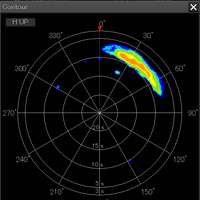
Thousands of containers have been lost by ships in heavy weather conditions over recent months, impacting the ocean environment and adding a large extra cost expense for shipping companies.Among many factors leading to the problem is heavy rolling and pitching of the ship that causes containers to lose their stability and fall overboard. Marine electronics company JRC said its navigational radar JMR-7200/9200 includes a Wave Analysis function made available through a software upgrade.The JRC Radar Wave Analysis function is developed to measure wave height, direction and length.
"A Maritime Disaster Waiting to Happen"
Since the founding in 2016, cyber defence company Naval Dome has won awards for its Endpoint cyber defense system and achieved the highest level of security certification from classification society DNV GL, helping to protect merchant ships, cruise ships and yachts from cyber-attack.In 2019, Naval Dome optimized Endpoint with a “Dashboard” App, providing maritime users with a clear picture of the cyber status of all critical systems on board the ship, designed to allow users…
Tech File: SeaGuard high resolution radar
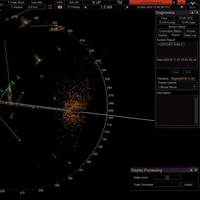
Originally developed for naval use, SeaGuard can enhance situational awareness in congested waters and improve search and rescue operationsSperry Marine unveiled SeaGuard, a high-resolution radar system designed to deliver a higher standard in navigational awareness for operators of very large cruise ships. Originally developed for navy use, the long-tenured marine electronics maker has already bagged a signature reference for the system. According to Pascal Göllnitz, Associate Product Manager…
Revival of Training Capability
A 20-foot shipping container on the Mornington Peninsula, Victoria, helps the Australian Navy run one of the world’s few remaining shore-to-sea live firing training sites. Since 1959, West Head Gunnery Range which occupies an area of 16 hectares has provided the Royal Australian Navy with live gunnery training for close range and medium calibre shipborne weapon systems, navigation radar and miscellaneous communications and support equipment. One of the many systems used for safety during live firings and also training is the Electro-Optical Tracking System. Also fitted to most major fleet units, the system is highly accurate multi-sensor tracking system used to track and locate targets in aerial warfare.
Kelvin Hughes radar for RN's River-class OPVs
A world leader in the design and manufacture of navigation and security surveillance radar, Kelvin Hughes announced in April 2015 that it had been selected to supply its SharpEye systems for the new Batch 2 River-class offshore patrol vessels (OPVs) - HMS Forth, HMS Medway and HMS Trent. Today, the company is delighted to announce that it will also be supplying the same industry-leading radar equipment for the two latest Batch 2 ships – HMS Tamar and HMS Spey. Each ship will be equipped with a SharpEye I-Band radar for helicopter control and navigation as well as an E/F-Band SharpEye™ radar for navigation and collision avoidance. In addition, Kelvin Hughes will be supplying its ARPA widescreen radar display for all of the Batch 2 OPVs.
70th Anniversary of First Type-approved Maritime Radar

Kelvin Hughes is celebrating 70 years of radar in 2017. In 1947 the first Type 1 radar was produced and installed on a new fishing trawler, the Type 1 then went on to be the first type approved radar, gaining its type approval certificate on August 11, 1948, the first radar to do so. Kelvin Hughes, a maritime navigation and security surveillance radar, has a history stretching back over 250 years. Over the course of that period, the company has been responsible for a number of significant technology ‘firsts’, including the first navigation radar for commercial ships to be type-approved.
New Commercial Shipping Radar from Kelvin Hughes
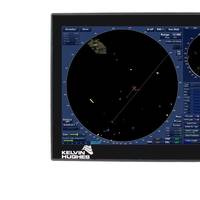
Kelvin Hughes has announced the launch of a new range of radar systems for commercial shipping based on its innovative, solid-state SharpEye technology. Kelvin Hughes has been supplying IMO type-approved radar to merchant ships, fishing boats and workboats since the 1940s, delivering reliability and low cost of ownership together with highly superior detection capability. SharpEye, with its Doppler processing of the radar returns, has taken situational awareness to a new level with its ability to detect more targets, at longer ranges, than conventional, magnetron-based radar systems.
Wrap-up: Amsterdam Conference Week 2016

Amsterdam hosted four different maritime conferences during week June 21-23, with two common exhibitions – all in the same RAI Conference & Exhibition Complex. The Autonomous Ship Technology Symposium, Electric & Hybrid Marine World Expo and Marine Maintenance World Expo and Conference were organized by UKIP Media & Events while the fourth, defense related, MAST (Maritime/Air Systems & Technologies) Conference and Exhibition was organized by MAST Communications. For an inaugural event…
Singapore Navy Chooses SharpEye Navigation Radar
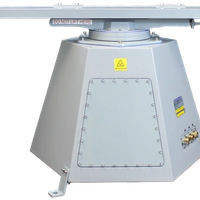
Kelvin Hughes will supply its SharpEye navigation radar for the Republic of Singapore Navy's Littoral Mission Vessel (LMV) program, which includes eight new vessels to replace the current fleet of Fearless-class patrol vessels. The lead ship of the fleet, Independence, was delivered in May of this year equipped with two I-Band (X-band) SharpEye systems. A further seven vessels will be similarly equipped with the same I-Band SharpEye systems. With its solid-state technology, SharpEye does not require a magnetron and transmits a low power, patented pulse sequence.
Safety and Preparation on the Brownwater Radar
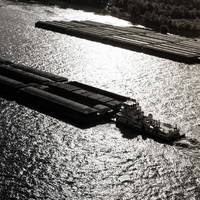
Weather Channel Forecasters are predicting a “near-average” hurricane season for 2016, but warn that an average season does not mean businesses and residents shouldn’t prepare for the worst. While it is unclear whether the season, which began June 1, will bring about a few mild storms or a catastrophic Category 5 hurricane, one thing is for sure: safety and preparation are on the radars of the owners and operators of brownwater vessels. Although forecasters consider this year’s predicted 12 named storms “average”…
Unmanned Surface Vessels: From Concept to Service
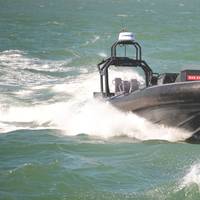
Over the next decade the maritime sector is likely to see one of the largest changes since sail gave way to steam. Unmanned Surface Vehicles (USV) are now being considered for various marine roles and the drivers for rapid development are significant. Unmanned or autonomous vessels have passed through the trial and evaluation stage and are now being adopted for civilian and military applications. The maritime sector now has the opportunity to shape technology developments from legislative and end-user standpoints.
Raytheon Anschütz to Debut New Radar at SMM
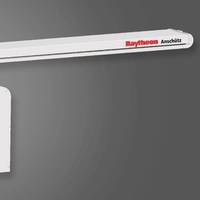
The German navigation system manufacturer Raytheon Anschütz announced the launch of a new generation navigation radar for this year’s SMM. The new radar is distinguished mainly by two innovations on the transceiver: Network technology replaces analog data transmission, and a pedestal which is newly constructed electrically and mechanically reduces cost of ownership and simplifies service. The new NautoScan NX radar transceivers are based on modern hardware and software infrastructure to achieve highest reliability on a high performance level.
Raytheon Anschütz Innovations to Debut at SMM

German navigation system manufacturer Raytheon Anschütz announced the launch of navigation system innovations as well as improvements to existing technologies for this year’s SMM. The world’s first IMO-certified Integrated Navigation System (INS), Synapsis Intelligent Bridge Control, will take the center stage at the Raytheon Anschütz booth. About two years after product launch, more than 100 Synapsis systems have been contracted and more than half of them are already in operation.
Raytheon Anschütz Unveils New Navigation Radar
On opening day of SMM, the German navigation system manufacturer Raytheon Anschütz officially launched the newly developed NautoScan NX network radar transceivers, the centerpiece of its next generation Synapsis Radar system. The new NautoScan NX transceivers generate raw radar video, which is distributed via Gigabit LAN. Raw video distribution without any analogue losses enables optimized performance with high-fidelity radar data processing through the individual end-user applications on the bridge. Dr.
Expanded Kelvin Hughes Product Range on Display

Kelvin Hughes is launching and demonstrating a host of new products and services at SMM 2014, including a port security radar system, specialist mission radome radar and displays, Voyage Data Recorders and the latest version of ChartCo PassageManager software. Co-exhibiting with Lammers Schiffselektronik GmbH who represent Kelvin Hughes in Germany for radar and navigation equipment sales and service. This is the biggest and broadest set of new products and offerings that Kelvin Hughes has ever brought to SMM, the company said.
New Heater Kits for Northern Sea Route Vessels
These heater kits will enable Marine Navigation Radar Turning Units to be operated in temperatures down below -55 degrees Celsius, in addition to keeping the S-Band and X-Band sensors in the turning units free from ice. Northrop Grumman Sperry Marine has designed them to be attached in the field at or after installation, and they are compatible with all VisionMaster FT (VMFT) radar sensors. "Ships operating in the Arctic environments are exposed to a number of unique risks and we recognize the need to ensure that our equipment is capable of functioning effectively under the challenges of polar operations," said Jeanne Usher, managing director, Northrop Grumman Sperry Marine.
Ocean Training Launches Blended Learning Course
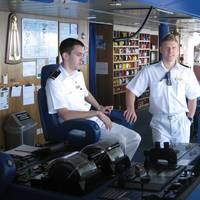
Major revisions to the International Convention on Standards of Training, Certification and Watchkeeping for Seafarers (The STCW Convention) came into force in 2012. The “Manila Amendments - 2010” were adopted at a diplomatic conference at Manila, in the Philippines in 2010. These aim to establish a Global standard for Training and Certification of seafarers to ensure operation of technically advanced ships of the future. The Manila 2010 amendments include the introduction of modern training methodology such as Distance Learning and Web based training.
New Tech & Tug Training
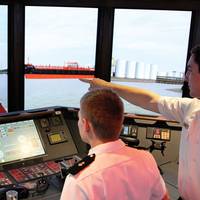
Mass. Maritime responds to industry demand, reloads with cutting edge Transas equipment, and moves to the head of the brown water training queue. It was a dark and stormy night with choppy seas. I didn’t hit anything, but I did run aground twice while at the helm of the tug boat simulator at the Massachusetts Maritime Academy (MMA) in Buzzards Bay. But then that’s the point – to let students safely make mistakes and get the closest thing to the real-life experience they need – and would have a limited shot at otherwise on the equipment they’ll be handling where the jobs are today…
SUNY Maritime: Bridging the Competency Gap
SUNY Maritime’s Cutting Edge Tug & Barge Simulator fills an enormous training hole in the tri-state area. When Morton S. Bouchard, III, maritime and political dignitaries officially opened the Bouchard Transportation Co., Inc. Tug & Barge Simulation Center on the campus of the State University of New York (SUNY) Maritime College last October, it opened a new era in maritime transportation for SUNY cadets and professional mariners in the greater New York area. That’s because the only other available simulator in the area had long since been moved to the Gulf Coast. With the snip of a ribbon by an oversized pair of ceremonial scissors, however, that situation was immediately resolved.