Alternative-Fuel Inflection Point: Gotland Horizon X and the Port Hydrogen Question

Gotland Horizon X is a 130-meter, 18,300-gt, 1,500-passenger, 400-car, 30-knot catamaran now under construction at Austal for delivery in summer 2028. Positioned as hydrogen-ready from day one, the vessel is not a technology demonstrator. It is a frontline Ro-Pax ferry designed to maintain timetable integrity while opening a credible pathway toward hydrogen. For ports and fuel suppliers, that distinction matters. Horizon X is less about a single vessel and more about what it signals: future-fuel ships are coming that will demand corresponding evolution ashore.Jonas Moberg…
Inside the Gotland Horizon X: Large, Hydrogen-Ready Catamaran

With a growing focus on mitigating climate change and progressing toward the International Maritime Organization’s (IMO) 2050 net-zero target, the marine sector is under intense pressure to decarbonize. Today, maritime transport emits nearly one billion tons of CO2 annually, representing roughly 2-3% of all energy-related carbon emissions worldwide .Substantial progress has been made over the past decade in reducing emissions from small commercial and coastal vessels via all-electric and diesel-electric propulsion (DEP) systems.
In the Search for Ship Energy Efficiency, Don't Forget Waste Heat
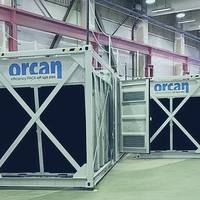
Fuel-agnostic and suitable for newbuilds and retrofit, Organic Rankine Cycle waste heat recovery systems are making headway as an energy-efficiency measure.Market prospects are looking so good for waste heat recovery systems that Orcan Energy recently expanded its industry relationships by partnering with Goltens on installations.Andreas Sichert, CEO of Orcan Energy, said: “Waste heat recovery is one of the most powerful and underutilized tools for improving energy efficiency.
Contract Signed to Build 130m ‘Hydrogen-Ready’ High-Speed Ferry
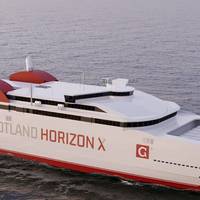
Austal Limited said that Austal Australasia has been awarded a contract valued between A$265 and A$275 million by Gotlandsbolaget of Sweden for the design and construction of a 130-m combined cycle, ‘hydrogen-ready’ vehicle passenger ferry. Part of Gotlandsbolaget’s ‘Horizon X’ program, the high-speed ROPAX catamaran will be the largest vessel ever constructed by Austal, and feature a unique, highly efficient combined cycle propulsion system that includes both gas and steam turbines – reportedly a first for high-speed craft.
MHI Develops Oilless, Nitrogen-Based Cryogenic ORC Generator
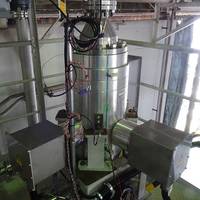
Mitsubishi Heavy Industries has demonstrated a 100kW class cryogenic organic Rankine cycle (ORC) power generation system using a nitrogen-based, oilless cryogenic turbine generator.ORC systems are able to harness lower-temperature heat than typical waste heat recovery systems, and MHI says the use of liquid nitrogen as the cryogenic energy source provides a stable refrigerant cycle and the specified regeneration output without freezing-induced clogging. It performs well even under…
Off the Boil: LNG Tankers Burn More Oil as Gas Prices Soar
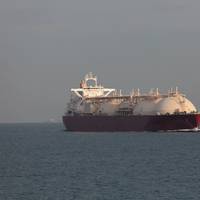
Liquefied natural gas (LNG) tankers are burning more dirty fuel oil than normal after the price of their super-chilled cargo soared above that of oil, trade and shipping sources said.LNG tankers often use some of their cargo, stored in liquid form at minus 163 degrees Celsius, for power, as a small portion tends to evaporate or "boil off" during transit and needs to be removed from the tanks anyway to avoid a build up of pressure.Older LNG tankers run on steam turbines that burn a combination of fuel oil and boil-off gas…
NICO International to Rep HHI Turbomachinery
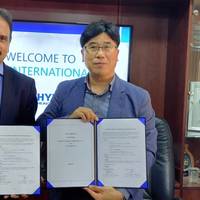
Hyundai Heavy Industries Turbomachinery Co., Ltd. (HHI – TMC), a turbomachinery business specializing in pumps for marine, nuclear and industrial field, gas and air compressors, and steam turbines, has entered into a service agent agreement with UAE based marine and industrial engineering company NICO International.With the new alliance in place, NICO said it aims to further strengthen the turbomachinery capabilities in the field of marine and industrial pumps and compressors market in the United Arab Emirates region with the expertise of HHI - TMC.
ClassNK Concludes CBM Research Agreement
Classification Society ClassNK has concluded a joint research agreement for developing advanced condition-based maintenance (CBM), a new maintenance and management process for engine machinery plants, and establishing a new classification survey scheme based on CBM.In the joint research project, engine conditions will be continuously monitored and involve the real-time sharing of detailed data acquired from sources including SIMS2 developed by NYK Group and the newly installed sensors of large main engines.
Keppel Orders PG Flow Solutions for Gimmi FLNG
Singaporebased Keppel Shipyard has awarded Norwegian liquid handling and pump specialist PG Flow Solutions a contract to supply high flow seawater pumps to the Gimi FLNG that is being converted at the yard.PG Flow Solutions will deliver four large seawater pumps, each with a capacity of 5,500 cubic metres of water per hour. The contract value is undisclosed.The seawater pumps will be used to cool down the onboard turbine steam condensers. As the LNG-fuelled vessel has steam turbines for power generation, the seawater pumps will provide continues flow of cold seawater to cool down the steam condensers and liquify the steam. The pumps…
China to Push LNG Shipbuilding
China would like to compete with South Korea in the field of building liquefied natural gas (LNG) carriers building.South Korea has won 86 percent of the world's total orders or 52 orders for LNG carriers so far in 2018, according to Clarkson Research. The remaining nine orders were shared by companies from China, Singapore and Japan.Though China leads offshore engineering products and mega container vessel shipbuilding sectors, the country is a laggard in LNG shipbuilding.A recent report in the country's official media China Daily quoted Tan Naifen, deputy secretary-general of the China Association of the National Shipbuilding Industry (CANSI) as saing: "The global demand for LNG carriers will continue to surge in the long term…
Wärtsilä Wins First ‘LPG as Fuel’ Order for New Gas Carriers
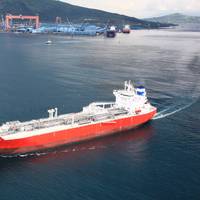
Wärtsilä will provide an integrated cargo handling and fuel gas system for two new liquefied petroleum gas (LPG) carriers for Belgium-based owner Exmar. The 80,000m³ very large gas carriers are being built at HHIC-Philippines (Hanjin Heavy Industries & Construction Philippines) in Subic Bay, and will be the first vessels capable of running on LPG, according to Wärtsilä, who secured the order in July 2018.Wärtsilä, which offers ‘LPG as fuel’ as a fully integrated part of the cargo handling system…
DNV GL Approves Kongsberg Engine Room Simulators
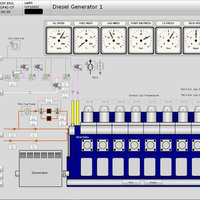
Kongsberg Digital has received DNV-GL statements of compliance for two of its newest Engine Room Simulator models designed to provide in-depth training on the K-Sim Engine simulator platform. The DNV GL-ST-033 March 2017 Maritime Simulator Systems certification, which is based on the requirements of STCW Convention, Regulation I/12, was awarded to the DEDF Cruise Ferry and L11 MAN 6S70 ME SCC K-Sim Engine models in December 2017. Now commercially available to all K-Sim Engine users…
GE, DSIC Unveil Plan for LNG Carrier Power Conversions
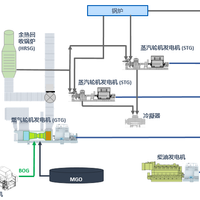
GE’s Marine Solutions and Dalian Shipbuilding Industry Co. Ltd. (DSIC) completed a preliminary design for the conversion of a steam turbine powered LNG Carrier (LNGC) to a gas turbine-based propulsion system. The study aims at steam powered LNGCs that offer low fuel efficiency but are not ready to be retired from service. The new design will feature GE’s reliable and compact COmbined Gas turbine, Electric and Steam (COGES) system. According to Yingbin Ma, DSIC Deputy Technical Director…
Designing the New National Security Multi-Mission Vessel
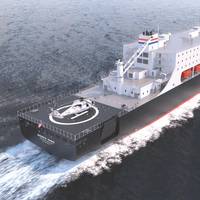
For more than 100 years the U.S. has depended on State Maritime Academies (SMA) to produce USCG licensed merchant officers. The SMA’s have also been an important source of U.S. Navy and U.S. Coast Guard officers, as well as trained personnel for the maritime industry and electric power industries ashore. Key to training these future deck officers and engineers has been the annual sea cruise on dedicated training vessels. The current SMA training ships, all of which were built for other purposes and later converted to be training ships, are getting old.
MAN Diesel & Turbo, MES Grow Partnership
A new cooperation agreement will intensify existing joint business activities between longstanding partners MAN Diesel & Turbo and Mitsui Engineering & Shipbuilding Co., Ltd. (MES). The agreement was signed by Takao Tanaka, President & CEO of Mitsui Engineering & Shipbuilding, and Dr. Uwe Lauber, CEO of MAN Diesel & Turbo. “Together, we will offer a solution portfolio that is unique in today’s market,” said Dr. Lauber. Expanding upon multiple previous collaborations, the two companies have now agreed to deepen mutual activities within sales, production, R&D and engineering, procurement and construction (EPC) initially, with the potential for other business fields to be added in the future. The common goal is to enhance mutual business opportunities in a more timely and effective fashion.
LR Grants AIP for S-CO2 Power Generation System
The world’s largest shipbuilder Hyundai Heavy Industries (HHI) and a utility firm Korea Electric Power Corporation (KEPCO) have received an Approval in Principle (AIP) from Lloyd’s Register for a 2MW Supercritical CO2 (S-CO2) Power Generation System recovering waste heat of a diesel/gas engine. S-CO2 is a fluid state of carbon dioxide where it is held above its critical pressure and critical temperature which causes the supercritical state to go beyond liquid or gas into a phase where it acts as both. The S-CO2 system runs generators by utilizing the CO2 as a working fluid for power generation. Since S-CO2 is denser than the working fluids in gas turbines and steam turbines…
MN100: Massachusetts Maritime Academy
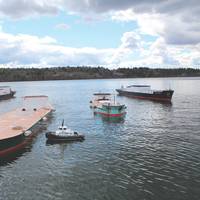
Massachusetts Maritime Academy offers seven undergraduate Bachelor of Science degrees and two graduate Masters of Science programs. The regiment of cadets is comprised of students from around the globe. The academy operates a training vessel used to acquire sea service for the cadets. Two tugs (Alert and Hercules) and a barge support the Mate of Towing program. The Academy has a vast array of simulators used for undergraduate and professional mariner training. The engineering…
MHI Subsidiary in Brazil for FPSO Compressors
In December Mitsubishi Heavy Industries Compressor Corporation (MCO), a Group company of Mitsubishi Heavy Industries, Ltd. (MHI) based in Hiroshima, will establish a new company in Brazil in a joint venture with Mitsubishi Corporation (MC), to be known as MHI Compressor do Brasil Ltda. (MCO-B). Creation of the new entity, which will launch commercial operations in February 2016, is targeted at developing the Latin American market for compressors, with a focus on expanding sales of compressors for use in Floating Production, Storage and Offloading systems (FPSO), a market expected to see robust demand as Brazil develops deepwater oil fields. Initially MCO-B will perform sales and after-sale servicing functions, with local manufacturing capability targeted for the future.
Interlake Steamship Nears Final Stage of $100m Fleet Upgrade
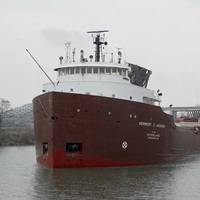
The Interlake Steamship Company announced that it will repower its last steamship, the S.S. Herbert C. Jackson, with a highly automated diesel propulsion system in the final phase of a 10-year, $100 million modernization effort to create the most efficient, reliable and environmentally friendly fleet on the Great Lakes. The six-month diesel conversion, which is slated to begin in mid-December, is the fifth major overhaul to Interlake’s fleet and its fourth steam-to-diesel conversion since 2006.
MHI to Shift Operations from Yokohama Kanazawa
Mitsubishi Heavy Industries, Ltd. (MHI) and Mitsubishi Hitachi Power Systems, Ltd. (MHPS) have decided on a policy to transfer operations currently performed at MHI's Yokohama Dockyard & Machinery Works' Kanazawa Plant and MHPS's Yokohama Works (Kanazawa Area) to other business bases in Japan and overseas. The company's aim is to pursue consolidation and optimization of its production bases for each product category as a way of further strengthening its global competitiveness in terms of technology, costs and efficiency. The transfer initiative is scheduled for completion by the end of March 2016. Operations relating to MHPS's thermal…
IGCC System for Tokyo Electric Power
A consortium led by Mitsubishi Hitachi Power Systems, Ltd. (MHPS) has received an order from Tokyo Electric Power Company, Incorporated (TEPCO) for design work for a large-scale integrated coal gasification combined-cycle (IGCC) system to be adopted for a project to create the world's most advanced coal-fired thermal power plants. The project plans call for the construction of two 500-megawatt (MW) class IGCC plants in Fukushima Prefecture to help promote local industrial recovery. Following receipt of the order, the consortium, which also includes Mitsubishi Heavy Industries, Ltd. (MHI), Mitsubishi Electric Corporation and Mitsubishi Heavy Industries Mechatronics Systems, Ltd. (MHI-MS), has already begun the newly contracted design work.
MN 100: Massachusetts Maritime Academy
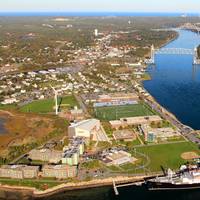
Massachusetts Maritime Academy is one of nine Massachusetts State Universities. Established in 1891, the academy now offers seven undergraduate and two master’s degrees. Approximately 50-60% of the undergraduates are enrolled in unlimited USCG Merchant Marine License preparatory programs. 1,350 students are members of the Regiment of Cadets residing on campus. The academy operates a training vessel (T.S. Kennedy) used to acquire sea service for the cadets. The academy also has an 87 ton auxiliary training vessel (Ranger) used during the academic semesters for coastal navigation.
MERS-equipped Ship Records 8% Fuel Savings
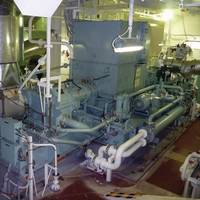
The push to outfit commercial vessels with energy saving equipment continues, and news out of Japan says that a Mitsubishi Energy Recovery System (MERS) supplied by Mitsubishi Heavy Industries Marine Machinery & Engine Co., Ltd. (MHI-MME) was installed on a VLOC (Very Large Ore Carrier) for the first time. The system is designed to enhance power generation efficiency by maximizing recovery and utilization of exhaust gas waste energy from marine diesel engines, and demonstrated significant fuel consumption improvement compared with existing ships during at-sea trial.