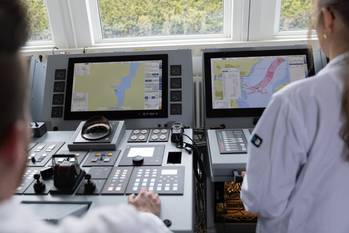
Infrastructure Insights: Executive Action Needed to Amend Antiquated Executive Order

The U.S. Army Corps of Engineers Civil Works mission began in 1824 when our Nation’s fifth President, James Monroe, signed into law a bill to improve navigation on the Ohio and Mississippi Rivers. While Corps projects have always been large and complex, the Civil Works missions have evolved over time to incorporate new regulations, policies, shifts from political pressures, and unfortunately, cumbersome bureaucracy. Today’s Corps’ Civil Works mission is critical to America’s economy and global competitiveness and provides a true return on investment to move the country forward.
Made in America: The U.S. Dredging Market, a Strategic Jones Act Industry

The United States dredging industry stands as one of the most competitive, efficient, and strategically vital sectors of the maritime economy. As part of the Jones Act fleet—the original Build America, Buy America industry — it not only strengthens our ports and waterways but also anchors thousands of middle-class jobs, spurs shipbuilding across the Gulf and East Coasts, and delivers exceptional value for taxpayers.The last several years have ushered in a quiet renaissance. Dredging firms large and small are modernizing their fleets, expanding capacity, and deepening critical U.S.
Funding the Flow: America’s Inland Waterways Need a Smarter Investment Strategy
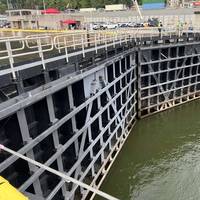
The path toward funding the U.S. Army Corp of Engineers (USACE) – and the critical inland infrastructure maintenance and construction of locks and dams that it does – is neither straight nor clear. Jen Armstrong, VP, Government Relations, Waterways Council, visited recently with Maritime Reporter TV to discuss in detail the historical context of how USACE funding has evolved in the past 50 years. A functional and efficient locks and dams system is not simply a matter of catering to inland waterway operators; rather it is a logistics imperative to fuel the U.S.
Port Houston Records Double-Digit Gains in Standout July
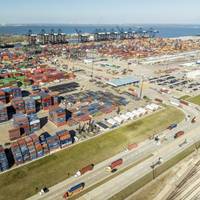
July was a standout month for Port Houston’s public terminals, with double-digit growth in key sectors that pushed year-to-date totals to new heights. Container volumes for July were up are markable 21% compared to July 2024, reaching 392,829 twenty-foot equivalent units (TEUs). This is one of the Port’s strongest single-month performances on record. Throughout this year Port Houston has continued to demonstrate strong capacity for growth in containerized cargo and has seen its largest volumes ever.
U.S. Representative Lisa McClain Recognized as a Great Lakes Champion
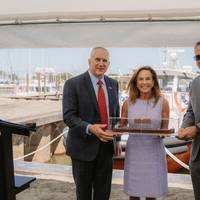
On Monday, August 18, 2025, the Great Lakes Maritime Task Force (GLMTF) recognized Michigan Congresswoman Lisa McClain for her efforts advocating for the Great Lakes Navigation System and those who live and work on or near the Fourth Sea Coast."It is an incredible honor to be recognized as Legislator of the Year by the Great Lakes Maritime Task Force. The Great Lakes are not only a vital economic engine for our region, but a national treasure that demands strong, informed policy,” Chairwoman McClain said.
Inland Waterways System: Driver for the U.S. Economy
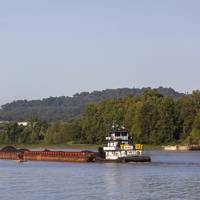
“In a global marketplace, supply and demand in one area of the world can greatly impact the agricultural production in another. American products are shipped worldwide …” is how the U.S. Department of Agriculture (USDA) describes the backdrop for international trade. The inland and coastwise waterway systems serving the United States (where agricultural cargoes are an important component) are sometimes regarded as insular highly specialized marketplaces. However, they are indeed elements of much larger trading networks that are influenced by global economic…
U.S. Boatbuilding Gains Steam
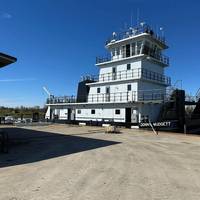
Shipbuilding in the United States has seen a heightened profile with increased attention from Congress and the Trump 2.0 Administration. The ongoing dialogue regarding reinvigorating the U.S. deep sea fleet has brought mainstream attention to vessel construction, which has been nearly absent in recent years. In contrast, the marketplace for domestic vessel construction, for vessels serving rivers and harbors, is alive and well. Recent newbuilds for linehaul trades, and also Z-drive vessels for ship assist work, show the resilience of this sector.
Army Corps of Engineers Seeks Public Comments On Proposal to Renew and Revise Nationwide Permits

The U.S. Army Corps of Engineers announced it is seeking comments on its proposal to renew and revise 56 existing nationwide permits and issue one new nationwide permit authorizing activities associated with improving fish passage. Nationwide permits authorize activities in wetlands and other waters that are regulated by Section 404 of the Clean Water Act and/or Section 10 of the Rivers and Harbors Act of 1899.“The streamlined set of nationwide permits proposed today offers a clear…
Infrastructure: USACE Funding Better Than Zero, But a Missed Opportunity
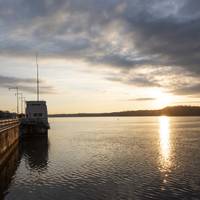
On May 15, the U.S. Army Corps of Engineers released its Fiscal Year (FY) 2025 Work Plan that allocated funds from the FY25 Full-Year Continuing Appropriations and Extensions Act. That bill provided funding for the Corps’ Civil Works mission, typically funded in the annual Energy and Water Development appropriations bill.The Corps’ FY25 Work Plan provided nearly $200 million for inland waterways construction projects, of which nearly $50 million will come from the Inland Waterways Trust Fund (IWTF).
USTRANSCOM Report: Impact of Dredging Limitations on U.S. Strategic Seaports

The U.S. Senate Committee on Armed Services, through the National Defense Authorization Act (NDAA) for Fiscal Year 2025, tasked the U.S. Transportation Command (USTRANSCOM) with assessing how reduced dredging capacity may have impacted designated strategic seaports. In response, USTRANSCOM submitted a report titled Dredging and the Strategic Seaport Program, which has recently been declassified and made available to the public. The report outlines operational impacts, identifies root causes of dredging challenges…
U.S. Army Corps of Engineers Readies for Mid-Atlantic Civil Works
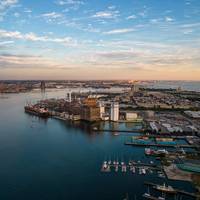
The U.S. Army Corps of Engineers (USACE), Baltimore District, has received more than $218 million in funding for numerous infrastructure improvement, dredging and environmental projects benefiting Maryland, Pennsylvania, southern New York, and the District of Columbia.The financing includes $62 million towards Baltimore Harbor operations and maintenance and $71.9 million for the Mid-Chesapeake Bay Island project.This funding is through the fiscal year 2025 Work Plan for the Army Civil Works Program, which is Congressionally authorized funding specifically for USACE.
US Gulf Coast’s First LNG Ship Bunkering Hub Secures Final Permits
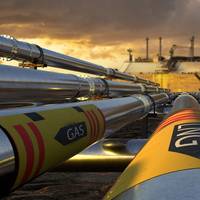
A joint venture project developing the first marine fuel facility for liquefied natural gas in the U.S. Gulf Coast has secured final permits and construction is expected to begin later this year, executives involved said on Monday.The global shipping industry has been looking for fuel solutions to cut carbon emissions, with LNG seen as a cleaner alternative.U.S. President Donald Trump's administration is seeking to expand LNG exports to help reduce Europe's dependency on Russian gas after Moscow's invasion of Ukraine three years ago.U.S. LNG can be used as a marine fuel in U.S.
Barge Sinks in Collision on Lower Mississippi River
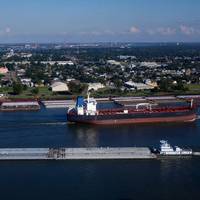
A vessel collision resulted in a barge breakaway and one sunken barge on the Lower Mississippi River near New Orleans on Sunday night.Watchstanders at Coast Guard Sector New Orleans received a report at approximately 9:20 p.m. Sunday that the Panamanian flagged Motor Vessel Isla De Bioko and the US flagged Towing Vessel Ginny Stone were involved in a collision at mile marker 110.Following the collision, six barges broke free and began drifting down river while one barge loaded with urea sank.
Legal Beat: U.S. Non-Contiguous Domestic Trade: Barge, Inland & Water Transportation
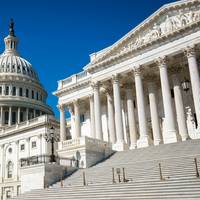
The U.S. inland waterway system is a critical and underutilized component of the domestic supply chain that serves non-contiguous markets originating in or destined for Alaska, Hawaii, and U.S. territories and possessions. For transportation service providers and shippers that operate in the domestic trade of the U.S., ocean carriers, barge operators, and inland waterway providers can offer cost-effective scalable alternatives to the traditional surface and air modes that connect these regions to the U.S. mainland.
Steel Cut for USACE Eco Dredger
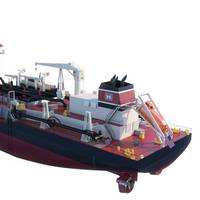
Eastern Shipbuilding Group (ESG) has officially begun construction on the U.S. Army Corps of Engineers' (USACE) new medium class hopper dredger with a ceremonial steel-cutting event.The vessel is being built at ESG's Allanton and Port St. Joe facilities and is scheduled for delivery in 2027.ESG is collaborating with Royal IHC on the design.USACE's new hopper dredger will be able to load up to 15% more efficiently, reducing fuel consumption and environmental impact, with an ECO Control Package that includes high-end controls for trail speed…
Large Wreckage Removed from Potomac River

The U.S. Army Corps of Engineers (USACE), Baltimore District, the U.S. Coast Guard (USCG) and U.S. Navy’s Supervisor of Salvage and Diving (SUPSALV), have removed all the major components of the American Airlines regional jet and U.S. Army Black Hawk helicopter from the Potomac River.The PSA Airlines Bombardier CRJ700 airplane operated as American Airlines Flight 5342 from Wichita, Kansas, to Reagan Washington National Airport and the US Army helicopter collided at 8:47 p.m. ET on January 29…
NOAA Guides Easier Hudson River Navigation
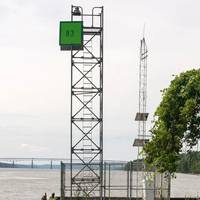
Real-time data on coastal conditions will support improved maritime navigation in New York.Navigating New York waterways just got a bit easier. NOAA and the New York State Department of Environmental Conservation announced the establishment of the Hudson River Estuary Physical Oceanographic Real-time System (PORTS). The system delivers real-time oceanographic and meteorological observations that can improve maritime safety and inform coastal resource management in the region.
INLAND Insights: Time to Remedy Inefficiency in Executive Order 12322
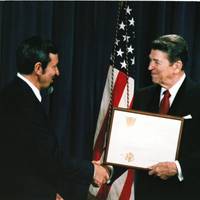
The members of Waterways Council, Inc., (WCI) the national organization that advocates for a modern, efficient, well-maintained system of ports and inland waterways, recently met in Washington, DC with Members of the 119th Congress to discuss WCI key and related priorities for 2025. An ancillary issue that WCI is looking to address is the removal or modification of an antiquated 1980s Executive Order (EO) 12322 that mandates any federal or federally assisted land or water resources…
One Year Ago Today: U.S. Maritime Industry Delivers in Wake of FSK Bridge Collapse
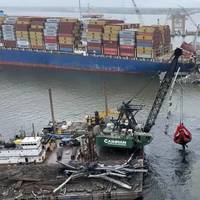
We are at the one-year since the Francis Scott Key (FSK) Bridge collapsed over the Patapsco River’s Fort McHenry Channel in Baltimore, Maryland. Nearly 100 percent of the wreckage and debris removal was conducted by the Jones Act private sector U.S. maritime industry. The FSK collapsed at about 1:28 a.m. local time on March 26, 2025 after the container ship MV DALI lost power and collided with one of bridge’s support piers. Six construction workers died in the collapse, while two other workers survived the fall into the freezing water.
USACE Grants Permit for Reconstruction of Baltimore's Key Bridge
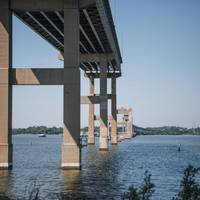
The U.S. Army Corps of Engineers (USACE) has issued a permit for the rebuilding of the Francis Scott Key Bridge, granting Maryland Transportation Authority permission to construct the bridge, following the collapse of the original structure that claimed the lives of six Baltimoreans. The Baltimore District Regulatory Branch previously issued two permit verifications in 2024 for preliminary construction activities, explosive demolition, and removal of the remaining bridge structures and continues to participate in weekly interagency meetings on the project.To remind…
MEGA INFRASTRUCTURE: Inside the Chickamauga Lock Upgrade Project
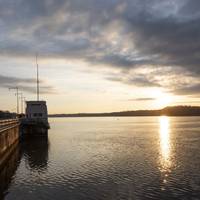
This episode of Maritime Matters: The MarineLink Podcast, delves into the critical importance of the inland waterways infrastructure in the U.S., focusing on the Chickamauga Lock Project on the Tennessee River. A trio of experts – Tracy Zea, President & CEO of WCI; Elizabeth Burks, USACE Nashville Division Chief; and Capt. Joe Cotton, Project Manager, Chickamauga Lock Project – discuss the current state of the inland waterways, the history and significance of the Chickamauga Lock…
Potomac River: Safety of Navigation Fully Restored

The section of the Potomac River affected by the Jan. 29 midair collision of an American Airlines regional jet and a U.S. Army Black Hawk helicopter near Washington’s Ronald Reagan Washington National Airport has now been fully restored, six days ahead of schedule.After aiding in initial rescue and recovery operations, 49 US Army Corps of Engineers subject matter experts worked alongside more than 2,000 responders from 45 private, local, state and federal agencies as they began preliminary assessments required for wreckage removal operations.Pre-staging operations commenced Jan.
Sixty-Eight U.S. Bridges At Risk from Vessel Strike
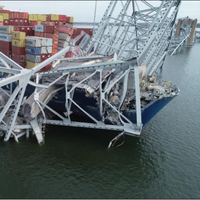
The U.S. National Transportation Safety Board (NTSB) has recommended that 30 owners of 68 bridges across 19 states conduct a vulnerability assessment to determine the risk of bridge collapse from a vessel collision.The recommendation comes as part of the ongoing investigation into the collapse of the Francis Scott Key Bridge in Baltimore.The NTSB found that the Key Bridge, which collapsed after being struck by the containership Dali on March 26, 2024, was almost 30 times above the acceptable risk threshold for critical or essential bridges…