
Wattlab Scales Up Solar Power for Bulkers

Following successful pilot projects and the first full-scale installation on a seagoing vessel, the Vertom Tula, Wattlab is now taking the next step: scaling its Solar Flatrack solution towards the international bulk shipping market.Currently, Solar Flatracks can be deployed on vessels up to and including the Supramax segment. In parallel, Wattlab has started the development of seaworthy solar solutions for Panamax and even Capesize bulk carriers.Wattlab, a specialist in solar power for shipping…
Study: Allseas SMR Tech Seen as Key Maritime, Industry Decarbonization Tool
Allseas’ small modular reactor (SMR) technology could generate up to $150 million billion in economic value for the Netherlands and create as many as 40,000 new jobs by 2050, according to an impact study released on Monday by the offshore engineering group.The study, conducted by consultancy Roland Berger, found that deploying the company’s 25 MWe / 70 MWt high-temperature gas-cooled SMR could also help cut grid congestion, strengthen energy security and deliver major emissions…
Solar System Installed on Dutch Coaster
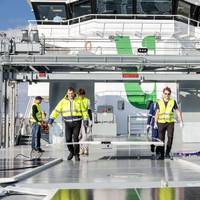
Dutch maritime solar company Wattlab has delivered a solar energy system for globally operating shipping, trading, and maritime services company Vertom.The recently delivered Vertom Tula is a 7,280dwt diesel-electric multipurpose cargo vessel. The solar system represents a major technical milestone and a step forward for sustainable shipping. Wattlab has delivered and installed 44 Solar Flatracks that will provide power to onboard systems, reducing 20% of the hotel load. Vertom operates a fleet of over 100 vessels…
I-SEAMORE Project Concludes with a Tested Maritime Surveillance Platform
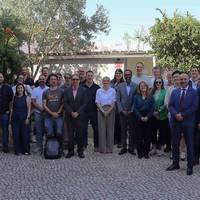
The I-SEAMORE project, co-funded by the European Union’s Horizon Europe research and innovation program under the Grant Agreement 101073911, officially concluded, having successfully delivered an integrated platform for maritime surveillance. Developed over two and a half years, the platform leverages AI, Big Data fusion, and multi-asset orchestration (UxVs) to provide European Maritime Authorities with enhanced situational awareness and operational readiness.The project marked its conclusion with the I-SEAMORE Final Demonstration on September 16th in Tróia…
Allseas Takes Aim at Nuclear Power for Energy-Intensive Vessels
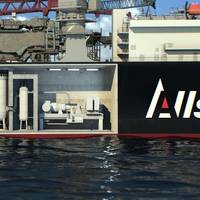
Dutch offshore contractor Allseas has launched a five-year plan to design, develop and deploy a Small modular reactor (SMR) tailored for integration into offshore vessels and for onshore use.Building on 40 years of engineering expertise in the offshore energy industry, Allseas move into nuclear marks the next bold step aimed at delivering clean, high-performance energy systems to sea and shore.Allseas has selected High-temperature gas-cooled reactors (HTGRs) in the 25 MWe range, due to their inherently safe characteristics.
Wattlab SolarDeck: Solar Power for Ships at Sea
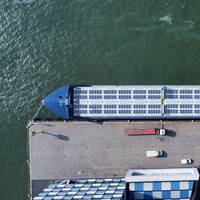
Wattlab introduced its SolarDeck - a modular and scalable system of deck-mounted solar panels that is designed to yield "significant reductions" in fuel consumption and CO2 emissions - for the seagoing shipping industry, with an expected ROI of 3-5 years.Established in 2017, Wattlab has spent its first years of operations focusing on the inland shipping sector with its Solar Flatrack, a modular solar energy system consisting of movable and stackable integrated solar panels and inverters.
Ammonia’s Future at a Turning Point in 2025
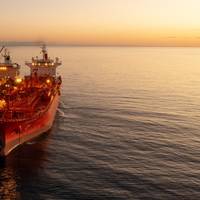
The shipping industry has been watching the dual-fuel engine choices made for newbuildings as an indicator of what many see as an uncertain fuel future.In December, DNV’s Alternative Fuels Insights platform counted 27 ammonia and 322 methanol-fueled vessels currently on the orderbooks.Methanol has raced ahead of ammonia, which currently lags in both engine and regulatory development.As the years tick by, 2025 is here and 2030 is rapidly approaching, eyes are now turning to the existing fleet – to the potential for engine retrofits. Again, methanol is ahead of ammonia.
Case Study: Onboard CCS Would Result in 10% Fuel Penalty
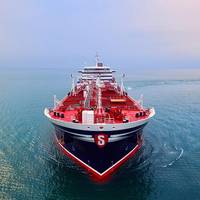
A project assessing the technical feasibility of onboard carbon capture and storage (CCS) has concluded that the technology has the potential to reduce a tanker’s CO2 emissions by as much as 20% per year, with a fuel consumption penalty of just under 10%.The project, Realising Maritime Carbon Capture to Demonstrate the Ability to Lower Emissions (REMARCCABLE), was carried out by the Oil and Gas Climate Initiative (OGCI), the Global Centre for Maritime Decarbonisation (GCMD) and Stena Bulk together with ABS…
New Project Aims to Capture Carbon Emissions Onboard Oil Tanker
A consortium made up of global energy and shipping organisations announced on Wednesday that they will start a project to build and test a carbon capture system onboard an oil tanker for the next two years.The project onboard a medium-range tanker owned by shipping firm Stena Bulk is targetting at least 30% absolute carbon dioxide capture, or about 1,000 kilogramme per hour, the companies said in a joint press release on the sidelines of the Singapore International Bunkering Conference and Exhibition (SIBCON) 2022.It is being carried out by the Global Centre for Maritime Decarbonisation (GCMD) in Singapore, the Oil and Gas Climate Initiative (OGCI)…
Damen Ramping Up Composites Shipbuilding
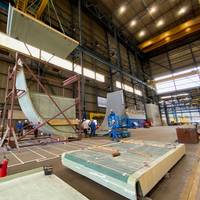
The Realization and Demonstration of Advanced Material Solutions for Sustainable and Efficient Ships (RAMSSES) project recently reached a key milestone. On July 18, at Damen Schelde Naval Shipbuilding’s (DSNS) location in Vlissingen-East, the Netherlands, the project’s partners unveiled the recently assembled full scale composite ship’s hull section they have been developing these past three years. This, entitled Custom Made Hull for Offshore Vessel, represents one of 13 demonstrators that make up the RAMSSES project.
GE's Haliade-X Produces First Power
GE Renewable Energy has generated first power from its 12MW Haliade-X prototype - the world's largest and most powerful wind turbine - located at Maasvlakte, the Port of Rotterdam.According to GE, local teams will now proceed with the testing phase, during which different types of measurements will be performed to obtain a Type Certificate for the Haliade-X in 2020.John Lavelle, CEO of Offshore Wind at GE Renewable Energy, said “This first kWh is a critical achievement for our whole team, bringing to fruition our vision and all the hard work put in place. Innovation is part of GE’s DNA, and having successfully powered the world’s first 12 MW wind turbine, this illustrates it perfectly.
Green Maritime Methanol Project Gets a Boost
Shipowners, shipyards, manufacturers and ports have joined forces to investigate the feasibility of methanol as a sustainable alternative transport fuel in the maritime sector.Major shipowners Boskalis, The Royal Netherlands Navy, Van Oord and Wagenborg Shipping will take part in the consortium, together with shipbuilders, Damen Shipyards, Feadship, Royal IHC and major marine engine manufacturers Pon Power and Wärtsilä together with their trade association VIV.Specialized marine equipment suppliers like Marine Service Noord and maritime service providers including C-Job Naval Architects complete the maritime supply chain.Work to study the infrastructure and supply chain for methanol is also addressed by the participation of The Netherlands’ two largest ports…
European Consortium to Convert Coal-Fired Power Plant to Biomass
The European ARBAHEAT consortium will start a research project to investigate the conversion of the ENGIE Ultra-SuperCritical coal-fired Rotterdam power plant into a biomass-fired heat and power plant this month.The innovative technology used to produce the required steam treated biomass has been developed by the Norwegian company Arbaflame AS.Goal of this showcase is to investigate the technical possibilities of cost-effectively converting the coal-fired power plant into a flexible 100% sustainable biomass fired plant, which will be able to deliver sustainable electricity as well as sustainable heat. For this project the consortium…
Advance Information of Berths in Ports Can Cut Cost and Emission
If seagoing vessels were better informed about the availability of berths and adapted their speed accordingly, substantial savings could be made in terms of fuel and CO2 emissions. This conclusion is based on a study that was recently commissioned by the Port of Rotterdam Authority and research institute TNO.The study pointed out that if sea-going vessels are regularly kept informed – particularly during the last twelve hours before arrival – about exactly when their berth will become available, they will be able to adapt their sailing speed accordingly.That usually means reducing their speed so that they arrive just in time. This in turn leads to less fuel consumption and therefore lower emissions of unwanted substances such as carbon dioxide, sulphur oxides and nitrous oxides.
CMM, Damen Debut Fast Marine Access in Brazil
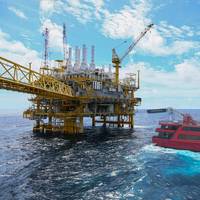
Compagnie Maritime Monégasque (CMM) and Damen Shipyards Group (Damen) have joined forces to introduce a fast, safe and reliable Fast Marine Access crew change solution for the Brazilian market using a Damen FCS 7011. The solution looks to transfer personnel between shore and the ever more distant deep sea offshore platforms and flotels. The FCS 7011 focuses on increased safety, cost reduction and comfort, while offering a high speed solution to complement existing helicopter transfers.
Amsterdam Port Becoming a Smart Global Hub
The growing number of construction projects in the Greater Amsterdam Area has created a need for a smart and efficient method for transporting materials to building sites. In an effort to meet this demand, the City of Amsterdam, Port of Amsterdam, Waternet and TNO (the Netherlands Organisation for Applied Scientific Research) have launched a partnership project in Amsterdam focussing on building logistics. As part of the project, commissioned by the Ministry of Infrastructure and the Environment, the consortium partners will be facilitating the creation of a multimodal building hub in the Port of Amsterdam. The multimodal building hub will be used to redirect a maximum amount of construction traffic from the road to the water from a single point located on the water.
Maritime Professionals Ask the Hard Questions

More than 80 maritime professionals attended two unique one day events focused on the sub IMO / sub 24 meter sector in Southampton this April. The fast moving and dynamic one day workshops brought together an international group of experts armed with the latest knowledge to identify problems that affect the maritime sector worldwide. The superb team of presenters shared unique insights and highlighted potential solutions for a changing world. Workshop lead John Haynes said, “The format of these one day events is shaped by our experience and is constantly evolving.
Is Tin Returning in Silicone Hull Coatings?
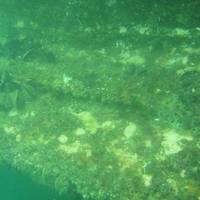
The reemergence of organotin in marine hull coatings is of increasing concern, with academics and environmentalists calling on International Maritime Organization (IMO) to investigate the use of tin in silicone-based foul release systems and other ships hull coatings. While use of the organotin tributyltin (TBT) was outlawed as an active biocide almost 10 years ago, the IMO is claimed to “have left the door open” for tin as a catalyst, but according to some academics the amount of organotin used suggests it could be acting as the active agent. Dr.
Rotterdam port mull power-to-gas-plant development
Six Rotterdam-based parties will investigate how sustainably generated electricity, converted into hydrogen, can be used in the production of fuels. TNO, Stedin, Smartport, Uniper, BP Refinery Rotterdam and Port of Rotterdam Authority will investigate the technical and economic feasibility of a power-to-gas plant in the Rotterdam port area, as well as the necessary amendments to regulations. The parties above signed a cooperation agreement to this end on 18 January 2017. The construction of wind farms in the North Sea means that a large amount of 'green electricity' will become available in the coming decades and will be landed via the Tennet grid at the Maasvlakte among other places. Using electrolysis, this electricity can split water molecules into oxygen and hydrogen.
Measuring Noise Levels of Cavitating Propellers
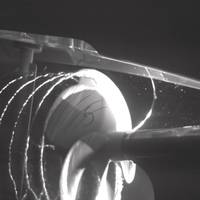
As underwater radiated noise levels in the oceans increases, MARIN has investigated just how much cavitating propellers are to blame. Traditionally, underwater radiated noise is mainly of interest for naval vessels and fishery research ships. Nowadays, however, there is a growing concern that marine life is affected by the rise in background noise levels in the oceans. Marine mammals and fish use sound to communicate and to sense their environment and this requires low background noise levels. The rise in noise levels is being caused by an increase in shipping, among other factors.
InterDam Conducts Door Safety Test
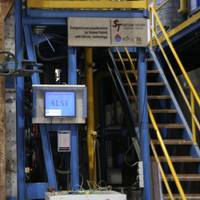
Between July and September, 2016, the architectural safety equipment company InterDam’s engineers subjected its G21 Fire Door to a single sample blast and fire safety test. The result, according to InterDam, was an unqualified success. “We have now confirmed that our standard G21 Fire Door can withstand a 0.56 bar blast followed by an A60 rated fire, while remaining structurally sound,” said Berend Groeneveld, InterDam Managing Director. The company has performed similar testing on walls at its customers’ request…
Europe's 'LNG Masterplan'
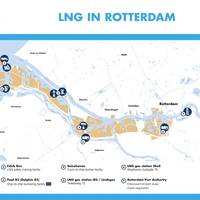
The European Union has facilitated this project between 2013 and 2015. The project cost a total of 34 million euros, 17 million of which were provided by the European Union from the TEN-T Program. "We can say 'well done' to all parties involved. It looks like we are going to benefit tremendously from this project for the implementation of LNG in the inland water transport sector. We are actually getting things done now," honored Dimitrios Theologitis, head of the European DG MOVE Unit Ports and Inland Waterways…
TNO, Imtech to Partner on Research and Development
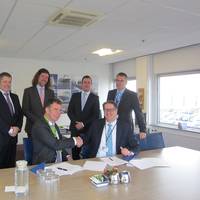
TNO and Imtech Marine have signed an agreement expressing intent to work together on research and development projects. The signing took place on January 21 at Imtech Marine in Rotterdam. TNO and Imtech have joined forces many times over the years and see possibilities to further strengthen each other and in doing so deliver added value to the market and society, said the contract signatories, Henk Geveke, General Director of Defence & Security on behalf of TNO, and André Meijer, Managing Director on behalf of Imtech Marine.