
How Are Advances in Simulation Shaping the Future of Maritime Training?
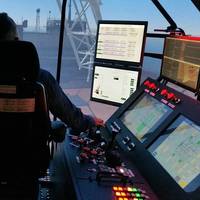
An increasing demand for safety and sustainability in the maritime industry has been instrumental in the advancement of simulation technology, which is revolutionizing maritime training by providing immersive, cost-effective, and risk-free learning experiences.Although simulation training has been used in the maritime industry for several decades, early simulation technologies were very basic compared to the sophisticated systems available today. The development of computer-based simulation technology in the latter half of the 20th century revolutionized maritime training.
Sea Machines Receives $12 Million in Funding
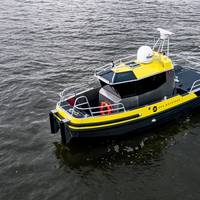
Boston-based Sea Machines, a developer of autonomous control systems and advanced perception technology for maritime vessels, announced it has secured $12 million from a group of capital investors.The funding round, led by cleantech venture capital specialist Emerald Technology Ventures, was joined by Nabtesco Technology Ventures (NTV), Chevron Technology Ventures, Ingram Industries, RKKVC, Level 2 Ventures and IMC Ventures. This adds to a financing in 2023 led by the Geekdom Fund.The company said the investments will help it to "hone its technological edge and grow its market presence".
Zelim Taps Sea Machines for Unmanned Search and Rescue Vessel
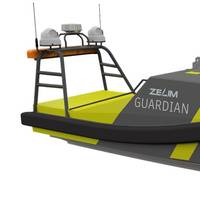
Scottish search and rescue (SAR) technology company Zelim has developed the Guardian class of fast rescue craft, controlled by Sea Machines Robotics’ SM300 maritime autonomy, enabling unmanned operation of the vessel employing Zelim’s casualty detection and recovery process. The 8.5m Guardian includes Sea Machines SM300 remote command and control product, making capable of uncrewed operation. The SM300 hardware integrates with the Guardian’s propulsion system and sensors, enabling…
World’s Fastest Autonomous Interceptor Unveiled
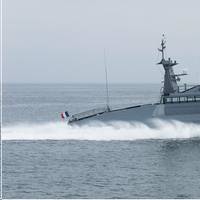
A high-tech autonomous interceptor vessel—said to be the world's fastest—is set to make its debut next week in Saudi Arabia.French group CMN NAVAL will demonstrate the UHSI32 at the World Defense Show from March 6-9, in Riyadh, showcasing its ability to execute autonomous transit missions, pattern autonomy and dynamic collision avoidance while being operated via over-the-horizon network connectivity almost anywhere in the world. The autonomous abilities and features has been developed by CMN in cooperation with Sea Machines Robotics.
Rolls-Royce and Sea Machines Partner on Autonomous Ship Control Solutions
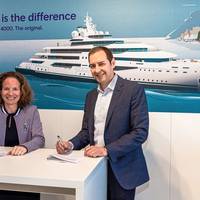
Rolls-Royce and Sea Machines Robotics announced they are working together to deliver remote command, autonomous control and intelligent crew support systems to the marine market.As part of this agreement, Rolls-Royce business unit Power Systems and Sea Machines, the developer of remote-vessel command and autonomous control systems, will join forces on the development and sale of fully and semi-autonomous vessel control systems.Michael Johnson, CEO and founder of Sea Machines, said…
Sea Machines Bags $3.1 Million Contract for US Navy Autonomous Supply Stations
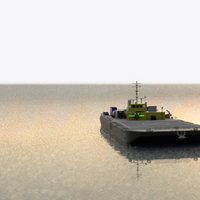
Autonomous command and control systems developer Sea Machines Robotics announced it has advanced its multi-year Other Transaction (OT) agreement with the U.S. Department of Defense (DoD)’s Defense Innovation Unit (DIU). Phase 2 of the multiphase contract delegates $3.1 million to the deployment of a full-scale oceangoing replenishment platform.In October 2020, Boston-based Sea Machines was enlisted by the DoD to engineer, build and demonstrate ready-to-deploy system kits that transform existing commercial barges to platforms capable of landing and replenishing military aircraft.
Kongsberg, Robert Allan Drive the Future of Marine Firefighting
The first vessel in the series will be the 20 meter RALamander 2000, featuring FiFi1 capability, pumping capacity of 2400 m3/hour and with optional foam capabilities. Vancouver based naval architects and marine engineers Robert Allan Ltd., and international marine technology specialist Kongsberg Maritime are collaborating on the development of a radically new remotely-operated fireboat that will allow first responders to attack dangerous port fires more aggressively and safer than ever before. Like other autonomous efforts underway on the waterfront, this concept tackles and solves the so-called “3D’s” – dull, dirty and dangerous – of workboat drudgery.
Meet the Future of Marine Firefighting
Kongsberg, Robert Allan drive the future of marine fighting. The first vessel in the series will be the 20 meter RALamander 2000, featuring FiFi1 capability, pumping capacity of 2400 m3/hour and with optional foam capabilities. Vancouver based naval architects and marine engineers Robert Allan Ltd., and international marine technology specialist Kongsberg Maritime are collaborating on the development of a radically new remotely-operated fireboat that will allow first responders to attack dangerous port fires more aggressively and safer than ever before. Like other autonomous efforts underway on the waterfront, this concept tackles and solves the so-called “3D’s” – dull, dirty and dangerous – of workboat drudgery.
Remotely Operated Fireboat Under Development
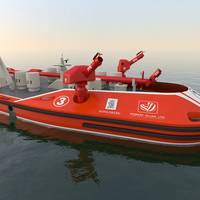
Robert Allan Ltd. and Kongsberg Maritime announced a collaboration to develop a new remotely-operated fireboat that will allow first responders to attack dangerous port fires more aggressively and safer than ever before. The un-crewed RALamander fireboat will offer in-close firefighting and ‘eye in the fire’ capability that keeps marine firefighting professionals out of harm's way. Fires involving containers, petrochemicals, shore-side structures or vessels can be attacked more…
Technology Qualification on the Route to Autonomy
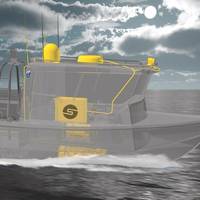
ABS weighs in on the way forward for marine autonomous systems and navigation technology. The era of digitization and hyper-connectivity is taking the maritime industry on a journey as it transitions from ‘smart’ to remotely operated and then, to autonomous vessels. The OSV sector – and offshore workboats in general – may well be leading that transition, with some projections for remote-controlled vessels as soon as next year. Many new technologies (sensors, navigational systems…
Unmanned Surface Vessels: From Concept to Service
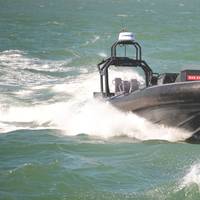
Over the next decade the maritime sector is likely to see one of the largest changes since sail gave way to steam. Unmanned Surface Vehicles (USV) are now being considered for various marine roles and the drivers for rapid development are significant. Unmanned or autonomous vessels have passed through the trial and evaluation stage and are now being adopted for civilian and military applications. The maritime sector now has the opportunity to shape technology developments from legislative and end-user standpoints.
Sea Machine: Unmanned Autonomous Workboat
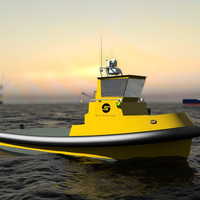
Press release- The Sea Machines V2 is a heavy-duty autonomus workboat built for offshore and nearshore operations. The semi-displacement hull provides open-ocean stability for surveying or USBL communications and the powerful propulsion system delivers more than 20 knots and 3 tons bollard pull when needed. With a pilot house and helm, the V2 is designed for operators who desire an autonomous vessel that can also be manually-driven as a conventional boat. The V2 is outfitted with our ACS control system which allows operation of the vessel in three primary gradations of autonomy…
Unmanned Vessels: The Future is Now
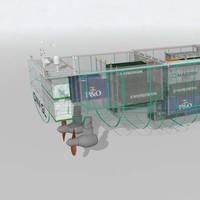
There is a global boom in the development of unmanned systems, from below the ocean’s surface to high in the sky to the world’s roads. Add to this list the maritime industry, on both military and civilian vessels. Maritime Reporter & Engineering News examines in depth recent developments taking place in Europe to discover general thoughts and technical trends driving the future of unmanned shipping. The joint European Research Project MUNIN was finalized in August 2015, a project…