ABB inks Deal for Orange Marine Cable Repair Newbuilds

ABB has won a contract to deliver a fully integrated electrical power, propulsion and automation system for two hybrid-electric cable repair vessels being built for French shipowner Orange Marine at Colombo Dockyard PLC in Sri Lanka.The vessels, scheduled for delivery in 2028 and 2029, will support submarine cable maintenance operations across the Atlantic and Indian oceans as well as the Mediterranean, Black and Red seas. Orange Marine is a wholly owned subsidiary of the Orange Group and specializes in the installation and maintenance of subsea telecommunications cables.Under the agreement…
In the Search for Ship Energy Efficiency, Don't Forget Waste Heat
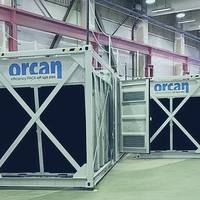
Fuel-agnostic and suitable for newbuilds and retrofit, Organic Rankine Cycle waste heat recovery systems are making headway as an energy-efficiency measure.Market prospects are looking so good for waste heat recovery systems that Orcan Energy recently expanded its industry relationships by partnering with Goltens on installations.Andreas Sichert, CEO of Orcan Energy, said: “Waste heat recovery is one of the most powerful and underutilized tools for improving energy efficiency.
Persevering with Hydrogen as a Maritime Fuel

Hydrogen fuel cell power plants for ships face the challenge of hydrogen’s low volumetric energy density at normal temperature and pressure and its low electricity-to-electricity energy conversion efficiency compared to batteries.The justification for persevering with hydrogen as a marine fuel, though, is that other leading candidates for future fuels (such as e-methanol and e-ammonia) require a hydrogen feedstock for production. Therefore, hydrogen will always be less energy…
Goltens Signs Distribution Deal SEA-Mate

Goltens Worldwide announced a new distribution agreement with Denmark's Marine Fluid Technology A/S (MFT) covering MFT’s SEA-Mate Blending-on-Board (BOB) system, SEA-Mate Filter system and other SEA-Mate products across key maritime markets in Singapore, Indonesia, India, the Philippines, and the Middle East including the UAE, Saudi Arabia, Bahrain, and Qatar.SEA-Mate Blending-on-Board is touted as a revolutionary technology designed for ship owners to rethink their lubrication oil use by recycling and enhancing engine efficiency and reducing operating costs…
Schottel Propulsion for Four New Saltchuk Escort Tugs
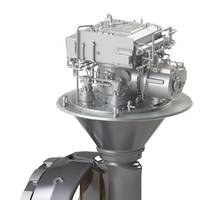
Schottel won an order to supply azimuthing thrusters for four new escort tugs for Seattle-based Saltchuk Marine, the beginning of the renewal of the Saltchuk fleet for operations on the US West Coast, Hawaii, and Alaska.To be built by Eastern Shipbuilding, the vessels are a RApport 2600 design by Canadian naval architect Robert Allan and will measure 25.6 x 12.8m with a 5.5-m draft. Accommodation will be provided for eight persons, and they will be operated by Foss Maritime.Each tug will be equipped with two azimuthing Schottel RudderPropellers of the type SRP 510 each.
Survitec Urges Fire Safety Reform for Methanol-fueled Vessels
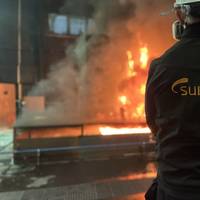
Survitec, a provider of survival technology solutions, has welcomed recent fire safety guidance from classification society DNV but warns that additional steps are necessary to ensure methanol-fuelled vessels are fully fire-safe.In a study published in their White Paper, “Do we need new fire safety standards for methanol?”, Survitec reveals that traditional fire-fighting methods are inadequate for dealing with methanol fires. The findings, presented this week at the SMM trade fair in Hamburg…
Is Stern Tube Damage Declining?
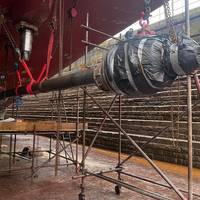
It might be easy to blame EALs, but the ongoing causes of stern tube damage are varied, and possibly declining.Environmentally Acceptable lubricants (EALs) gained market traction with the introduction of US VGP regulations in 2013. Since then, DNV has observed two major trends. The first, starting in 2013 was early life damage, either during sea trials or within the first five years of operation, where aft stern tube bearings typically failed under extreme load conditions. Then from around 2018…
SCHOTTEL to Propel Orca Class Heavy-lift Vessels
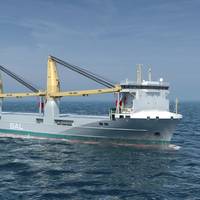
The new Orca Class heavy-lift vessels being built at China's Wuhu Shipyard for the Jumbo-SAL-Alliance will be propelled by SCHOTTEL ControllablePropellers (SCP).The four-bladed controllable pitch propellers type SCP 129 will feature an input power of up to 8,810 kW and a propeller diameter of six meters.Jumbo-SAL-Alliance is a commercial joint venture between German shipping company SAL Heavy Lift and Netherlands-based Jumbo Shipping. Their new Orca Class, which includes four firm and two optional vessels…
Steeprop to Ferry Owners: Focus on TCO Instead of kW-power to Optimize Costs
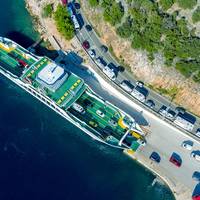
Companies planning a new ferry build should focus on the Total Cost of Ownership (TCO) instead of kW-power, in order to optimize costs, Steeprop, a designer and manufacturer of azimuth propulsion systems, said.Choosing the propulsion unit based mainly on Capex, for example, will most likely increase costs in the long run, adding that a ferry owner can save more than two million euros over a 15-year period by concentrating on the TCO."The traditional way of handling the procurement of propulsion systems…
Historic Steam Ship Sailing Cleaner with New Bilge Filter
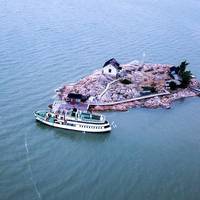
Environmental awareness is key priority for historic 83-year old steam yacht S/S UkkopekkaThe last surviving ship to have seen active service in Finland’s Winter Wars and Continuation Wars from 1939-1944 has stepped up its fight against marine pollution with the installation of new environmental protection products.Built in 1938, S/S Ukkopekka is a 35-meter privately owned passenger steamship operating cruise trips in the Finnish Archipelago Sea. This area of the Baltic is a MARPOL…
Ship Power: Inside WinGD's X-DF2.0 Technology
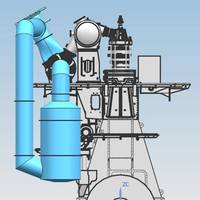
Developments in marine power today are centered on ever tightening legislative mandate which increasingly aim to dramatically reduce and eventually eliminate greenhouse gas emissions to the environment. While the holy grail of being truly ‘emissions free’ is still not feasible, there is much concurrent work in industry and academia to develop and source the fuels, the machinery technology, the logistical infrastructure and the business case for solutions that will meet the 2050 50% emission reduction mandates from the International Maritime Organization (IMO).
Penflex Receives DNV GL Certification
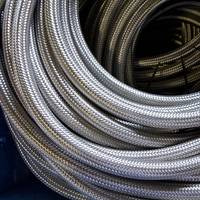
Flexible metal hose manufacturer Penflex Corporation said Penflex Vietnam has received DNV GL certification for its products used in marine and offshore applications.Penflex single and double braided 700 Series sizes 2 ½” to 12” and P3 Series sizes ¼” to 2” comply with all DNV GL standards pertaining to metal hose.DNV GL rules for classification: Ships Pt. 4 Ch. 6 Piping SystemsDNV GL offshore standards (OS): DNVGL-OS-D101 Marine machinery systems and equipmentDNV GL class programmes…
DOJ: F/V Owner & Operator Fined $1 mln

Fishing Vessel Owner and Operator Plead Guilty and Fined $1 Million for Discharging Oily Waste into the Coastal Waters of the United States Sea Harvest Inc., operator of the fishing vessels Enterprise and Pacific Capes, along with Fishing Vessel Enterprises Inc., the vessels’ owner, pleaded guilty today to violating the Clean Water Act for both knowing and negligent discharges of oily bilge water from the vessels’ engine rooms. The companies were sentenced to pay a $1 million criminal fine and serve a five-year term of probation.
NYK Develops Advance Water-in-Oil Alarm to Prevent Engine Trouble
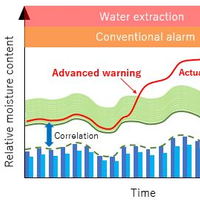
As a part of initiatives utilizing big data, NYK and MTI Co. Ltd. have developed an advance alarm system (patent pending) that can detect anomalies on a real-time basis caused by water getting in lubricating oil. This alarm has been installed on Haramachi Maru, an NYK-operated vessel, to prevent such troubles and thus realize high-level preventive maintenance for the engine.1. BackgroundControlling the quality and property of lubricating oil is very important for vessel engines to operate stably.
Tanker Captain Fined for Safety Violations
The captain of a Russian oil tanker is forced to pay £25,761.99 (more than $34,300) in the U.K. for breaching the International Safety Management (ISM) Code in a prosecution brought by the Maritime & Coastguard Agency (MCA).Vitaliy Trofimov, Captain of the Russian registered 85-meter-long tanker Tecoil Polaris, pleaded guilty at Hull Magistrates Court on Thursday to a number of safety failures which placed the vessel – to be loaded with 1,665 metric tons of lubrication oil – at risk. He was fined £1,400 and ordered to pay £24,361.99 in costs.The vessel arrived at Humber Port on the evening of Tuesday, June 5, 2018 having come from Hamina, Finland.
US Fines Shipping Company $1 Mln for Pollution Crimes
A Japanese shipping company will have to pay $1 million after being convicted and sentenced for obstruction of justice and falsification of an Oil Record Book to cover-up intentional pollution from bulk carrier M/V Atlantic Oasis.The company Nitta Kisen Kaisha Ltd., owner and operater of the Atlantic Oasis, admitted that its engineers failed to document the illegal discharge of oily wastes from the vessel’s fuel and lubrication oil purifier systems, as well as discharges of oily bilge waste from the bilge holding tank and from the vessel’s bilges when delivering steel products to Wilmington, N.C. in 2017.During a U.S. Coast Guard inspection of the vessel on May 17…
Chevron Lubricant Receives Approval from WinGD
Chevron Marine Lubricants received a No Objection Letter (NOL) from Winterthur Gas & Diesel (WinGD) for the use of its Taro Special HT 100 cylinder lubrication oil in a number of the manufacturer’s engines when operating on a wide variety of fuels from 0.0% to 3.5% sulphur, including fuels compliant with emissions control area (ECA) regulations with a maximum content of 0.10% sulphur, eliminating the need to change cylinder lubricants when operating in and out of ECAs. This follows 2,000 hours of validation testing on-board a Panamax containership fitted with a Wärtsilä 8RT-flex82T engine. The NOL applies to the use of Taro Special HT 100 in WinGD X…
Engine Providers Power Operators' Profits
With an eye towards environmental compliance, operational efficiencies and the bottom line, the Marine News top propulsion providers touch all bases. Sitting down to select the best engine and propulsion manufacturers in the workboat marine space isn’t necessarily the easiest task in the world. Nor is it a linear exercise. On the other hand, these Marine News featured firms – Caterpillar Marine, Volvo Penta and Yanmar – all have more in common than you might think. With a laser focus on their collective customer’s bottom lines and addressing that concern through technology, environmental compliance and economical but powerful performance, each satisfies the niche in its own particular fashion. See if you don’t agree.
Big Win for Maersk Fluid Technology’s BOB System
In the second half of 2015, Maersk Fluid Technology introduced a new version of its cylinder oil ‘Blending-On-Board’ (BOB) system, targeting medium-sized 2-stroke propulsion engines with a cylinder bore between 420 and 680 mm. Now the first volume order has been placed for retrofit of the SEA-Mate B1000 system onto 12 tankers delivered to Maersk Tankers between 2005 and 2008 – ten vessels equipped with Wärtsilä (WinGD) RTA and RT-Flex engines with a bore between 580 and 620 mm and two vessels with engines designed by MAN Diesel & Turbo. The order has been placed after careful evaluation of the expected payback time, which was found to be less than 2 years when taking the proven fuel savings, system oil and cylinder oil cost reductions into account.
Wärtsilä Launches WTT-40 Transverse Thruster
Wärtsilä is launching its new Wärtsilä WTT-40 transverse thruster. The first WTT-40's have been ordered and are scheduled for delivery during 2016. This first variant is part of Wärtsilä's new transverse thruster series and features a 4000 kW power level and a 3400 mm diameter controllable pitch propeller, neither of which have been available in Wärtsilä's current product range. While Wärtsilä has designed and built large, up to 5500 kW, transverse thrusters as customised versions, the WTT-40 and others in the WTT range address customer needs for high power transverse thrusters for bow and stern applications. Development work on the Wärtsilä WTT-40 began in 2015 in response to market demand.
Norwegian Fish Food Carrier to Run on LNG
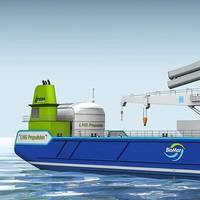
Rolls-Royce has signed a $6.5 million contract with Tersan Shipyard in Turkey to supply a liquefied natural gas (LNG) propulsion package for a cargo carrier designed by NSK Ship Design for Norwegian ship owner NSK Shipping. The vessel will deliver fish food on behalf of BioMar Group. The new cargo carrier will be a slightly larger sister ship to NSK Shipping’s MS Høydal which was the world’s first LNG powered cargo vessel and which was delivered from Tersan Shipyard in 2012. Both ships are designed by NSK Ship Design.
New Oil Debris Sensor Launched
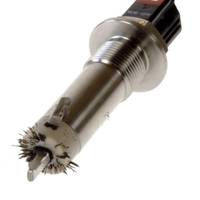
Gill Sensors & Controls Limited announced immediate availability of its new Oil Debris Sensor that provides continuous real-time monitoring of particle contamination in hydraulic and engine oil lubrication systems. The new sensor triggers either an immediate shutdown in cases of large particle build-up, or an early warning indication for needed maintenance in both cases preventing unexpected downtime. Typical applications include monitoring helicopter gearboxes, industrial gearboxes…
Sunken Tug to Be Removed in Alaska
The U.S. Coast Guard received approval for removal and destruction of tugboat Challenger under the Federal Water Pollution Control Act (FWCPA). An incident command will be established and operations will begin Monday, February 1, to manage the removal of the tugboat that sank in Juneau’s Gastineau Channel September 12, 2015. The operation could take weeks to complete. “Our highest priorities are safety to the environment and safety of operations and responders,” said Capt. Shannan D. Greene, federal on-scene coordinator for the tug Challenger response and the commander of Coast Guard Sector Juneau. The Coast Guard hired divers in September…