New Coast Guard Portal for Mariner Credentialing

The U.S. Coast Guard has launched a new, easier-to-use online system that allows mariners to submit and track credential applications faster and more securely. The Application Submission and Additional Information Portal, known as ASAP, lets mariners apply for Merchant Mariner Credentials and Medical Certificates, upload documents and monitor application status in one place. The system is now the primary way to submit applications to the Coast Guard’s National Maritime Center. The redesigned portal features simpler navigation, clearer instructions and improved document uploads.
Coast Guard Awards Contract for Mariner Credentialing Program Modernization
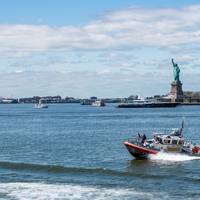
The U.S. Coast Guard has awarded a blanket purchase agreement to Stealth Solutions Inc. to modernize the service’s Mariner Credentialing Program (MCP) information technology system and support revitalization of the maritime workforce and industry.The MCP is essential to vetting and denying criminals access to critical maritime infrastructure and supporting the Marine Transportation System (MTS). The National Maritime Center (NMC) processed nearly 75,000 credential requests and 66…
Modernizing Mariner Credentialing: A Maritime Workforce Imperative
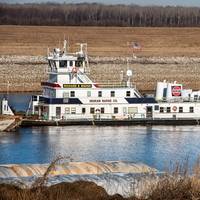
While its implementation can sometimes take partisan forms, the goal of efficient delivery of government services is something that all Americans—both members of the public interacting with the government, and the government officials providing those services—can, and do, support. For the maritime industry, there are few government services more important than credentialing America’s merchant mariners.While Congress and the U.S. Coast Guard have recognized the need to modernize mariner credentialing and have taken some initial steps to begin that process…
Insights: Jennifer Carpenter, President & CEO, American Waterways Operators

Jennifer Carpenter joined The American Waterways Operators (AWO), the national trade association representing the inland and coastal tugboat, towboat and barge industry, in August 1990 and became its president and CEO in January 2020. She highlights some of the greatest focus areas for the 80-year-old trade group—simultaneously looking at both the present day and the road ahead.The towboat, tug and barge industry is in a period of rapid evolution. How is AWO—now in its 80th year…
US Coast Guard Announces New Merchant Mariner Credential
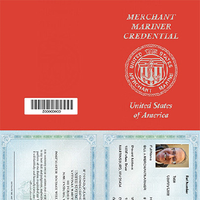
The U.S. Coast Guard announced a new merchant mariner credential (MMC) set to launch on March 1, 2024, marking the first comprehensive revision of the mariner credential in nearly a decade.The Coast Guard is the exclusive source of U.S. MMCs, which are required for U.S. mariners who serve on commercially operated vessels such as passenger boats, tug and barges, offshore supply vessels, and deep draft ocean going cargo vessels throughout the nation and internationally.The Coast…
Cultivating Tomorrow’s Waterways Workforce
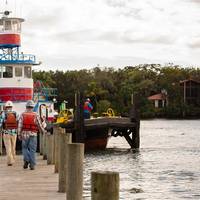
The American Waterways Operators (AWO) is taking action to help address an industry need and a national imperative to recruit, retain and develop the next generation of maritime employees.As much as the tugboat, towboat and barge industry contributes to our nation’s prosperity and security today, we are an industry with an incredibly bright future that has even more to offer in the years to come. Our industry is uniquely positioned to be part of the solution as shipper-customers…
TECH FILE: Software Helps Merchant Mariners with USCG Credentials
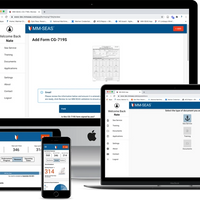
MM-SEAS is the reportedly the first software that automates the manual task of obtaining, tracking and renewing U.S. Coast Guard (USCG) credentials, helping to eliminate paperwork processing errors while delivering merchant mariner career guidance.Civilian mariners are required to have valid USCG Merchant Mariner Credentials (MMC) to be onboard any commercial or federal ship in the United States. Credentialing is a complex and vague process. From 2012 to 2018, 44.9 percent of approximately 500…
Maritime Resilience and the Human Element at MRS2020

Has the age of maritime discovery and exploration actually ended? Perhaps not exactly. As the history of maritime resilience and the human element shows, as far back as the 1500s and earlier, from using new navigational aids and improved ship designs, to coastal and inland route sailing, to navigating on open seas with uncertain charts, wayward icebergs, dense fog and luckily at times, clear starry nights, mariners have faced human element and maritime resiliency challenges. "Short of food and water…
“Minor” Incident Sends Mariner Down S&R Rabbit Hole
The twists and turns of any marine casualty investigation can be unpredictable, but what is predictable is the potentially crushing cost to defend your license, livelihood and professional reputation.It was early afternoon on a late summer day in a busy commercial and fishing port in coastal New England. The captain of an offshore supply vessel was returning to his company’s dock and was lining up to transit past the harbor’s fixed storm mitigation gate when he decided to ‘bail out’ on his approach because the tide was ebbing and the outbound current of approximately two knots was offsetting his vessel to the east. No stranger to these waters…
USCG Seeking SME's for Working Groups
The National Maritime Center is still seeking participants for the three remaining merchant mariner examination working group meetings in 2019.Deck working group – September 10-12Engine working group – October 22-24Deck working group – December 3-5Examination reviews are currently scheduled to take place at the National Maritime Center in Martinsburg, West Virginia. However, dates and locations may change based on the number of attendees.Section 315 of the 2015 Coast Guard Authorization…
Government Shutdown: USCG Update
To mitigate the impact caused by the partial lapse in appropriations and shutdown of National Maritime Center (NMC) operations, the following updated actions are being taken:• Merchant Mariner Credentials (MMC) (National Endorsements only) and Medical Certificates that expire in December 2018, January 2019, or February 2019 are extended as valid until April 30, 2019. Print letter and carry it with your credential.• Additional Information (AI) letters, sent to mariners that expire in December 2018, January 2019, or February 2019 are extended to April 30, 2019.• Approval to Test (ATT) letters and mariner training course certificates that expire in the months of December 2018…
USCG Update – Mitigation Efforts Due to Partial Government Shutdown
To mitigate the impact caused by the partial lapse in appropriations and shutdown of National Maritime Center (NMC) operations, the following actions are being taken:Merchant Mariner Credentials (MMC) (National Endorsements only) and Medical Certificates that expired in December 2018 or expire in January 2019 are extended as valid until March 31, 2019. Print the attached letter and carry it with your credential.Additional Information (AI) letters, sent to mariners that expired in December 2018 or expire in January 2019 are extended to March 31…
Partial Government Shutdown Shutters Coast Guard NMC, REC's
Due to the partial government shutdown, the National Maritime Center (NMC) and all Regional Exam Centers (RECs) are closed until further notice.Customer walk-in service is suspended. Examinations and other REC appointments are cancelled, and REC appointment calendars are closed. Applications may continue to be e-mailed or mailed in and will be processed when the shutdown is over.The following limited operations will be maintained:The Customer Service Center call center is open from 8:00 a.m. to 6:00 p.m. EST, Monday through Friday. You may reach the call center at 1-888-IASKNMC (427-5662) and [email protected] NMC website will provide…
National Maritime Center Closed Due to Gov't Shutdown
The National Maritime Center (NMC) issued a notice stating it is closed due to the government shutdown. The NMC said it is authorized to maintain a small cadre of personnel to support national defense-related credentialing issues. Maintain the Customer Service Center call center: 1-888-IASKNMC (427-5662) and [email protected] will be monitored from 8 a.m. to 6 p.m. EST, Monday through Friday. Regional Examination Center (REC) and other NMC phone/e-mail addresses will not be monitored. Maintain the NMC website, keeping the industry up to date on its status via the website and all list servers. -Examination appointments are cancelled and must be rescheduled after the shutdown is lifted. Online scheduling is disabled.
MMPAC October 2017 Meeting Set
The Merchant Marine Personnel Advisory Committee (MERPAC) and its working groups are scheduled to meet October 26-27, 2017, at United States Coast Guard National Maritime Center in Martinsburg, WV. Although the meetings are open to the public, attendees must pre-register to be admitted. Additional details about the location, point of contact, how to submit comments, and the agenda can be found in the Federal Register in notice document 82 FR 44433, published on September 22, 2017
Interview: Rear Admiral Paul Thomas, USCG
Rear Admiral Paul Thomas develops and maintains policy, standards and program alignment for waterways management, navigation safety, boating, commercial vessels, ports and facilities, merchant mariner credentialing, vessel documentation, marine casualty investigation, inspection and port state control activities. He serves as the Assistant Commandant for Prevention Policy overseeing three Coast Guard directorates: Inspections and Compliance, Marine Transportation Systems, and Commercial Regulations and Standards. A specialist in Marine Safety, Security and Environmental Protection, he has served at the Marine Safety Center in Washington, DC and many others before that. His other tours include, among others, service as Commanding Officer of USCGC CAPE ROMAIN.
Meet the Maritime Education Standards Council

The Maritime Education Standards Council (MESC) is a coalition of 35 member schools in the U.S. and Canada that offer U.S. Coast Guard (USCG) approved maritime training courses to professional and recreational mariners. The coalition was formed with the aim to safeguard education standards and provide students who utilize MESC schools with a high level of training that meets all USCG guidelines. The organization is comprised of privately owned, public and/or nonprofit maritime education providers that offer national and STCW maritime education…
Insights: Capt. Novotny, Commanding Officer, USCG National Maritime Center
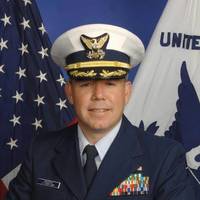
Captain Jeffrey P. Novotny is Commanding Officer of the U.S. Coast Guard’s National Maritime Center in Martinsburg, WV. He is responsible for all activities related to professional credentialing, training and assessments of the nation’s 215,000 merchant mariners. He graduated from the U.S. Coast Guard Academy with a degree in Mathematics and Computer Science. Prior to commanding the NMC, he was the Deputy Commander at the Coast Guard’s Deployable Operations Group. His duties included the oversight and responsibility for all personnel…
Insights: Rear Admiral Paul F. Thomas
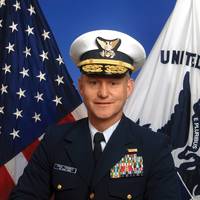
Rear Admiral Paul Thomas is the Assistant Commandant for Prevention Policy overseeing three Coast Guard directorates: Inspections and Compliance, Marine Transportation Systems, and Commercial Regulations and Standards. The programs include waterways management, navigation and boating safety, ports and facilities, merchant mariner credentialing, vessel documentation, marine casualty investigation, commercial vessel inspections, and port state control. A longtime specialist in Marine Safety…
Transas to Supply TechSim Solutions to SUNY Maritime
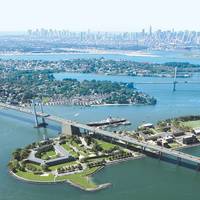
The Navsim Services and Transas Americas Team, have been awarded contracts for supply of a combination of full mission, classroom and cloud based Transas Technical simulation (TechSim) solutions for the State University of New York (SUNY) Maritime College. The full mission and classroom systems are being procured to meet forthcoming new United States Coast Guard (USCG) National Maritime Center (NMC) training requirements, and include multiple models from the Transas library with the latest functional capabilities of the Transas TechSim platform.
Mariner’s Medical Certificates – the New Normal
The Maritime Labor Convention of 2006 became effective on 20 August 2013: Are the authorities ready? Consider that MLC 2006 Regulation 1.2-Medical certificate. Standard A1.2 states that “a competent authority shall require prior to beginning work on a ship, seafarer’s hold a valid medical certificate.” Under paragraph 7a of that same regulation it further states that “a medical certificate shall be valid for a maximum period of TWO YEARS.” That requirement also became official for U.S.
From the Editor's Desk
Now clear of the holidays and into an already exciting 2014 on the waterfront, we find ourselves plowing ahead with the proverbial bone in our teeth. That’s because, beyond my questionable nautical metaphor, there are big things happening for the domestic workboat industry in the coming months. As you dig deeper into this issue of MarineNews, you will soon see that much of that revolves around the United States Coast Guard. As you do, look also look for the pace of regulatory rulemaking, boatbuilding and mariner credentialing to increase exponentially. While some industry stakeholders tend to view the Coast Guard as the bane of their compliance battles on so many fronts, the outreach of the nation’s first line of defense for homeland security are much more diverse than that.
MMA's Brad Lima Talks Maritime Education and Beyond
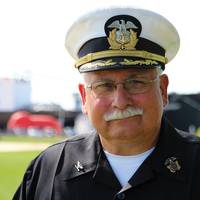
Maritime employers, thirsting for quality employees in numbers sufficient to run their far flung businesses, continue to struggle to recruit and retain talent despite lingering high unemployment across the other sectors of the economy. On the waterfront, there are many models for producing marine professionals; some quite new and others, time tested. Brad Lima is the Dean and Vice President for Academic Affairs at the Massachusetts Maritime Academy. As a 1974 graduate (BS; marine engineering) of the nation’s oldest continuously operating academy…