

AAM Delivers R/V Osprey to UNCW

All American Marine (AAM) announced the delivery of a 78-foot aluminum research vessel commissioned by the University of North Carolina Wilmington (UNCW). Following successful sea trials at AAM’s Bellingham, WA facility, R/V Osprey has arrived in Florida and is currently making her way up the coast to her home port of Wilmington, NC. There, she will support UNCW’s faculty, students, and research partners conducting scientific and educational missions along the Mid-Atlantic, U.S.
Saitec Tests Nature Inclusive Design Installations at Floating Wind Platform

Saitec Offshore Technologies, through DemoSATH Lab, is using its operating floating wind demonstrator as a real-scale testing ground to study environmental interactions, improve monitoring methods, and explore solutions that support coexistence with marine biodiversity.Following the successful deployment of biomimetic reef solutions on the submerged section of the platform, the company is now testing new methods to co-locate floating wind and aquaculture.The recent offshore operation marks a new step in DemoSATH Lab's biodiversity program and forms part of the AQUASATH Project…
KONGSBERG Supplies Technology Suite for NIOZ RV Anna Weber-van Bosse

KONGSBERG has supplied a comprehensive package of advanced ocean science and navigation technologies for RV Anna Weber-van Bosse, the new ocean research vessel owned and operated by Royal Netherlands Institute for Sea Research (NIOZ).Christened on the island of Texel in early March, the 80-meter newbuild has been outfitted with a range of innovations including HiPAP acoustic positioning systems, EM304 and EM2040 multibeam echosounders, TOPAS sub-bottom profiling technology, advanced echosounders for water column observation…
Oil Leaking from USS Arizona Could Provide Guidance for Thousands of WWII Shipwrecks

A new study published in Marine Pollution Bulletin shows that oil is still seeping from the wreck of the USS Arizona, more than 80 years after its sinking at Pearl Harbor. The study focuses on samples collected by the National Park Service in 2016 and 2018.Researchers, led by the University of Houston and Woods Hole Oceanographic Institution (WHOI), analyzed oil samples collected from multiple leak points on the sunken battleship, using advanced molecular fingerprinting techniques. The results confirm the oil is a heavy fuel oil refined from California crude, consistent with U.S.
CCG's New Offshore Oceanographic Science Vessel Begins Sea Trials
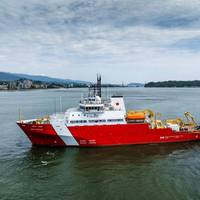
CCGS Naalak Nappaaluk, the Canadian Coast Guard’s (CCG) new Offshore Oceanographic Science Vessel (OOSV), began sea trials this week in North Vancouver, sailing from Seaspan Vancouver Shipyards where final outfitting, installation, and commissioning work has been taking place since the vessel’s launch in August 2024.CCGS Naalak Nappaaluk is a Polar Class 6 vessel, with a displacement of 5,058t, and is 88 meters long, 17.6 meters wide, and will accommodate up to 60 personnel.Sea trials mark the final major phase of a shipbuilding project before delivery.
REV Ocean Finds Ship Management Partner for New Expedition Vessel
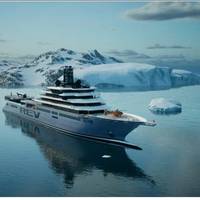
V.Ships, part of V.Group, will partner up with REV Ocean to provide a suite of ship management services for the REV Ocean vessel, deemed the world’s largest and most advanced research and expedition ship.Currently at Vard Søviknes in Norway, the vessel will be equipped to conduct research across the entire marine ecosystem, using advanced technology systems.Scientists and other experts will use it for research expeditions, seeking to solve issues related to the impact of CO2 emissions…
Scientists Reconstruct Impact of Seafloor Volcanic Eruption
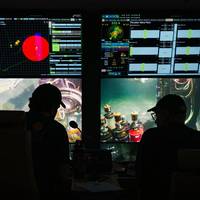
An international team of scientists is reconstructing the impact of the 2008 Chaitén volcanic eruption on the marine environment following an expedition onboard Schmidt Ocean Institute’s R/V Falkor (too).After 9,000 years of dormancy, the Chaitén Volcano erupted without warning on May 2, 2008. Ash spewed 30 kilometers (18 miles) into the air and blanketed the landscape. Heavy rain in the following days triggered devastating volcanic mudflows known as lahars that cascaded down mountainsides and into the Northern Patagonian Sea.
4500 Years Old & 180km: World's Largest Known Plant Discovered in Shark Bay
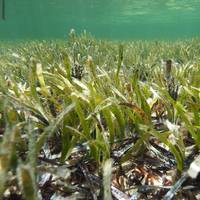
Largest known plant on earth discovered at Shark Bay, and it's 4,500 years old.Researchers from The University of Western Australia and Flinders University have located what is believed to be the largest plant in the world – an ancient and incredibly resilient seagrass stretching across 180km that is estimated to be at least 4,500 years old.The discovery of the single plant or ‘clone’ of the seagrass Posidonia australis in the shallow, sun-drenched waters of the World Heritage Area of Shark Bay in WA…




