
Money Pours in for Hull Cleaning Technology
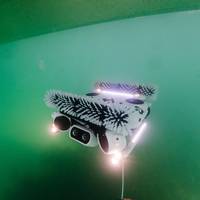
In April this year, the IMO Marine Environment Protection Committee approved guidance on in-water cleaning of ships' biofouling and also approved a proposal for the development of a legally binding framework for the management of biofouling.The move comes in recognition that biofouling is a key contributor invasive species and to greenhouse gas emissions. Biofouling can increase fuel consumption by up to 30%, costing the shipping industry $40-50 billion annually and driving excess…
Trafag Highlights the NAT 8252 Industrial Pressure Transmitter
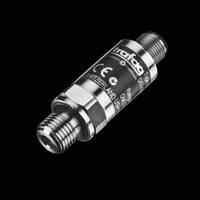
Trafag, a manufacturer of measurement devices, highlights the NAT 8252 Industrial Pressure Transmitter, designed to meet the demands of industrial monitoring and control systems.Engineered with Trafag’s thin-film-on-steel sensing technology, the NAT 8252 ensures stable and precise pressure measurement over time, even in harsh environments. Its long-term stability reduces the need for recalibration, lowering operational costs and maintenance burdens. Its measuring range, from 0 to 700 bar (0 to 10…
Quantum Sensing Beats GPS-Denied Navigational Challenges

The same error-prone sensitivity that has slowed down the development of quantum computers is being turned into an advantage for GPS-denied navigation.A new quantum sensing technology from Australia-based Q-CTRL has most recently caught the interest of Lockheed Martin and the US Defense Innovation Unit, but the company is already working with the Australian Department of Defence, the UK Royal Navy, the US Department of Defense and Airbus.These agencies are interested in a quantum-sensing-based navigation system…
ClassNK Releases Guidelines for Hull Monitoring
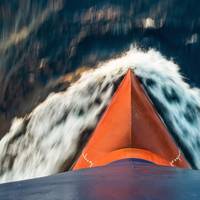
ClassNK released its “Guidelines for Hull Monitoring” that summarize technical requirements for a hull monitoring system to achieve the improvement of the ship safety, and stipulates the relevant class notation.A hull monitoring system is intended to collect information through sensors like a strain gauge or an accelerometer installed on the ship and perform condition monitoring and condition evaluation. With the recent development of sensing technology, communication between ships and shore…
Maritime 2050: Facing the Decarbonization Challenge
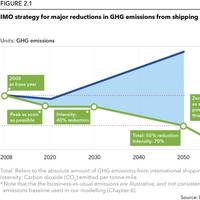
The International Maritime Organization (IMO) greenhouse gas (GHG) strategy signals a true game changing moment for the shipping industry. External pressure was building, but the IMO strategy sets a time line and goals for shipping to tackle one of the great challenges of our time. The GHG strategy gives our latest Maritime Forecast to 2050 its focus, and with this publication we attempt to set out the different strategies and pathways the industry can take to reach these goals.The first conclusion from the report is a sobering one.
Chelsea Technologies Appoints Paull as MD

Chelsea Technologies, a leader in the design and manufacture of sensors for the maritime sector and a Sonardyne company, has announced the appointment of Elizabeth Paull as its new managing director. Paull, who joins the company from leading subsea technology developer Sonardyne International, has been appointed to further develop Chelsea Technologies as a market leader in environmental sensing technology across a variety of industry sectors, and particularly in maritime where…
Well-SENSE Intros Miniature Optical Gauge
Downhole sensing technology specialist, Well-SENSE, has launched a miniature optical pressure-temperature gauge, as part of its FiberLine Intervention (FLI) system.The Well-SENSE optical gauge widens the well surveillance application envelope for FLI, both on and offshore, and offers operators a low-cost and disposable alternative to both permanent downhole sensors and more traditional electronic logging devices.Combined with FLI’s other features and benefits, including a simple deployment mechanism and distributed sensing, it can deliver savings in the region of 50-90% compared to conventional logging methods.The fiber Bragg grating based device is a robust optical gauge with no electronics, batteries, external connections or power supply required.
2018 Green Apple Spill Exercise
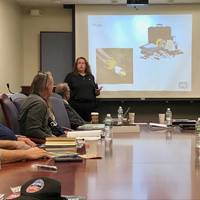
Committed to providing tugboat and towing vessel operators with a platform to meet regularity requirements and collaborate with local resources, the annual event also reminds us that Proper Planning Prevents Poor Performance.On September 28 2018, American Marine Associates, LLC (AMA) coordinated and hosted the 3rd annual Green Apple Spill Response Exercise in Bayonne, NJ. The Green Apple Spill Response exercise was established specifically for the tugboat and towing vessel industry operating in New York Harbor.
Sonardyne Acquires Chelsea Technologies Group

Subsea technology developer Sonardyne International Ltd. said it has acquired maritime and marine science technology specialist Chelsea Technologies Group Ltd. as part of a long-term growth strategy that includes market diversification.In acquiring Chelsea (also known as CTG), Sonardyne said it looks to strengthen its presence in the maritime, marine and ocean science sectors and create new opportunities in the water environmental, defense and process control markets. Chelsea will gain access to Sonardyne’s considerable research…
Maritime Thought Leadership: Koichi Fujiwara, ClassNK

Tokyo-based Nippon Kaiji Kyokai, or ClassNK as it is more commonly known, is one of the world's leading classification societies with 9,104 ships representing 250 million gt under register, as of June 2018. We spoke with Koichi Fujiwara, Chairman, ClassNK, earlier this year in Tokyo for his overview of the market today, and the path forward on technological trends.While Koichi Fujiwara, like many of his colleagues, sees challenging times in the maritime market, he does note that conditions are improving…
DNV GL JDP for Marine Batteries
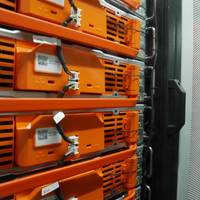
Classification society DNV GL has announced the launch of a Joint Development Project (JDP), designed to advance the understanding of the use of lithium-ion batteries in the shipping industry. More than a dozen partners from the entire value chain have joined the initiative, including flag states, research institutions, battery and propulsion suppliers, fire detection and extinguishing system providers, and ship owners, operators and yards. “Including batteries in ships, whether as a hybrid or fully electric system…
LR Presents CES Descriptive Notes to China Smart Ship
Great Intelligence, the first China smart ship, was presented with Lloyd's Register (LR) cyber-enabled ship (CES) descriptive notes. Great Intelligence was designed by Shanghai Merchant Ship Design and Research Institute (SDARI) and built at Guangzhou Wenchong Shipyard Co., Ltd (GWS), a subsidiary of China State Shipbuilding Corporation (CSSC). Along with LR, System Engineering research Institute (SERI) and China Class Society (CCS) were also involved in this project. Great Intelligence, a 38,800 dwt modified version of the Green Dolphin fuel-efficient Bulk Carrier concept, is the pilot smart ship project within China. LR’s latest CES descriptive notes will be assigned to the project and the latest requirements are applied to this ship.
UK Partners Launch Autonomous Navigation Project
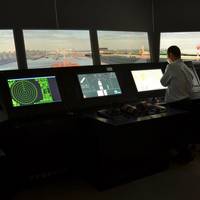
As unmanned surface vessels continue to gain ground globally, a new project in the U.K. sets out to address challenges relating to the coexistence of autonomous systems and traditional manned vessels in shared water space. The £1.2 million ($1.6 million) research project, dubbed SWANS (Shared Waterspace Autonomous Navigation by Satellite), is funded by the U.K.’s innovation agency Innovate UK. Project lead BMT will work with partners ASV Global and Deimos Space UK to enable beyond line of sight…
Researchers to Visit ‘Battle of the Atlantic’ Wreckage
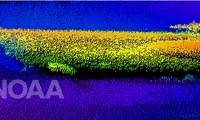
Researchers from the U.S. National Oceanic and Atmospheric Administration (NOAA) and its partners are set to visit what remains of two ships—a German U-boat and a Nicaraguan freighter – which sank off Cape Hatteras during World War II’s “Battle of the Atlantic,” which pitted the U-boats of the German navy against combined Canadian, British, and American forces defending Allied merchant ships. By July 1942, the United States had been in World War II for less than a year, but the fight was coming to the nation’s shores.
MSRC CEO to Retire in April 2017
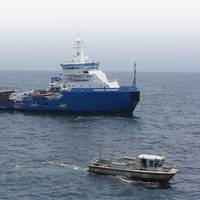
The Marine Spill Response Corporation (MSRC), the nation’s leading oil spill response organization, has announced that Steven T. Benz, the company’s President and CEO, will be retiring on April 30, 2017. Tim Plummer, Chair of the MSRC Board of Directors, said “We are thankful to Steve for his many years of strong leadership. During his tenure, he has solidified MSRC as the preeminent spill response organization in the nation, as demonstrated by the critical role MSRC played in the “Deepwater Horizon” response.
Remains of Lost 1800s Whaling Fleet Found

NOAA archaeologists have discovered the battered hulls of two 1800s whaling ships nearly 144 years after they and 31 others sank off the Arctic coast of Alaska in one of the planet's most unexplored ocean regions. The shipwrecks, and parts of other ships, that were found are most likely the remains of 33 ships trapped by pack ice close to the Alaskan Arctic shore in September 1871. The whaling captains had counted on a wind shift from the east to drive the ice out to sea as it had always done in years past.
Seattle to Host Spill Preparedness Conference
The U.S. Coast Guard and Washington Department of Ecology will host a spill preparedness conference May 20-21 at the Jackson Federal Building in Seattle. The two-day seminar is an opportunity to discuss the latest in spill-recovery theory and technology. The sessions focus on topics including remote oil sensing technology, sinking oils, software tools and best practices. "In the response business, there is no room for complacency,” said Capt. Robert Pearce, chief of response, Coast Guard 13th District. “Knowing about the latest game-changing technology is important. Opportunities are everywhere. The marine environment that dominates the Pacific Northwest is essential to the high quality of our lives.
General Dynamics Delivers Micro Encryptor to U.S. Navy
General Dynamics C4 Systems’ cyber-defense products team recently delivered the 100,000th TACLANE®-Micro (KG-175D) in-line network encryptor to the U.S. Navy’s Space and Naval Warfare Systems Command (SPAWAR). SPAWAR develops, delivers and sustains communications capabilities for warfighters, keeping them connected wherever they are around the world. Introduced in 2007, the rugged TACLANE-Micro is one of the most popular in-line network encryptor certified by the National Security Agency (NSA) to protect information classified Top Secret and below. The TACLANE-Micro provides cyber defense for networks operating in U.S. government agencies, embassies and military command and operation centers worldwide.
The History of Offshore Energy
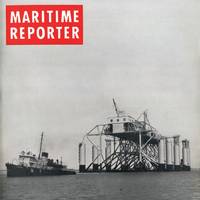
Offshore exploration is a history of man v. Prospecting for oil is a dynamic art. From a lake in Ohio, to piers off the California coast in the early 1900s, to the salt marshes of Louisiana in the 1930s, to the first “out-of-sight- of-land” tower in 1947 in the Gulf of Mexico, the modern offshore petroleum industry has inched its way over the last roughly 75 years from 100 ft. of water ever farther into the briny deep, where the biggest platform today, Shell’s Perdido spar, sits in 8,000 ft. of water. As a planet, we have two unquenchable thirsts – for water and for oil.
MSRC Announces Ocean Imaging Remote Sensing Contract
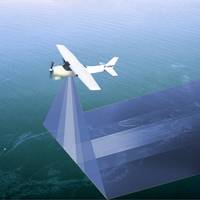
The Marine Spill Response Corporation (MSRC) has entered an exclusive contract with Ocean Imaging Corporation for cutting edge remote sensing capability. Ocean Imaging will provide its proprietary aerial surveillance technology as part of MSRC's overall strategy for enhancing the ability to tactically position response resources in the optimal areas of oil migration for responding to spills. The announcement was made today at the Clean Gulf Conference at the Tampa Convention Center in Tampa, Fla., where both MSRC and Ocean Imaging technology are present.
Fairweather Forms New Subsidiary Tulugaq

Following the recent acquisition of VDOS, a worldwide company in airborne remote sensing operations, Fairweather, LLC has announced the formation of subsidiary Tulugaq, LLC -- the result of a partnership between Fairweather, LLC, Olgoonik Corporation and Kaktovik Iñupiat Corporation. The company was formed to bolster Fairweather’s remote sensing and real-time scientific data collection capabilities utilizing specialized manned and unmanned airborne assets to support offshore oil and gas exploration and production efforts in the Arctic.
Spotlight on 'Training the Trainer'

Kongsberg Maritime simulation users gather to discuss key training topics. Student assessment and instructor training were hot topics of discussion at this year’s Kongsberg Maritime European Simulation User Conference (UC), which took place in Tønsberg, Norway, 24th – 27th September. The annual UC was this year co-hosted by Vestfold University College, which recently opened a new research park featuring several Kongsberg simulators. Approximately 150 delegates attended the UC…
New Low-Cost Marine Thermal Camera

SPI's latest introduction to the market is a low cost Marine PTZ thermal camera for vessels of all sizes. The SPI CORP M1-D Thermal Marine PTZ is said to be the first to combine multiple sensor technologies into a small lightweight all weather system. The M1-D Marine PTZ features a high-resolution thermal camera, a low light visual CCTV camera and a bore sighted laser pointer. The thermal camera is a heat sensing technology that can see in complete darkness or full daylight while the CCTV camera provides the operator the traditional video camera view.