

Breakthrough Technology Unveiled at Oceanology International

Major industry announcements and new product launches continued to drive significant visitor numbers and plentiful business activity as Oceanology International 2026 (Oi26) surpassed expectations on the second day at Excel London.Among the companies taking center stage, expanding platform OceanSight used Oi to unveil its new collection of ocean technology brands built to advance marine sensing and subsea intelligence, celebrating an exciting new chapter focused on accelerating innovation and strategic growth.OceanSight…
Glamox to Light Up PGS’ Seismic Vessels
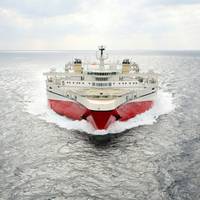
Lighting solutions specialist Glamox has won a contract from PGS to provide marine LED lighting for eight of its vessels that undertake seismic surveys of the seabed.This first phase of the major retrofit project will involve replacing fluorescent tube lighting with around 2,500 marine-certified LED luminaires fitted on the exterior and interior of the eight vessels.PGS’s switch to energy-efficient LED lighting is being driven by its desire to comply with emission reduction targets…
Glamox to Install LED Lighting on Eight PGS Seismic Vessels
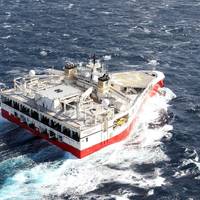
Lighting solutions specialist Glamox has won a contract from the Norwegian marine seismic survey firm PGS to provide marine LED lighting for eight of its seismic data acquisition vessels.This first phase of the retrofit project will involve replacing fluorescent tube lighting with around 2,500 marine-certified LED luminaires fitted on the exterior and interior of the eight vessels. PGS’s switch to energy-efficient LED lighting is being driven by its desire to comply with emission reduction targets…
Tethys Marine & Logistics Becomes 51% Shareholder of OSV Firm Bourbon Guyana
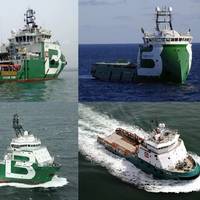
Bourbon Marine & Logistics has partnered with the Guyanese company Tethys Marine & Logistics, which becomes a 51% shareholder of the Bourbon Guyana Joint Venture. "With 75% Guyanese Directors, Bourbon Guyana thus becomes the first indigenous Offshore Support Vessels operator, fully compliant with the most recent local content regulations," Bourbon Marine & Logistics said."With a fleet of 6 vessels (Large PSV, AHTS & Tugs) and the full range of marine services, Bourbon Guyana has…
Scorpio Sells Another Bulk Carrier
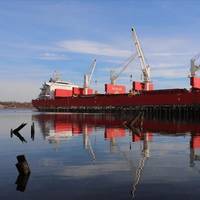
Scorpio Bulkers announced it has entered into an agreement to sell another Ultramax bulk carrier, its second this week, as the company continues its transition away from dry bulk shipping to focus on the offshore wind market.Scorpio said Wednesday the 2015-built SBI Orion was sold to an unaffiliated third-party buyer for approximately $16.1 million. Delivery of the vessel is expected to take place in the first quarter of 2021.Earlier this week, Scorpio sold the 2016-built SBI…
Scorpio Continues to Sell Bulkers in Transition to Offshore Wind
Scorpio Bulkers has sold off another vessel as the NYSE-listed shipowner shifts its focus to the offshore wind market. SBI Tethys was sold for $18.25 million and is expected to be handed over to its new owner in the first quarter of 2021, Scorpio announced Tuesday. The 2016-built Ultramax is the latest in a string of bulk carriers sold by Scorpio since the company announced in August that it planned to depart the dry bulk shipping business. The company has recently sold eight vessels and has contracted to sell 13 additional vessels, all of which are expected to close in the first half of 2021. Upon the completion of the announced vessel sales…
MBARI Works at Unlocking Ocean Biology
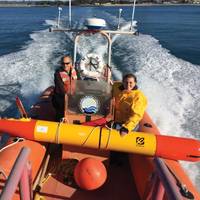
Greater understanding of what goes on in the ocean is starting to become a reality – thanks to growing use of unmanned surface and underwater vehicles and developments in biological sensing. Elaine Maslin takes a look at what a team at MBARI has been doing.Gathering biological data from the oceans remains a significant challenge for oceanographers. Now, an increasing range of unmanned vehicles that are able to work together is becoming available, as is an ability to collect biological data using them.It sounds straight forward…
PGS Updates on Seismic Acquisition Contract in South America
Norwegian seismic player Petroleum Geo-Services ASA (PGS) updated on changes of the contract for the 3D survey in South America announced November 14, 2018.The vessels Ramform Atlas and Ramform Tethys mobilized early December 2018 for this survey. The contract had an estimated total duration of approximately 13 vessel months and an estimated value in excess of $75 million, the marine geophysical company said.Due to unresolved issues affecting the survey, both vessels have been on paid standby from December 23, 2018.The client, ExxonMobil, has notified PGS that the Ramform Atlas is no longer required. PGS will receive payment for mobilization, work performed, standby and demobilization.
Venezuela Navy Confronts Exxon Vessel in Guyana Border Dispute

Venezuela's navy "intercepted" a ship exploring for oil on behalf of Exxon Mobil Corp in Guyanese waters over the weekend, Guyana's foreign ministry said in a statement, while neighboring Venezuela said the incident occurred within its territory.The latest incident in a century-old border dispute comes after a series of offshore oil discoveries have given Guyana the potential to become one of Latin America's largest producers. In OPEC member Venezuela, by contrast, crude output has tumbled to the lowest levels in nearly 70 years amid an economic crisis.The Ramform Tethys vessel…
Venezuela Navy intercepts ExxonMobil Oil Explore Ship
The Venezuela's navy on Saturday "intercepted" a ship exploring for oil on behalf of Exxon Mobil Corp. in Guyanese waters, neighboring Guyana's foreign ministry said in a statement, in the latest incident in a century-old border dispute.A series of offshore oil discoveries in recent years have given Guyana the potential to become one of Latin America's largest producers. In OPEC member Venezuela, by contrast, crude output has tumbled to its lowest levels in nearly 70 years amid an economic crisis.The Ramform Tethys vessel, which belongs to Norwegian company Petroleum Geo-Services (PGS) and was conducting seismic survey work on behalf of Exxon…
LRAUV: Arctic Oil-Spill-Mapping Robot Put to the Test

As commercial shipping and energy activities picks up in the Arctic region, the prospect of accidental oil spills in this pristine environment remain a concern. In response, the U.S. Department of Homeland Security (DHS) is taking the lead – through the U.S. Coast Guard – to develop a subsea robotic system to map and report on spills.“Because of ice coverage and the tyranny of distance, it is difficult to get resources and assets up in the Arctic in a quick manner,” said Kirsten Trego, Executive Director of the Coast Guard’s Interagency Coordinating Committee on Oil Pollution Research.
Hatenboer-Water Reverse Osmosis Units For Diving Support Barges

Holland Shipyards has asked Hatenboer-Water to supply two Tethys reverse osmosis (RO) water treatment units for diving support barges scheduled to be deployed along the Gabon coast. The order marks the first project for Tethys, the new Hatenboer-Water standard water maker series for compact applications. The RO units are to be installed aboard two diving support barges currently under construction in the Holland Shipyards’ site in Hardinxveld-Giessendam, the Netherlands. Each unit will provide drinking water at a capacity rate of up to 6 m3 per day.
PGS Revenue Slumps
Petroleum Geo-Services ASA reported revenue fall in their recently released Second Quarter and First Half 2016 Results. It logged a healthy MultiClient Sales and continues to undertake cost reductions. "With the gradual recovery of the oil price from its lows in early Q1, we are starting to see early signs of a stabilizing market and improving sentiment," observed Jon Erik Reinhardsen, President and Chief Executive Officer. "We believe that this has started to impact our MultiClient performance positively. The marine contract market is still characterized by very low pricing, but here too we see indications of more predictable patterns in customer survey planning and contracting processes.
WHOI Investigates Deepwater Horizon Oil Spill
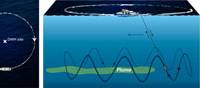
Taking another major step in sleuthing the 2010 Deepwater Horizon oil spill, a research team led by the Woods Hole Oceanographic Institution (WHOI) has determined what chemicals were contained in a deep, hydrocarbon-containing plume at least 22 miles long that WHOI scientists mapped and sampled last summer in the Gulf of Mexico, a residue of the Deepwater Horizon oil spill. Moreover, they have taken a big step in explaining why some chemicals, but not others, made their way into the plume.
Underwater Hydrocarbon Plume in Gulf
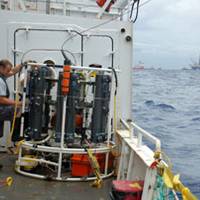
Scientists funded by the National Science Foundation (NSF) and affiliated with the Woods Hole Oceanographic Institution (WHOI) have detected a plume of hydrocarbons at least 22 miles long and more than 3,000 ft below the surface of the Gulf of Mexico, a residue of the BP Deepwater Horizon oil spill. The 1.2-mile-wide, 650-ft-high plume of trapped hydrocarbons was detected during a ten day subsurface sampling effort from June 19-28, 2010 near the wellhead. The results provide a snapshot of where the oil has gone as surface slicks shrink and disappear.



