
Marine Link
Friday, April 17, 2026

This week’s key shipbuilding industry updates

U.S. Rebuilding Shipbuilding Industry with Policy and Investment

The U.S. government is launching a new era for shipbuilding, with a focus on industrial base renewal, national security, and economic growth. Key developments include:

The establishment of a federal office of shipbuilding and tax incentives announced in March 2025.

The "Maritime Action Plan" allowing federal investments in logistics infrastructure and maritime manufacturing.

Reintroduced SHIPS Act aiming for a strategic commercial fleet of 250 U.S.-built vessels and modernizing shipyard financing.

An $8.75 million U.S. Department of Transportation grant announced for ship modernization.

A $150 billion investment fund pledged by South Korea following summit talks with the U.S., anchoring collaboration with Hanwha Philly Shipyard.

Hanwha’s $5 billion expansion plan at Philly Shipyard to increase capacity and workforce training, with production expected to ramp from one to 20 ships annually.

Hanwha Philly Shipyard secured the first U.S. commercial LNG carrier order in nearly 50 years and contracts for 10 medium range oil and chemical tankers.

Curtin Maritime's $160 Million Order for Hybrid Tugboats

Curtin Maritime in California announced a landmark deal to build eight hybrid-electric tugboats equipped with integrated electric powertrains by Detroit-based Arc. The $160 million project to be built at Seattle’s Snow & Co. shows commercial viability for zero-emission workboats influenced by California's strict harbor craft regulations. Delivery is expected before the end of 2026. The project highlights overcoming previous cost and operational hurdles through vertical integration of design, construction, and electric systems.

Indian Government’s Ambitious Shipbuilding Plans

India announced its plan to become a global shipbuilding hub by 2047, focusing on job creation, sustainability, and global competitiveness. The initiative includes modernized infrastructure and developing the blue economy, targeting to be among the top 5 maritime nations by 2047. The strategy focuses on combining international collaboration and domestic growth.

Additional Shipbuilding Industry Updates

Grimaldi Group took delivery of its second ammonia-ready pure car transporter (PCTC) vessel, with 14 more due by 2027, advancing the transition to alternative fuels.

U.S. Department of Labor announced $8 million funding availability aimed at supporting shipbuilding workforce revitalization efforts.

Secretary of Labor Lori Chavez-DeRemer visited Newport News Shipbuilding, underscoring federal attention to workforce and industrial growth in maritime sectors.

Tags: shipbuilding

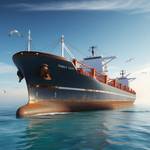
Copyright Mauro Carli/AdobeStock

Fincantieri, Princess Ink Deal for Three LNG-Fueled Ships

Fincantieri and Princess Cruises signed an agreement for the construction of three…

Chantiers de l'Atlantique-built Celebrity Xcel can run on methanol as well as standard fuel types.
Image courtesy Celebrity Cruises

Cruise Shipbuilding Keeps European Yards Busy to mid-2030s

A flourishing cruise market and European shipbuilders’ unerring contractual success…

U.S. Navy Rear Adm. Thomas Anderson, (far left) Program Executive Officer Ships, U.S. Marine Corps. Brig. Gen. Robert Brodie, (left) Director of Expeditionary Warfare, Office of the Chief of Naval Operations, U.S. Marine Corps Col. Raymond Feltham, (right) Program Manager, Medium Landing Ship and U.S. Navy Command Master Chief James Timmerman, Program Executive Office, Ships, salute during an establishment ceremony for the Medium Landing Ship (LSM) Program Office at the Humphrey's Building on Wa

Fincantieri Wins First U.S. Navy LSM Contract, Advances 35-Ship Program

Fincantieri has secured its first contract under the U.S. Navy’s Medium Landing Ship (LSM) program…

Comparison of CTV photo and 3D model. © NYK Line

NYK Employs 3D Technology to Design and Construct New CTVs

NYK has jointly implemented a crew transfer vessel (CTV) newbuilding project that…

League leader: Imabari's network of shipyards in Japan effected 65 newbuild deliveries last year. (CREDIT: Imabari Shipbuilding)

Shipbuilding: Changing Shipyard Dynamics in Japan

Continuous design refinement and incremental productivity gains — reflecting the…

© Meyer Turku

Meyer Turku: Cruise Vessel Demand Drives Strong Orderbook

In the world of large cruise ship construction, few yards operate at the level of Meyer Turku…

John McDonald, Chairman and CEO of the American Bureau of Shipping (ABS). Image courtesy ABS

Born into Maritime: John McDonald, Chairman & CEO, ABS

Many claim to have ‘saltwater in their veins,’ but all you have to do is walk into…

Credit: GrayMatter Robotics

HII Teams with GrayMatter Robotics to Integrate AI into Shipbuilding

HII and GrayMatter Robotics (GMR) have signed a memorandum of understanding to explore…

Source: Mesabi Metallics

Mesabi Metallics Secures Funding for New Steel Plant

Mesabi Metallics, backed by Essar Group, has secured $150 million of financing from Macquarie Group…

(Credit: SDHI)

SDHI Books Order for Four Ammonia Dual-Fuel Bulk Carriers

Swan Defence and Heavy Industries Limited (SDHI) has secured an order from Energy…

Design work is under way for Port Alpha, a greenfield “next-generation shipyard”.
Image courtesy Saronic Technologies

Gulf Coast Shipbuilding is the Anchor for America’s Maritime Comeback

The future of shipbuilding and maritime competitiveness will be featured at the Maritime…

© Jean-Pierre Cantin - Photographe

Polar Max Project Celebrates Start of Construction

The Polar Max project reached an important milestone as Davie and ALMACO officially…

Related Articles

Charting a New Course: The Future of the Maritime Workforce in a Digital, Green Era

The global maritime industry is on the cusp of a profound transformation, driven by rapid decarbonization, advanced digitalization, and an increasingly complex regulatory landscape. This article explores how these forces are reshaping the skills, roles, and welfare needs of the maritime workforce. From the demand for "green" engineering expertise to the rise of remote operations and AI-driven systems, we delve into the challenges and opportunities in attracting, training, and retaining the talent essential for sustainable and efficient shipping. The future maritime professional will be a highly adaptable, digitally fluent, and environmentally conscious individual, operating within an industry that must prioritize human-centric approaches to truly thrive.

Blockchain in Shipping: Revolutionizing Global Supply Chains

Blockchain technology, initially developed as the backbone of cryptocurrencies like Bitcoin, is now making waves in the shipping industry. With its ability to provide secure, transparent, and tamper-proof records, blockchain is poised to revolutionize global supply chains, addressing some of the most persistent challenges in maritime logistics, including inefficiencies, fraud, and lack of transparency.

Container Ships Maritime Vessels - The Backbone of International Trade

Container ships are vessels designed specifically to transport standardized containers. Container ships have revolutionized shipping, making it more cost-effective and efficient to transport goods across oceans.

Maritime Careers / Shipboard Positions

The maritime industry offers a vast array of career opportunities, each playing a crucial role in the global economy. From navigating the high seas to ensuring the smooth operation of ports and shipping lines, maritime careers are diverse and dynamic. This article explores the various career paths available in the maritime industry, the skills required, and the benefits of pursuing a career at sea.

Digitalization and Smart Shipping: Transforming the Maritime Industry

The maritime industry, a cornerstone of global trade, is undergoing a significant transformation through the adoption of digitalization and smart shipping technologies. As the industry navigates the challenges of efficiency, sustainability, and safety, digital solutions are emerging as key drivers of change. From enhanced operational efficiency to real-time data analytics, digitalization is revolutionizing how ships and ports operate, paving the way for a smarter, more connected maritime future.