

RWE, Trump Reach $1.22b agreement to Cancel Offshore Wind Leases

German energy company RWE said on Thursday that it had reached a $1.22 billion agreement with the Trump administration to cancel three offshore wind leases in U.S. waters and to direct the funds to LNG and natural gas power plant projects.The arrangement is the fifth, and largest, the administration has entered into this year as part of its wide-ranging effort to stop development of U.S. offshore wind projects, which U.S. President Donald Trump regards as costly and ugly. His…
Sonplas Unveils Explosion-Proof Test Chambers for Fuel and Energy Components

German-based engineering firm Sonplas has developed explosion-proof thermal chambers designed to test fuel and energy system components under controlled temperature conditions in hazardous environments, as demand grows for validation of equipment used with alternative fuels such as hydrogen, methanol and ammonia.The company said the chambers are designed for testing components including injectors, pumps, pressure sensors, complete fuel systems and power electronics under dynamic operating conditions.
Shell Forecasts 65% Surge in Global LNG Demand by 2050

Global liquefied natural gas demand is expected to rise by around 65% by 2050, driven largely by Asia as countries seek lower-emission alternatives to coal and data centres boost power demand, Shell said in an annual report on Tuesday.Global demand is likely to reach nearly 700 million metric tons a year by that date, the world's largest trader of the superchilled fuel said in its 2026 LNG Outlook.LNG trade, which reached 422 million tons in 2025, had been set to increase in 2026, it added.
Is Hindsight 20/20? Hormuz Oil Shock and Lessons Learned from 1973

While oil and gas are once again flowing through the Strait of Hormuz, the closure of the vital waterway for over 100 days could prove to be a turning point in global energy markets. The Arab oil embargo of 1973, a similarly disruptive supply shock, offers clues about where we might be headed.The latest Middle East crisis tested the limits of the modern energy system, which has evolved over recent decades into a highly interconnected global market held together by thousands of tankers…
SeaRenergy Restructures Management to Compliment Company Growth, Industry Trends

SeaRenergy Offshore Holding GmbH, a service provider for the offshore wind industry, is restructuring its management team to align its leadership organization with the company’s next phase of growth.After 24 years of service to the Rickmers family and having played a defining role in SeaRenergy since its founding in 2010, Jan Boje Steffens will retire on June 30, 2026. As one of the key architects behind the establishment of SeaRenergy, he has shaped the company from its inception and helped build it into what it is today.Going forward…
Bechtel Secures EPC Contract for Sabine Pass LNG Expansion

Cheniere Energy Partners has signed a lump-sum turnkey engineering, procurement and construction (EPC) contract with Bechtel Energy for the first phase of the Sabine Pass LNG Expansion Project in Louisiana and issued a limited notice to proceed allowing early engineering and procurement work to begin.The agreement covers Phase 1 of the expansion project, including Train 7, a boil-off gas re-liquefaction unit and supporting infrastructure connected to the existing Sabine Pass LNG terminal.Phase 1 is expected to have LNG production capacity of more than 6 million tonnes per annum (mtpa)…
MarineSolar Conducts Pilot Trial of Photovoltaic Energy System

Clean energy company MarineSolar Energy Solutions has conducted a pilot trial of its NanoDeck photovoltaic (PV) energy system on RTM Cook, a Rio Tinto-owned vessel, as part of a non-commercial evaluation of the technology in real-world marine conditions.The trial marks a significant step in testing MarineSolar’s energy-saving PV technologies under some of the most challenging real-world marine conditions. NanoDeck is designed to deliver retrofittable renewable power for ships both at sea and in port…
BATTERIES: FleetZero aims to Help Rewrite the Rules of Marine Power

Michael Carter and Steven Henderson grew up together in North Carolina, attended the United States Merchant Marine Academy (USMMA) together, and most recently jointly founded Fleet Zero, a company aiming to develop modular, containerized battery technology for electrifying cargo ships. As of the interview, the company has raised about $60 million in funding, it employs 40 people, it recently opened a new manufacturing/R&D facility in Houston where it is targeting to produce 300 MW hours of batteries this year.There’s a familiar narrative in maritime: an industry steeped in tradition…
Cavotec Introduces Crane Operation Energy System

Cavotec has launched PowerAccESS, a modular and mobile battery Energy Storage System (ESS) designed to support the electrification of port crane operations.Developed for demanding and evolving port environments, PowerAccESS provides zero-emission power for RTG cranes during block changes as a one-to-one replacement for diesel generators.
EnergyPathways, ABP Partner on Energy Storage Project at Port of Barrow

EnergyPathways has signed a collaboration agreement with Associated British Ports (ABP) to evaluate the Port of Barrow in northwest England as a location for onshore facilities linked to its Marram Energy Storage Hub (MESH) project.The AIM-listed company said the MESH project, located in the Irish Sea, is expected to combine compressed air energy storage with natural gas and hydrogen storage using subsea salt caverns.According to EnergyPathways, the project has the potential to support up to 60 subsurface salt caverns and is targeted to begin operations in 2031…
Guyana President: Energy Supply-Demand Gap Widens Further

The gap between supply and demand is widening as global energy systems face strain, Guyana's President Irfaan Ali said on Monday, as the Iran warenters its third month and continues to drive up oil and gas prices amid supply shortages.Energy markets have been reeling since the start of the war, which has caused damage to infrastructure across the Middle East and led to the effective closure of the Strait of Hormuz, a key trade chokepoint. Oil prices have climbed above $100 a barrel and global trade flows have shifted as some nations scramble to secure supply.
Energy Prices Jump After Iran Attacks Qatar LNG Plant

Energy prices surged on Thursday after Iran struck the world’s largest LNG complex, causing damage that Qatar said could take five years to repair, as the energy sector's worst fears about the war launched by the U.S. and Israel on Iran came true.QatarEnergy CEO Saad al-Kaabi told Reuters the state-owned gas company may have to declare force majeure on long-term contracts to Italy, Belgium, South Korea and China after the attack meant a loss of around 17% of Qatar's liquefied…
Reopening Energy Markets is in Iran's Hands, for now

When Saudi Aramco told its oil buyers in a letter this week that it had no clear idea which port it would use for April exports, it laid bare a new reality: Iran, not the United States, holds the key to reopening the global energy market.The letter, sent to Saudi oil buyers around the world, said they might receive oil from the Red Sea, but they might still get it from the Gulf."I might as well call Iran to find out when this war ends so I can get my oil," one regular Saudi oil…
Iran War Exposes Risks of Fossil Fuel Dependence

The economic risks of the world’s heavy dependence on oil and gas have been laid bare twice in four years - first with Russia’s invasion of Ukraine and now with the U.S.-Israeli war on Iran - undermining U.S. President Donald Trump’s flagship push to double down on fossil fuels.The dramatic supply disruptions and price spikes unleashed by the latest Middle East conflict are likely to harden the resolve of many governments to accelerate the drive for greater energy self‑sufficiency…
NYK Advances Design of Subsea Cable-Laying Vessel

Japanese shipping major NYK Line has completed the basic design of a new long-distance subsea cable-laying vessel intended to support the development of Japan’s future high-voltage direct current (HVDC) transmission network, marking a key milestone in a national effort to strengthen offshore renewable energy infrastructure.The vessel’s design recently received General Design Approval (GDA) from classification society ClassNK, confirming that the concept meets relevant international…
Hungary Accuses Ukraine of Plans to Disrupt National Energy System

Hungary's Prime Minister Viktor Orban accused Ukraineon Wednesday of planning to disrupt the Hungarian energy system, and dispatched troops to safeguard infrastructure, escalating a dispute that has undermined Europe's pro-Ukraine consensus.Hungary and Slovakia, whose leaders are outliers in the EU for maintaining relations with Moscow, blame Kyiv for an outage on the Druzhba oil pipelinethat supplies their refineries with Russian crude pumped through Ukraine.Kyiv says the pipeline was damaged by a Russian drone attack in January and it is fixing it as fast as it can.Orban…
Meyer Turku Unveils Net-Zero Cruise Ship Concept
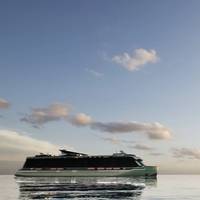
Meyer Turku has unveiled a net-zero cruise ship concept design named AVATAR.The project achieved its set emissions reduction target: the vessel’s lifecycle carbon footprint was successfully reduced by more than 90 percent compared to the baseline defined by the IMO.Developing a net zero vessel concept was one of the key objectives of NEcOLEAP, Meyer Turku’s four‑year research and development program co‑funded by Business Finland. The outcome has also been critically reviewed by a third party.“AVATAR has provided a solid foundation for our development work.
Inside the Gotland Horizon X: Large, Hydrogen-Ready Catamaran

With a growing focus on mitigating climate change and progressing toward the International Maritime Organization’s (IMO) 2050 net-zero target, the marine sector is under intense pressure to decarbonize. Today, maritime transport emits nearly one billion tons of CO2 annually, representing roughly 2-3% of all energy-related carbon emissions worldwide .Substantial progress has been made over the past decade in reducing emissions from small commercial and coastal vessels via all-electric and diesel-electric propulsion (DEP) systems.
EU Backs Øresund CCUS Cross-Border Scheme

The European Union has awarded funding to support the development of carbon capture, utilization and storage (CCUS) in the Øresund region, backing a cross-border project aimed at accelerating renewable energy use and enabling the production of sustainable fuels.The three-year project is supported by financing from the Interreg Øresund-Kattegat-Skagerrak program and will establish a Danish-Swedish collaboration platform focused on integrating CCUS into the regional energy system.The…
EMEC Completes Tidal, Hydrogen and Battery Demonstration
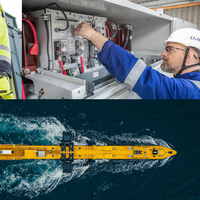
A world-first demonstration combining tidal power, battery storage, and hydrogen production has been completed at the European Marine Energy Centre (EMEC) in Orkney, Scotland.The demonstration successfully integrated three technologies – Orbital Marine Power’s O2 tidal turbine, vanadium flow batteries supplied by Invinity Energy Systems, and an ITM Power 670 kW electrolyser, at EMEC’s onshore site on the island of Eday.Multiple energy flow scenarios were trialed. During high generation periods…
Battery Bulker to get Solar Panels
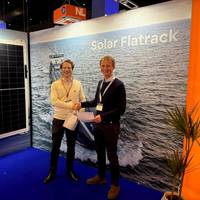
After delivering its first full-scale seagoing project last week, Wattlab has been contracted to outfit the hatches of the BRF Froan with its onboard solar energy system.Owned by Norwegian shipping company Berge Rederi, the vessel will be the world’s largest battery-powered bulk carrier. BRF Froan is expected to be delivered in Q2 2026 and will transport marble from Brønnøy and Visnes to a production plant in Elnesvågen.The vessel is currently under construction and will sail to Norway next summer.
Solar System Installed on Dutch Coaster

Dutch maritime solar company Wattlab has delivered a solar energy system for globally operating shipping, trading, and maritime services company Vertom.The recently delivered Vertom Tula is a 7,280dwt diesel-electric multipurpose cargo vessel. The solar system represents a major technical milestone and a step forward for sustainable shipping. Wattlab has delivered and installed 44 Solar Flatracks that will provide power to onboard systems, reducing 20% of the hotel load. Vertom operates a fleet of over 100 vessels…
GTT, Bloom and Ponant to Develop New Energy System for Future Cruise Vessel
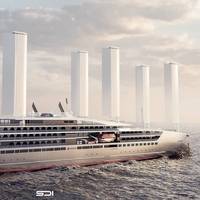
French engineering specialist GTT has teamed up with Bloom Energy and Ponant Explorations Group to develop an integrated energy system combining solid oxide fuel cells (SOFC) powered by LNG with marine carbon capture, aiming to significantly cut onboard emissions for future cruise operations.The system is slated to be installed on Ponant’s Swap2Zero cruise vessel by 2030. The vessel will be propelled by wind-assisted technology and fuel cells, and the new system is designed to cover the ship’s hotel load - including lighting…



