

Scaling Up Hydrogen Fuel Cell Demand

This past month Maritime Reporter TV has taken a close look at two hydrogen fuel cell projects: the new research vessel planned for Scripps Institution of Oceanography and e1 Marine’s methanol-to-hydrogen technology which is being adopted by STAX Engineering for its emissions capture barges.The Scripps California Coastal Research Vessel will feature a hydrogen fuel cell propulsion system that will allow it to operate with no greenhouse gas or other emissions for 75% of its missions – and for all of its time operating in state waters.
Research Vessels: A Conversation with Bruce Applegate of UNOLS
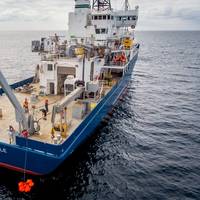
The U.S. oceanographic research community depends on a complex network of ships and institutions for scientific discovery at sea. The University-National Oceanographic Laboratory System (UNOLS) is the central organization that provides scientists with access to advanced research ships and technology to explore the world's oceans. We recently spoke with Bruce Applegate, Chair of the UNOLS Council and Associate Director at Scripps Institution of Oceanography, to explore UNOLS’ operations and future plans.Understanding UNOLS and the U.S.
Shipbuilding RFP Issued to Build Hydrogen-Hybrid Research Vessel
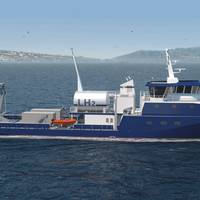
UC San Diego’s Scripps Institution of Oceanography issued a request for proposals (RFP) to select a shipyard for the final design and construction of its new 163-ft. Coastal Class Research Vessel (CCRV), reportedly the first oceanographic research ship to primarily operate on renewable fuels.The vessel will feature a dual-powered hydrogen fuel cell and diesel-electric propulsion system, capable of conducting 75% of its missions using only liquid hydrogen. When running on hydrogen…
The ‘Boat Nerds’ Ringleader – Morgan Fanberg, CEO, Glosten

When he joined Glosten more than 26 years ago as an intern, little did Morgan Fanberg know that one day he’d be at the helm leading one of the largest privately owned naval architecture firm in the United States. But this USMMA-grad was well outfitted for the task, and in this Maritime Matters: The Marinelink Podcast, Fanberg’s passion for the maritime industry and his company is clear as he candidly discusses the challenges he, his team and the maritime industry face in meeting legislatively mandated goals…
Hydrogen-Hybrid Research Vessel Earns AIP
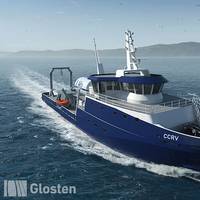
Glosten was awarded an Approval in Principle (AIP) by the American Bureau of Shipping (ABS) for the design of UC San Diego’s new hydrogen-hybrid Coastal-Class Research Vessel (CCRV). The CCRV will be operated by Scripps Institution of Oceanography and feature a propulsion system that uses hydrogen fuel cells for zero-emissions operation.Glosten and the project’s electrical integrator, Siemens Energy (SE), completed the preliminary design for the CCRV in March 2024. As an uninspected…
Glosten, Siemens Energy Select Key Equipment Vendors for World's First Hydrogen-hybrid Research Vessel
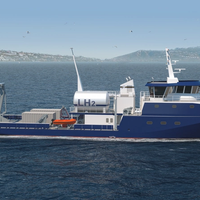
Naval architecture and marine engineering firm Glosten and Siemens Energy have selected Ballard Power Systems and Chart Industries as primary equipment vendors for their design of what will be the first hydrogen-hybrid research vessel in the world. The vessel, nominally known as the CCRV, is currently in the design phase and will be owned and operated by UC San Diego’s Scripps Institution of Oceanography (Scripps). Ballard Power Systems will provide the fuel cells which will help power the vessel…
US Navy-owned FLIP Research Platform Retired from Service
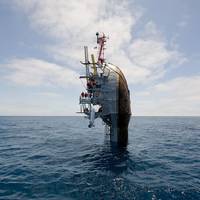
A dynamic era in naval oceanography recently ended as the iconic Floating Instrument Platform — popularly known as FLIP — was officially retired from service.Built in 1962 with funding from the Office of Naval Research (ONR), FLIP helped generations of scientists and oceanographers better understand the mysteries of the sea, including internal waves, air-sea interaction and long-range sound propagation. Sadly, age and exorbitant life-extension costs resulted in the platform being disestablished.On Aug.
ABS Publishes Requirements for Hydrogen-Fueled Vessels
ABS has claimed a first with the publication of an expansive set of requirements to guide the industry in the use of hydrogen-fueled vessels.The ABS Requirements for Hydrogen Fueled Vessels offers the industry a risk assessment framework for introducing hydrogen as marine fuel to their fleet.The publication is a continuation of ABS' attention to the alternative fuel, building upon projects such as the ABS-classed, Glosten-designed hydrogen-fueled research vessel for the University of California San Diego’s Scripps Institution of Oceanography.
ABS to Class Scripps' New Research Vessel
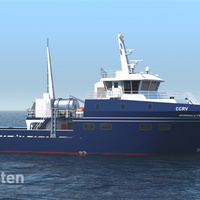
A hydrogen-fueled research vessel commissioned by the University of California San Diego’s Scripps Institution of Oceanography will be built to ABS Class.Designed by Glosten, the vessel will feature a new hydrogen-hybrid propulsion system that integrates hydrogen fuel cells alongside a conventional diesel-electric power plant, enabling zero-emission operations. The design is scaled so the ship will be able to operate 75% of its missions entirely using hydrogen. For longer missions…
In Memoriam: E. John Michel, MRCM (DV) USN (Ret), Chief-of-the-Boat, Bathyscaph Trieste

REMEMBERING MY SHIPMATE JOHN MICHELWe met in January 1959 when I became the first Officer in Charge of the Navy’s newly acquired Bathyscaph Trieste and John was the first USN enlisted man to be assigned to the project. We were based at the Naval Electronics Laboratory in San Diego. Trieste was unique as there were only two deep diving manned submersibles in the world. The French Navy had the other. Our team learned about the bathyscaph more by ‘apprenticeship’ than through any sort of formal learning process.
Hydrogen as Fuel: Possibilities, But…
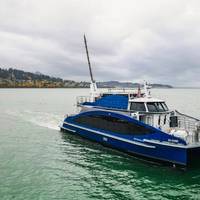
Hydrogen is everywhere. You know that from high school chemistry. And you also know it from Marine News’ almost daily updates about H powered vessel projects around the world.As a fuel that could potentially replace fossil fuels, H is in the spotlight. Perhaps the brightest spotlight, at least in the U.S., is within the Department of Energy’s “Energy Earthshots” initiative.R&D on H was the first such Earthshot announced last year. DOE wants the “Hydrogen Shot” program to “accelerate…
Glosten Tapped to Design Scripps' New Hydrogen-hybrid Research Vessel
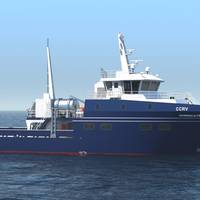
UC San Diego’s Scripps Institution of Oceanography today announced that naval architecture and marine engineering company Glosten has been selected as the naval architect for the university’s new California coastal research vessel. The new vessel will feature a first-of-its-kind hydrogen-hybrid propulsion system.Selected after participating in the university's request for proposal process, Glosten will provide the preliminary design, contract design and detailed design for the research vessel to be operated by Scripps Oceanography.“This vessel will be the first of its kind…
Opinion: A Call for the USNS Walter Munk to Honor America’s Greatest Oceanographer

In the 2021 National Defense Authorization Act, Congress established a commission to rename several military bases and ships that commemorate members of the Confederacy. One of these is the Naval oceanographic ship USNS Maury (T-AGS 66), named after oceanographer Matthew Fontaine Maury, who resigned his commission in the U.S. Navy to join the Confederacy at the outbreak of the American Civil War. The USNS Maury is an asset of the Naval Meteorology and Oceanography Command (NMOC), which I led from 2014-2017.
Eye on the Navy: Navy extends Life for Research Ships, but Says Farewell to FLIP
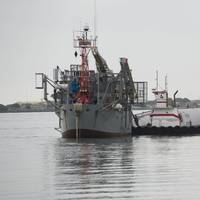
The U.S. Navy’s three Global class oceanographic research ships (AGORs) have received a new lease on life. The ships-- R/V Thomas G. Thompson (AGOR 23), R/V Roger Revelle (AGOR 24) and R/V Atlantis (AGOR 25)-- which entered service between 1991 and 1998--were built with 30-year expected service lives. Thanks to extensive overhauls on all three they have been returned to service with another 15 years of useful service.AGOR 23 is operated by the University of Washington; AGOR 24 is operated by Scripps Institution of Oceanography…
The Value of Friends in “High-Latitude” Places
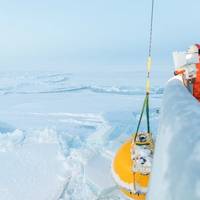
Who do you call when you need a job done on short notice, in total darkness, under 100-percent ice cover, thousands of meters at the bottom of the sea? In the case of the U.S. Office of Naval Research (ONR), you call your friends in Norway.That is exactly what the Chief of Naval Research Rear Admiral Lorin C. Selby did when he enlisted the help of the Norwegian Coast Guard icebreaker and offshore patrol vessel, the CGV Svalbard, to retrieve oceanographic moorings containing irreplaceable data.
Subsea Defense: Navy Deepens Commitment to Underwater Vehicles
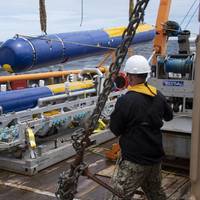
The U.S. Navy uses unmanned and robotic underwater vehicles for a multitude of functions, including environmental sensing, mine hunting, and salvage. The Navy plans to evolve an unmanned systems operating concept that is platform agnostic and capable of operating in highly complex contested environments with minimal operator interaction.The most recent edition of the Navy’s Unmanned Systems (UxS) Roadmap was issued in 2018, and a new version is expected in the near future. The 2018 document states that UxS will operate in every domain…
Ship Repair: Inside the $60m Refit of RV Roger Revelle
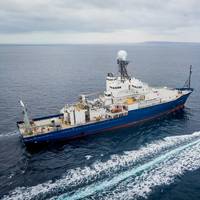
This month MR dives inside the $60 million refit of RV Roger Revelle, a project which leverages a treasure trove of ‘lessons learned’ from recent refits in the academic research vessel fleet and highlights the value of slimming the vendor list.Research vessel (R/V) Roger Revelle is back at work after a midlife refit involving upgrades from top to bottom, bow to stern. The ship is owned by the Office of Naval Research and has been operated by Scripps Institution of Oceanography at the University of California San Diego since 1996. It is one of the largest ships in the U.S.
Brix Marine Building Research Vessel for Northrop Grumman
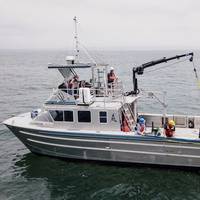
Boatbuilder Brix Marine (formerly Armstrong Marine USA) has been contracted by aerospace and defense technology company, Northrop Grumman, to build a catamaran survey-research vessel, slated for fall 2021 completion.The 44- by 16-foot vessel is Brix’s third IPS-drive catamaran; the first two were 4216-CTC models, both delivered in 2019, to UC San Diego’s Scripps Institution of Oceanography (R/V Bob and Betty Beyster) and Orca Maritime, Inc. (R/V Benthic Cat), respectively.Northrop Grumman said they will utilize the vessel for testing commercial navigation systems…
Measuring the Hostile Ocean Beneath Hurricanes
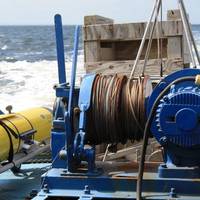
Unmanned Vehicles Collect Data for Improving Storm ForecastsThe influences of ocean conditions and currents on living environments are now more widely appreciated—from the Earth’s climate and severe weather conditions to fisheries and biodiversity. Sustained and widespread measurements are needed to provide essential clues for understanding the oceans, for effective monitoring of environmental changes, and for helping to clarify the long-term effects of global warming.To meet this challenge, ocean researchers have invented various types of unmanned observing platforms.
@ Glosten: “Crazy ideas are not off the table”

From racing scows on the inland lakes of Minnesota to graduating from the United States Merchant Marine Academy to taking the helm of Glosten, Morgan Fanberg has led a ‘maritime life.’ We caught up with Fanberg in his Seattle office to discuss the path ahead for one of the U.S.’ most progressive and respected naval architecture and marine engineering firms.Morgan Fanberg has always been a ‘maritime guy,’ but his early maritime aspirations centered on racing sailboats. “I went to St.
Research Vessel Delivered to Orca Maritime
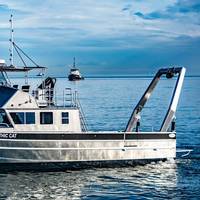
Washington-based boat builder Armstrong Marine said it has delivered a new 42’ x 16’ catamaran research vessel, Benthic Cat, to Orca Maritime, Inc. following launch and sea trials in Port Angeles Harbor. The vessel will enter service immediately, beginning with a week-long operation around San Clemente Island.The second IPS-drive catamaran delivered by Armstrong, the 4216-CTC model was selected by Orca Maritime after the builder delivered the same design to UC San Diego’s Scripps…
Scripps Adds New Research Vessel
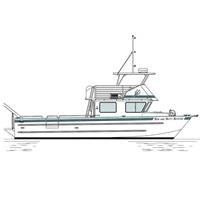
The Scripps Institution of Oceanography at the University of California San Diego has added to its fleet a fourth research vessel, which was constructed by Armstrong Marine. The research vessel Bob and Betty Beyster is expected to launch in mid-April for use in San Diego.Armstrong Marine of Port Angeles, Washington, designed the 42-foot aluminum hulled boat. Pacific Power Group, working closely with Armstrong, fit the vessel with a Volvo Penta IPS 650 propulsion system. This is…
Oi: Tracking 50 Years of Ocean Innovation

As Oceanology International celebrates its 50th Anniversary, Marine Technology Reporter explores half a century of subsea technology development and discovery. Oceanology International Americas runs February 25-27, 2019 in San Diego.When Oceanology launched in 1969 in the seaside resort of Brighton the world was a very different place. For a start, Brighton was home to the mods and rockers, who would square off against each other on the town’s elegant seafront. The British currency included shillings and ha’ pennies and man had yet to step foot on the moon.More crucially…

