
Wärtsilä, Sinocrew Launch Advanced Maritime Training Centre in China
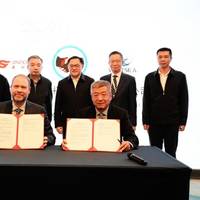
Finnish technology group Wärtsilä and Sinocrew Maritime Services have inaugurated an advanced maritime simulation and training centre in Beihai, China, to support the next generation of seafarers in the Asian cruise industry and advance the adoption of decarbonization technologies.The Beihai International Seafarer Training Center (BISTC) will provide simulation-based training focused on cruise ship operations and sustainable maritime practices. The project aims to equip seafarers…
Wärtsilä’s Advanced Simulators to Enhance Malaysia’s Maritime Training Capacity
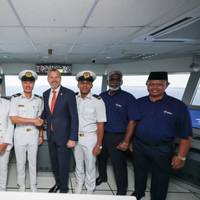
A new advanced simulation suite, supplied by technology group Wärtsilä, has been inaugurated at the maritime training institute Akademi Laut Malaysia (ALAM), the training arm of Malaysia International Shipping Corporation (MISC), a subsidiary of Petronas.The integration of Wärtsilä’s latest simulator technology significantly raises the level of maritime education for the region, creating a new generation of highly skilled and proficient seafaring professionals.ALAM’s new simulation suite features Wärtsilä’s new advanced dual-fuel simulator technology…
China Rolls Out 17MW Floating Wind Turbine Prototype
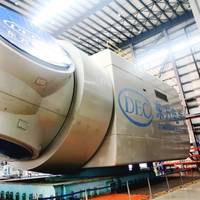
The world’s most powerful direct-drive floating offshore wind turbine, rated at 17 MW and co-developed by Dongfang Electric Corporation and China Huaneng, has been rolled out in China.With the highest single-unit capacity and the largest rotor diameter globally, the milestone marks a new breakthrough in China’s offshore wind power equipment manufacturing and provides vital technological support for expanding into deepsea offshore wind development.The turbine has a rotor diameter of 262 meters and a swept area of about 53…
Capital Group Invests in Kongsberg Simulators for New Training Center in Greece
Kongsberg Maritime has secured a contract with Capital Group, Greece, to deliver K-Sim Engine Room and Cargo simulators for their training centre on the Greek island of Chios. The investment underscores Capital Group’s commitment to high-quality training for its crew, enhancing both general STCW training and product familiarization with onboard automation systems.The delivery, scheduled for completion by the end of June 2025, includes K-Sim Engine Room and Cargo Handling Simulators. The simulators feature K-Chief automation systems installed onboard the Capital Group’s tankers and LNG gas carriers and will ensure the crew gains hands…
ABS, Akselos Sign Floating Wind MOU
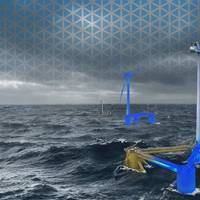
ABS and Akselos have signed a Memorandum of Understanding (MoU) to advance engineering and certification processes for floating offshore wind projects.The companies signed a Memorandum of Understanding (MoU) to collaborate on solutions aimed at optimizing design, reducing costs, and improving efficiency for the floating wind sector globally.The collaboration utilizes ABS's expertise in offshore certification and classification with Akselos' simulation technology for structural risk mitigation and optimization. Together, they aim to support the U.S.
Simulation Training Profile: Chris Hearn, Memorial University
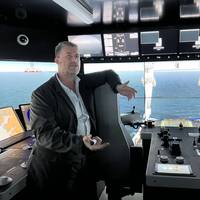
Memorial University in St. Johns, Newfoundland & Labrador, Canada, is a microcosm of how this unique regional cluster has parlayed its geographic locale and harsh, unique operating conditions into world leadership in the maritime, offshore energy and subsea tech spaces. An alumni, a professional mariner and now the Director of the Center for Marine Simulation, the Fisheries & Marine Institute at Memorial University, Chris Hearn has his hand on the pulse of the tectonic changes reshaping maritime and offshore energy simulation training today.
How Are Advances in Simulation Shaping the Future of Maritime Training?
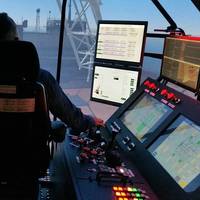
An increasing demand for safety and sustainability in the maritime industry has been instrumental in the advancement of simulation technology, which is revolutionizing maritime training by providing immersive, cost-effective, and risk-free learning experiences.Although simulation training has been used in the maritime industry for several decades, early simulation technologies were very basic compared to the sophisticated systems available today. The development of computer-based simulation technology in the latter half of the 20th century revolutionized maritime training.
Simulators Track our Changing Relationship with Technology
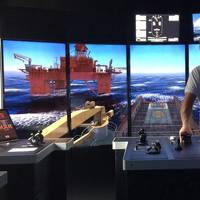
Simulation-based training has its whole-of-ship/whole-of-team scenarios, but zooming in, the industry is now working on more specific targets.We have a close relationship with technology, evidenced by, for example, the phones we are estimated to unlock around 50-80 times a day. It has changed us. Half the people surveyed in a 2022 King’s College London study said that they feel like their attention span is shorter than it used to be. They are wrong, though, if they think that the average attention span of adults today is just eight seconds, one second less than goldfish.
Simulators Track our Changing Relationship with Technology
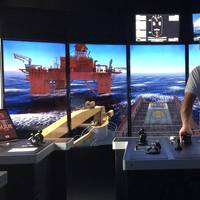
Simulation-based training has its whole-of-ship/whole-of-team scenarios, but zooming in, the industry is now working on more specific targets.We have a close relationship with technology, evidenced by, for example, the phones we are estimated to unlock around 50-80 times a day. It has changed us. Half the people surveyed in a 2022 King’s College London study said that they feel like their attention span is shorter than it used to be. They are wrong, though, if they think that the average attention span of adults today is just eight seconds, one second less than goldfish.
Kongsberg Digital Launches K-Sim Navigation CLOUD
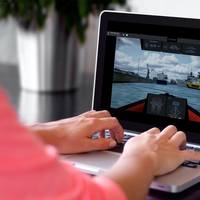
Kongsberg Digital launched its new cloud-based navigation simulation solution.K-Sim Navigation CLOUD is based on Kongsberg’s simulation technology, developed in the SkyNav project funded by Innovation Norway. It enables schools and training centers to provide high-quality simulation training in navigation and ship handling, including ECDIS and radar. The solution is designed to provide basic navigation training in compliance with the DNV’s Class D requirements. For training institutes with onsite simulators…
VR Headsets Provide 'Immersive' Training for Royal Navy
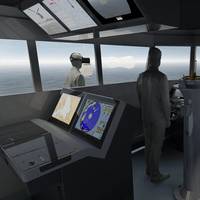
A new suite of navigation simulators for the Royal Navy will be rolled out this year as part of Project Selborne’s modernization of Royal Navy training.The Kongsberg Digital simulation technology is designed to ensure that Royal Navy personnel can maximize operational effectiveness in all types of situations, from single unit pilotage through to Replenishment at Sea and Task Group maneuvers, day and night and in all weather conditions. The simulators will enable teams to train together with multiple vessels in the same scenarios…
Maritime Training in the Philippines: Kongsberg Digital Sings MoU with MARINA
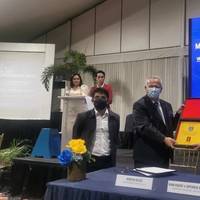
Norway-based Kongsberg Digital (KDI) and Maritime Industry Authority in the Philippines (MARINA) have signed a memorandum of understanding (MOU). According to Kongsberg, the MOU represents a significant milestone for innovation and transformation in maritime training in the Philippines,"Kongsberg Digital’s suite of simulation systems provides efficient and realistic training for maritime students and crew so building vital skills promoting safety, cost-efficiency, and sustainability in operations at sea.
Digitalization: Simulating Cleaner Shipping

Technologies developed and deployed in pursuit of net zero bring environmental and societal benefits for shipping owners and operators to outweigh their own emissions.SIM is a technology with the potential to make a significant contribution to maritime decarbonization, writes Patrick Ryan, ABSOne of the biggest problems for shipowners seeking to understand how environmental regulation will impact the performance of their fleets in future is uncertainty. While the regulatory framework is in place…
NYK, ABS, WinGD Working on Battery-Hybrid System to Cut GHG Emissions from Ships
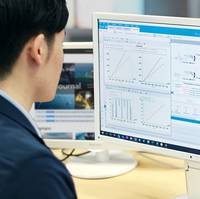
NYK and NYK Group company MTI Co., Ltd. (“MTI”), together with the American Bureau of Shipping (“ABS”) and Winterthur Gas & Diesel Ltd. ("WinGD"), have started joint research for optimization of ship design by utilizing a battery-hybrid system to aid ship propulsion and thus reduce greenhouse gas (GHG) emissions from vessels.A vessel’s main-engine revolutions may increase significantly when a vessel tries to maintain its sailing speed during strong waves and winds.This phenomenon is called “load fluctuation.” The shaft generator may also increase the burden on the main engine.
Kongsberg Digital to Supply Simulators to UAE's AASTS
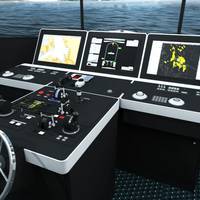
Kongsberg Digital (KDI) said it has signed a contract to deliver a suite of multipurpose simulation solutions to the Arab Academy for Science, Technology and Maritime Transport Branch in Sharjah (AASTS), United Arab Emirates. The state-of-the-art simulators enable realistic training scenarios for different vessel types in various operations and weather conditions, and will be used in training and assessment of the academy’s students as well as crew from government and private organizations.“When we signed the agreement to establish the Sharjah branch of the AASTS…
Evergreen Marine Renews LTSSP Contract with Kongsberg Digital
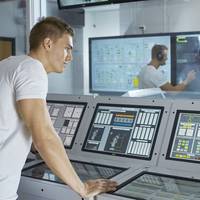
Kongsberg Digital (KDI) announced that its long-term system support program (LTSSP) contract with the Evergreen Marine Corporation has been renewed for another 10 years.The Taiwanese shipping company, one of the largest of its kind in the world, has used KONGSBERG simulators for crew training for over 20 years, with the first maritime simulator delivered to the firm’s training center in 1999. Since then, Evergreen Marine Corp. has used KONGSBERG simulator solutions to train its crews…
Profiles in Training: Dr. Michael Ekow MANUEL, Professor, World Maritime University

The global seafarers crisis takes center stage at the World Maritime University (WMU), as Dr. Michael Ekow Manuel discusses the importance of seafarers, seafarer training and the MarTID 2021 survey.While many maritime professionals have the theoretical ‘salt in their veins’, a career at sea seemingly predestined by family ties and/or geographic proximity, that is not the case for Dr. Michael Manuel, Professor, WMU. Hailing from Ghana, Dr. Manuel from a young age had a fascination with vehicles and everything that moves, but ships were not his focus, rather airplanes.
Panama Canal Authority Taps Kongsberg for New Navigation Simulators
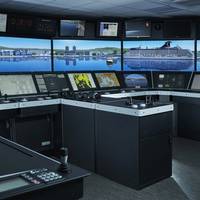
The Panama Canal Authority (ACP), which manages the 82 kilometers long Panama Canal that connects the Atlantic Ocean with the Pacific Ocean, has awarded Kongsberg Digital a contract to upgrade and extend the K-Sim Navigation simulators based in SIDMAR; the Center for Simulation, Research and Maritime Development of the Panama Canal Authority. Equipped with the new technology, the Panama City-based center will be able to include multiple vessels in training scenarios and extend the realism of the simulator training provided for pilots and tug masters…
Norwegian Partners Developing Cloud-based Maritime Training
Kongsberg Digital (KDI) and the University of South-Eastern Norway (USN) are partnering to develop cloud-based simulation exercises for the international maritime education market.As a developer of cloud-based simulation software, KDI is aiming to drive the evolution of cloud simulation technology as a sustainable and immersive supplementary tool for building competencies within the maritime industry, the company said, adding its partnership agreement with USN will seek to scale up the scope of maritime training.
Maritime Training: Non-Traditional Maritime Simulation
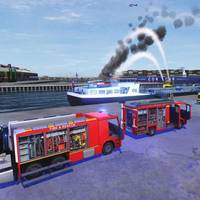
Our COVID-19 maritime world continues to change as our perspectives on education and training with the availability of online learning and conferencing, an increased use of webinars, and the use of simulation technology must evolve if we are to be able to continue to train and maintain skill sets as we navigate the current and predicted restrictions on movement. Changes made now may eventually become fully integrated in to future iterations of training in many industries.An increasing…
USMMA: Teaching with Simulation in the Maritime Field
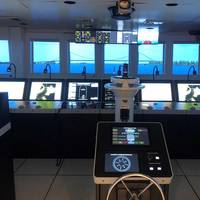
A great deal of research related to student learning styles has emerged in recent years. Through that research strong arguments have been made that more kinesthetic learning methods, such as hands-on or experiential learning, are more effective than more traditional methods like the lecture. In the maritime field, technology such as simulation, has provided us with tools to harness the power of experiential learning; however, those tools alone cannot ensure students are learning…
Training Tips for Ships Tip #17: Getting Serious About Assessing Skills
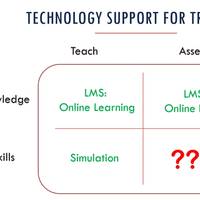
Ours is both a knowledge-based and skill-based industry. We know this. Yet our training does not address both aspects equally. And until it does, we are needlessly sacrificing safety and performance. There is more we can do.Maritime workers require a high degree of both knowledge and skills to perform efficiently and safely. Knowledge enables officers and crew to react intelligently to novel situations and to operate safely in challenging environments. Yet knowledge, while necessary, is not sufficient for safe and performant operations.
KR Opens LNG Bunkering Simulation Center
The Korean Register (KR) said it established a new liquefied natural gas (LNG) fuel and bunkering simulation center (KR LSC) at its headquarters in BusanThe use of LNG as a ship fuel and demand for bunkering is expected to increase as a result of the International Maritime Organization's (IMO) regulations to reduce SOx, which came into effect at the beginning of this year, and with the strengthening of GHG emission regulations in the future.The KR LSC will provide comprehensive technical services relating to LNG operations…