MarineLink News Search
Search term • sensor
Create an email alert for sensor
Connectivity Lifts Safety and Efficiency to the Next Level
Ship classification society risk and sustainability service provider DNV GL briefed the press today on the future of shipping at an event at the Posidonia exhibition in Greece.
Threat Detection and Recognition
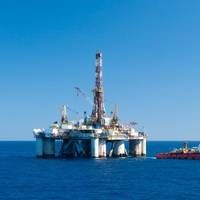
Trucks, trains, ships and oil rigs are all potential targets for criminal organizations. Organizations that own, use or transport high value assets recognise the need to protect their goods and employees, especially when they are at their most vulnerable - when in remote or isolated situations, at night and when operating alone. By their very nature, trucks, trains, ships and oil rigs are all potential targets for criminal organisations.
Innovation Drives Monitoring System Development
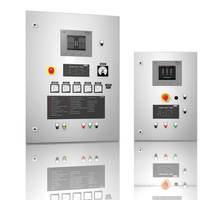
Innovation is a key driver in the development of advanced monitoring systems for environmental and safety compliance in the marine sector. Patrice Flot and Alain Meslati of diesel engine control and instrumentation specialists CMR Group, explain more about the latest technologies. The marine power sector is facing many challenges, particularly in areas where emissions resulting from combustion inside engines, along with fuel consumption levels need to be reduced.
USV Powered by Renewable Energy
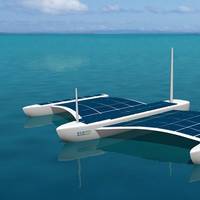
Eco Marine Power (EMP) today revealed details of its Aquarius Unmanned Surface Vessel (USV) and announced that it will begin work related to the construction of a prototype. The Aquarius USV is being developed as a cost-effective unmanned surface vessel (USV) and will incorporate a number of technologies from EMP and its strategic partners. These technologies include marine computer systems and lightweight flexible marine solar panels.
Synapsis INS for Two New Wind Farm Service Vessels
The German navigation system manufacturer Raytheon Anschütz, says that together with its exclusive Norwegian distributor Syberg AS, it has been awarded a contract…
FORCE Expands Tidal Energy Project Team
Nova Scotia's efforts to harness the power of the highest tides in the world are accelerating this year, and more people are joining the project to help ensure its success. Today, speaking to industry, science, and government representatives at the Nova Scotia Energy Research and Development Forum, Tony Wright, general manager of FORCE (the Fundy Ocean Research Center for Energy), announced two new…
VMMS for the Carbon Trust OWA Program
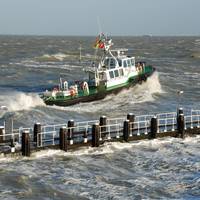
Strainstall’s Vessel Motion Monitoring System (VMMS) has been successfully installed on a vessel running trials for the Carbon Trust Offshore Wind Accelerator (OWA) program, a joint industry program aiming to reduce the cost of offshore wind by 10% for UK Round 3 sites. The OWA trial focuses on turbine access systems, proving and de-risking design concepts. VMMS is supporting the Carbon Trust during prototype testing phases to quantify vessel conditions during personnel transfers.
Subsea Risk Management in Real Time
Bergen, Norway – May 20, 2014 – A newly established research center on Norway’s west coast hopes to improve subsea operation and maintenance by bringing risk management into real time.
DoD Contract Modification Awards to Lockheed Martin, BAE Systems
The U.S. Lockheed Martin Mission Systems and Training, Liverpool, New York, is being awarded a $31,777,262 modification to previously awarded contract (N00024-13…
Elmer A. Sperry: Pioneer of Modern Naval Tech
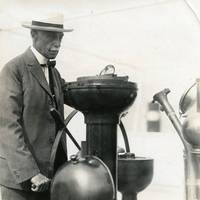
Elmer A. Sperry casts a long shadow over the history of modern naval, nautical and aeronautical technology, one few people know much about, but should, for a man crowned both the “father of modern navigational technology” and “the father of automatic feedback and control systems,” as well as a pioneer of rocket and missile technology. “It is safe to say that no one American has contributed so much to our naval technical progress…
New Submersible Pressure Sensor from AST
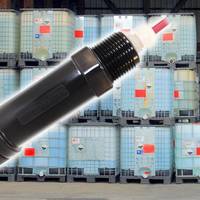
The Model AST 4530 Liquid Level Transmitter from American Sensor Technologies, Inc. (AST) is designed to measure the level of harsh liquids such as slurries, salt water and oil in vented tanks or containers. Constructed with PVDF material and a PTFE diaphragm, the AST 4530 submersible pressure sensor features a submersible PVDF cable, cord grip and housing as well as a conduit connection for turbulent installations such as process plants…
Ergonomic Controls Innovation for ECDIS, Bridge Controls
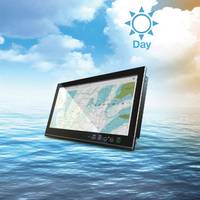
Innovations in computer display technology would seem to have recently hit a plateau. With the advent of LCD panels, improvements in computer displays have recently been limited to larger screens, higher pixel resolution, greater energy efficiency, and lighter, more efficient use of base resources. Yet there remains two areas where computer display manufacturers can continue to offer improvements: the human-machine interface, and local display intelligence.
Stauff Sensors Offer Real-time Oil Monitoring
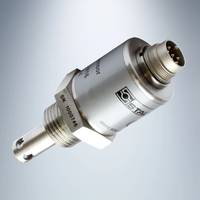
The demand for effective solutions to monitor hydraulic and lubricant systems is constantly increasing. Oil condition – or the result of the natural aging of the substance, decomposition of additives and contamination by foreign particles – is therefore the significant factor in determining the optimal point in time for an oil change. Changing the fluid too early generates unnecessary costs; changing…
The Broadband of Competitive Advantage

Inmarsat Maritime President Frank Coles said the efficiency gains of the “Maritime Industrial Internet” are at hand, if only shipowners can grasp the potential for competitive advantage. The first satellite in the Global Xpress fleet will complete all of its testing by July of this year, with the second and third satellites on schedule to be launched by the close of 2014. The Global Xpress Maritime service is expected to become globally available from the end of the first quarter of 2015.
The History of Offshore Energy
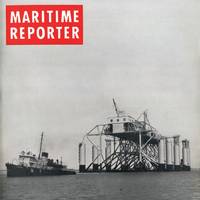
Offshore exploration is a history of man v. Prospecting for oil is a dynamic art. From a lake in Ohio, to piers off the California coast in the early 1900s, to the salt marshes of Louisiana in the 1930s, to the first “out-of-sight- of-land” tower in 1947 in the Gulf of Mexico, the modern offshore petroleum industry has inched its way over the last roughly 75 years from 100 ft. of water ever farther into the briny deep, where the biggest platform today, Shell’s Perdido spar, sits in 8,000 ft.
C-MAR's Modern Approach to DP Training in Brazil
The modern offshore maritime industry heavily relies on different classes of DP vessels, from OSVs to Drillships and Tankers, almost all vessels serving the oil…
Unique Technologies Improve Port Security
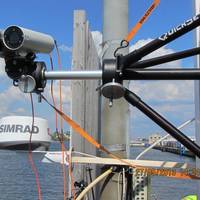
Practical results from the SUPPORT (Security UPgrade for PORTS) project, coordinated by BMT Group Ltd. and part-funded by the European Commission’s FP7 Security Research Program will be demonstrated to key stakeholders at Stena Line’s ferry terminals starting at Masthuggskajen in the Port of Gothenburg on May 7-8, 2014. Comprising a collaboration of 21 European organizations, SUPPORT integrates legacy port systems with new surveillance and information management systems.
Strategic Planning With Aggregate Data

A sensor is a device that measures some kind of input from the physical world. On complicated technical systems such as vessels, there is an enormous amount of different sensors. The number of sensors will surely grow as the size and cost of sensors continuously decrease. A person technically trained is able to gain some information from a single sensor reading, but the information is much more useful when the data from multiple sensors and sources is combined and aggregated at a higher level.
ESAB Releases Updated Columbus III
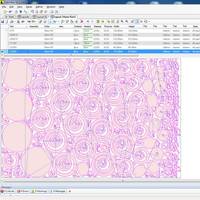
ESAB Welding & Cutting Products announces the release of Columbus III version 1.2, a powerful CAD/CAM programming and nesting software optimized for plasma, oxy-fuel, laser and waterjet cutting. This latest version of Columbus III offers many new features and updates to make programming easier and more efficient, improve material utilization, increase productivity, and streamline workflow. The new…
RCH Engineers New Steering System
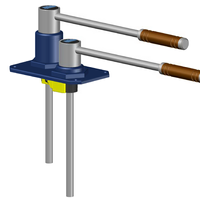
Rio Controls & Hydraulics (RCH) said it has developed a new steering system by modifying existing inductive sensors used in the oil and gas industry to reach a design that the company said will provide accurate and longer lasting sensor command and feedback signals. This technology aims to replace conventional devices such as potentiometers, as RCH claims its system offers many advantages over traditional steering.
Essential Weather Measurement Tools for the Marine Environment
The Future of Shipping: Autonomous and Unmanned Marine Vehicles
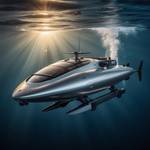
Autonomous Ships: Charting the Course for the Future of Maritime Navigation
Receive Information on moisture in oil
Meet The New Standard in Underwater Connectivity

Next-Gen Naval Power: Innovations Reshaping Modern Fleets

Navigating the Future: Emerging Trends in Naval Operations
Ship Electronics
Sonar
Remote Controlled Tugboat Demonstrated