Ship Repair
All ships need maintenance and repairs. Many repair and maintanance operations can be performed at sea or by the crew in port. Complicated or large-scale repairs might require the ship to be removed from commercial operation. Classification Society supervision is required for most large-scale repairs, particularly those carried out in a ship repair yard. For oceangoing ships, particularly tankers, the ship has to be prepared for repair at a Deballasting Station. The tank must be thoroughly cleaned and its slops (grey water and hydrocarbon residues) must be pumped ashore according to environmental regulations.

Russia Strikes Kyiv Telecoms Infrastructure, Cargo Vessels Bound for Ukraine
Russia's Defence Ministry said on Monday its forces had struck fuel and telecommunications…

Synergy Marine Group, Cochin Shipyard Sign MoU to Initiate Collaboration
Synergy Marine Group and Cochin Shipyard Limited (CSL) have signed a memorandum of…

Fraser Shipyards: 138 Years In, Building for What Comes Next
Part of a group of companies that make up Fraser Industries, Fraser Shipyard is a…

San Diego Hosts the 99th International Propeller Club Convention
This September, the 99th International Propeller Club Convention comes to San Diego.

One Killed in Chinese Shipyard Explosion
An explosion at a shipyard in the southeastern Chinese province of Fujian on Thursday…

Travis Richardson Appointed as Phoenix International Holdings Hawai’i Manager
Phoenix International Holdings, Inc., announced the appointment of Travis Richardson…

The Trouble with Pinning Down Maritime
Connecticut Maritime Association has decided to move its annual meeting and exposition…

Cobots Take on Grueling Work
In the February issue of Maritime Reporter magazine Nirav Patel, Nuclear Navy Segment…

Shipbuilders Council of America Announces New Board of Directors Leadership
The Shipbuilders Council of America (SCA), the national association representing the U.S.

Sabine Surveyors, Ltd. Announces Parent Company Transition, Leadership Appointments
Sabine Surveyors, Ltd. has announced organizational changes aimed at strengthening…

Tsuneishi Kure Completes Renewal of No.2 Floating Dock
Tsuneishi Kure has completed refurbishment work on the No.2 Floating Dock at its Wakaba Works…

Drydocks World, Cochin Shipyard Limited Enter Agreement to Develop Ship Repair Cluster in Kerala
Drydocks World, a DP World company, and Cochin Shipyard Limited (CSL) have signed…
A port authority operates ports and other transportation infrastructure for a special-purpose district. Whether operated directly by the government or in cooperation with government agencies, North American port authorities are public entities and are governed by a board or commission.
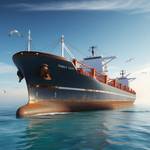
Tanker ships are an important component of the maritime sector, and they transport liquid cargoes around the world. These vessels are vital to the supply chain for energy, chemicals and other essential commodities. There are many types of tankers, each designed for specific cargoes such as oil, LNG, chemicals, or other liquids.

The global maritime industry is on the cusp of a profound transformation, driven by rapid decarbonization, advanced digitalization, and an increasingly complex regulatory landscape. This article explores how these forces are reshaping the skills, roles, and welfare needs of the maritime workforce. From the demand for "green" engineering expertise to the rise of remote operations and AI-driven systems, we delve into the challenges and opportunities in attracting, training, and retaining the talent essential for sustainable and efficient shipping. The future maritime professional will be a highly adaptable, digitally fluent, and environmentally conscious individual, operating within an industry that must prioritize human-centric approaches to truly thrive.

Naval forces globally are undergoing a profound transformation, driven by an accelerating pace of technological innovation and evolving geopolitical landscapes. This article explores the cutting-edge advancements that are redefining maritime defense and offense. From the integration of artificial intelligence and unmanned systems to the development of directed energy weapons and advanced stealth capabilities, we delve into how these innovations are enhancing situational awareness, extending operational reach, and enabling new forms of naval warfare. The future fleet will be characterized by networked, intelligent, and highly adaptable platforms, operating across multiple domains to secure sea lanes and project power more effectively than ever before.

Cutting-Edge Electric Propulsion for Container ShipsHD Korea Shipbuilding & Offshore Engineering and HD Hyundai Heavy Industries received Approval in Principle (AIP) from ABS for a concept design of a 16,000 TEU container ship featuring an electric propulsion system.




