Autonomous Ships Must Have Search and Rescue Capabilities
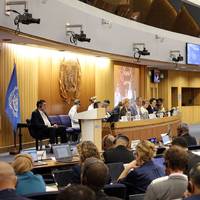
The 110th session of the Maritime Safety Committee (MSC 110) was held from June 18 to 27, with significant progress on a new non-mandatory code of safety for autonomous ships (MASS Code).The code addresses the emerging need for a regulatory framework to ensure the safe, secure and environmentally sound operation of autonomous and remote-controlled key functions.DNV reports that MSC 110 made significant progress, finalizing 18 chapters in the MASS Code, leaving mainly the chapter…
IMO's Credibility Put to the Test
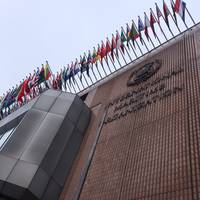
The IMO will reconvene in London on March 31 and April 1, for a crucial two-day Intersessional Working Group on Greenhouse Gas (ISWG-GHG 19) meeting. The meeting sets the stage for a decision on a GHG pricing mechanism by the Marine Environment Protection Committee 83 (MEPC 83) on April 7-11 on the future of shipping’s climate responsibility.The 6PAC+ alliance, a group of Pacific, African and Caribbean States, backed by major allies, emphasizes that this meeting is a make-or-break moment for securing a universal GHG levy of $150 per tonne of CO2-equivalent.
IMO Getting Ready to Seal the Deal on a GHG Emissions Pricing Mechanism
There were no major breakthroughs in the on-going discussions about a universal levy at the IMO's Intersessional Working Group on Reduction of GHG Emissions from Ships (ISWG-GHG 18) last week. Any GHG emissions pricing mechanism is going to mean big change for the industry, and a lot of different sectors within shipping will be impacted.InterManager has pointed out, in a paper submitted to the next meeting of the IMO’s Marine Environment Protection Committee (MEPC83 in April)…
IMO Working Group Fails to Finalize GHG Emissions Pricing Scheme

International efforts to curb GHG emissions from shipping took a step forward as the IMO's Intersessional Working Group on Reduction of GHG Emissions from Ships (ISWG-GHG 18) concluded its latest round of discussions on Friday.The IMO's 2023 GHG Reduction Strategy commits Member States to adopting mid-term measures to reduce GHG emissions from ships in late 2025, including:• a technical element, namely a goal-based marine fuel standard regulating the phased reduction of a marine fuel's GHG intensity; and • an economic element involving a maritime GHG emissions pricing mechanism.
ICS Pushes Levy-Based System Ahead of IMO Meeting

Guy Platten, Secretary General of the International Chamber of Shipping, has released a statement ahead of the UN IMO Intersessional Working Group on Reduction of GHG Emissions from Ships (ISWG-GHG 18) calling for a levy-based GHG pricing mechanism.The key purpose of the mandatory GHG charge will be to reduce the cost gap between conventional marine fuels and zero/near-zero GHG emission fuels (such as green methanol, green methane including biomethane, green ammonia, green hydrogen…
In Depth: Outcomes of MEPC 82

The IMO Marine Environment Protection Committee MEPC 82 met from 30 September to 4 October 2024 and discussed a range of environmental matters, including proposed mid-term measures for the reduction of greenhouse gas (GHG) emissions from ships, enhancing energy efficiency of shipping, tackling marine litter, ballast water management and underwater noise reduction.Tackling climate change - cutting GHG emissions from shipsThe Committee made progress on the development of mid-term…
IMO Finalizes Norwegian and Canadian ECA Designations

The IMO’s Marine Environment Protection Committee (MEPC) held its 82nd session from September 30 to October 4, 2024, with outcomes including the adoption of the Canadian Arctic and the Norwegian Sea as NOx, SOx and PM Emission Control Areas.The relevant MARPOL amendments will enter into force on March 1, 2026.DNV reports that for the Canadian Arctic:• The 0.10% fuel sulphur content requirement takes effect from March 1, 2027.• Tier III NOx requirements will apply to ships constructed (keel-laid) on or after 1 January 2025…
IMO Technical Cooperation Committee Advances Capacity Development Strategy

The Technical Cooperation Committee held its 74th session at IMO Headquarters in London from Junw 24 to 28 and made progress on the IMO Capacity-Development Strategy for providing technical support for Member States. The Committee approved a new title (IMO Capacity-Development Strategy) and structure for the document. The draft revised comprehensive strategy combines the existing Capacity-Building Decade 2021-2030 Strategy, with both the strategy for the long-term financing of…
MSC 108 Revises Autonomous Ship Roadmap
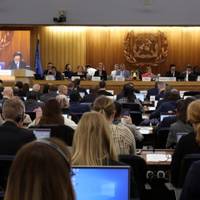
The Maritime Safety Committee of the IMO met for its 108th session at IMO Headquarters in London from May 15 to 24, and its outcomes included revising the roadmap for the development of a code to regulate autonomous ships (Maritime Autonomous Surface Ships - MASS).The Committee approved the report of the third session of the Joint MSC-LEG-FAL Working Group on MASS (MASS-JWG 3) and noted the significant progress made to date to develop the draft MASS Code, including the restructuring of chapters and refining the draft provisions.
Momentum Builds For a Universal GHG Price
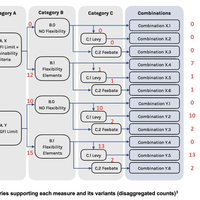
The 16th Meeting of the Intersessional Working Group on Reduction of GHG Emissions from Ships concluded with some progress made on the finalization of mid-term measures, and without a decisive shift in the landscape of positions and preferences.This meeting was the first convening of the IMO following the adoption of the Revised GHG Strategy in July 2023.Although it was already agreed in the Revised GHG Strategy to adopt both a GHG Fuel Standard (a mandate on GHG intensity of fuel/energy)…
UN Secretary-General Encourages MEPC 80 to Aim for Net-Zero

UN Secretary-General António Guterres sent a video message to MEPC 80 saying: “Humanity is in dangerous waters on climate, but the decisions you take over the coming days could help us chart a safer course."Science tells us it is still possible to limit global temperature rise to 1.5°C. But, it requires an immense and immediate global effort. And shipping, which accounts for almost 3% of global emissions, will be vital.”The industry must move much faster to get on track and drive investment and innovation…
UMAS: IMO Intersessional Working Group Made Little Headway on GHG strategy
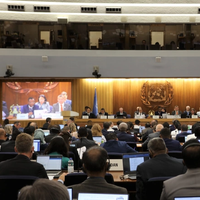
The fifteenth Intersessional Working Group on Greenhouse Gases (ISWG GHG 15) that concluded last week left key details undecided, says advisory service company UMAS.The meeting was the final working group meeting before the 80th session of the Marine Environment Protection Committee (MEPC) this week. MEPC 80 is a critical moment for the IMO because it coincides both with the adoption of a Revised GHG Reduction Strategy (Revised Strategy), as well as being the point that a set of policy measures key for enabling that strategy…
Kitack Lim Tells GHG Strategy Group: Be Ambitious and Bold

IMO Secretary-General Kitack Lim has delivered a speech at the working group meeting on the revision of shipping’s GHG strategy.The Intersessional Working Group on Reduction of GHG Emissions from Ships (ISWG-GHG 15) is meeting for five days before MEPC 80 meeting (3-7 July).There are two main themes: the finalization of the draft 2023 IMO strategy on reduction of GHG emissions from ships, and the further assessment and selection of measures, both technical and economic elements.Lim said: “You have already reiterated your commitment to finalize the revision of the initial strategy at MEPC 80.
IMO to Review GHG Strategy and More at MEPC 80

The IMO’s Marine Environment Protection Committee (MEPC) - 80th session will meet at IMO Headquarters in London from July 3-7, and amongst key agenda items, the MEPC 80 session is expected to adopt an upgraded IMO greenhouse gas strategy.The revised IMO GHG Strategy will contain concrete greenhouse gas reduction targets for the sector and is expected to outline a range of technical and economic measures. Negotiations have been ongoing and will continue during the Intersessional Working Group on Reduction of GHG Emissions from Ships (ISWG-GHG 15)…
Headwinds Hamper the Poseidon Principles

The Poseidon Principles provide a platform for financing shipping’s sustainable future, but the technical guidance underpinning the initiative remains under scrutiny.In July 2023, the International Maritime Organization’s Maritime Environment Protection Committee (MEPC) will consider revising the UN agency’s strategy on greenhouse gas emissions from ships. Moving on from a current target to reduce CO2 emissions from ships by at least 50% by 2050, based on 2008 levels, influential administrations seek to accelerate towards net-zero or even zero by 2050.
Headwinds for the Poseidon Principles

The Poseidon Principles provide a platform for financing shipping’s sustainable future, but the technical guidance underpinning the initiative remains under scrutiny.In July 2023, the International Maritime Organization’s Maritime Environment Protection Committee (MEPC) will consider revising the UN agency’s strategy on greenhouse gas emissions from ships. Moving on from a current target to reduce CO2 emissions from ships by at least 50% by 2050, based on 2008 levels, influential…
Shipping Industry Proposes Levy to Accelerate Zero Carbon Future
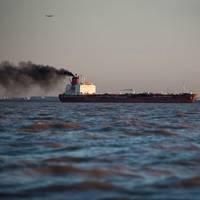
Leading shipping associations have proposed creating a global levy on carbon emissions from ships to help speed up the industry's efforts to go greener.With about 90% of world trade transported by sea, global shipping accounts for nearly 3% of the world's CO2 emissions and the sector is under growing pressure to get cleaner.For the first time, the International Chamber of Shipping (ICS) and Intercargo jointly proposed a levy based on mandatory contributions by ships trading globally…
IMO Updates Virtual Meetings Calendar
The International Maritime Organization (IMO) has published its remote meetings calendar for the rest of 2020 after its initial agenda of IMO Council and Committees sessions was scrapped due to the coronavirus pandemic.The first scheduled meeting is set to be a simultaneous, remote extraordinary sessions of all Committees (expected to be held 16-18 September), to address procedural matters. This follows decisions of the IMO Council's thirty second extraordinary session (summary here C.ES 32)…
IMO Postpones More Meetings Due to COVID-19

The International Maritime Organization (IMO) said its meetings scheduled to be held in July, including the next regular session of the IMO Council, have been postponed due to the COVID-19 pandemic, as the UN shipping agency moves to revise its meeting program for the remainder of 2020.The IMO said it has drawn up a priority list of meetings to be considered by the Council at its 32nd extraordinary session that will be held by correspondence from May to July. This follows the 31st session of the Council that took place…
Advance Information of Berths in Ports Can Cut Cost and Emission
If seagoing vessels were better informed about the availability of berths and adapted their speed accordingly, substantial savings could be made in terms of fuel and CO2 emissions. This conclusion is based on a study that was recently commissioned by the Port of Rotterdam Authority and research institute TNO.The study pointed out that if sea-going vessels are regularly kept informed – particularly during the last twelve hours before arrival – about exactly when their berth will become available, they will be able to adapt their sailing speed accordingly.That usually means reducing their speed so that they arrive just in time. This in turn leads to less fuel consumption and therefore lower emissions of unwanted substances such as carbon dioxide, sulphur oxides and nitrous oxides.
Just-in-Time Ship Operations Can Cut Emissions
Reducing the amount of time ships spend waiting outside port and at anchor could significantly reduce ship emissions, according to studies carried out by members of the International Maritime Organization (IMO) GloMEEP Global Industry Alliance (GIA).Ships can spend hours or days waiting at anchor outside ports, but providing ships with regular updates about the availability of berths, especially in the last twelve hours prior to port arrival, can support significant reductions in ship and port emissions.Implementing “Just-In-Time” ship operations means ships receive information in advance so they can time their arrival at the berth.
IMO Calls for Tackling Greenhouse Gas Emissions
An intersessional working group to develop a programme of follow-up actions to International Maritime Organization (IMO)'s Initial strategy on reducing greenhouse gas emissions from ships opened at IMO Headquarters (15 October).The initial strategy, adopted in April this year, sets out a vision to continue to reduce GHG emissions from international shipping and phase them out, as soon as possible - in this century.The strategy provides clear direction to the shipping sector and its partners to stimulate investment in developing low- and zero-carbon fuels and innovative energy-efficient technologies.Opening the session, IMO Secretary…
IBIA Promotes Sensible Approach to Sulphur Testing
International Bunker Industry Association (IBIA) is continuing its efforts for IMO to adopt guidelines ahead of 2020 that will promote a uniform approach to fuel oil testing and reporting protocol for the verification of compliance with MARPOL Annex VI sulphur limits. Earlier this year, IBIA submitted two papers to the 5th session of the IMO’s Sub-Committee on Pollution Prevention and Response (PPR 5) proposing a way ahead on sulphur testing and compliance verification. Both papers will be forwarded to a PPR intersessional working group (ISWG) taking place at the IMO in July. In PPR 5/12/1, IBIA proposes establishing appropriate guidelines for verifying the sulphur content in fuel oil samples taken from ships’ fuel systems (in-use samples).