
International Chamber of Shipping Releases Sixth Edition of Tanker Safety Guide (Chemicals)

The International Chamber of Shipping (ICS) announced the launch of the sixth edition of its benchmark publication, the Tanker Safety Guide (Chemicals). First published in 1971, the Tanker Safety Guide (Chemicals) is an industry reference for the safe operation of chemical tankers. This new edition provides up‑to‑date, practical guidance for those serving on board ships carrying hazardous and noxious liquid substances in bulk under MARPOL Annex II, supporting safe, compliant and pollution‑free operations.The sixth edition incorporates substantial updates to reflect evolving industry practice…
IMO PPR 13 Advances Biofouling Regulation Development

The IMO's Sub-Committee on Pollution Prevention and Response held its 13th session at IMO Headquarters in London from 9 to 13 February 2026.Outcomes include:Groundwork laid for future legally binding framework on biofoulingFollowing the decision of MEPC 83 to develop a legally binding framework on biofouling management to prevent the spread of invasive aquatic species, the Sub-Committee agreed some fundamental elements that will guide this work. These include the recommendation for the framework to take the form of a standalone instrument…
World Maritime Day 2025 Focuses on Marine Environment

The ocean takes center stage on World Maritime Day 2025, as the IMO celebrates how the industry is stepping up action to protect the ocean.This year’s World Maritime Day, observed globally on 25 September, focuses on the sector’s impact on the marine environment, and what it can do to reduce pollution, curb greenhouse gas emissions and prevent biodiversity loss.Secretary-General of the IMO Arsenio Dominguez said: “IMO has, for many decades, worked to strike the right balance to ensure that the shipping industry is not the problem but the solution.
Ship Fuel Quality Holds Steady, says LR Report
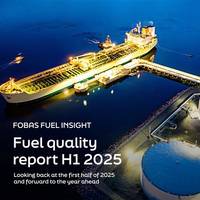
LR’s latest FOBAS Fuel Insight report highlights broadly steady fuel quality with particular issues around high sediments and chemical contamination, and an increased use of biofuel blends with developments in energy-content measurement.Global bunker fuel quality remained resilient in the first half of 2025 despite growing fuel diversity and tightening environmental regulation, according to Lloyd’s Register’s latest FOBAS Fuel Insight report. The findings highlight how improved testing…
IMO Calls for Action After UN Ocean Conference
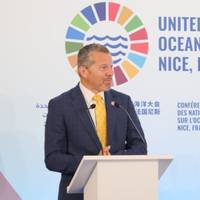
The Secretary-General of the International Maritime Organization (IMO), Arsenio Dominguez has applauded the important commitments made at the United Nations Ocean Conference (9-13 June) in Nice, France, while urging countries to deliver on these promises as soon as possible.Dominguez said: “Commitments are a necessary first step, but they are not the finish line. We must now move beyond the statements and turn those words into real, measurable action. That will take all stakeholders coming together…
Biofuel Blending: Whitchampion Bunker Tanker Earns Unique Certification
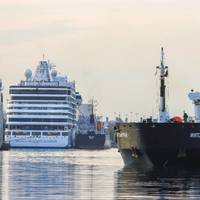
UK-based bunker operator John H. Whitaker (Tankers) Limited secured chemical certification from Lloyd’s Register (LR) on behalf of the Isle of Man Flag Administration for its tanker Whitchampion to load, carry and blend Fatty Acid Methyl Esters (FAME B100) onboard under IBC Code and MARPOL Annex II regulations.The certification allows Whitchampion to perform onboard blending of biofuels with petroleum distillates and residual fuel oils. The operation is authorized within UK coastal…
New Lloyd’s Register Report Outlines Upcoming Regulatory Changes
A new Lloyd's Register report outlines the upcoming changes to mandatory statutory regulations and instruments. A comprehensive suite of new International Maritime Organization (IMO) and International Labour Organization (ILO) regulations come into force over the next few months, reshaping environmental standards, safety protocols, and seafarer welfare. The changes outlined in Lloyd’s Register’s “Future IMO and ILO Legislation – Spring 2025” report highlight upcoming updates to mandatory statutory regulations and instruments, with effective dates on or after May 1, 2025.
IMO: New Air Pollution Limits Begin May 1 for Ships in the Mediterranean

The Mediterranean Sea officially became an Emission Control Area for Sulphur Oxides and Particulate Matter (Med SOx ECA) under MARPOL Annex VI on May 1, 2025. The sulphur content in fuel oil for ships operating in the area is now limited to 0.1%, reducing air pollution and delivering benefits to both human health and the marine environment. Ships operating in Emission Control Areas for Sulphur Oxides and Particulate Matter, such as the Mediterranean Sea, are subject to strict mandatory measures to prevent, reduce and control air pollution.
Outcomes of the Marine Environment Protection Committee (MEPC 83)

The Marine Environment Protection Committee (MEPC) met for its 83rd session in person at IMO Headquarters in London from April 7-11, 2025. The meeting was chaired by Dr. Harry Conway (Liberia), with Mr. Hanqiang Tan (Singapore) as Vice-Chair.Highlights included:Tackling climate changeThe Committee finalized and approved the draft legal text for the "IMO Net-Zero Framework," to be included as a new chapter in Annex VI to the International Convention for the Prevention of Pollution…
IMO Approves Net-Zero Regulations for Global Shipping
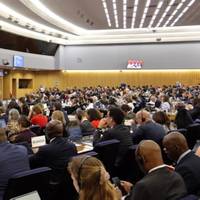
The International Maritime Organization (IMO) has achieved another step towards establishing a legally binding framework to reduce greenhouse gas (GHG) emissions from ships globally, aiming for net-zero emissions by or around, i.e close to 2050. The IMO Net-zero Framework is the first in the world to combine mandatory emissions limits and GHG pricing across an entire industry sector. Approved by the Marine Environment Protection Committee during its 83rd session (MEPC 83) from April 7-11, 2025, the measures include a new fuel standard for ships and a global pricing mechanism for emissions.
MEPC 83 Set to Tackle Mid-Term Measures on Emissions
The Marine Environment Protection Committee (MEPC) will meet for its 83rd session from April 7 to 11 April, and efforts to reduce GHG emissions from ships will be top on the agenda.Tackling climate change - Reduction of GHG emissions from shipsThe 2023 IMO GHG Strategy outlines a set of “mid-term measures” aimed at reducing greenhouse gas emissions from international shipping. These measures should consist of:• a technical element: a goal-based marine fuel standard designed to gradually lower the GHG intensity of marine fuels…
Evac Group: Dehydro Meets Waste Management Needs of Smaller Vessels

Evac Group, a leader in sustainability technologies and solutions, has launched Dehydro, an onboard waste management system designed to meet the specific needs of smaller vessels. Traditional onboard waste systems typically require high volumes of wet waste to be cost-effective, which makes them impractical for smaller vessels. The Dehydro system, using dehydration technology, makes onboard waste treatment viable for smaller ships, reducing the need for overboard discharge or costly offloading to land-based facilities.
ICS and CMI Renew Call for Treaty Ratification

The International Chamber of Shipping (ICS) and the Comité Maritime International (CMI) have launched an updated campaign for promoting maritime treaty ratification as there is a long-standing concern that many governments are not ratifying important international conventions despite their adoption at IMO and other regulatory fora.The campaign highlights the international maritime Conventions which ICS and CMI believe are significantly important for governments to ratify as a matter of urgency.
IMO Getting Ready to Seal the Deal on a GHG Emissions Pricing Mechanism

There were no major breakthroughs in the on-going discussions about a universal levy at the IMO's Intersessional Working Group on Reduction of GHG Emissions from Ships (ISWG-GHG 18) last week. Any GHG emissions pricing mechanism is going to mean big change for the industry, and a lot of different sectors within shipping will be impacted.InterManager has pointed out, in a paper submitted to the next meeting of the IMO’s Marine Environment Protection Committee (MEPC83 in April)…
Ship Managers Propose Revisions to IMO’s Net-Zero Framework

Ship managers have expressed concerns about the International Maritime Organization’s future net-zero framework and have suggested concrete changes to make the proposals more effective.Acting on behalf of the global ship management sector, InterManager, the international association for ship managers, has submitted a proposal to the next meeting of the IMO’s Marine Environment Protection Committee (MEPC83) to suggest essential changes.The submission warns that, in its current form…
IMO Working Group Fails to Finalize GHG Emissions Pricing Scheme

International efforts to curb GHG emissions from shipping took a step forward as the IMO's Intersessional Working Group on Reduction of GHG Emissions from Ships (ISWG-GHG 18) concluded its latest round of discussions on Friday.The IMO's 2023 GHG Reduction Strategy commits Member States to adopting mid-term measures to reduce GHG emissions from ships in late 2025, including:• a technical element, namely a goal-based marine fuel standard regulating the phased reduction of a marine fuel's GHG intensity; and • an economic element involving a maritime GHG emissions pricing mechanism.
IMO PPR 12 Finalizes In-Water Cleaning Guidance
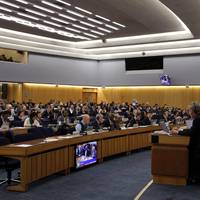
The 12th session of the IMO’s Sub-Committee on Pollution Prevention and Response (PPR 12), held in London from January 27 to 31 January 2025, finalized guidance on in-water cleaning of ships’ biofouling.The guidance is expected to be approved by MEPC 83 in April, says DNV. The guidance includes voluntary procedures related to planning, documentation, reporting and inspection when conducting in-water cleaning. It also includes recommended practices for those jurisdictions that…
In Depth: Outcomes of MEPC 82
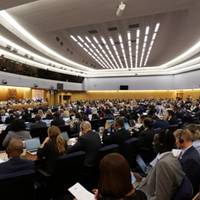
The IMO Marine Environment Protection Committee MEPC 82 met from 30 September to 4 October 2024 and discussed a range of environmental matters, including proposed mid-term measures for the reduction of greenhouse gas (GHG) emissions from ships, enhancing energy efficiency of shipping, tackling marine litter, ballast water management and underwater noise reduction.Tackling climate change - cutting GHG emissions from shipsThe Committee made progress on the development of mid-term…
IMO Finalizes Norwegian and Canadian ECA Designations

The IMO’s Marine Environment Protection Committee (MEPC) held its 82nd session from September 30 to October 4, 2024, with outcomes including the adoption of the Canadian Arctic and the Norwegian Sea as NOx, SOx and PM Emission Control Areas.The relevant MARPOL amendments will enter into force on March 1, 2026.DNV reports that for the Canadian Arctic:• The 0.10% fuel sulphur content requirement takes effect from March 1, 2027.• Tier III NOx requirements will apply to ships constructed (keel-laid) on or after 1 January 2025…
Caribbean States Want IMO to Agree Universal Fuel Levy

The IMO’s Marine Environment Protection Committee (MEPC82) opened on Monday, and the Caribbean islands – Jamaican, Antigua and Barbuda, Belize, Barbados, Dominica, the Grenadines, Grenada, Trinidad & Tobago, St Kitts, St Lucia and St Vincent – are calling for participants to agree on a fuel levy as part of IMO’s mid-term measures for reducing GHG emissions.The states want a universal GHG levy on shipping emissions which ensures that all carbon emitters contribute proportionately.
Tanker Captain Gets Prison Sentence Over Environmental Crimes
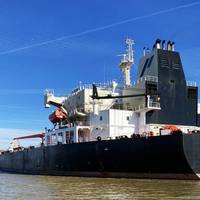
The operators of a Panama-registered tanker have been fined $2 million and the ship's captain sentenced to eight months in prison over charges stemming from environmental violations in the United States, the Department of Justice announced. Dubai-based Prive Overseas Marine LLC and Turkey-based Prive Shipping Denizcilik Ticaret, the two corporations that operated the motor tanker P/S Dream, were sentenced in federal court in New Orleans to pay a $2 million criminal penalty and complete four years of probation.
Interferry Calls for CII Fleet-Balancing Mechanism
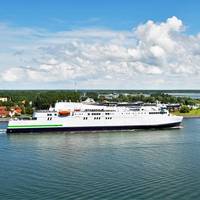
Interferry Director of Regulatory Affairs Johan Roos has announced that the organization has drafted an alternative compliance mechanism to the CII that will be submitted to MEPC 82, to be held September 30 - October 4.CII is a shipping industry-specific operational efficiency requirement that dictates how much fuel is allowed to be burned per nautical mile in relation to ship type and ship size. “It follows the same illogical statistical approach as IMO’s Energy Efficiency Design Index (EEDI) for new ships and the Energy Efficiency Existing Ship Index (EEXI)…
IMO Progresses MARPOL GHG Chapter
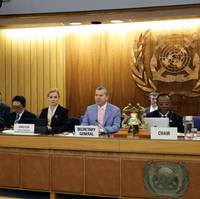
The IMO’s MEPC 81 meeting, concluded on March 22 with progress made on several fronts but the door left open to a number of risks, including that of architecture, timing, scope of emissions, compliance and enforcement, says consultancy UMAS.A new draft for a chapter in the Annex VI of MARPOL has been initiated titled “Regulations on the IMO net-zero framework”.Whilst, this new chapter is just a framework of subheadings for now, it includes all the elements needed to adopt any of the GHG policy options currently under consideration.