

The End of Predictable Shipping: Supporting Seafarers in an Ocean of Geopolitical Tensions

The US domestic and global maritime industry in 2026 stands at a critical crossroads, caught between structural labor deficits and an increasingly volatile geopolitical landscape. Shipping has undergone a transition since Covid-19, moving away from decades of relative stability with defined trade flows toward operating conditions that grow more complex and volatile by the year. Historic energy routes have shifted, uncertainty has settled over key maritime chokepoints, and global supply chains have absorbed the disruption.
Autonomous Vehicles Solve (and Create) Problems for Ports

Autonomous vehicles are increasingly sophisticated defensive tools for ports wanting to protect against maritime threats - including attacks from other autonomous vehicles.In December 15 last year, the Security Service of Ukraine reported that its underwater drone had struck a Russian submarine in Novorossiysk. The incident highlighted just how sophisticated potential threats have become. Harbor cameras were likely hacked, providing real-time visual evidence of the attack, with…
Rescued by the Welder’s Whip and Anchored by the Painter’s Spray Gun

As a vessel construction manager with extended building experience in both the U.S. and South Korea, more than several opportunities have landed on our desks as Private Equity and Venture Capital analyze tanker tonnage and construction in the domestic trades. With the understanding these requests are based upon the current Persian Gulf and Venezuela issues driving that market we should also pay attention to the 2027 Maritime budget that allocates $1.5 trillion dollars for overall National Security and $65.8 billion set aside for U.S. Navy Shipbuilding.
UN Agencies Call for Protection of Satellite Navigation

Increasing incidents of interference with aviation, maritime and other satellite telecommunications services mean States need to urgently enhance their protection of a critical radio-frequency band, the International Telecommunication Union (ITU), the International Civil Aviation Organization (ICAO), and IMO said in a joint statement.These cases of harmful interference are in the form of jamming and spoofing that disrupt Global Navigation Satellite Systems (GNSS) operating in the frequency bands allocated to the Radio Navigation Satellite Service (RNSS).
Maritime Coastal Border Security and the Role of USCG R&D

The United States' maritime coastal security poses a significant challenge due to the vastness of its coastline and the complexity of its maritime borders. According to the National Oceanic and Atmospheric Administration National Geodetic Survey there are approximately 95,000 miles of coastline. According to the Department of Homeland Security 2007 Transportation Systems publication there are “361 ports, and 3.3 million square miles of Exclusive Economic Zone (EEZ) to secure”.
Spire Wins Canadian Government Contract for Ship Tracking Data

Spire Global, a provider of space-based data, analytics and space services, announced it has been awarded a CA $1.41 million contract by the Government of Canada for the provision of global automatic identification system (AIS) ship tracking data.The one-year contract includes options for two additional years, extending the total potential contract value to nearly CA $4.23 million, Spire said.Under the contract, Spire will share its real-time global ship tracking data, providing visibility in both open oceans and high-traffic zones.
ASGARD: Developing an Anti-Spoofing Weapon

Saab and GMV are collaborating in ASGARD, an EU-funded project that aims to improve maritime security when using GNSS and OSNMA. The project addresses the growing threat of GNSS spoofing and other cyberattacks on navigation systems used in the maritime industry.The ASGARD project, run by Saab and GMV, is an ambitious European Union (EU) initiative that aims to develop advanced technologies to improve Global Navigation Satellite System (GNSS) and Open Service Navigation Message Authentication (OSNMA) security in maritime environments.
AI-Driven Maritime Custody Service Now Available Commercially

BlackSky Technology and Spire Global have teamed up to create a real-time, commercially available Maritime Custody Service that can automatically detect, identify and track more than 270 thousand vessels worldwide in open water, along rivers and canals, and while docked at port.The system uses data from Spire’s radio frequency-monitoring satellite constellation to detect emissions from maritime targets, including the ability to detect and locate dark vessels that manipulate their reported position in order to conceal nefarious activities.
Cobham Satcom Launches Two New THOR 7 Ka-band Antennas

Cobham Satcom, provider of radio and satellite communications solutions to the maritime and land has expanded its SAILOR XTR portfolio with the introduction of two new Ka-band antenna systems for Telenor Satellite’s THOR 7 VSAT services.The one-meter SAILOR 1000 XTR Ka and 65-centimeter SAILOR 600 XTR Ka leverage Cobham Satcom’s most advanced VSAT technology platform to secure high availability of broadband service on the THOR 7 satellite, used for a full range of network applications…
Maritime Communications: Easier, Faster, Cheaper

In November 2021, GTMaritime published a white paper: “Maritime Communications - A look over the horizon.” The report, available here, is built around three broad Sections – 1. “Basics of marine Communications;” 2. “The connected ship;” and 3. “Special services.”Then, each Section presents a closer look at various topics. The “Basics” section, for example, covers regulatory issues established by IMO treaties and national agencies. It presents the terms and concepts that define satellite systems and networks…
Want to stop a Drug Smuggling Boat? Try out a High Power Microwave Weapon Systems

Videos of U.S. military personnel stopping drug-smuggling boats are exhilarating and frightening. They are not Hollywood movies but real-life, dangerous encounters on the high seas. In each of those instances, the use of force applies. The High Power Microwave (HPM) Weapon Systems Division at Naval Surface Warfare Center Dahlgren Division (NSWCDD) makes those encounters safer for everyone involved.“A significant portion of what we do focuses on vessel stopping,” said Kevin Cogley, HPM Weapon Systems Division head.
Partners Digitize Spare Parts Management
Fleet management software provider ABS Nautical Systems (ABS NS) and spare parts supply chain technology company Spares CNX are partnering to digitalize spare parts inventory management and deliver significant time and cost savings to vessel owners and operators. PROPELLER platform, Spares CNX's proprietary software for vessel inventory management, will be integrated with ABS NS' NS Enterprise software suite, offering clients seamless data-driven support for the procurement process, including increased visibility into onboard spare parts levels, locations and real-time consumption.PROPELLER works seamlessly with select NS Enterprise software modules…
LED Lighting for Ships: Seeing is Believing

New Lighting Technology offers bright ideas for better interior and exterior lighting that saves money, manpowerThe U.S. Navy is leaving traditional lighting behind for Solid State Lighting (SSL) with very long-life solid-state light-emitting diode (LED) lighting. Technology has illuminated new ways to light ships that are safer, more efficient and more affordable. Taking advantage of the new technology has its challenges, such as finding cost effective lighting that is rugged…
Nautel Expands Maritime Offering with Kenta Acquisition

Canada-headquartered Nautel announced Wednesday that it has acquired France-based technology company Kenta, expanding Nautel’s offerings to customers in the maritime sector.Kenta was established in 1990 and has gained extensive experience in the development of Radio Frequency Communication Systems, mainly in the area of Global Maritime Distress and Safety Systems (GMDSS) for telephony or voice transmission. The company offers complete turnkey transmitter and receiver solutions for MF…
Intellian Launches New KU-KA Convertible VSAT

Intellian has released the latest model in its new NX Series future proof and low lifecycle cost VSAT antenna portfolio. The v130NX is a Ku-Ka convertible VSAT terminal with a 1.25-meter reflector, making it an ideal platform for high-speed global Internet on ships, offshore vessels, and superyachts.The v130NX is a flexible system supporting Ku-band and Ka-band (2.5 GHz Wide) networks. It is also compatible with GEO (Geostationary Earth Orbit), MEO (Medium Earth Orbit) and LEO (Low Earth Orbit) constellations.
'HawkEye' on Suspicious Ships
HawkEye 360 has launched its first cluster of three, formation-flying small satellites aboard a SpaceX Falcon 9 rocket.The Radio Frequency (RF) data analytics company said in a release that the Pathfinder satellites will deliver a unique source of radio frequency (RF) data that HawkEye 360 will use to create first-of-its-kind RF-based analytics."The successful launch of our Pathfinder satellites is the biggest moment in our company's young history," said John Serafini, CEO, HawkEye 360. "I am extremely proud of what our 30-person team has accomplished over the past three years. We combined our varied expertise in small satellites, signals processing and data analytics to bring a new source of RF information to the market.
Sea Tel 9711 Triband Maritime Antenna System Launched
Satellite 2018 marks the launch of Cobham SATCOM’s Sea Tel 9711 Triband maritime antenna system, which leverages unique technology and capabilities from global communications company Viasat Inc. The Sea Tel 9711 Triband is the world’s first and only 2.4m maritime stabilized antenna capable of delivering full 2.4m gain performance across any C-, Ku-, or Ka-band network to maximize high-speed, high-quality broadband connectivity for high-demand maritime segments, such as Cruise, Energy and Government. The triband antenna system leverages radio frequency (RF) technology provided by Viasat to enable compatibility across any Ka-band satellite network operating in any orbit.
Inmarsat: The Future of IoT in Logistics
Unreliable communication networks may render logistics businesses unable to capture full value from the Internet of Things (IoT), says Inmarsat. Top three challenges to successful IoT deployments in transportation sector: IoT skills (54 per cent), integrating IoT with existing systems (43%) and connectivity (40%). The research by the global mobile satellite company for its ‘The Future of IoT in Enterprise – 2017’ report suggests that while 96 per cent of transportation and logistics organisations believe that the success of their IoT deployments is based on reliable ubiquitous connectivity, many businesses are still struggling to access the connectivity they need.
Ocean Alliance Calls APM Terminals Port Elizabeth
APM Terminals Port Elizabeth welcomed the 8,700 TEU capacity CMA CGM Bianca, marking the first call of the weekly Ocean Alliance US East Coast Loop 3 Service, providing direct service to the US East Coast from ports in China and Southeast Asia. After a formal welcoming ceremony held at the facility, APM Terminals Port Elizabeth hosted a reception for senior executives of Ocean Alliance member lines to commemorate the occasion. The CMA CGM Bianca arrived and departed on schedule with a berth productivity of 129.2 moves per hour (MPH) for the 4,393 container moves at the terminal, for 30.1 gross MPH, and average dwell for rail-destined containers of less than one day. Until recently, container ships calling the Port of New York & New Jersey were mainly of the 5,000-8,000 TEU size class.
Cost Reduction Through Modified EMC Regulation

The joint proposal to applicate risk based EMC regulations has been accepted and will be implemented January 2017. The intention of this proposal is to reduce EMC related costs by applying a risk based approach combined with smart installation methods. The proposal has been submitted by the “EMC for future ships” work group. Partners of RH Marine in this work group are: Damen, Thales, DMO, Lloyd’s Register and University of Twente. EMC stands for Electromagnetic compatibility, meaning that equipment won’t be interfered by phenomena such as radio frequency fields and switching transients.
Indian Ports to Implement RFID
All Major Ports have been directed to implement the Radio Frequency Identification (RFID) system to track the movement of men, materials and vehicles within the port premises on real time basis. Implementation of RFID system will eliminate manual checking of documents at port gate and real time tracking of movement of vehicles, men and materials. This would reduce congestion and also cost of operations at Ports. Ports have been directed to have the RFID system in place by 31.03.2017. At Haldia Dock Complex (HDC), Kolkata Port Trust, for RFID based Vehicle Tracking and Management System work order placed on 9.5.2016. Software developed and other activities are in process. The entire project will be implemented by 31.12.2016.
GM Deep Sea Mooring Secures Det Norske Oljeselskap Contract

Global Maritime Deep Sea Mooring, a provider of offshore mooring services in Norway, has signed a contract with Norwegian operator Det norske oljeselskap to support Prosafe’s semi-submersible Safe Zephyrus accommodation rig in the Ivar Aasen North Sea field. The contract also includes support to the Maersk Interceptor ultra-harsh environment jack-up rig. Deep Sea Mooring, which has already installed the pre-lay system, will supply mooring and pre-lay equipment; offshore personnel…
US Navy Strengthens Battlespace Situational Awareness
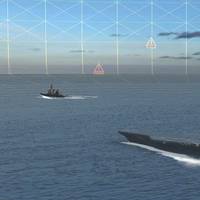
The U.S. Office of Naval Research has awarded BAE Systems an $11 million contract to develop next-generation electronic warfare (EW) technology that will quickly detect, locate, and identify emitters of radio frequency signals. Known as the Full-Spectrum Staring Receiver (FSSR), this technology will enable near-instantaneous battlespace situational awareness, emitter identification and tracking, threat warning and countermeasure and weapon cueing. Conventional situational awareness systems are not able to deliver the high level of coverage and responsiveness that FSSR will provide.



