

ST Engineering Gets RINA’s Approval for Hydrogen Ferry Retrofit Design

RINA has granted an Approval in Principle (AiP) to ST Engineering Marine for a retrofit concept involving a hydrogen-powered fuel cell system on a fast passenger ferry.The approval covers the replacement of one auxiliary diesel generator on the Asean Raider I ferry with a hydrogen fuel cell system supported by lithium-ion batteries.The concept is designed to reduce carbon emissions while maintaining safety, performance and regulatory compliance, RINA said.The assessment was conducted…
ABB, HDF Energy Target Maritime Decarbonization with Fuel Cells

ABB and HDF Energy have signed a joint-development agreement (JDA) to develop a high-power fuel cell unit for marine applications.The agreement builds on an earlier Memorandum of Understanding (MoU) signed between ABB and HDF Energy in 2020, envisaging the collaboration.Foreseeing pilot installations in 2028 - 2029 and serial production from 2030, the agreement initiates a significant step forward for developing fuel cells as a commercially viable option to support maritime decarbonization.The…
Lloyd’s Register Shares Updated Guidance to Support Fuel Cell Integration

Lloyd’s Register (LR) has released updated guidance for the installation of fuel cells on ships, offering shipowners and shipbuilders a comprehensive framework to support the safe deployment of alternative power systems. The July 2025 edition of Guidance Notes on the Installation of Fuel Cells on Ships incorporates recent regulatory updates and technical developments related to fuel cell technology in the maritime sector. Fuel cells powered by hydrogen or ammonia are viewed as options for achieving zero or near net-zero tank-to-wake emissions.
ABB Integrates 3.2MW Fuel Cell on Superyacht
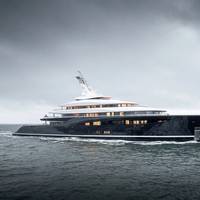
ABB has integrated a 3.2MW fuel cell system onboard Feadship Breakthrough.The vessel was constructed by Dutch high-end yacht builder Feadship. Launched in May 2025, the privately-owned 118.8-meter yacht is among the first vessels in the world to feature multi-megawatt fuel cell technology.ABB’s scope of supply comprised the Onboard DC Grid™ power system platform and two 3.2MW Azipod® electric propulsion units, which minimize noise and vibrations on board. ABB’s Power and Energy Management System PEMS™ optimizes energy use on board…
Scaling Up Hydrogen Fuel Cell Demand

This past month Maritime Reporter TV has taken a close look at two hydrogen fuel cell projects: the new research vessel planned for Scripps Institution of Oceanography and e1 Marine’s methanol-to-hydrogen technology which is being adopted by STAX Engineering for its emissions capture barges.The Scripps California Coastal Research Vessel will feature a hydrogen fuel cell propulsion system that will allow it to operate with no greenhouse gas or other emissions for 75% of its missions – and for all of its time operating in state waters.
World’s First Hydrogen-Powered Cruise Ship to Debut 2026
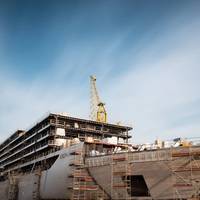
Viking and Fincantieri have announced that the Viking Libra, the world’s first hydrogen-powered cruise ship, capable of operating with zero emissions is scheduled for delivery in 2026.The vessel is already under construction at Fincantieri’s Ancona shipyard, and Viking’s subsequent ocean ship, the Viking Astrea, is also currently under construction and scheduled for delivery in 2027.Both vessels will have a hybrid propulsion system partly powered by hydrogen-fueled fuel cells…
Svitzer Steadily Builds a Maritime Behemoth
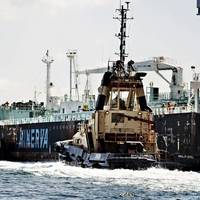
Operating one of the world’s largest marine fleets of any kind, it is Svitzer’s local footprint that speaks volumes for its diverse and far-flung workforce and assets. Strengthened by a multi-national team, providing value in more than three dozen countries, Svitzer stands out every day. On 30 April 2024, Svitzer was listed on Nasdaq Copenhagen (SVITZR) as a result of the previously announced separation from its former parent company, A.P. Møller - Mærsk A/S. Danish national Kasper Karlsen has been Global Chief Operating Officer of the Svitzer Group since December 2022.
Meyer Werft Kicks Off Fuel Cells for Cruise Ship Retrofits Project
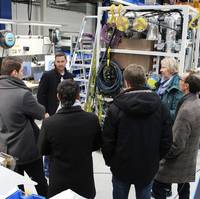
German shipyard Meyer Werft has launched the zero4cruise project with project partners including Freudenberg e-Power Systems and the German Aerospace Center (DLR).The project aims to develop climate-friendly and low emission energy systems for cruise ships, focusing on fuel cell technology powered by green methanol.The hybrid energy system will combine PEM fuel cells with a methanol reformer and battery systems to optimize efficiency and ensure ships can operate carbon-neutral…
An (Electric) Jolt for the Passenger Vessel Industry
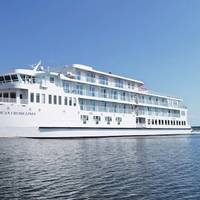
The domestic passenger vessel answers the call for cleaner and more efficient platforms. It is truly an electric time to be a part of this niche industry.In the shadow of a rapidly changing political landscape, the domestic passenger ferry sector is nevertheless seeing an increasing number of newbuild vessel orders. Older fleet vessels, some approaching financial and operational obsolescence – also environmentally undesirable on a waterfront that more than ever demands cleaner carbon signatures – are going the way of the dinosaur.
Corvus' Pelican Fuel Cell System Awarded DNV Type Approval
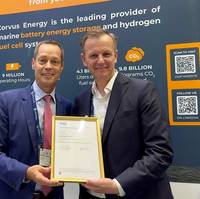
Corvus Energy announced that the Corvus Pelican Fuel Cell System has received Type Approval from DNV. The system, which was developed through the three-year-long H2NOR project, is the first Fuel Cell System (FCS) designed to be inherently gas-safe.Receiving type approval from DNV, a leading maritime classification society, confirms that the Corvus Pelican Fuel Cell System meets the most stringent performance and safety standards required by the maritime industry. Olaf Drews, Head of Engines & Pressurized Equipment Maritime…
Hydrogen-powered Ferry Sea Change Set to Enter Service
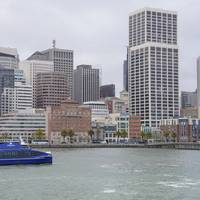
The first-of-its-kind hydrogen-fueled ferry Sea Change will soon begin public service, providing zero-emissions transport for passengers in San Francisco Bay.The groundbreaking commercial passenger vessel is the world’s first powered 100% by zero-emission hydrogen fuel cells. It was developed by owner SWITCH Maritime with grant support from the California Air Resources Board (CARB) as a solution to reduce emissions from the marine transportation system.A group of private and public sector partners came together to officially launch the Sea Change on July 12…
Blue World Wraps Up Trials of 200kW Green Methanol Maritime Fuell Cell System
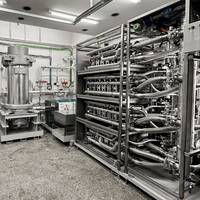
Denmark-based Blue World Technologies has completed the testing of the world’s first 200 kW high-temperature PEM fuel cell module, exceeding performance expectation of the system which aims to contribute to the decarbonization of the maritime industry.The test was completed at the newly established test facilities in connection to the Blue Aalborg Factory, where the fuel cells for the system are produced. The initial testing has been completed with great results which has exceeded performance expectations…
Autonomous Vessels: Already Working, but Still Under Close Review
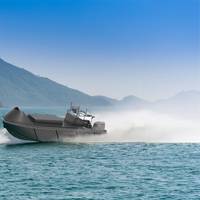
Advances in autonomous vessels – from R&D to regulatory policies to actual work – are moving rapidly. AVs include a range of vessel types and missions, from freight to law enforcement to research to defense. There are many acronyms. Some examples –AV stands for autonomous vessel.AUV is autonomous underwater vessel.MASS stands for “maritime autonomous surface ship.”NOMARS is a U.S. Department of Defense term for “no manning required ship.”Different…but maybe not so differentSurface…
TECO 2030’s Fuel Cell Running at 100% Capacity in Test Bed
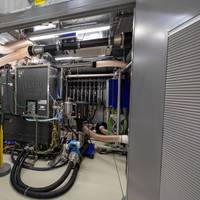
TECO 2030 has successfully reached stable and maximum power output of zero emission hydrogen-electric power with its fuel cell system at AVL's test bed in Graz, Austria.TECO 2030’s fuel cell technology features a modular system with installed power capacity of 400kW. This includes high energy efficiency, an inherent safety concept, optimal weight and size dimensions, advanced component design, extended lifespan, and rapid dynamic load response.“This milestone is the biggest one so far in the history of TECO 2030 Group…
Printed Circuit Board Fuel Cell Technology Tested on Narrowboat
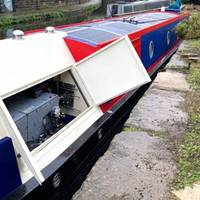
Bramble Energy has launched the world’s first hydrogen-electric boat powered by a printed circuit board fuel cell (PCBFC™).As the lead partner in the HyTime project working alongside custom engine builder Barrus, Bramble Energy has created a demonstration vessel that it says showcases the vast potential of its PCBFC™ technology to quickly and cost-effectively decarbonise the marine sector.A 57ft narrowboat was launched in Sheffield, UK, where it has successfully completed testing.
Great Ships of 2023: Icon of the Seas
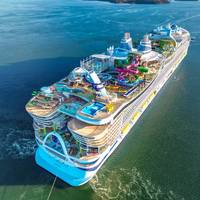
“Turku is building the real big ships,” said Meyer Turku CEO Tim Meyer.Meyer is not exaggerating. The yard’s latest newbuild, Icon of the Seas—the first ship of Royal Caribbean’s Icon class—is 248,655 GT, making it the largest cruise ship ever constructed.In general, the cruise ships rolling out of the nearly 300-year-old Finnish shipyard have been steadily increasing in size since the Meyer Group took full ownership in 2015. “We are proud to say Turku has been a first-mover in building these big new classes for Royal Caribbean…
World's Largest Cruise Ship: Meyer Turku Delivers Royal Caribbean's Icon of the Seas
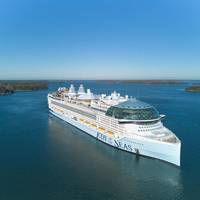
Finnish shipbuilder Meyer Turku on Monday delivered the world's largest cruise ship, the 248,655 GT Icon of the Seas, to U.S.-based Royal Caribbean International.The 365-meter-long cruise ship has 20 decks (including 18 guest decks) and surpasses the previous world's largest, Royal Caribbean's Oasis-class Allure of the Seas. With 2,805 staterooms, Icon is able to carry 5,610 passengers at double occupancy, or up to 7,600 passengers if every cabin is maxed out—another cruise industry record.
ABB's Power, Propulsion, and Automation for Samskip's Hydrogen-powered Container Ships
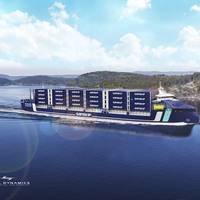
ABB has won a contract to deliver a power, propulsion, and automation system for two new-built short-sea container ships for Rotterdam-based global logistics company Samskip Group.According to ABB, the vessels will be among the world’s first of their kind to use hydrogen as a fuel. Financial details of the contract were not disclosed. Built by India-based Cochin Shipyard, the 135-meter ships are due for delivery in Q3 and Q4 of 2025, respectively. Both vessels will be operating between Oslo Fjord and Rotterdam, a distance of approximately 700 nautical miles.
World's First Methanol Hybrid Fuel Cell Tug Taking Shape
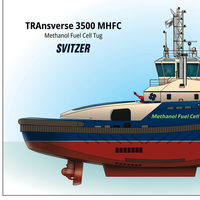
Towage and marine solution services firm Svitzer on Thursday launched the second phase of its project to design the world’s first methanol hybrid fuel cell (MHFC) tug.Svitzer, part of A.P. Moller-Maersk, has conducted technical studies to establish the feasibility of this type of vessel accommodating the real-world operational requirements of a tug. Work will now begin between Svitzer and naval architect company Robert Allan Ltd. to design the world’s first MHFC tug. The next phase will include work to complete the vessel design…
Mercuria and ÈTA Shipping Partner on Vessels with Modular Power Systems
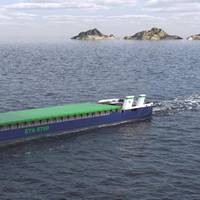
Global energy and commodity group, Mercuria, and Netherlands-based ÈTA Shipping have established a joint venture for the construction of six diesel-electric shortsea general cargo vessels with the option for another 10.The vessels will be built by Taizhou Sanfu Ship Engineering in China and will be owned by Mare Balticum BV, a subsidiary of Mercuria, with ÈTA Shipping acting as a minority shareholder. The maiden voyage of the first vessel is planned for the second quarter of 2025.ÈTA Shipping’s modular design of the ÈTA 6700 vessel involves an electric motor that powers the propeller.
Powering the Transition to Zero-emissions with Hydrogen Fuel Cells
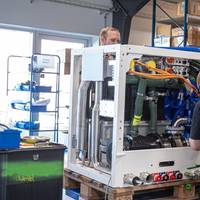
By now, it is a well-known fact that the marine industry contributes significantly to the greenhouse gasses causing climate change—and the impact is predicted to rise as the demand for shipping by sea increases. Action is needed now, and the majority of ship operators are adopting or planning zero-emission solutions to accommodate upcoming emission reduction targets.A key zero-emission technology that will be a critical enabler for decarbonizing the marine industry—now and in the future—is hydrogen fuel cells.Today…
World's Largest Cruise Ship Starts Sea Trials
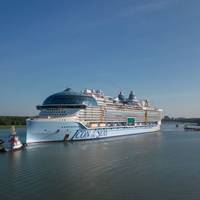
Royal Caribbean's Icon of the Seas—the world's largest cruise ship—has commenced sea trials in the Baltic Sea.The 250,800 GT vessel, the first in Royal Caribbean's new Icon-class, has been under construction at the Meyer Turku shipyard in Finland since June 2022. The fully assembled ship was floated out in December and is now undergoing final outfitting and testing.This first set of sea trials—which tests the performance of the ship's propulsion systems, navigation systems and other ship features…
Corvus Unveils Pelican Fuel Cell System
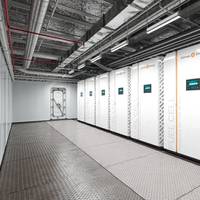
Corvus Energy has launched its inherently gas-safe marine fuel cell product, the Corvus Pelican Fuel Cell System.The system is the result of the H2NOR research project that started in 2021. H2NOR was initiated by Corvus Energy, Toyota and other partners to fast-track the development and production of sustainable and scalable Maritime Hydrogen Fuel Cell Systems.Corvus says the result of the two-year development is the safest marine fuel cell system to date. Using the well-proven fuel cell technology from Toyota…



