

US Legislation Introduced to Reauthorize Federal Maritime Commission

U.S. Representative Dusty Johnson (R-S.D.) introduced legislation to reauthorize the Federal Maritime Commission (FMC), the independent federal agency responsible for regulating the U.S. international ocean transportation system.“Ocean shipping is a critical aspect of America’s national, food, and economic security. That’s why our Federal Maritime Commission must be equipped with the proper tools to keep the industry operating above bar,” said Johnson. “Ocean shipping is integral to our economy, from farmers to phones, critical minerals to cars. I’m proud to lead this legislation with Rep.
What's New in the Reintroduced SHIPS for America Act?

On April 30, Senator Mark Kelly (D-AZ), together with several original co-sponsors, reintroduced the SHIPS for America Act in the U.S. Senate, first introduced in December 2024, divided into two bills. Companion legislation was also introduced in the U.S. House of Representatives by Rep. Trent Kelly (R-MS) and Rep. John Garamendi (D-CA). This is a major, historic effort to revitalize the U.S. merchant marine. The legislation had to be reintroduced to be considered by the new U.S.
OPINION: Balzano on Why New Hampshire Needs the Jones Act

Reproduced Courtesy NH JournalThere has been a lot of discussion in New Hampshire lately about the effectiveness of a pro-American law that has been providing national and economic security for the United States for many years. I want to provide some stakeholder’s perspective and perhaps add some context as to how this issue relates to New Hampshire.The Jones Act is a series of laws that ensure that America controls its own critical supply lines. The Act ensures our most important commodities – like heating oil and other fuels…
Support for Jones Act, Concern about China Voiced at Maritime Infrastructure Hearing
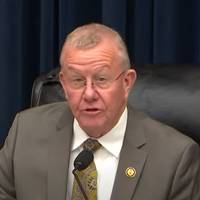
US Coast Guard and Maritime Transportation Subcommittee Chairman Mike Ezell (R-MS) addressed a hearing titled “America Builds: Maritime Infrastructure” on Wednesday saying: “It is clearly critical that we must build a safer and more efficient system.”The new chairman, for the 119th Congress, said the Jones Act is quite literally the bedrock and foundation of the nation’s shipbuilding industrial base because it helps to maintain a pool of qualified American mariners that the US relies on to transport goods and its military…
SHIPS for America Act rolled out on the Hill
The bipartisan, bicameral bill will fuel U.S. economy, strengthen national security by responding to China’s threat over the oceans. Currently, the number of U.S.-flagged vessels in international commerce is 80; China has 5,500.Today, Senator Mark Kelly (D-AZ), Senator Todd Young (R-IN), Representative John Garamendi (D-CA-8), and Representative Trent Kelly (R-MS-1) introduced the Shipbuilding and Harbor Infrastructure for Prosperity and Security (SHIPS) for America Act, comprehensive legislation to revitalize the United States shipbuilding and commercial maritime industries. After decades of neglect, the United States has a weakened shipbuilding capacity, a declining commercial shipping fleet that is dwarfed by China, and a diminished ability to supply the U.S. military during wartime.
US Election Awash with Maritime Implications

With a critical election fast approaching – in which the Executive Branch, House and Senate are all up for grabs – it is essential to consider the election’s potential impact on the maritime industry before heading to the voting booth.Maritime impact on the electionAt the time of writing, we are two weeks away from the expiration of the current six-year master agreement between the United States Maritime Alliance (USMX) and the International Longshoremen’s Association (ILA) with no new agreement in sight.
Congress Raises the National Security Alarm on Shipbuilding

A bipartisan, bicameral group is emerging in Congress as the thought leaders for future maritime policy. On January 30, 2024, Senator Mark Kelly (D-AZ) and Representative Mike Waltz (R-FL-6) led a letter to President Biden, joined by 17 other members of Congress, urging the White House to embrace a “bold and clear vision” for the future of U.S. sea power. Among other recommendations – including establishing an interagency maritime policy coordinator – the Congressional group urged President Biden to issue a Presidential Determination to establish “commercial…
Government Shipbuilding Could Soon Enter American Living Rooms

With the U.S. Navy and U.S. Coast Guard FY 2025 budget requests offering uninspiring news for traditional shipbuilders, industry observers might be forgiven for checking out and dismissing 2024 as just another dull year in the frustrating business of government shipbuilding.But with an election season underway and an increasingly disorderly sea, the year may end up being far more exciting for industry than most U.S. shipbuilders expect.In fact, it might even be time to prepare for a “Remember the Maine” moment.
Congressmen Urge FMC to Finalize OSRA Provisions
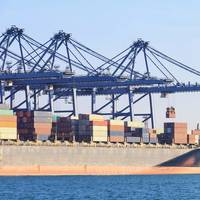
Two U.S. Congressmen are urging the Federal Maritime Commission (FMC) to finalize the rule on demurrage and detention billing requirements required in their Ocean Shipping Reform Act that became law in 2022.The Ocean Shipping Reform Act was signed into law on June 16, 2022 and provides authority to the FMC to investigate ocean carriers’ business practices and apply enforcement measures following the unreasonable refusal of American exports throughout the COVID-19 pandemic.In January 2023, U.S.
Ask What Your Government Can Do For Your Industry (A 2023 Retrospective)
John F. Kennedy’s famous locution, “Ask not what your country can do for you, but you can do for your country” remains the rallying call for civic action and public leadership. The message remains foundational to the success of the United States, particularly as we head into an election year that once again appears to be filled with divisiveness and vitriol. That said, before we flip the calendar, it is important to set JFK’s message aside for a moment and reflect upon what our political leadership in Washington…
Jones Act Uncertainties Persist in US Offshore Wind
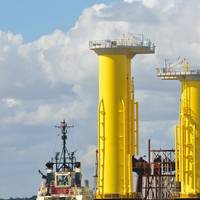
The Jones Act is a single sentence long, and yet somehow that reservation of U.S. domestic maritime commerce to qualified U.S.-flag vessels has spawned numerous complications with respect to offshore wind energy projects. Although not supported by prior experience, maybe 2023 will bring some clarity.U.S. Customs and Border Protection (CBP) is the primary source of guidance for how the Jones Act applies. CBP issued its first two offshore wind rulings in May 2010 and February 2011 in the heady early days of U.S. offshore wind.
Congress, GAO Set Their Focus on Cargo Preference Fixes
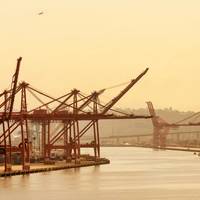
On September 14, 2022, the House Transportation & Infrastructure Committee (T&I Committee), Subcommittee on Coast Guard and Maritime Transportation, held a hearing which indicated a potential revitalization, and new enforcement regime, of U.S.-flag requirements under the Cargo Preference Act of 1954 (the CPA). The hearing occurred on the heels of a Government Accountability Office’s (GAO) report regarding the Maritime Administration’s (MARAD) lack of COA enforcement, with significant recommendations to revamp oversight by the agency to ensure a growing…
New Bill Aims to Increase US Federal Funding for Public Ferry Service
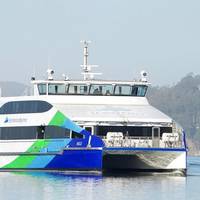
A new bill recently introduced by Congressman John Garamendi (D-CA) and U.S. Senator Patty Murray (D-WA) aims to increase federal funding for public ferry services in the United States.The “Ferry Service Expansion Act” would boost funding for both the Federal Highway Administration’s formula and the Federal Transit Administration’s competitive grant programs to the levels requested by the Public Ferry Coalition, building upon New Federal Investment in Ferry Service under Bipartisan Infrastructure Law.Specifically…
U.S. Ports Have Highest Demurrage and Detention Charges in the World, Report Shows
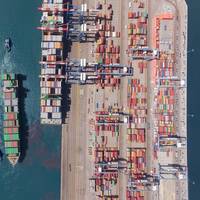
Container xChange's latest annual benchmark study of demurrage and detention charges recently showed that the ports in the U.S have the highest demurrage and detention (D&D) charges among the top 60 ports worldwide. Demurrage and detention tariffs have two main purposes: (1) compensating the shipping line for the use of its container and (2) encouraging the merchant to return the container as soon as possible for the shipping line to re-use it and have a fast turnaround. Demurrage is the charge that one pays for the use of the container within the terminal beyond the free time period.
Maritime Antitrust Immunity in Crosshairs
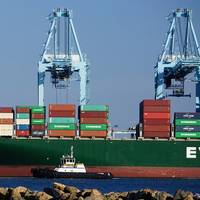
While those in the Beltway continue to struggle to offer solutions to U.S. supply chain capacity issues, it seems apparent that policymakers have at least found their scapegoat for these issues in the form of the maritime industry. A specific talking point during the State of Union Address, a White House-endorsed agreement between the Federal Maritime Commission (FMC) and Department of Justice (DOJ), multiple pieces of legislation, and a vigorous hearing before the Senate Committee on Commerce…
Supply Chain Shocks: Ocean Shipping Challenges Abound
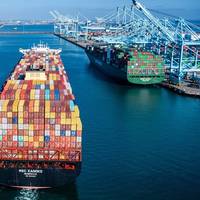
Supply chain issues tied to liner shipping have been front page news throughout 2021; just about everyone agrees that there’s a problem. The underlying cause is right out of Economics 101: a surge in demand for moving containerized cargo, in the face of “inelastic” throughput capacity (which includes vessels and their landside interfaces to surface transportation, trucks and rail) that could not handle the swell, attributable to re-stocking of containerized cargo as economic activity recovered from the pandemic induced jolts.
US Defense Bill Affirms Jones Act Applies to Offshore Wind
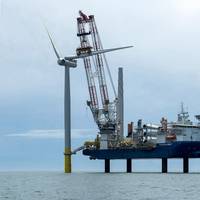
The U.S. Senate on Friday passed the National Defense Authorization Act (NDAA) for fiscal year 2021, a massive $741 billion defense bill setting policy for the Pentagon. Importantly for the U.S. offshore and maritime industries, the bill includes an amendment ensuring full enforcement of the Jones Act and other federal laws in offshore wind development.The legislation passed the Senate by a vote of 84-13 and now heads to President Donald Trump’s desk for his signature following overwhelming 335-78 veto-proof House passage on December 8.
Working Out the Election’s Impact on the US Workboat Industry
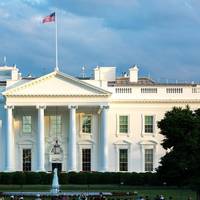
By the time this article is published, voting will have concluded in the 2020 United States presidential election. Based on the possibility of legal challenges to the election, however, it may be some time before we know who will be occupying 1600 Pennsylvania Avenue on January 20, 2021. Additional uncertainty may linger with regard to control of the Senate. However, beyond the general spectacle of American politics, an important question remains: What does this election mean for the U.S.
Congress Passes Bill Supporting Jones Act Enforcement in Offshore Wind

The U.S House of Representatives passed the Clean Economy Jobs and Innovation Act (H.R. 4447) aiming to reform U.S. energy policy and authorize significant investment in the transition to greater use of low-carbon energy.The legislation, which addresses a wide range of energy topics and initiatives, includes an amendment by Congressman John Garamendi (D-Calif.) which would enforce Jones Act requirements for all offshore wind development, construction, production and servicing.The amendment clarifies that the Outer Continental Shelf Lands Act…
American Shipbuilding Act Re-introduced
Congressman John Garamendi and U.S. Senator Roger Wicker reintroduced the Energizing American Shipbuilding Act (H.R.3829), that seeks to revive domestic shipbuilding and maritime industries by requiring that increasing percentages of liquefied natural gas and crude oil exports be transported on U.S.-built, flagged and crewed vessels.The bill would require 15% of LNG exports to be carried on US-built ships by 2041 and 10% of crude oil exports to be carried on US-built ships by 2033.If enacted, the bill is expected to spur the construction of dozens of ships, supporting thousands of good-paying jobs in American shipyards, as well as the domestic vessel component manufacturing and maritime industries.According to an estimate from the Shipbuilders Council of America…
OP/ED: The Jones Act is Worth Fighting For

The President says he wants to make American great again, so why is he trying to destroy the principal support system for America’s maritime industry? This week, we learned that President Trump is “seriously considering” issuing a broad waiver for the Jones Act, a critical law that requires domestic shipping in the U.S. to occur on ships that are built in the United States, fly the U.S. flag, and are operated by crews consisting of at least 75 percent American citizens.I served as the top Democrat on the House Subcommittee of Coast Guard and Maritime Transportation for six years.
WASHINGTON WATCH: A Tale of Two Fleets

Mixed Government Support for U.S. Shipbuilding.It has been a busy start to the 116th Congress for the U.S. shipbuilding industry, with three congressional hearings in early March focused on the industry’s role as a critical component of the U.S. national security industrial base. In addition, the Consolidated Appropriations Act, 2019, which was signed into law on February 15, contained mixed news for shipbuilding programs. Through the congressional hearings and enacted legislation, two opposing themes have emerged.
Maritime Challenges: A Time to Act Boldly

Maritime Challenges in the 116th Congress.The 116th Congress, with its now Democrat-controlled House and 110 newly-elected members, faces a choice. On one hand, Congress can continue to pursue the status quo, supporting U.S.-flag vessel operators and domestic port infrastructure development through existing programs, with suboptimal results. On the other, the 116th Congress can choose to be bold. It can recognize that the U.S.-flag fleet, with only 83 vessels operating in international trade, clearly requires new mechanisms of support.

