

Hamworthy Returns with Renewed Focus on the Future of Marine Water & Waste

Marking a new chapter for British marine water and waste specialist Hamworthy, CEO Fraser Scott reflects on how environmental systems have evolved from check-box auxiliary equipment into essential infrastructure at the heart of modern shipping.When we reintroduced the Hamworthy name to the maritime industry in June, I found myself reflecting on everything that has changed during our 14 years as the water and waste systems division of the Wärtsilä Group. Hamworthy and Serck Como have been part of the marine environmental systems industry for decades…
SciencoFAST Introduces the Slide-In Marine Sanitation Device

SciencoFAST launched the MarineFAST Slide-In, a Marine Sanitation Device with a rail-mounted installation system that allows the unit to either slide directly into existing hull tanks and slide back out, or drop into an existing tank or space for easy inspection or maintenance.“The MarineFAST Slide-In was developed to solve one of the most common challenges in marine sanitation—tight equipment rooms and limited-service access,” said Bob Millerbaugh, Executive Vice President, Marine Sales.
ICS Publications Releases 6th Edition of Environmental Compliance Shipping Guide

International Chamber of Shipping (ICS) Publications launches the sixth edition of Shipping and the Environment: A Guide to Environmental Compliance, offering an expanded and accessible overview of how shipping relates to environmental protection and global regulation.Developed for a broad audience, including shipping companies, seafarers, policymakers, and those new to the maritime sector, the guide provides a clear introduction to environmental requirements affecting shipping today, alongside developments expected in the years ahead.
NAVTOR Launches New Version of Digital Logbooks

NAVTOR has unveiled the latest iteration of its Digital Logbooks offering, featuring the industry’s first integrated Visitors log onboard, in addition to a Remaining on Board (ROB) report function to ease compliance and reduce crew workloads. Other improvements featured in version 2.6.23, include simplified logbooks for the Ferry and Small Boat segment, enabling ‘on the go’ log management for busy crew members. Adopted by over 1500 vessels within the world fleet, Digital Logbooks provide reliable…
ClassNK Receives Authorization to Conduct Surveys on French-Flagged Vessels

ClassNK announced that it has earned authorization from the French Government (Directorate general for Maritime affairs, Fisheries and Aquaculture) to carry out surveys for French flagged vessels.With this authorization, ClassNK is now able to perform statutory surveys and issue certificates for French flagged vessels on behalf of the French Government, in accordance with the requirements of international conventions, including SOLAS, MARPOL, and the International Convention on Load Lines.
World Oceans Day: IMO Urges Nations to Put Policies into Practice

To mark World Ocean Day on 8 June, the IMO is calling on its 176 Member States and the global shipping industry to step up implementation of measures to protect the marine environment.In a video message for World Oceans Day, IMO Secretary-General Arsenio Dominguez said: “At IMO, we take our responsibility to protect the ocean seriously. With shipping being one of the main users of the ocean space, it is the reason why we focus on enhancing our regulatory framework to reduce pollution and address new challenges…
International Chamber of Shipping Releases Sixth Edition of Tanker Safety Guide (Chemicals)

The International Chamber of Shipping (ICS) announced the launch of the sixth edition of its benchmark publication, the Tanker Safety Guide (Chemicals). First published in 1971, the Tanker Safety Guide (Chemicals) is an industry reference for the safe operation of chemical tankers. This new edition provides up‑to‑date, practical guidance for those serving on board ships carrying hazardous and noxious liquid substances in bulk under MARPOL Annex II, supporting safe, compliant and pollution‑free operations.The sixth edition incorporates substantial updates to reflect evolving industry practice…
KR Adds AI Tools to Maritime Compliance Platform

Korean Register (KR) has launched an upgraded version of its maritime conventions database, adding artificial intelligence (AI)-powered features to help shipowners navigate increasing regulatory complexity.The organization said Version 24 of its KR-CON platform introduces enhanced search functionality and a restructured classification system, aimed at improving access to international maritime regulations.The upgrade comes as amendments to frameworks set by the International Maritime Organization…
MARPOL Redux: Look Back, because Something may be Gaining on Us

Amidst the IMO sustainable fuel regulation highs and lows there are other parts of the maritime regulatory environment that may warrant a closer look.For roughly a century, maritime relied on liquid fossil fuels. Meanwhile, it took over half a century for regulations to start to deal with the negative effects of liquid fossil fuels and to effectively deal with maritime fossil fuel disasters.The star player in this effort was OPA90, which, once implemented, massively reduced the…
Report: No Obvious Compromise to Net Zero Framework
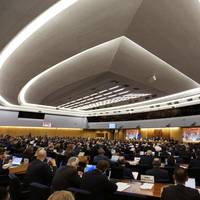
A new insight brief by the UCL Shipping and Oceans Research Group for the Getting to Zero coalition, titled "Uncertainty at the IMO: Three scenarios and their consequences for shipping’s transition”, concludes that of those options only the ‘as is’ (Net Zero Framework as agreed in principle in April 2025) has the potential to provide a credible, stable demand signal and revenue stream to support early and mass-market uptake of scalable zero-emission fuels.Weaker alternatives risk delaying scalable zero-emission fuel availability into the 2040s…
IMO PPR 13 Advances Biofouling Regulation Development

The IMO's Sub-Committee on Pollution Prevention and Response held its 13th session at IMO Headquarters in London from 9 to 13 February 2026.Outcomes include:Groundwork laid for future legally binding framework on biofoulingFollowing the decision of MEPC 83 to develop a legally binding framework on biofouling management to prevent the spread of invasive aquatic species, the Sub-Committee agreed some fundamental elements that will guide this work. These include the recommendation for the framework to take the form of a standalone instrument…
IMO Welcomes First Global Marine Biology Treaty in International Waters

The world’s first global treaty to protect ocean life in international waters enters into force on January 17, 2026, bringing into effect legally-binding rules for the sustainable use and management of marine resources in the high seas. Formally known as the Agreement under the United Nations Convention on the Law of the Sea on the Conservation and Sustainable Use of Marine Biological Diversity of Areas beyond National Jurisdiction (BBNJ Agreement), the treaty addresses:Marine genetic resources…
IMO: Raft of Shipping Rules in Place January 1, 2026

A set of amendments to key IMO treaties and Codes have entered into force on January 1, 2026. They include the following: Preventing and responding to bullying, harassment and sexual assaultAmendments to the Seafarers' Training, Certification and Watchkeeping Code (STCW Code) aim to prevent and respond to violence and harassment in the maritime sector, including sexual harassment, bullying and sexual assault.The amendments are included in table A-VI/1-4 (Specification of minimum standard of competence in personal safety and social responsibilities) of the STCW Code.
IMO Challenged Over Livestock Carrier Regulations

A global network of 36 animal welfare and protection organizations around the world has issued an urgent call to the IMO to introduce binding international regulations for livestock carriers, warning that the ageing fleet poses serious and escalating risks to human life, animal welfare, public health, and the marine environment.In an open letter sent to the IMO Secretary-General, the organizations outlined systemic safety failures across the global live export shipping fleet, which is now the oldest of any ocean shipping sector…
Spiridon II: Call for IMO Investigation
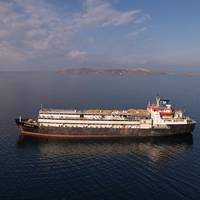
The livestock carrier Spiridon II has unloaded cattle in the Libyan city of Benghazi after being stranded off the Turkish coast for more than a month after a month-long voyage from Uruguay with nearly 3,000 cattle on board.The Spiridon II is now back at sea.It is unclear what happened to the dead animals and sewage onboard. Dozens of animals had already died, and many calves had been born, lost, or perished. The dead animals and excrement cannot legally be disposed of in the Mediterranean Sea due to MARPOL regulations.
Rejected Livestock
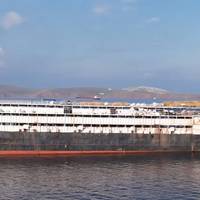
The recent rejection of around 2,900 dairy cattle on the Spiridon II raises animal welfare and pollution concerns when, after a long sea voyage, the laden vessel has again had to return to sea.The 52-year-old livestock carrier has left Turkey after its cargo was rejected by local authorities. Court transcripts translated by Animal Welfare Foundation indicate that 58 cows died in transit to Turkey, 140 cows had miscarriages in transit, 50 newborn calves were present on board, but another 90 are unaccounted for.Having departed from Montevideo…
Crew and Cattle Stranded Off Turkey
The 52-year-old livestock carrier Spiridon II remains in quarantine off Turkey with around 20 crew and 2,853 cows onboard.Having departed from Montevideo (Uruguay) bound for Turkey on September 19 with 2,901 heifers, some of which may be pregnant, the Spiridon II is, over 50 days later, still unable to deliver the animals to shore.Veterinary authorities are refusing to allow them to disembark due to a controversy over ear tags that guarantee, among other things, the exact origin…
Witherbys to Introduce New Oceanographic Research Vessel from 2026
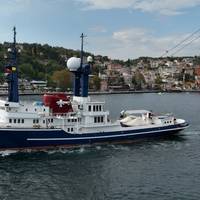
Maritime publishing and digital training group Witherbys has unveiled plans to introduce a new oceanographic research vessel, the MV Sea Ranger, from 2026 to support its technical development, real-world navigational studies and maritime training programs.The MV Sea Ranger will support Witherbys’ mission to enhance maritime knowledge and safety through research directly linked to shipboard operations.It will strengthen the delivery of computer-based training programs, both via Witherbys’ eBook Reader Witherby Connect…
Ship Fuel Quality Holds Steady, says LR Report
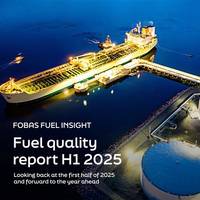
LR’s latest FOBAS Fuel Insight report highlights broadly steady fuel quality with particular issues around high sediments and chemical contamination, and an increased use of biofuel blends with developments in energy-content measurement.Global bunker fuel quality remained resilient in the first half of 2025 despite growing fuel diversity and tightening environmental regulation, according to Lloyd’s Register’s latest FOBAS Fuel Insight report. The findings highlight how improved testing…
Second Edition of Ship to Ship Transfer Guide Published
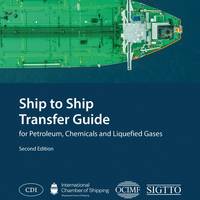
The Chemical Distribution Institute (CDI), International Chamber of Shipping (ICS), Oil Companies International Marine Forum (OCIMF) and the Society of International Gas Tanker and Terminal Operators (SIGTTO) have released the second edition of ‘Ship to Ship Transfer Guide for Petroleum, Chemicals and Liquefied Gases’.Originally published by OCIMF in 1975, the STS Transfer Guide was consolidated in 2013 through the combined expertise of CDI, ICS, OCIMF and SIGTTO. Recognized globally by the tanker industry and IMO Member States as the definitive reference for safe and effective STS operations…
Seatrium Secures ABS Backing for Deepwater FPSO Design
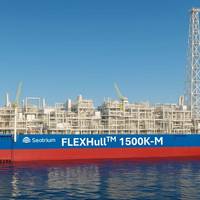
Seatrium has received Approval in Principle (AiP) from the American Bureau of Shipping (ABS) for its proprietary FLEXHull 1500K-M floating production storage and offloading (FPSO) design.The AiP underscores Seatrium’s ability to deliver advanced solutions for deepwater oil and gas production, the company said.The FLEXHull 1500K-M is designed to handle topside loads of up to 80,000 metric tons, with a hull that can be adjusted for different requirements. It also features expanded tank capacity…
World Maritime Day 2025 Focuses on Marine Environment
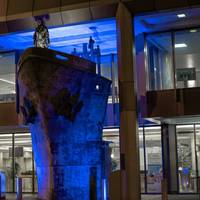
The ocean takes center stage on World Maritime Day 2025, as the IMO celebrates how the industry is stepping up action to protect the ocean.This year’s World Maritime Day, observed globally on 25 September, focuses on the sector’s impact on the marine environment, and what it can do to reduce pollution, curb greenhouse gas emissions and prevent biodiversity loss.Secretary-General of the IMO Arsenio Dominguez said: “IMO has, for many decades, worked to strike the right balance to ensure that the shipping industry is not the problem but the solution.
Seven Shipping Associations Call for IMO Adoption of NZF
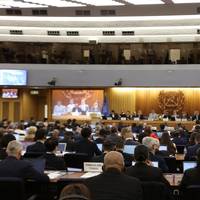
Heads of seven shipping associations have called for the IMO to adopt its Net-Zero Framework (NZF) at the crucial vote in October. Anything else would be a major setback for the green transition and risk leaving the industry with a complicated patchwork of regional climate regulations.Next week the 176 members of the IMO will convene in London to formally adopt the historic agreement on binding climate regulation of the shipping industry agreed upon in April.Danish Shipping along with six other shipping associations calls for the adoption of the IMO Net-Zero Framework.



