

Gearing up for MEPC 84

The shipping industry is getting ahead of discussions at MEPC 84 next week by reaffirming their commitment to the IMO.BIMCO, CLIA, ICS, INTERCARGO, INTERFERRY, INTERTANKO and WSC, representing the global commercial shipping fleet, issued a statement saying they remain committed to pursuing the ambition established within the 2023 IMO Strategy on Reduction of GHG Emissions from Ships, having invested and committed billions of dollars to trial and implement the use of alternative…
Shipping Industry Reaffirms Support for IMO-Led GHG Pathway

BIMCO, CLIA, ICS, INTERCARGO, INTERFERRY, INTERTANKO and WSC, representing the global commercial shipping fleet, have issued a statement in support of the IMO ahead of the next Marine Environment Protection Committee (MEPC 84) meeting next week.The industry associations remain committed to pursuing the ambition established within the 2023 IMO Strategy on Reduction of GHG Emissions from Ships, having invested and committed billions of dollars to trial and implement the use of alternative fuels and innovative technology.Following the postponement…
Daniamant DanEI-300 Electronic Inclinometer Meets New IMO Carriage Requirements

The Daniamant DanEI-300 electronic inclinometer has achieved IMO Wheelmark (Marine Equipment Directive) approval, becoming the world’s first electronic inclinometer certified to meet IMO carriage requirements for container ships and bulk carriers.The approval confirms that the DanEI-300 complies with the requirements of Directive 2014/90/EU (MED) for Electronic Inclinometer Equipment, following successful conformity assessment under Module B (EC Type Examination) and Module D (Quality System Assessment) by the notified body DNV (Notified Body No.
WAPS Make Wind Blow for Vessel Decarbonization

WAPS: Making the Wind Blow for Shipping’s DecarbonizationIn the evolving landscape of maritime decarbonization, few subjects are as timely or arguably as misunderstood as wind-assisted propulsion. Yet the shipping industry finds itself at a decisive moment, driven by regulatory tightening, customer expectations for greener supply chains, and an urgent need to manage escalating fuel costs. Wind-assisted propulsion systems (WAPS), and wingsails in particular, are no longer speculative technologies. They are proven, available, and scalable solutions ready to meet the moment, writes Dr.
Advanced Polymer Coatings Signs Deal to Coat Two Methanol Tankers with Fratelli Cosulich
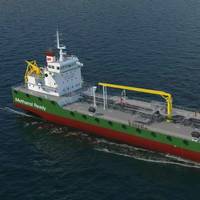
Manufacturer Advanced Polymer Coatings (APC) has signed a deal with global maritime transportation group Fratelli Cosulich to support its methanol-ready fleet expansion.APC has signed a contract with the Italian headquartered group to supply its industry-leading MarineLINE cargo tank coating to two new IMO Class II chemical tankers, to prepare them for methanol bunkering in Singapore.The MarineLINE cargo tank coating will ensure superior chemical resistance, faster tank turnaround and extended service life.The 7…
DNV 2050 Forecast Points to New Fuel Supply Challenges

New insights from DNV’s Maritime Forecast to 2050 indicate that the number of alternative-fuel-capable vessels in operation is set to almost double by 2028.By 2030, the alternative-fuelled fleet will be able to burn up to 50 million tonnes of oil equivalent (Mtoe) of low-greenhouse gas (GHG) fuels annually, double the estimated volume needed to meet the IMO 2030 emissions target.Yet today, actual consumption of low-GHG fuels remains at just 1 Mtoe.The widening gap between capacity…
IMO Launches Regional Office in Fiji

The IMO has inaugurated a new Regional Presence Office in Suva, Fiji.The Regional Presence Office, hosted by the Government of Fiji and initially based at the Secretariat of the Pacific Community (SPC) buildings, will support Pacific nations with implementing global regulations and standards in maritime safety and environmental protection, while advancing their maritime sectors. IMO Secretary-General Arsenio Domiguez, on his first official mission to the Pacific, underlined the central role of shipping and the wider blue economy in the region…
Are Workboats Really Going Green?
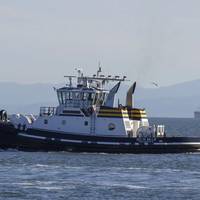
Tugboat and towboat owners across the nation eye fuel efficiency and emission reduction technologies and techniques in advance of increasingly stringent regulations.he first half of 2025 has seen a great deal of attention on emissions from vessels, with an eye towards their continued reductions in the coming years. Mid-April saw the International Maritime Organization (IMO)’s much anticipated Maritime Environment Protection Committee’s MEPC 83 meeting participants lay out plans for reduced greenhouse gas emissions in the coming years…
New IMO Designation for the Mediterranean Sea Helps Bring More Doba Crude to Europe
Dutch and German oil refineries have snapped up all four cargoes of Chadian Doba crude in April to profit from soaring demand for cleaner marine fuel in Europe from shipping companies including Maersk, according to shipping data and trade sources.Asia was the main destination of Doba cargoes prior to April, as China and Malaysia received several cargoes, according to Kpler.In May, the International Maritime Organization designated the Mediterranean Sea as an Emission Control Area…
Veson Nautical: Three Impacts of the IMO’s New Fuel Intensity Target on S&P Activity
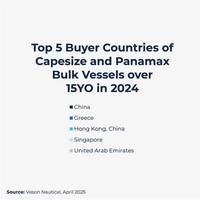
The International Maritime Organization (IMO) recently hosted the 83rd meeting with the Marine Environmental Protection Committee (MEPC 83), resulting in a new fuel intensity target, which is set to come into force no later than March 2027.This new regulation is similar to the Fuel EU regulation enforced this year, but with global fleet coverage. The major effect of this new IMO GHG regulation will be to enforce a financial penalty for using cheaper, carbon intensive fuels like Heavy Fuel Oil (HFO)…
Pherousa Scoops ABS, DNV Approvals for Ammonia-Cracking Tech for Ships

Norwegian maritime technology company Pherousa has secured approvals in principle (AiPs) from American Bureau of Shipping (ABS) and DNV for its ammonia cracking technology onboard ships, featuring PEM Fuel Cells and Fuel Gas Supply System (FGSS) for fully electric propulsion.Pherousa, together with partners, is developing ammonia cracking technology that could make the transition to fossil-free and zero-emission propulsion within the maritime short- to deep-sea transport sectors a reality.Key partners in the work towards the two AiPs include the designers Deltamarin…
Anschütz eLog Meets New Ballast Water Record Book Regulations
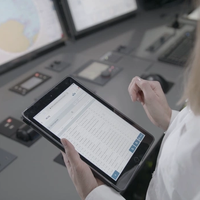
Anschütz released a new software version for the eLog electronic logbook, which meets the latest format requirements for Ballast Water Record Books (BWRBs), which the International Maritime Organization (IMO) recently introduced. Shipowners can take advantage of this update, which ensures compliance with the new IMO regulations, improves operational efficiency, and reduces administrative workload.The new software version of the Anschütz eLog includes essential improvements explicitly…
ICS Pushes Levy-Based System Ahead of IMO Meeting

Guy Platten, Secretary General of the International Chamber of Shipping, has released a statement ahead of the UN IMO Intersessional Working Group on Reduction of GHG Emissions from Ships (ISWG-GHG 18) calling for a levy-based GHG pricing mechanism.The key purpose of the mandatory GHG charge will be to reduce the cost gap between conventional marine fuels and zero/near-zero GHG emission fuels (such as green methanol, green methane including biomethane, green ammonia, green hydrogen…
Engine Room Fire Sparks Request for New IMO Requirements

The UK Marine Accident Investigation Branch (MAIB) has released its report into the engine room fire on board ro-ro passenger ferry Stena Europe as it approached Fishguard, Wales.At 2115 on 11 February 2023, a fire broke out in the engine room of the vessel while on passage from Rosslare, Ireland, to Fishguard, Wales. The fire caused significant damage to the engine room but nobody was injured and there was no damage to the environment. The fire was extinguished by the crew.The…
New IMO Tier III Tug for Port of Santos
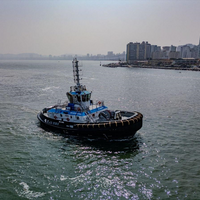
The Wilson Sons tug WS Onix has commenced operation in the Port of Santos, the largest port facility in Latin America.It is the sixth vessel in the company's 2513 class and was built at the Wilson Sons shipyard in Guarujá (SP). The six new tugs built over the last two years have completed more than 5,000 port maneuvers. They are 25 meters long and 13 meters wide, operate forward and aft with the same efficiency and can be used in port maneuvers and deep-sea towage.The tugs are equipped with over 90 tons of bollard pull and are the first ever in Brazil to meet the IMO TIER III standard…
Industry Unites on Enclosed Space Deaths

Appalled that deaths in enclosed spaces continue to be all too frequent occurrences in the shipping industry, the Maritime Professional Council of the United Kingdom (MPC) has announced its support for fundamental changes to ship operation and design.MPC member InterManager has been at the forefront of raising this issue where, it says, seemingly innocuous compartments, cargo holds and fuel tanks, vital for storage and operation on board any vessel, have become graveyards for far too many seafarers due to a lack of attention…
Canadian Navy Adding Four New Tugs
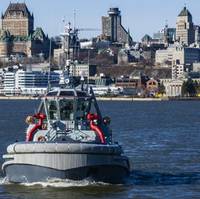
The Royal Canadian Navy (RCN) is acquiring four new state-of-the-art Naval Large Tugs (NLT) to modernize its fleet. These new tugs—two for each of Canada's coasts—will replace the current Glen-class and Fire-class tugs.The new IMO Tier III vessels are based on a proven Robert Allan Ltd. RAmparts 2400 design. They are more powerful and more capable, which will improve the RCN's effectiveness in harbor berthing, coastal towing and firefighting. This update will strengthen the RCN's effectiveness in supporting the fleet.In April 2019…
IMO's Facilitation Committee Revised MASS Roadmap

The IMO's Facilitation Committee held its 48th session (FAL 48) from April 8 to 12, in person at IMO Headquarters in London.The Facilitation Committee (FAL) meets annually to deal with matters related to the facilitation of international maritime traffic, including the arrival, stay and departure of ships, persons and cargo from ports. The Committee also addresses electronic business and aims to ensure that the right balance is struck between regulation and the facilitation of international maritime trade.
New IMO Secretary-General Welcomes Era of Progression

The new IMO Secretary-General Arsenio Dominguez has released a video with his 2024 message to the industry, saying:“Here at IMO, we have a great trajectory of successes. But of course, we can always do more. I don't need to tell you how vital the shipping industry is for the world. And IMO has done much to support its member states, seafarers, the industry and everyone who lives on the planet. For example, during the COVID pandemic, we supported hundreds of individual cases of seafarers…
Time is Running Out for some Fi-Fi Foams
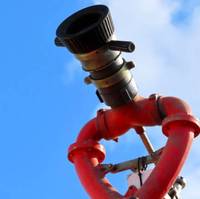
A new IMO resolution will see the phase-out of foam firefighting systems that use fluorinated foams containing perfluoro-octane sulfonic acid (PFOS) as the foam-producing component. The new rules come into effect under a rolling programme beginning in 2026, but Swedish maritime engineering specialist Scanunit believes that a proactive replacement strategy should be put into effect now.Foam firefighting systems on ships typically make use of a family of synthetic chemical compounds known as perfluoroalkyl and polyfluoroalkyl substances (PFAS).
Shipping Will Need a Third of World’s Carbon Neutral Fuel by 2030
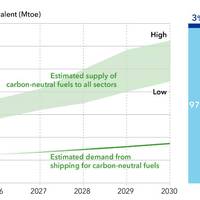
According to the latest edition of DNV’s Maritime Forecast to 2050, the shipping industry will find it challenging to secure enough supply of carbon-neutral fuels.To meet the anticipated demand of 17 million tonnes of oil equivalent (Mtoe) annually by 2030, the maritime sector would need to access 30-40% of the projected worldwide carbon-neutral fuel supply.As the shipping industry will compete for these fuels with aviation and road transportation, as well as other industries, their production needs to significantly accelerate if the industry’s emission-reduction goals are to be met.
IBIA Appoints Dr. Edmund Hughes as Its New IMO Representative

The International Bunker Industry Association (IBIA) announced the appointment of Dr. Edmund Hughes as its International Maritime Organization (IMO) Representative, effective from September 1, 2023. Dr. Hughes will succeed Unni Einemo.A prominent figure in the maritime community, many will recognize Edmund for his pivotal role as the Head of Air Pollution and Energy Efficiency in the Marine Environment Division at the IMO. His tenure there played a significant part in developing MARPOL Annex VI…
Scania Expands IMO Tier III Engine Range
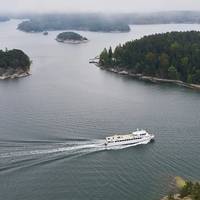
Engine manufacturer Scania announced it has added seven new IMO Tier III compliant marine engines to its existing portfolio as it strives to slash emissions and support more sustainable marine operations.The new DI13 solutions of 257 kW, 280 kW, 284 kW, 331 kW, 368 kW, 405 kW and 441 kW at the rated speed of 2,100 rpm widen the range of propulsion engines, in a commitment to further reduce NOx emissions. The new marine engines that are available in the heat exchanger or keel cooling systems…

