Titan Clean Fuels and TURN2X Agree e-Methane Supply Deal

Titan Clean Fuels has signed an off-take agreement with green energy supplier TURN2X to deliver e-Methane to the maritime industry from 2028 onwards.Titan operates seven bunker vessels and is able to deliver in around 52 ports today.TURN2X’s modular and load-flexible production plant in Miajadas, Spain, converts renewable energy and biogenic CO₂ into ISCC-certified e-methane. This green fuel is then fed into the grid and transported to major European ports, where Titan bunkers it to ship operators.E-methane can achieve net-zero greenhouse gas (GHG) emissions on a well-to-wake basis…
The Switch Launches PMM850M Permanent Magnet Machine

The Switch, a supplier of permanent magnet (PM) machines for marine applications, has launched the PMM850M PM machine, a compact, high-efficiency solution designed to help shipowners lower fuel consumption, reduce emissions and decrease operating costs. Deliveries are scheduled to begin in 2027.Key advantages:Reduced fuel consumption thanks to high electrical efficiency.Lower CO₂ and NOx emissions, supporting compliance with environmental regulations.Minimal maintenance requirements…
New Fuels Studies Still Require Apples with Apples Comparisons
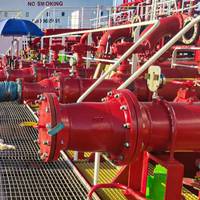
It was back in 2022, that industry group SEA-LNG said: The industry is making newbuild investment decisions now that will impact greenhouse gas emissions today and for the next 25-30 years, the typical lifetime of a vessel. It is essential their assessments of alternative marine fuel pathways are made on a like-for-like, or “apples with apples” basis.The issue was that discussion of alternative fuels too often compared the green versions of ammonia and methanol with fossil LNG.The…
Bio-Methanol Gaining Traction as Alternative Fuel

This week, CMA CGM and SIPG Energy successfully completed the bunkering of 3,643 tons of bio-methanol for the CMA CGM Osmium at Yangshan Port in Shanghai. This operation marks CMA CGM’s first bio-methanol bunkering worldwide and sets a new national record for the largest single bio-methanol bunkering operation carried out at a Chinese port.As part of its commitment to achieving Net Zero Carbon by 2050, the CMA CGM Group is preparing to operate around 200 dual‑fuel container vessels by 2031…
Grimaldi Takes Delivery of Grande Seoul
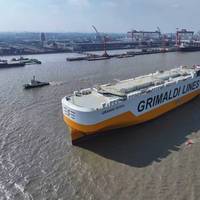
The Grimaldi Group has taken delivery of the new PCTC Grande Seoul.Built by Shanghai Waigaoqiao Shipbuilding Company Limited (SWS) and China Shipbuilding Trading Company (CSTC) – both part of China State Shipbuilding Corporation (CSSC) – the vessel is the Italian group’s ninth ammonia-ready unit.With a length of 200 meters, a beam of 38 meters, and a gross tonnage of approximately 77,500 tonnes, the Grande Seoul has been designed for the efficient transport of vehicles (cars, SUVs, vans, etc.), both electric and powered by traditional fuels, as well as any other type of rolling cargo.
WinGD, HHI Complete Landmark Approval Tests on Ammonia Marine Engine

Swiss marine power company WinGD has completed both Type Approval Testing (TAT) and Factory Acceptance Testing (FAT) of its ammonia-fueled two-stroke marine engine, marking a milestone in efforts to decarbonize shipping.The test programs were completed in January 2026 on the X52DF-A-1.0 engine at HD Hyundai Heavy Industries’ Engine & Machinery (HHI-EMD) facility in South Korea. The tests were witnessed by classification society Lloyd’s Register together with representatives from major classification societies…
IMO PPR 13 Advances Biofouling Regulation Development

The IMO's Sub-Committee on Pollution Prevention and Response held its 13th session at IMO Headquarters in London from 9 to 13 February 2026.Outcomes include:Groundwork laid for future legally binding framework on biofoulingFollowing the decision of MEPC 83 to develop a legally binding framework on biofouling management to prevent the spread of invasive aquatic species, the Sub-Committee agreed some fundamental elements that will guide this work. These include the recommendation for the framework to take the form of a standalone instrument…
Inside the Gotland Horizon X: Large, Hydrogen-Ready Catamaran

With a growing focus on mitigating climate change and progressing toward the International Maritime Organization’s (IMO) 2050 net-zero target, the marine sector is under intense pressure to decarbonize. Today, maritime transport emits nearly one billion tons of CO2 annually, representing roughly 2-3% of all energy-related carbon emissions worldwide .Substantial progress has been made over the past decade in reducing emissions from small commercial and coastal vessels via all-electric and diesel-electric propulsion (DEP) systems.
Longitude Launches New PSV Design to Target Cost Efficiencies

Design and engineering consultancy Longitude has launched a compact “D-Flex” platform supply vessel (PSV) design, the second design in its IMT Isca series.The D-Flex design is an evolution of the IMT 984 (G-Class) design and a smaller, cost-efficient addition to the series for shipowners that seek long term economic value. The D-FlexThe D Flex is designed as a compact PSV tailored for offshore energy operations in Asia, the Middle East, and West Africa, with additional potential for deployment in the Southern North Sea.The DP Class 2 vessel is 74.7 meters long…
Yanmar Obtains Ship Classification Certification for Hydrogen 4-Stroke High-Speed Engine

Yanmar Power Solutions Co., Ltd., a subsidiary of Yanmar Holdings, has become the first engine manufacturer in Japan to obtain both type approval certificate1 and NOx certificate2 from Nippon Kaiji Kyokai (ClassNK) for its pilot-ignition hydrogen-fueled 4-stroke high-speed engine for power generation for domestic coastal vessels as part of the Nippon Foundation’s Zero Emission Ships Project.In 2025, Yanmar Power Solutions was intensifying its land-based demonstration tests utilizing a small amount of Hydrotreated Vegetable Oil (HVO) as a pilot fuel…
Allseas’ Heavy Transport Vessel Newbuild be Powered by Wärtsilä Engines

Technology group Wärtsilä has signed a contract to supply the engines for Allseas’ new purpose-built semi-submersible Heavy Transport Vessel (HTV).The ship is being built at the Guangzhou Shipyard International (GSI) facilities in China.The future-proof Wärtsilä 31 engine was selected because of its modular design, which enables a significant reduction in maintenance requirements and costs, and its readiness to use alternative sustainable fuels.The vessel will operate with four Wärtsilä 31 engines…
World’s First Methanol Dual-Fuel KAMSARMAX Bulk Carrier Delivered

Tsuneishi Shipbuilding’s Philippines-based yard Tsuneishi Heavy Industries has delivered the world’s first methanol dual-fuel KAMSARMAX bulk carrier, Brave Pioneer.By adopting methanol as a propulsion fuel, the vessel achieves a reduction of approximately 10% in carbon dioxide emissions, 80% in NOx and 99% in SOx compared with conventional vessels. The use of green methanol further enhances the vessel’s potential to reduce environmental impact.The vessel features both a shallow draft and low air draft, enabling access to a wide range of ports worldwide.
PCTC Vessel MV Ocean Explorer Delivered

Sallaum Lines accepted its latest Pure Car and Truck Carrier (PCTC) vessel, MV Ocean Explorer as part of its Ocean Class fleet. The newbuilding’s arrival represents a major milestone in the company’s ongoing fleet expansion strategy and its commitment to advancing sustainable and energy-efficient maritime operations.“With the delivery of MV Ocean Explorer, we are proud to take another bold step toward a more sustainable future for maritime transport,” said Mr. Hasan Sallaum – Sallaum Lines Managing Director.
Bureau Veritas Classes its First Methanol Fual-Fuel Container Ship

Bureau Veritas Marine & Offshore (BV) has classed its first methanol-fueled containership, CMA CGM ANTIGONE. The 15,000 TEU methanol dual-fuel vessel was built by CSSC Jiangnan Shipyard for the CMA CGM Group, and officially named on December 11 and delivered on December 12.CMA CGM ANTIGONE is the lead ship of CSSC Jiangnan Shipyard’s independently designed “Kun” series of 15,000 TEU-class methanol dual-fuel container ships. With an overall length of 366 meters, the vessel represents…
MSC: How the World’s Largest Boxship Fleet Squeezes More Miles from Every Molecule

It’s trite (but true) to say that in the maritime industry’s quest to cut emissions, there is no ‘silver bullet’ solution, rather a series of small step changes that cumulatively add up over time. Maritime Matters: The Marinelink Podcast, recently hosted Giuseppe Gargiulo, Head of Newbuildings, MSC and Daniel Bischofberger, CEO, Accelleron, to specifically discuss the development and delivery of Accelleron’s FITS2 technology, and automation technology built with MSC and premised on Accelleron’s cumulative 100+ years of turbocharger experience.
J-ENG to Develop Methanol-Fueled Engine

Japan Engine Corporation (J-ENG) has commenced development of the methanol-fueled engine, UEC50LSJM. Following the completion of its first ammonia-fueled engine, 7UEC50LSJA, in August of this year, J-ENG is also working on the development of the hydrogen-fueled engine, 6UEC35LSGH. The aim is to have the engine complete within fiscal year 2027.Methanol is a low-carbon fuel that has the effect of reducing GHG (Greenhouse Gas) emissions, as well as sulfur oxides (SOx), nitrogen oxides (NOx), and particulate matter.
Low-Emission Cement Carrying Vessel to be Dual-Fuel Methanol

Heidelberg Materials Northern Europe has taken a decisive step toward low-emission coastal logistics with the development of a next-generation methanol-powered cement carrier, an 80% emissions-cutting vessel that could redefine short-sea bulk operations in Scandinavia. Planned to enter service in early 2028, the newbuild is the product of a multi-stakeholder public-private partnership involving the Hartmann Group, the Green Shipping Programme (GSP) and the Norwegian NOx Fund,…
DNV: Methanol Emerging as Scalable Marine Fuel but Economics Still Limit Uptake
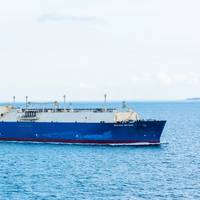
Methanol is emerging as a practical alternative fuel for deep-sea shipping as engines and technical systems reach high readiness levels, but high costs and limited supply continue to constrain wider adoption, classification society DNV said in a new report.As the industry explores multiple decarbonization pathways, methanol is gaining attention as a practical and scalable alternative fuel for deep-sea shipping, supported by over 450 methanol-capable vessels in operation and on order and technical solutions now available for all major ship types.DNV’s latest white paper…
UK Funds BlueNose Project to Develop Vessel Aerodynamic Retrofits

BlueNose, a London-based maritime innovation startup, has been awarded $460,000 through the U.K. Government’s Clean Maritime Demonstration Competition (CMDC6) to advance aerodynamic efficiency concepts for commercial shipping.The seven-month feasibility study, funded under the Department for Transport’s UK SHORE program and delivered by Innovate UK, will support Project WAVE and run until March 2026. BlueNose, working with lomarlabs, will develop inflatable and foldable wind-deflector…
Marine News Boat of the Year: William E Moran, First in Class
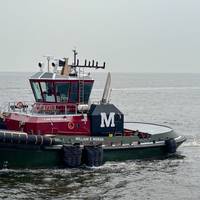
The William E. Moran has entered service in New York, bringing enhanced capability and performance to Moran’s evolving fleet. As the first vessel in the company’s next-generation class, it is purpose-built to meet the demands of modern port operations, support evolving customer needs, and advance Moran’s goals for safety, efficiency, and environmental responsibility. These next-generation tugs will be among the largest in the fleet, underscoring Moran’s continued focus on delivering safe…
Efficiency First: Inside Olympic Subsea’s Bet on Greener Offshore Vessels
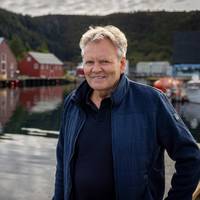
A new generation of hybrid vessels is demonstrating significant gains in both fuel economy and operational output. For Olympic Subsea’s owner and CEO Stig Remøy, it proves that technology-led efficiency is the fastest path to decarbonization—and a powerful business case.When Stig Remøy began pivoting Olympic Subsea toward subsea and renewables a decade ago, the move was met with some internal skepticism. “Naturally, there were internal discussions — some believed oil and gas was the future,” he recalled.
Ammonia-Ready PCTC Enters Service
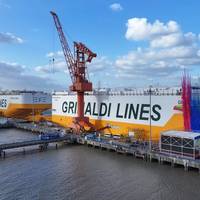
On October 22, the port of Shanghai hosted a ceremony for the official naming and delivery of the Grimaldi Group’s latest vessel, the Grande Melbourne.This is the third of a series of seven cutting-edge, ammonia-ready pure car and truck carriers (PCTC) commissioned at Shanghai Waigaoqiao Shipbuilding Company Limited (SWS) and China Shipbuilding Trading Company Limited (CSTC), both subsidiaries of CSSC.With a length of 200 meters, a beam of 38 meters, and a gross tonnage of approximately 77…
Jan De Nul’s Largest Cable Laying Vessel Hits Water in China (Video)
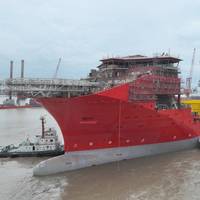
Belgian marine contractor Jan De Nul has launched its newest cable laying vessel (CLV), the Fleeming Jenkin, at the CMHI Haimen shipyard in China, which has now entered the final phase of construction ahead of delivery planned for second half of 2026.The 215-meter-long vessel has a loading capacity of 28,000 tonnes, making it the world’s largest of its kind.Jan De Nul will use the vessel to install subsea cables for the transmission of renewable energy, as the Fleeming Jenkin was specifically designed to install longer and heavier cables in ultra-deep waters up to 3…