
IMO Progresses Lifeboat Air Supply Requirements
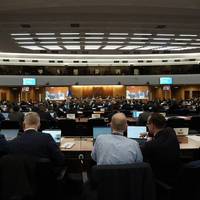
The IMO Sub-Committee on the Ship Systems and Equipment (SSE) held its 12th session from March 9 to 13, 2026. ABS has issued guidance on the significant issues progressed at the session including the proposed amendments to the LSA Code.The amendments introduce a new paragraph in Chapter IV requiring that partially enclosed lifeboats installed on or after 1 January 2032 be equipped with a means of supplying sufficient air to maintain CO₂ concentrations below 5,000 ppm for the full number of occupants…
Fireboy Launches Low-Pressure Water Mist System for Battery Cooling, Containment
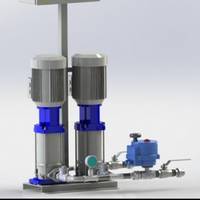
Fireboy, a leader in marine fire detection and suppression technology, is launching the BACC Mist System, a low-pressure water mist system designed specifically for the cooling and containment of battery rooms and machinery spaces. The Fireboy BACC Mist (Battery Area Cooling and Containment) system provides a compact, scalable and efficient solution for managing heat build-up and fire risk in critical onboard environments. Operating at pressures below 16 bar, it delivers effective water mist suppression using a small pump…
VIKING and Johnson Controls Form Global Marine Fire Service Alliance
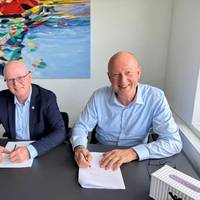
Johnson Controls International (JCI) and Denmark-based VIKING Life-Saving Equipment have signed a global agreement to provide coordinated fire safety service solutions for the maritime and offshore industries.As part of the partnership, VIKING has been appointed as the globally approved, trained, and certified service provider for all marine and navy firefighting systems and equipment supplied by JCI.JCI’s Marine and Navy division is a major global manufacturer of firefighting systems…
IUMI Publishes Updated Best Practice for Carriage of Electric Vehicles
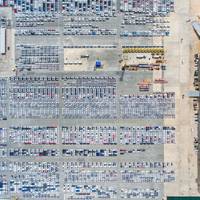
In 2023, the International Union of Marine Insurance (IUMI) published a set of best practice and recommendations for the safe carriage of electric vehicles, and it has now published an updated version titled “Risk mitigation for the safe ocean and short-sea carriage of electric vehicles”.IUMI Secretary General, Lars Lange, explains: “The volume of cars being shipped by maritime transport globally is around 20 million units per annum. EVs have been transported in ever larger numbers since 2017.
IoT Arrives in Shipboard Fire Protection Systems
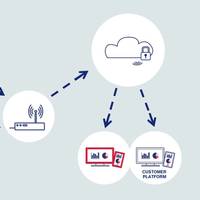
Marioff debuted its Internet of Things (IoT) solution designed for high-pressure water mist fire protection systems, a tech it says enables real-time monitoring, smart alerts, and centralized control.Marioff has been advancing its HI-FOG solution for more thanthree decades, and the new IoT solution builds on this, integrating with existing HI-FOG systems to provide continuous visibility, real-time alerts, and smarter system management.“Our IoT solution marks a significant step forward in fire safety,” says Juha Ilvonen, CEO of Marioff.
VIKING to Service FAIN’s Marine Fire Systems and Equipment
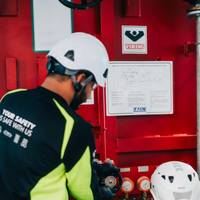
Marine safety solutions provider VIKING Life-Saving Equipment and firefighting systems supplier FAIN have signed an exclusive worldwide agreement for VIKING to provide certified services for marine fire systems and equipment delivered and installed by FAIN.FAIN supplies the full spectrum of firefighting systems for marine use, including CO2, foam, DP, water-mist, sprinkler, alternative gases and more.Headquartered in Yangsan, South Korea, the company is a major supplier to shipyards in China…
Survitec Urges Fire Safety Reform for Methanol-fueled Vessels
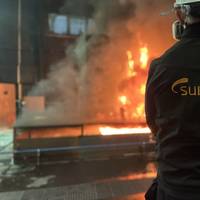
Survitec, a provider of survival technology solutions, has welcomed recent fire safety guidance from classification society DNV but warns that additional steps are necessary to ensure methanol-fuelled vessels are fully fire-safe.In a study published in their White Paper, “Do we need new fire safety standards for methanol?”, Survitec reveals that traditional fire-fighting methods are inadequate for dealing with methanol fires. The findings, presented this week at the SMM trade fair in Hamburg…
Study Demonstrates Need for New Fire Safety Rules for Methanol-Fueled Ships
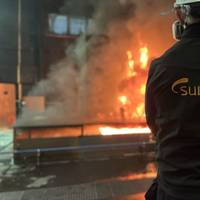
A new fire safety study by survival technology solutions provider Survitec finds that existing fire-fighting methods used to extinguish machinery space spray and pool fires on conventionally fueled vessels are inadequate when dealing with methanol-based fires.This follows extensive comparative fire tests on dual-fuel marine engines using diesel oil and methanol.“Our tests confirm that traditional water mist fire suppression mechanisms do not perform as expected on methanol pool fires and methanol spray fires.
Engine Room Fire Investigation Highlights Due Diligence Failings
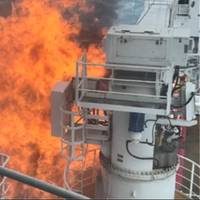
A fire on board a multi-purpose vessel chartered by the Australian Antarctic Division (AAD) while transiting the Southern Ocean highlights the risks and challenges of operating in harsh, remote conditions.On April 5, 2021, the 145 meter MPV Everest was en route from Antarctica to Hobart with 37 crew and 72 Australian Antarctic Division (AAD) staff on board when a fire broke out in its port engine room.The fire was contained and eventually extinguished using the engine room water mist fixed fire-extinguishing system after about 2.5 hours…
Survitec Unveils Interactive Safety Monitoring Solution
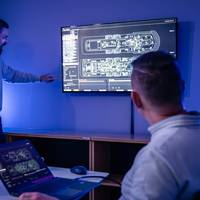
Survitec has announced a new interactive safety management solution it hopes will substantially improve onboard safety.The Safety Management and Rapid Response Technology Interface (SMARR-TI) uses a graphical monitoring interface to integrate fire detection and fire suppression systems within one system.SMARR-TI, which Survitec developed in cooperation with Turkish shipyard Tersan and Norway’s Havila Voyages, is already in operation on a pair of 15,500gt passenger ships.SMARR-TI…
Great Ships '22: USS Jack H. Lucas (DDG 125)
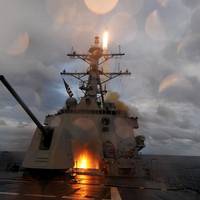
The Arleigh Burke-class Guided Missile Destroyer - The world’s most successful post-war surface combatantsThe USS Arleigh Burke (DDG 51) class of guided missile destroyers can rightfully be called the most successful class of surface combatants in the post-World War II era. The lead ship was commissioned in 1991, and the Navy is still building them at Huntington Ingalls Industries Ingalls Shipbuilding in Pascagoula, Miss., and General Dynamics Bath Iron Works in Bath, Maine. A total of 89 have been procured through FY2022…
Great Ships of '22: MV George III, LNG Containership
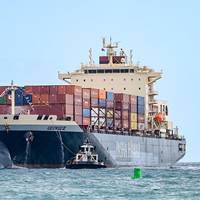
Operating on Liquefied Natural Gas (LNG) from day one in service, the MV George III, the first of Pasha Group’s two new ‘Ohana Class’, Jones Act-qualified containerships, features a state-of-the-art engine, an optimized hull form, and an underwater propulsion system with a high-efficiency rudder and propeller. George III is the first LNG-powered vessel to fuel on the West Coast and the first to serve Hawaii. The 774-ft. Jones Act vessel surpasses the International Maritime Organization (IMO) 2030 emission standards for ocean vessels.
Firefighting at Sea – Towards a Safe Ship Concept
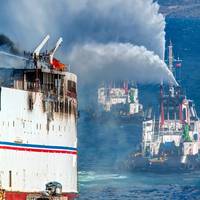
The most important of all international maritime safety conventions is the International Convention for the Safety of Life at Sea (SOLAS). The first version was adopted at a conference in London in 1914. The catalyst for this conference was the sinking of the Titanic on her first voyage in April 1912, which cost the lives of more than 1,500 passengers. This was the beginning of the journey that put in place a regulatory framework to protect those who work and travel by sea.Whilst the sinking of the Titanic was not fire-related…
Survitec to Deliver Fire-fighting Systems for Spirit of Tasmania's New Eco Ferries
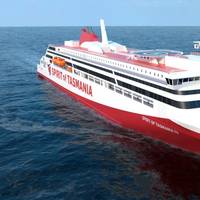
Survival Technology solutions provider Survitec has won a contract to supply advanced fire-fighting systems to a pair of 48,000grt LNG dual-fuelled eco ferries under construction at Finland’s Rauma Marine Constructions (RMC) for Australian shipowner Spirit of Tasmania."This is a major order from a returning customer,” said Michal Peruga, General Manager, Survitec, Poland. “This contract win demonstrates our ability to go beyond simple equipment supply to being able to provide a complete bespoke fire safety solution for all areas of the ship…
Tech File: Yara Birkeland Equipped with Survitec Fire Fighting System
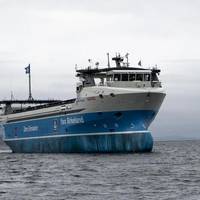
Survitec’s advanced fire fighting system and safety equipment aboard Yara Birkeland – the world’s first fully autonomous containership – has successfully completed its first annual service ahead of the 3200dwt ship’s first laden voyage.The zero-emission, fully electric Yara Birkeland is preparing to carry its first fertilizer cargo on the Herøya-Brevik route in early 2022.The groundbreaking vessel, which deployed on its maiden manned voyage in November, operates a unique, automatic…
Ship of the Month: Mercy Ships and the Quest to Build Global Mercy
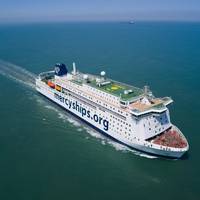
Mercy Ships is known globally for its charitable work performing medical procedures in developing countries. For the first time, the organization has a new ship, Global Mercy, recently delivered from a shipyard in China. Jim Paterson, Marine Executive Consultant, Mercy Ships takes Maritime Reporter & Engineering News inside the construction of the world’s largest civilian hospital ship.Jim Paterson already had a career and Chief Engineer’s Certificate when he joined Mercy Ships nearly 34 years ago, in search of a life change to make a difference.
GE to Power the US Navy's Constellation-class Frigates
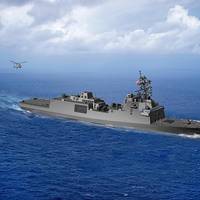
GE Marine will provide gas turbine engines and associated equipment for the Navy’s Constellation-class frigates being designed and built by Fincantieri Marinette Marine in Wisconsin.“GE Marine brings a proven and reliable gas turbine that integrates perfectly in our combined diesel electric and gas turbine (CODLAG) propulsion system,” said Dario Deste, President and CEO of Fincantieri Marine Group. “Fincantieri has a decades-long relationship with GE, and we are proud to have these American-made gas engines on our U.S.
EGR Offered for Dual-fuel ME-GA Engine
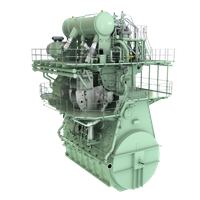
MAN Energy Solutions announced that it will offer its proprietary EGR (Exhaust Gas Recirculation) system as an emissions solution for its new, low-speed ME-GA engine, the Otto-cycle variant of its established ME-GI dual-fuel engine. EGR is a NOx-emissions-reduction technique that ensures IMO Tier III-compliance in both diesel and gas mode.The company has long experience with the emission-reduction technology and reported the first order for an EGR system in 2011 when it was fully integrated within the MAN B&W 6S80ME-C9 main engine of a 4,500 teu containership newbuilding.Thomas S.
Tech to Fight Container Fires
Fire safety has become a major concern in the container shipping industry, in particular, with vessels of 20,000-TEU and more entering the market. A fire in just one container can have catastrophic implications for the whole of the cargo. The very nature of container shipping means that the cargoes are in general finished goods of high value. Insurer Allianz gives the example of a March 2018 fire onboard the Maersk Honam southeast of Oman. At the time the ship was carrying 7,860 containers, corresponding to 12,416 TEU.
Major Supply Contracts Awarded for Finland's New Warships
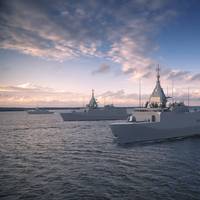
Finnish shipbuilder Rauma Marine Constructions (RMC) revealed it has entered into three major supply contracts worth over €100 million ($117.4 million) in total for the main equipment of Pohjanmaa Class multi-purpose corvettes commissioned by the Finnish Defense Forces.The most crucial contracts for the supply of critical main equipment with long delivery times were signed during spring and summer in highly unusual circumstances, the shipbuilder said, adding that the coronavirus pandemic has posed significant challenges to numerous businesses…
Fire Protection with Turbine
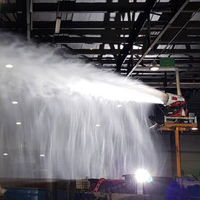
The Italian company EmiControls has been working on innovative fire protection solutions worldwide since 2011. With the FT10e water mist turbine, EmiControls has launched a product that gives companies more safety in the fight against fires. This is a brief Case Study of an FT10e installation at the Recycling Center Santini in Northern Italy.EmiControls develops stationary and mobile firefighting turbines. EmiControls combines the high efficiency of water mist with an advanced turbine technology.When extinguishing fires, water mist achieves a higher cooling effect than a traditional water jet.
New Subsea 7 Heavy Construction Vessel Built to LR Class
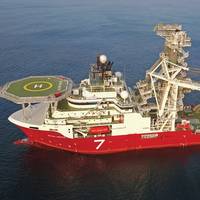
Subsea 7’s newest heavy construction flexlay vessel, Seven Arctic, has been designed and built to Lloyd’s Register (LR) class. Designed to meet the demands of deepwater and harsh environments, she can work at depths of 3,000m and features three offshore cranes, the largest of which is capable of a 1000-tonne lift. Built by Hyundai Heavy Industries, Seven Arctic measures 162.3 meters in overall length with a breadth of 32m. The vessel also features a 600-tonne top tension tiltable lay system for pipe laying and is fitted with six diesel generators producing just over 25…
Ferry Design Contest Winners Announced
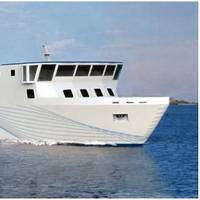
The winners of the Worldwide Ferry Safety Association’s (WFSA) Safe Affordable Ferry Competition, as determined by a panel of judges, have been announced by WFSA Executive Director Dr. Roberta Weisbrod. The requirements of this year’s competition were to design a safe and affordable RoPax ferry able to transport 185 passengers plus a crew of 15 and cargo carrying vehicles on a route linking five islands surrounding Indonesia’s Savu Sea. Taking home first place honors is the University of Strathclyde, which will earn a $5,000 prize for its Savutec ferry.