

Report: No Obvious Compromise to Net Zero Framework

A new insight brief by the UCL Shipping and Oceans Research Group for the Getting to Zero coalition, titled "Uncertainty at the IMO: Three scenarios and their consequences for shipping’s transition”, concludes that of those options only the ‘as is’ (Net Zero Framework as agreed in principle in April 2025) has the potential to provide a credible, stable demand signal and revenue stream to support early and mass-market uptake of scalable zero-emission fuels.Weaker alternatives risk delaying scalable zero-emission fuel availability into the 2040s…
Many Green Shipping Corridors Stalled
A new report from the Getting to Zero Coalition identifies 25 new green shipping corridors – trade routes designed to demonstrate and scale novel zero-emission fuels, vessels, and technologies – launched this last year, expanding the global total to 84 active initiatives.At a Crossroads: Annual Progress Report on Green Shipping Corridors 2025 reveals that new initiatives have been launched in major developing economies like China, India, Brazil, Chile, Ghana, and Kenya.For the first time since the report’s inception in 2022…
Green Corridors Progressing
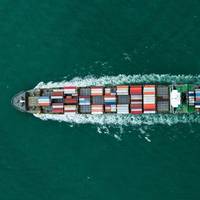
The 2024 edition of the Getting to Zero Coalition’s Annual Progress Report on Green Shipping Corridors finds that the movement has made healthy progress.In the last year, 18 new green shipping corridor initiatives emerged worldwide, and two-fifths of existing initiatives advanced to a new phase of development.At least six green corridor initiatives have moved towards enabling real-world implementation.At the same time, the report warns that progress could stall without urgent action from governments to overcome a “feasibility wall.”It states:1.
Report: Shipping Unlikely to Meet 2030 Targets
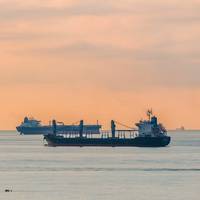
The global shipping industry is not on track to meet its target of having zero-emission fuels account for 5% of all fuels by 2030, according to a new report from the UCL Energy Institute, UN Climate Change High-Level Champions and the Getting to Zero Coalition.The third annual progress report, Progress Towards Shipping’s 2030 Breakthrough, warns that the next 12 months are critical to avoid shipping falling irreparably behind its climate goals.The IMO set a goal of ensuring that zero- or near-zero emission fuels make up 5% to 10% of all shipping fuels by 2030.
Nine Organisations Commit to Book and Claim Systems
Nine companies across the maritime value chain have issued a joint statement expressing their commitment to developing and implementing robust book and claim chain of custody systems to accelerate the early phases of shipping’s decarbonisation. The signatories of the joint statement – Aspen Shipping Decarbonization Initiative, DHL Global Forwarding, Hapag Lloyd, Kuehne + Nagel, Norden, Oldendorff Carriers, ONE, Torvald Klaveness, and Yara Clean Ammonia –belong to the Getting to Zero coalition…
Marine News' Top Vessels of 2022
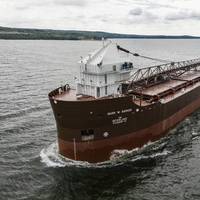
The November edition of Marine News magazine highlighted the most notable newbuilds delivered in 2022. From sturdy and nimble workboats, to the first new Jones Act laker in a generation, each vessel on display showcases the industry’s engineering prowess and technological ingenuity, with the focus on improving efficiency in operations. The maritime industry has no shortage of challenges to overcome, and each of Marine News’ top vessels will, in one way or another, aid efforts to tackle them.Mark W.
New Report Tracks the Maritime Industry's Progress to Net Zero
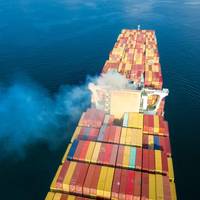
A new report from the Global Maritime Forum, prepared on behalf of the Getting to Zero Coalition, assesses progress toward the development of Green Shipping Corridors - maritime routes between major port hubs where zero-emission solutions are supported and demonstrated – and finds that activity during 2022 exceeded expectations. However as maritime Green Shipping Corridors progress toward implementation, some key industry stakeholders, especially cargo owners and fuel producers, will need to be engaged as soon as possible.
Partners to Develop Green Corridor for Australia-Asia Iron Ore Shipping
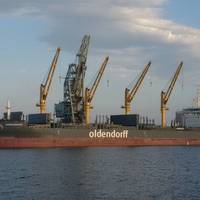
A consortium, led by the Global Maritime Forum and consisting of BHP, Rio Tinto, Oldendorff Carriers and Star Bulk Carriers Corp., signed a letter of intent (LOI) to assess the development of an iron ore Green Corridor between Australia and East Asia.To mobilize demand for green shipping and to scale zero- or near-zero greenhouse gas emission shipping, governments and industry decision-makers are increasingly looking to enable and simplify the task of decarbonizing the maritime sector by establishing Green Corridors: specific shipping routes where the economics…
Clean Canaveral Completes Inaugural LNG Bunkering
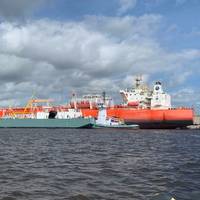
The Clean Canaveral, a new liquefied natural gas (LNG) bunker barge operating along the coast of the southeastern United States, recently completed its inaugural bunkering in Jacksonville, Fla. The Clean Canaveral has a capacity of 5,500 cubic meters, making it the largest Jones Act LNG bunker barge. The vessel operates as an articulated tug barge unit (ATB) and is owned by Polaris New Energy LLC, a subsidiary of Seaside LNG Holdings.The operation marks the first barge-to-ship cool down performed in the United States.
Isle of Man Ship Registry Reduces Fees for ‘Green’ Ships

The Isle of Man Ship Registry (IOMSR) announced it will reduce registration fees for ships deploying green technology, in a move aimed at spurring decarbonization in the maritime industry.The new measure, which the flag state claims is the first of its kind in the world, will give a 15% reduction on annual registration fees for cargo ships, commercial yachts or passenger ships investing in biofuel, alternative fuels, wind or shore-side energy technology.The initiative forms part of the Isle of Man Government’s Merchant Shipping (Fees) Regulations 2022…
The Path to Zero: Study Shows Hydrogen-Based Ship Fuel Projects on the Rise
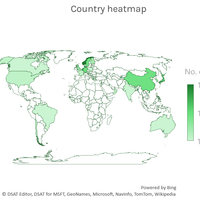
The Getting to Zero Coalition’s updated Mapping of Zero Emission Pilots and Demonstration Projects uncovers emerging trends, sees a strong climb in the number of identified projects as well as increased activities in Asia.The 'fuel of the future' debate is one of the hottest topics in maritime circles, as shipowners eye ever tightening emission regulations through 2050. While there is no 'silver bullet' solution, the Getting to Zero Coalition’s biannual Mapping of Zero Emission Pilots and Demonstration Projects outlines the spread and scope of existing zero emission projects…
Alfa Laval Continues Green Push with PureCool

The newly-intorduced Alfa Laval PureCool system tackling methane slip from liquefied natural gas (LNG) engines continues a green solutions journey nearly two decades long while pointing the way forward into a new era of environmental work, the Swedish manufacturer says.A unified push for green solutionsThe emissions reduction system is part of Alfa Laval's Pure Thinking portfolio, introduced over 15 years ago to define an organized effort to pursue environmental solutions and help marine customers meet new legislation.
Time to Launch Carbon Plan for Shipping is Now, Industry Says
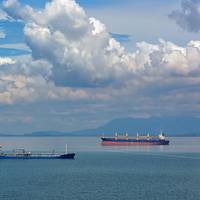
The shipping industry must act now in order to meet U.N. targets to cut carbon emissions by 2050, leading officials said on Wednesday, ahead of a meeting next week that will seek to advance a plan.The U.N. agency the International Maritime Organization (IMO) has said it aims to reduce overall greenhouse gas emissions from ships by 50% from 2008 levels by 2050.About 90% of world trade is transported by sea. Carbon emissions from shipping in the six-year period to 2018 accounted for 2.9% of the world’s CO2…
First Flag State Joins Getting to Zero Coalition
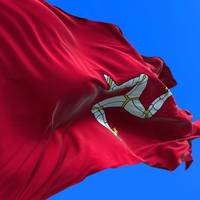
The Isle of Man Ship Registry has become the first flag state to join the Getting to Zero Coalition, an industry-led alliance working toward decarbonizing the international maritime shipping sector.Established in 2019, the coalition is a partnership between the Global Maritime Forum, the Friends of Ocean Action and the World Economic Forum. Its members include more than 120 organizations from the maritime, energy, infrastructure and finance sectors.The coalition says the development and deployment of commercially viable…
Shell Outlines Plans for Decarbonized Shipping
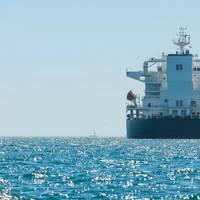
It will take well-defined goals and a mix of new green technologies to meet the International Maritime Organization's (IMO) target to achieve net-zero shipping emissions by 2050, oil major Shell said in a newly published report.In the report, Decarbonizing Shipping: Setting Shell’s Course, Shell highlights the role that hydrogen and fuel cells could play in achieving a decarbonized shipping sector. Calling for the IMO to adopt a clear trajectory to net-zero emissions by 2050,…
Alfa Laval, WinGD Partner Up to Improve Engine Efficiency on Gas-run Ships
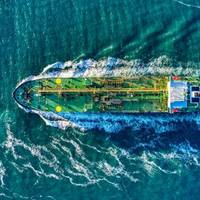
Swedish marine equipment provider Alfa Laval and Swiss engine developer WinGD, have developed a cascade exhaust gas cooling system that promises to improve the engine efficiency on ships that run on gas.The new Alfa Laval CEC-S system (cascade exhaust gas cooling system) will be incorporated into WinGD’s gas engines where it will be used for cooling and recycling purposes. "It will contribute to significantly lowering the methane slip into the atmosphere, while also improving engine efficiency thus decreasing a ship’s carbon footprint…
Lubrizol Joins Shipping’s Zero Emissions Ambition

The Lubrizol Corporation says it has become the first lubricant additive technology supplier to join an international coalition aiming to drive the development of commercially viable, zero-emissions deep-sea ships by 2030.A partnership between the Global Maritime Forum, the World Economic Forum and Friends of Ocean Action, the Getting to Zero Coalition is currently endorsed by 14 governments and is composed of more than 100 organizations, including ship owners, ports, technology…
Interview: Toyohisa Nakano Discusses "K" Line Green Initiatives
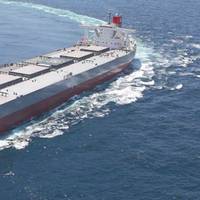
Last year Kawasaki Kisen Kaisha, Ltd. (“K” Line) – one of the world’s largest and most influential ship owners with 478 ships comprising 40.5 million DWT and more than 6,000 employees – celebrated its 100th anniversary. Toyohisa Nakano, Executive Officer, in charge of Ship Technical and Environmental Affairs for “K” Line, is a 30+ year veteran of the company. He discusses with Maritime Reporter & Engineering News the ship owner’s strategy to meet ever-tightening ship emission regulations.Please provide an overview of the ships you have on order today.We placed an order for 210…
NYK Focuses on Ammonia as Marine Fuel
Japan-based shipping giant NYK has presented its concept for using ammonia as a marine fuel or zero-emission ships as part of the industry’s decarbonization drive.Ammonia does not emit carbon dioxide (CO2) when it is heated and would thus be expected to contribute to the effort to address global warming.In addition, if CO2-free hydrogen is used, zero emissions are said to be achieved. NYK is thus considering the use of ammonia as marine fuel, one of the solutions for decarbonization.The NYK Group is making efforts to create next-generation green businesses involving alternative marine fuels to realize decarbonization and the company’s basic philosophy of “Bringing value to life” and contributing to the betterment of societies.
Alfa Laval Joins 'Getting to Zero Coalition'
Sweden's Alfa Laval has joined the Getting to Zero Coalition, a coordinated effort to fight climate change by introducing zero-emission vessels by the year 2030.Alfa Laval is committed to reaching this vital goal, which is key to decarbonizing the global shipping industry and reaching the International Maritime Organization (IMO) target of cutting vessel-related greenhouse gas emissions by at least 50% by 2050.The ‘Getting to Zero Coalition’ was announced on September 23, 2019, at the United Nations Climate Action Summit in New York, and is a partnership between the Global Maritime Forum, the World Economic Forum and Friends of Ocean Action.
IMO's 2050 Decarbonization Target Has $1 Trillion Pricetag
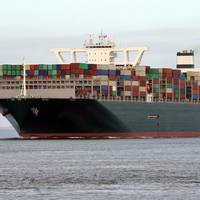
At least $1 trillion of investment in new fuel technology is needed to enable the shipping industry to meet U.N. targets for cuts in carbon emissions by 2050, a study published on Monday showed.The global shipping fleet, which accounts for 2.2% of the world's CO2 emissions, is under pressure to reduce those emissions and other pollution. About 90% of world trade is transported by sea.U.N. shipping agency, the International Maritime Organization (IMO), aims to reduce the industry's greenhouse gas emissions by 50% from 2008 levels by 2050…
Partners Developing Ammonia-fueled Tanker
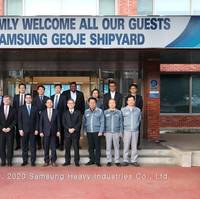
Maritime industry partners striving to advance shipping's decarbonization efforts are working to develop an ammonia-fueled tanker, classification society Lloyd's Register (LR) announced.The joint development project (JDP) involving LR and shipping line MISC Berhad, builder Samsung Heavy Industries (SHI) and engine maker MAN Energy Solutions aims to develop commercially viable deep-sea zero-emissions vessels (ZEVs) that would be operational by 2030, ahead of the International Maritime Organization’s 2050 greenhouse gas (GHG) emissions target.Nick Brown…
Eagle Bulk Joins Decarbonization Coalition
The US-based dry bulk carrier Eagle Bulk Shipping has joined industry group the Getting to Zero Coalition.The group is an alliance of over 90 companies within the maritime, energy, infrastructure, and finance sectors which are committed to the decarbonization of deep-sea shipping, in line with the International Maritime Organization's greenhouse gas emissions reduction strategy and the UNFCC Paris Agreement.Gary Vogel, Eagle Bulk’s CEO, said, “We are constantly working on improving energy and operational efficiencies at Eagle, and while these will continue to be critically important, on their own, they will not be enough to meet the…



