Ship Repair
All ships need maintenance and repairs. Many repair and maintanance operations can be performed at sea or by the crew in port. Complicated or large-scale repairs might require the ship to be removed from commercial operation. Classification Society supervision is required for most large-scale repairs, particularly those carried out in a ship repair yard. For oceangoing ships, particularly tankers, the ship has to be prepared for repair at a Deballasting Station. The tank must be thoroughly cleaned and its slops (grey water and hydrocarbon residues) must be pumped ashore according to environmental regulations.

Sabine Surveyors, Ltd. Announces Parent Company Transition, Leadership Appointments
Sabine Surveyors, Ltd. has announced organizational changes aimed at strengthening…

Tsuneishi Kure Completes Renewal of No.2 Floating Dock
Tsuneishi Kure has completed refurbishment work on the No.2 Floating Dock at its Wakaba Works…

Drydocks World, Cochin Shipyard Limited Enter Agreement to Develop Ship Repair Cluster in Kerala
Drydocks World, a DP World company, and Cochin Shipyard Limited (CSL) have signed…

Lagersmit, Subsea Global Solutions Strengthen Partnership in Southeast Asia
Lagersmit, a provider of advanced sealing solutions and a member of The Timken Company…

Colonna’s Shipyard Invests $70m for Fourth Drydock
Colonna’s Shipyard, Inc. (CSI) will invest $70m to acquire its fourth drydock, expected…

Everett Ship Repair Acquires Puget Sound’s Largest Dry-Dock
Everett Ship Repair, LLC (ESR), a provider of ship repair and conversion services…

ASRY Taps Solar Power for Shipyard
Arab Shipbuilding and Repair Yard Company (ASRY) unveiled an innovative solar energy…

Vard Secures Seismic Vessel Conversion Job
Norwegian shipbuilder Vard has signed a contract with Norway-based Sanco Shipping…

General Dynamics NASSCO Takes Delivery of New Floating Dry Dock
General Dynamics NASSCO has taken delivery of a new dry dock at its Long Beach location…

Coastal Veterans Repair Group Acquires Voyager Maritime Alliance Group
Coastal Veterans Repair Group LLC, a veteran-owned ship repair and marine services…

RIX Industries Partners With Sumitomo Heavy Industries to Expand Access to Technologies
RIX Industries, a leader in advanced gas compression and generation technologies…

Gibdock Completes Renewal of TechnipFMC's Deepwater Pipelayer
Gibraltar-based ship repair and conversion yard Gibdock has completed the repair…
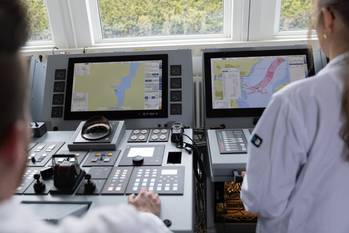
Electronic devices classed for use in the marine environment. All electronics used onboard must be designed to fit in the small confines of a bridge and can come in contact with salt water, so they are made to be very water resistant or waterproof.
The maritime industry is on the brink of a revolutionary transformation with the advent of autonomous ships. These vessels, capable of operating without human intervention, represent a significant leap forward in technology, promising to reshape the future of global shipping. Autonomous ships, also known as unmanned vessels, are designed to navigate and perform various operational tasks using advanced sensors, artificial intelligence (AI), and communication systems. This innovation is set to enhance efficiency, safety, and sustainability in the maritime sector.
Marine salvage is the process of rescuing a ship, its cargo, or other property from peril. Salvage encompasses rescue towing, putting out fires, patching or repairing a ship, refloating a sunken or grounded vessel, moving a disabled vessel in order to clear navigation channels…
The global maritime industry is under immense pressure to meet ambitious climate targets, spearheaded by the International Maritime Organization (IMO)'s strategy to reach net-zero emissions by or around 2050. This mandate has triggered the most significant technological and financial upheaval the sector has ever faced. This article explores the core challenge—the decarbonization dilemma—focusing on the complex regulatory landscape (CII, ETS) and the intense, multi-fuel race to find viable, scalable, and safe "green fuels." We analyze the leading contenders—ammonia, methanol, and hydrogen—highlighting their pros, cons, and the colossal infrastructure investment required to power the future of global shipping.
The maritime industry, a crucial pillar of global trade, has always grappled with the challenge of piracy. Over the past few decades, the nature of piracy has dramatically evolved, and new technologies have become a double-edged sword. On one hand, they offer improved safety and navigation capabilities; on the other, they provide pirates with unprecedented tools that enhance their capacity for disruption, theft, and violence. Let's delve into the growing threat of new technologies in maritime piracy and the implications for global maritime security.