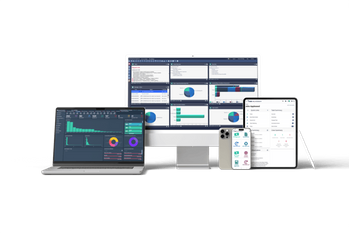

RINA, Hanwha Team Up to Develop Battery-Hybrid Propulsion Systems

RINA has signed a memorandum of understanding (MoU) with South Korea’s Hanwha Group to promote the adoption of battery-hybrid propulsion systems in the maritime sector.The agreement involves Hanwha affiliates Hanwha Power Systems, Hanwha Aerospace and Hanwha Engine, and targets the development of hybrid propulsion solutions for both newbuild vessels and retrofits, with a focus on the roll-on/roll-off ferry segment.The partners said the collaboration aims to accelerate the transition to lower-emission vessels by combining Hanwha’s expertise in propulsion…
Joint Project Aims to Enhance Maritime Battery Safety

ABS and Siemens Energy have signed a joint development project (JDP) to advance the understanding of thermal runaway in lithium-ion batteries through modeling and simulation, supporting safer and more reliable energy storage systems for the marine and offshore industries.The JDP brings together ABS’s technical expertise in classification, verification, and standards development with leadership from Siemens Energy in digital simulation and industrial technology innovation. The collaboration aims to create new insights into how lithium-ion battery systems behave under extreme conditions…
Top 8 Market (& Maritime) Movers of 2025

This past year won’t soon be forgotten. In 2025, conventional thinking about economics and investor behavior was frequently challenged, as dramatic changes in technology, energy and geopolitics drove markets in often unexpected ways.As the clock turns to 2026, here are 8 general market movers that can help explain what happened in 2025 and what it might mean for 2026 and beyond.1. Trade TurmoilPresident Donald Trump’s "America First" agenda proved to be a key market driver in 2025 – particularly in the first half of the year – as the U.S.
Corvus Energy Secures Record Order for Seven Fully Electric CMAL Ferries

Corvus Energy, a provider of zero-emission energy solutions for the maritime industry, has received a record order from Remontowa Shipbuilding in Poland for the supply of battery systems for seven new fully electric ferries for Scottish Government owned Caledonian Maritime Assets Limited (CMAL) in Scotland.This marks the largest contract in Corvus Energy’s history, measured in USD value, and represents a milestone in advancing clean, sustainable ferry operations in the UK.The…
Real Zero, Not Just for Australia

The December issue of Maritime Reporter magazine includes a feature story on Australian mining company Fortescue’s pioneering ammonia fuel trial on the platform supply vessel Green Pioneer.The Green Pioneer was named one of TIME’s Best Inventions of 2025.The conversion journey of its diesel-electric power system to dual-fuel ammonia started in 2022, on land, when Fortescue converted a four-stroke Cummins engine at is Perth testing facility in Western Australia.“The Fortescue Green Pioneer is proof that safe, technical solutions for ammonia power engines exist” said Dr.
BYD Energy Storage, Corvus Energy Sign MoU to Accelerate Marine Battery Innovation
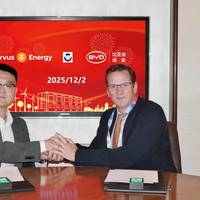
BYD Energy Storage, a leader in the energy storage sector, and Corvus Energy AS, a leader in marine energy storage systems (ESS), announced the signing of a Memorandum of Understanding (MoU) to establish a strategic collaboration aimed at advancing next-generation battery solutions for the maritime sector.The MoU strengthens the cooperative relationship between the two companies by combining BYD Energy Storage’s scale and technological leadership in LFP batteries with Corvus Energy’s unparalleled expertise in marine ESS applications.
Crew Training Shortfall is Constraining Battery Uptake
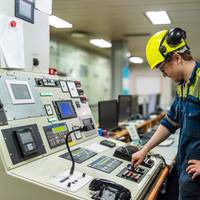
CIMAC and the Maritime Battery Forum have published the second paper on the environmental impact of batteries in deep-sea shipping concluding that the transition to battery-powered deep-sea vessels is no longer constrained primarily by technical or regulatory limitations but rather by the human and organizational readiness.Class societies, flag states, and international standards organizations have all developed rules and guidelines that sufficiently address the technical and safety requirements for implementing battery systems on ocean-going vessels.However…
ABB to Power Washington State Ferries’ First Hybrid-Electric Newbuilds
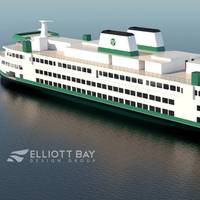
ABB has secured an order with Washington State Ferries (WSF), the United States’ largest ferry operator, to supply and integrate hybrid-electric propulsion systems for two hybrid-electric 160-auto ferries.With the first two ships scheduled for delivery from Eastern Shipbuilding Group, one apiece in 2030 and 2031, the contract also includes an option for a third ferry. WSF has previously announced plans to build up to 16 ships by the end of 2040, as part of a ferry electrification program targeting lower emissions.ABB will supply and integrate end-to-end systems including power distribution…
Echandia to Supply Battery Systems for Spliethoff’s Cargo Vessel Newbuilds
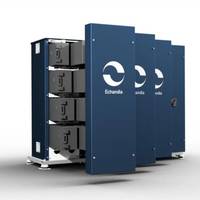
Swedish developer of battery systems for maritime applications Echandia has been selected to supply energy storage systems for eight newbuild cargo vessels, with an option for two more vessels, owned by Spliethoff Group.The vessels are being built at Wuhu Shipyard in China, with WE Tech Solutions as the system integrator.The battery systems will be installed to optimize generator efficiency during cargo loading and unloading system operations, a demanding application requiring…
USCG Research Center Warns of Lithium-Ion Fire Hazards at Sea
As maritime industries accelerate toward electrification, the U.S. Coast Guard Research and Development Center (RDC) has issued a warning: lithium-ion batteries—the same technology powering the global shift to hybrid and all-electric vessels—pose a unique and evolving threat when things go wrong. The April 2025 white paper, Lithium Battery Fire Hazards in the Maritime Environment, lays out the risks, firefighting challenges, and post-incident dangers associated with lithium battery fires at sea…
Energy Storage and New Fuels Work Together as One on Vessels
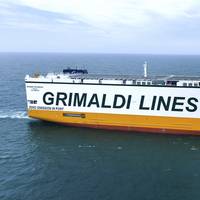
There’s an obvious fuel saving advantage, but partnering energy storage systems with new fuels brings other advantages too.There’s a new generation of vessels emerging which is exemplified by Grimaldi’s PCTC Grande Shanghai, claimed to reduce fuel consumption by 50% compared to previous-generation car carriers, and the NCL Vestland, a container feeder vessel similarly claimed to reduce energy consumption per TEU per nautical mile by 63%.What these vessels have in common is a propulsion system that combines energy storage systems and new fuels.As Henrik Helgesen…
Lloyd’s Register Grants AiP for HD Hyundai Heavy Industries VLGC

Lloyd’s Register (LR) has awarded Approval in Principle (AiP) to HD Hyundai Heavy Industries (HHI) for a new Very Large Gas Carrier (VLGC) design that features a forward accommodation block and integration of wind assisted propulsion systems (WAPS). The announcement was made during a ceremony at Gastech 2025. By relocating the bridge and accommodation block to the bow, the vessel’s aerodynamic profile is improved, reducing headwind resistance and improving overall propulsion efficiency.
ABS AIP for Electric Propulsion Container Ship
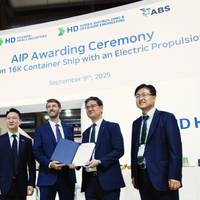
At Gastech 2025, HD Korea Shipbuilding & Offshore Engineering (HD KSOE) and HD Hyundai Heavy Industries (HD HHI) received approval in principle (AIP) from ABS for its concept design of a 16,000 TEU container ship with an electric propulsion system.ABS completed design reviews based on class requirements, analyzing the power system including key elements such as power generation, power conversion and propulsion motors.“ABS, HD KSOE and HHI share a commitment to leveraging our combined resources and expertise to advance electrical applications in the maritime industry.
ABS Report Explores Emerging Maritime Battery Technologies
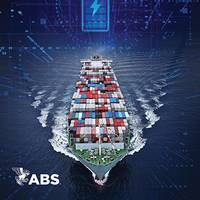
The latest advances in battery technologies have the potential to not only support direct electrification and the integration of alternative fuels but also offer pathways to enhance operational efficiency and reduce fuel costs, according to the latest analysis from ABS.The report, Emerging Battery Technologies in the Maritime Industry Volume II expands understanding of the inherent safety risks associated with emerging battery systems, particularly thermal runaway (TR) and gas…
EST-Floattech Expands Octopus Portfolio with New Battery Modules
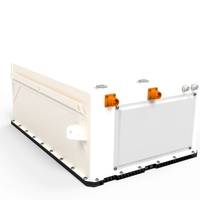
EST-Floattech, Dutch energy storage systems provider for maritime and industrial applications, has expanded its Octopus Series with the introduction of Lithium Iron Phosphate (LFP) battery modules.With the latest addition the company aims to address the market demand for battery systems based on another chemical configuration.The new Octopus LFP ESS is engineered for large scale battery systems, and works together seamlessly with the Octopus Series Battery Management System (BMS).The newly introduced LFP is based on the advancements made in recent years…
Charge It: ‘Electrification’ Momentum Mounts in Maritime
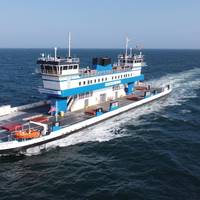
Siemens Energy has had its hands on a number of groundbreaking ship design and construction projects globally, projects that highlight the possibilities and the challenges inherent in being a technology pioneer. Ed Schwarz, Head of Marine Solutions Sales for Siemens Energy in the US and Canada, give an insider’s view of some practical steps to take if electrification is on an organization’s fleet expansion agenda.Energy transition is everywhere you turn in maritime today, and electric solutions are an important and growing part of the mix…
Maritime Batteries 101: What to Consider When 'Going Green'
In the current pathway, global shipping greenhouse gas (GHG) emissions are forecast to rise in this decade and eventually return to 2010 levels by ~2050.The chart represents the three scenarios for shipping emissions developed by the International Energy Agency (the IEA) and adds in the IMO Strategy targets for emissions reduction. The IEA’s aspirational case (i.e. what governments and companies aspire to do rather than are actually doing – that is the current pathway) closely mirrors the IMO’s 2023 updated strategic direction.
New Island Class Ferries will be Electric-Capable
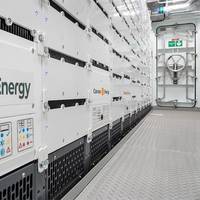
Damen Shipyards Group has selected Corvus Energy to supply energy storage systems (ESS) for four new, fully electric capable passenger car ferries currently under construction as part of BC Ferries’ fleet of Island Class vessels.The ferries are scheduled for delivery by 2027 and will expand BC Ferries’ existing fleet of six hybrid diesel-electric Island Class ferries.The new ferries are electric-ready with the ability to operate on fully electric power, utilizing renewable shore power for battery charging.The new vessels are planned to serve routes between Nanaimo and Gabriola Island…
Global Tensions Ratchet Up Shipping Sector Risk

The global maritime sector is entering an era of heightened geopolitical and regulatory uncertainty that threatens to offset long-term safety gains, according to Allianz Commercial’s 2025 Safety and Shipping Review. While vessel losses have reached a record low, the industry faces a volatile landscape shaped by trade conflict, increased sanctions, shadow fleets, and ongoing security threats in key shipping lanes.The review underscores how fast-evolving global tensions — from attacks…
Fortescue Green Pioneer: Proving Ground for Ammonia as Maritime Fuel
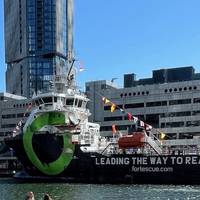
Fortescue’s Green Pioneer, billed as the world’s first ammonia dual-powered vessel, left Singapore in January of this year on voyage past the Cape of Good Hope en route initially to Southampton, both for Port State Control and to demonstrate the use of ammonia in its engines to the UK’s Maritime and Coastguard Agency (MCA), and then on to London’s Canary Wharf where is stayed through mid-April, before travelling to other north European ports.At the time when the IMO’s Marine Environment…
Bureau Veritas Calls For Standardized Safety Regulations For Electrification Technologies
Bureau Veritas Marine & Offshore (BV), a leader in testing, inspection, and certification, has called for greater clarity regarding standardized safety regulations that will advance the development of maritime electrification technologies, following the publication of a new technology report, Maritime Electrification: Maritime Battery Systems and Onshore Power Supply. The report explores how electrification technologies—specifically Energy Storage Systems (ESS) and Onshore Power…
Aker Arctic to Design Baltic Icebreaker
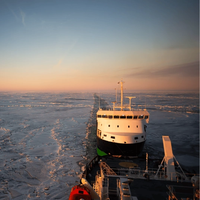
The Finnish Transport Infrastructure Agency (FTIA) has chosen Aker Arctic to design a Baltic Sea assistance icebreaker as part of the Winter Navigation Motorways of the Sea III (WINMOS III) project co-financed by the European Union.The initial design phase will include the evaluation of different fuel alternatives and machinery configurations suitable for icebreakers. In addition, the use of different electric energy storage systems to balance out the load fluctuation will be…
NYK, Partners to Develop Renewable Energy-Powered Floating Data Center
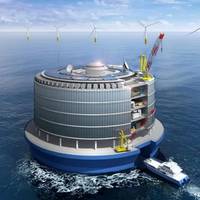
NYK Line, NTT FACIITIES, Eurus Energy Holdings Corporation, MUFG Bank, and the city of Yokohama have signed a memorandum of understanding (MoU) for a demonstration project of an offshore green data center, utilizing a mini-float installed as a disaster countermeasure.On a mini-float, spanning 25 meters in length and 80 meters in width, installed off Osanbashi Pier in Yokohama City, the partners will test an offshore floating data center fully powered by renewable energy generated by solar power and battery energy storage systems.Based on the results…