MacGregor to Supply Cargo Access, Deck Machinery for BC Ferries’ Newbuilds

MacGregor has been selected to supply cargo access solutions and deck machinery for four new major vessels under BC Ferries’ fleet renewal program.The next-generation vessels, to be built at China Merchants Industry (CMI) Weihai Shipyard, are designed as diesel-battery hybrid, all-electric ready ships intended for BC Ferries’ busiest routes between Vancouver Island and the Lower Mainland in Canada.MacGregor will provide the cargo access equipment along with a dedicated Integrated Logistic Support (ILS) package.
Crew Training Shortfall is Constraining Battery Uptake
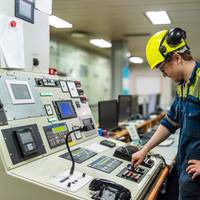
CIMAC and the Maritime Battery Forum have published the second paper on the environmental impact of batteries in deep-sea shipping concluding that the transition to battery-powered deep-sea vessels is no longer constrained primarily by technical or regulatory limitations but rather by the human and organizational readiness.Class societies, flag states, and international standards organizations have all developed rules and guidelines that sufficiently address the technical and safety requirements for implementing battery systems on ocean-going vessels.However…
Hanwha Group, HMM, and KR Sign Fuel Cell MoU

Four Hanwha Group companies — Hanwha Power Systems, Hanwha Ocean, Hanwha Aerospace, and Hanwha Systems — signed a memorandum of understanding (MoU) with shipping company HMM and Korean Register (KR) to jointly develop and demonstrate next-generation carbon-free ship propulsion systems.The partners will jointly conduct concept design for next-generation propulsion systems — including an integrated solution combining an ammonia-based gas turbine and fuel cells for 7,000–8,000 TEU-class container vessels…
USCG Research Center Warns of Lithium-Ion Fire Hazards at Sea
As maritime industries accelerate toward electrification, the U.S. Coast Guard Research and Development Center (RDC) has issued a warning: lithium-ion batteries—the same technology powering the global shift to hybrid and all-electric vessels—pose a unique and evolving threat when things go wrong. The April 2025 white paper, Lithium Battery Fire Hazards in the Maritime Environment, lays out the risks, firefighting challenges, and post-incident dangers associated with lithium battery fires at sea…
Energy Storage and New Fuels Work Together as One on Vessels
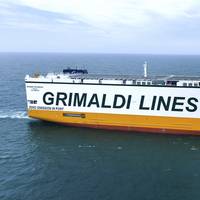
There’s an obvious fuel saving advantage, but partnering energy storage systems with new fuels brings other advantages too.There’s a new generation of vessels emerging which is exemplified by Grimaldi’s PCTC Grande Shanghai, claimed to reduce fuel consumption by 50% compared to previous-generation car carriers, and the NCL Vestland, a container feeder vessel similarly claimed to reduce energy consumption per TEU per nautical mile by 63%.What these vessels have in common is a propulsion system that combines energy storage systems and new fuels.As Henrik Helgesen…
ABS, Partners Launch Electrification and Battery Safety Alliance
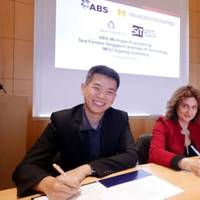
Representatives from American Bureau of Shipping (ABS), University of Michigan, Singapore Institute of Technology (SIT) and Sea Forrest Technologies have signed a memorandum of understanding to explore batteries and electrification in maritime applications.The agreement establishes a cooperative framework for the organizations to collaborate on academic and scientific projects related to battery technologies and electrification capabilities, with activities to include the development…
Management-Led Buyout Creates Maritime Battery Firm Nereida Energy

A management team led by industry veteran Geir Bjørkeli has completed the buyout of Yinson GreenTech's Norwegian subsidiary Yinson Green Technologies, establishing an independent company under the new name Nereida Energy.The move positions Nereida to advance battery solutions for the maritime industry, drawing on the leadership team’s deep sector expertise.Bjørkeli, formerly CEO of maritime battery specialist Corvus Energy and with past senior roles at Rolls-Royce and Huisman…
ABS Report Explores Emerging Maritime Battery Technologies
The latest advances in battery technologies have the potential to not only support direct electrification and the integration of alternative fuels but also offer pathways to enhance operational efficiency and reduce fuel costs, according to the latest analysis from ABS.The report, Emerging Battery Technologies in the Maritime Industry Volume II expands understanding of the inherent safety risks associated with emerging battery systems, particularly thermal runaway (TR) and gas…
King County Selects Moose Boats for Hybrid Patrol Boat
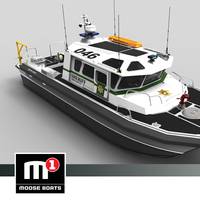
The King County Sheriff’s Office Marine Division in Washington has selected Moose Boats to build a new, custom diesel electric hybrid patrol boat.The model M1 will be 46’ long and powered by two Volvo Penta D11-625HP Diesel engines integrated with in-line twin Dan Foss electric motors.The vessel build will be a close collaboration between Hamilton Jet, who has designed the electric propulsion system, Volvo Penta and Moose Boats. Current battery technologies manufactured by Corvis Battery will enable the vessel to run solely under electric propulsion for up to two hours at five knots.
Preview: Japan Energy Summit & Exhibition 2025
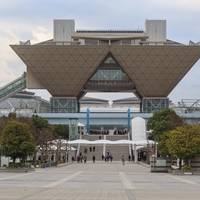
From June 18-20, 2025, the Japan Energy Summit & Exhibition will return to Tokyo Big Sight, convening global energy leaders, influential policymakers, and industry executives to advance Japan’s energy transition, investment landscape, and strategic role in the global energy system. Co-hosted by JERA and Tokyo Gas, this high-level platform will once again provide critical insight into the country’s evolving energy strategy under the Seventh Strategic Energy Plan.Held amid rising global energy demand…
INSIGHTS: Timo Vesala, ABB Marine & Ports
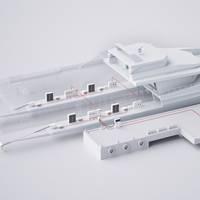
Timo Vesala, Account Manager, Americas, at ABB Marine & Ports, is responsible for newbuild sales in the Americas market. Since joining ABB in 2018, he has gathered extensive experience in the marine industry with a focus on electrification and propulsion systems. He holds a Master’s Degree in Mechanical Engineering from Aalto University, Finland, and has a passion for clean technology and maritime decarbonization. This month, in our annual Power & Propulsion edition, he weighs…
Eye on Design: Hybrid Blood, Sweat, and Tears
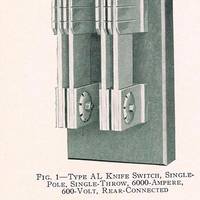
In earlier columns, I have discussed various approaches and issues with Hybrid Propulsion.I have now had the pleasure of a number of years of experience with the design, operation, upgrade, modification, and maintenance of ship (and car) hybrid propulsion systems and may be able to make a claim of gradually becoming a little less confused.It is still not easy, but at the same time, I am starting to see a few shortcuts that make it less likely that a beautiful vision of marine efficiency ends up being beached somewhere.In essence, they are variants of the KISS (Keep It Simple Stupid) principle.
Navico Invests to Boost Manufacturing Capabilities
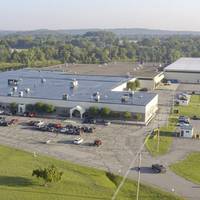
Navico Group, a division of Brunswick Corporation, announced a multimillion-dollar investment in its Lowell, Mich. facility to create two Centers of Excellence in metal fabrication and electrification. The investment is intended to increase quality, capacity and efficiency, as well as improve product manufacturing capabilities, the company said.“Navico Group is committed to being a leader in metal fabrication and electrification for the industries we serve, and this investment is a testament to that” said Brett Dibkey, Navico Group President.
ABS and Sea Forrest Collaborate on Maritime Electrification Tech
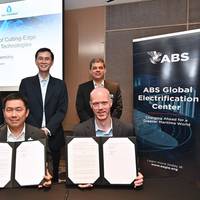
The American Bureau of Shipping (ABS) and Sea Forrest Power Solutions (Sea Forrest), a subsidiary of BH Global, have signed a Memorandum of Understanding (MOU) to drive advancements in cutting-edge maritime electrification technologies.Supported by the new ABS Electrification Center in Singapore, the agreement will cover projects for electric vessels, shore charging infrastructure, along with related industry standards and marine classification requirements, ABSABS and Sea Forrest…
ABS Invests Electrification Center in Singapore to Support Green Shipping
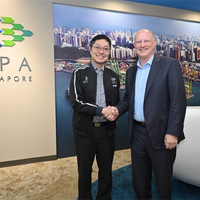
The American Bureau of Shipping (ABS) is launching a global ABS Electrification Center in Singapore to support maritime decarbonization projects.Comprised of ABS engineers and technical specialists, the center will support a range of cutting-edge electrification projects for shipowners, shipyards and other stakeholders across the Asia Pacific region and around the world, ABS said.The center will also provide support for the electrification of harbor and coastal craft aligned to the initiatives from the Maritime and Port Authority of Singapore (MPA).
Batteries: Ready to Scale Up
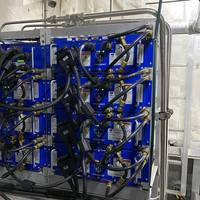
Batteries for maritime power have been picking up big momentum, benefiting from the most basic concept within Econ 101: supply and demand.On May 19 Corvus Energy announced it would establish a lithium ion battery manufacturing facility in Port Bellingham, Wash., just north of Seattle. Corvus Energy is a leading supplier of battery energy storage systems (BESS) for marine applications. Its systems already power more than 30 North American vessels, as well as 29 hybrid port cranes and 11 land-based drilling rigs.Geir Bjørkeli…
Vard Electro to Install Hybrid Battery on Atlantic Towing's Platform Supplier
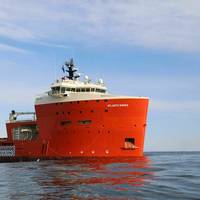
Marine electrical systems supplier Vard Electro will equip Atlantic Towing's platform supply vessel Atlantic Shrike with a hybrid battery power system."Atlantic Towing is the first company to implement this multiple mode application of battery technologies on a single vessel in the Canadian offshore oil and gas industry," Vard Electro said.Atlantic Towing has received funding for the project through Petroleum Research Newfoundland & Labrador (PRNL) as a component of the offshore research…
Op/Ed: Considering Alternative Energy Sources for Ships
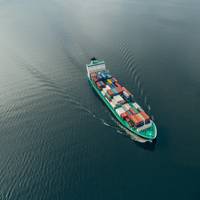
Hydrogen or battery technologies? Strict regulations force shipowners to consider alternative energy sourcesThere are more than 60,000 ships in the world, which engines emit almost 2.5% of the world's greenhouse gases. The automotive industry has made rapid progress towards electrification and there is more and more talk of hydrogen solutions for trains, at the same time the transition to non-fossil fuels has been slower in the shipping industry.Energy for moving ships can originate from a wide variety of sources. Ships have been sailing powered by wind for millenniums.
Will Customers Redefine Design and the Science of Marine Propulsion?
It is “pre-COVID ” April of 2018, and 174 member states of IMO adopt a new strategy to reduce greenhouse gases from shipping. The meetings are considered “urgent” and the target is to reduce carbon emissions in half by 2050. Prior to those “targets” shipping dealt with regulations to address SOx and NOx reductions. Most of which have resulted in limited success due to infrastructure problems and a consideration as a temporary fix.The technical world has responded with low sulfur fuels, LNG, and methanol to work towards the target.
Interview: Eddie Brown, Cummins' Director of Business Development, Marine

How do you see business today, and where is Cummins looking for opportunities as COVID-19 and volatile oil markets generate market uncertainty?Even in the current state, we are still seeing a solid level of interest and activity in the commercial marine space. Scheduling has been impacted and some areas have slowed down, but overall, the marine industry is very much still active around the world. When we take a closer look at some of the segments within the commercial marine space, differences begin to emerge.
Maersk Tests Containerized Battery System
Danish shipping giant Maersk will install a containerized 600 kWh marine battery system on board the 4,500 TEU Maersk Cape Town in December 2019 to improve vessel performance and reliability while reducing CO2 emissions.“This trial will provide a greater understanding of energy storage that will support Maersk in moving towards further electrification of its fleet and port terminals. Maersk will continue to facilitate, test, and develop low-carbon solutions on our journey to become carbon neutral by 2050,” explains Søren Toft, Maersk COO.Propelling marine vessels with battery power alone is still years away from being a technically- and economically viable option.
Setting the Course for Low Carbon Shipping
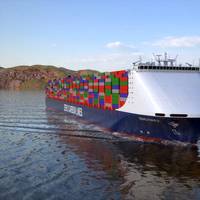
In a collective call to action for the decarbonization of shipping last year, 34 signatory CEOs from the industry made clear that efforts to significantly lower the carbon footprint of shipping presented “biggest technology challenge in the past 100 years”.This statement was not an exaggeration. In fact, the transition to a low-carbon future will take more than an unprecedented commitment to the research and development that traditionally underpins technological advance. Finding complex solutions that are at once commercially viable…
Kalmar Intros Electric Empty Container Handler
The cargo handling solutions provider Kalmar, part of Cargotec, has introduced a fully electric version of the Kalmar Empty Container Handler.According to a company press release, the launch represents another significant step on the company's journey towards offering an electric version of every product in its portfolio by 2021. The all-electric machine is the latest addition to Kalmar's Eco Range, which already includes the Kalmar Eco Reachstacker with a fuel-saving guarantee. In addition, Kalmar has already launched fully electric versions of its light and medium forklift trucks, Kalmar Ottawa terminal tractors, shuttle and straddle carriers, automated guided vehicles (AGVs) and yard cranes.