

The Great Lakes BWMS Regulation Scrum
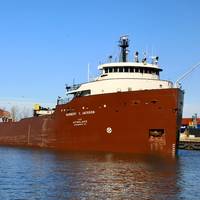
There hasn’t been an invasives species introduced to the Great Lakes from ballast water since 2006. So, what’s the problem now?As far as Transport Canada is concerned: “Scientific sampling to date consistently shows that ballast water management systems (BWMS) used in the Great Lakes reduce organism densities in ballast water discharges by over 99%, consistent with global evidence. As crews gain experience in operating these systems, performance continues to improve, contributing to the ongoing protection of Canada’s waters from invasive species.” However…
Palfinger Marine to Equip DOF’s New OSV

Palfinger Marine has secured a contract by CRIST S.A. in Poland to supply a comprehensive equipment package for a next-generation Offshore Support Vessel (OSV) under construction for DOF Group.As part of the comprehensive equipment package, Palfinger Marine will supply a fully electric, frequency-controlled winch system. The advanced solution enables safe and efficient anchoring, mooring, deck handling, towing, and ice management under extreme offshore conditions.The contract also includes a stern roller and the PALFINGER HSS (Hose Securing System)…
Canada Awards Icebreaker Contract to Davie
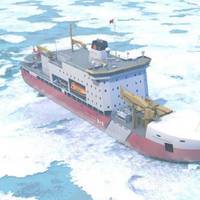
Canadian shipbuilder Davie has been awarded a contract by the Government of Canada for the construction of a polar icebreaker.Work will begin this year on the agreement valued at $3.25 billion. Davie will deliver its production-ready heavy icebreaker design called the Polar Max to Canada by 2030.To support the rapid delivery of the ship, Davie will capitalize on the expertise of Helsinki Shipyard, which was acquired by Davie in 2023 with the support of the Québec government. Helsinki…
BRIX Delivers Bridge Cat 49 for Bridgemans Services Group

BRIX Marine launched a Bridge Cat 49 (4519- DCT), built for Bridgemans Services Group. The personnel transfer vessel, Bridge Cat 49 (BC49), accommodates up to 45 passengers plus three crew and is built to meet Transport Canada passenger vessel requirements for use in British Columbia, Canada.The BC49 is constructed with a 45-foot aluminum hull and an 18.5-ft. beam, powered by twin Cummins QSL9 405HP diesel inboard engines paired with ZF marine transmissions for smooth operation. The vessel has a 500-gallon fuel capacity and a lightship weight of approximately 43,000 lbs.
New Bunkering Service Debuts in Canadian Port
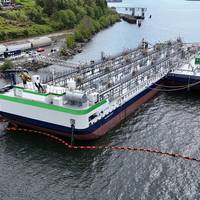
The port of Prince Rupert has welcomed the startup of Wolverine Terminals’ marine bunkering service for deep sea shipping, adding a key logistical capability to this strategic deepwater port on the west coast of Canada. Using a unique pair of barges designed by Robert Allan Ltd., Wolverine Terminals can deliver a wide range of fuels to suit the needs of vessels calling at the port, including marine diesel, heavy, intermediate, and other blends to individual customer specifications.The Wolverine Terminals fleet is composed of a transloading barge and a fuel delivery (lightering) barge.
Ocean Group Switching to HVO Fuel for Port Towing Operations
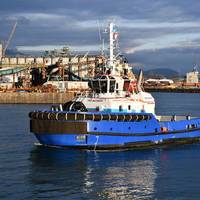
Ocean Group announced it is adopting HVO (Hydrotreated Vegetable Oil) renewable diesel fuel for all of its port towing operations.Made from renewable sources, including vegetable oils, residues of plant or animal origin, and used oils such as those derived from frying, HVO fuel reduces CO2 emissions by around 80% compared with traditional fossil fuels.Since 2023, Group Ocean has been testing the efficiency of HVO at its Delta Port and Fraser River sites. After months of data analysis and obtaining the necessary authorizations from Transport Canada…
Canadian-led Research Project Reveals Ways to Reduce Underwater Noise from Ships
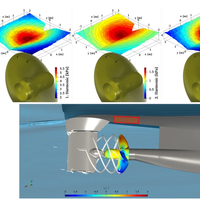
As the international shipping industry continues to explore measures to conserve and protect underwater life, the International Maritime Organization (IMO) is proposing the future monitoring of Underwater Radiated Noise (URN), which may lead to the establishment of thresholds combined with long-term monitoring requirements for certain regions.Underwater noise from ships can significantly impact marine life by disrupting communication, navigation, and feeding behaviors in various species.
Spire Wins Canadian Government Contract for Ship Tracking Data
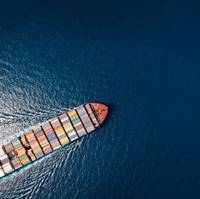
Spire Global, a provider of space-based data, analytics and space services, announced it has been awarded a CA $1.41 million contract by the Government of Canada for the provision of global automatic identification system (AIS) ship tracking data.The one-year contract includes options for two additional years, extending the total potential contract value to nearly CA $4.23 million, Spire said.Under the contract, Spire will share its real-time global ship tracking data, providing visibility in both open oceans and high-traffic zones.
Autonomous Vessels: Already Working, but Still Under Close Review
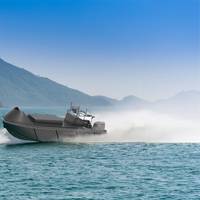
Advances in autonomous vessels – from R&D to regulatory policies to actual work – are moving rapidly. AVs include a range of vessel types and missions, from freight to law enforcement to research to defense. There are many acronyms. Some examples –AV stands for autonomous vessel.AUV is autonomous underwater vessel.MASS stands for “maritime autonomous surface ship.”NOMARS is a U.S. Department of Defense term for “no manning required ship.”Different…but maybe not so differentSurface…
US Probes Canadian Ballast Water Regulations After Shipping Companies Cry Foul
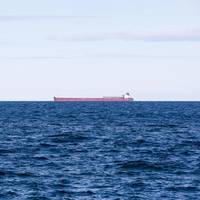
U.S. regulators are investigating potential unfair trade practices within pending Canadian regulations governing ballast water management systems of ships in the U.S.-Canada Great Lakes trade.The Federal Maritime Commission (FMC) on Tuesday said it launched the probe to determine if the pending regulations have a disparate effect on U.S. flagged vessels and constitute a Foreign Shipping Practices violation under 46 U.S.C. Chapter 423.U.S.-based companies operating ships in the…
Davie Awarded Contract for Canadian Icebreaker Design
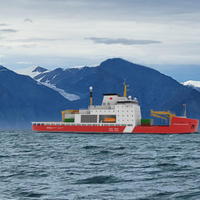
The Canadian government has awarded a contract to shipbuilder Chantier Davie Canada Inc. of Lévis, Quebec, for initial work related to the construction of new Program Icebreakers. Under this $19.6-million contract including taxes, Davie will begin work to develop the initial design.A series of six new Program Icebreakers is planned to replace the Canadian Coast Guard’s (CCG) medium icebreakers that operate in Atlantic Canada and the St. Lawrence waterways during the winter, and in the Arctic during the summer.This contract enables the shipyard to initiate project planning phases…
Many Different Vessels but One Goal – Passenger Safety
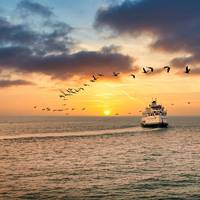
Because there are so many different kinds of passenger vessels, the critical topic of passenger safety can sometimes appear as a set of niche topics, each one just distantly connected to another. After all, passengers aboard a cruise ship in the Caribbean face safety issues that are much different than a commuter going from Jersey City to Manhattan or a tourist crossing from the Mukilteo, Wash. ferry terminal to Whidbey Island or a family on a fishing vessel in Miami.Importantly, though, for passenger vessel operators, a commitment to safety is not siloed.
Expert BWTS Team Secures Grant from Transport Canada
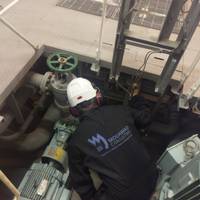
Mouawad Consulting, Boll & Kirch, bestUV, KraftPowercon and Lower Lakes Towing, have received CAD 5 million from Transport Canada towards a project aimed at addressing technical challenges surrounding the installation, operation, and maintenance of ballast water management systems (BWMS) on vessels operating within the Great Lakes and St. Lawrence River (GLSLR) region."The significance of this grant cannot be overstated. Through our partnership with Mouawad Consulting, Boll & Kirch…
Jamaica and Canada Sign Reciprocal Seafarer Recognition Agreement

Jamaica and Canada have signed a Reciprocal Recognition Agreement to enable seafarers from the two countries to work on ships sailing under the Jamaican or Canadian flags.The agreement was signed by Joanna Manger, Director General, Marine Safety & Security at Transport Canada, and Rear Admiral (retd) Peter Brady, Director General of the Maritime Authority of Jamaica.Brady commented: “This is a milestone for both our countries’ seafarers and indeed our respective maritime and transport administrations.
Green Ferry Refit is First of Its Kind in Canada
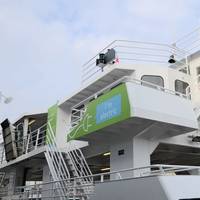
A newly retrofitted electric ferry is the first in Canada to be powered completely by a zero-emissions, lithium-ion power and propulsion system containing no diesel fuel components.In 2018, PortsToronto issued a request for expression of interest (RFEOI) to reduce air and noise emissions from its 96-foot Marilyn Bell I, used for transporting passengers, vehicles and supplies the very short distance (90-second trips) to and from Billy Bishop Toronto City Airport on Toronto Island.St. Catharines-based marine electrical engineering firm Canal Marine & Industrial Inc.
CSL Completes B100 Biofuel Tests
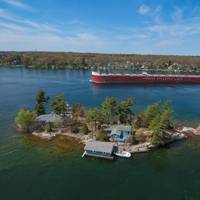
In late November 2021, CSL successfully completed the world’s longest-running trials of B100 biodiesel on marine engines, accumulating nearly 30,000 running hours. Conducted on half of CSL’s Canadian fleet, the tests resulted in a 23% total fleet life cycle reduction of CO2 as compared to marine gas oil (MGO).During the trials, conducted in partnership with Canada Clean Fuels and with the collaboration of Sterling Fuels, 14,000 tonnes of MGO, a fossil fuel, was substituted for 100% bio-content second-generation biofuel…
A BC Ferries Case Study: Lessons Learned in Setting Underwater Radiated Noise Targets

In a typical year, the waters surrounding British Columbia’s Port of Vancouver host approximately 3,000 deep sea commercial vessels and 19 of the 35 ferries operated by BC Ferries, one of the largest ferry operators in the world. These waters are also home to a wide variety of aquatic wildlife, including the southern resident killer whales (SRKW), which have been listed as endangered in Canada since 2003.With vessel-generated acoustic disturbances identified by Fisheries and Oceans Canada as one of four key threats to the SRKW…
Canada's New Oil Spill Response Boats Powered by Scania
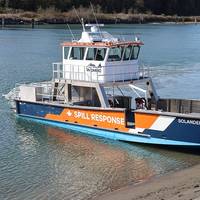
Engine manufacturer Scania said it has been selected by the Western Canada Marine Response Corporation (WCMRC) to power four 52-foot oil spill response landing crafts.Currently in production by family-owned Burlington, Wash welded aluminum boat manufacturer the William E. Munson Company, the vessels are powered by twin keel-cooled 750 HP Scania DI13-liter 088M engines with Twin Disc 5095 marine gearboxes, supplied by distributor Cascade Engine Center. Propulsion is provided by Hamilton 403 waterjets. This combination offers a top speed of 35 knots at full power.
Canadian Nuclear Laboratories Studying Maritime Decarbonization Technology
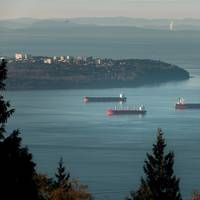
Canada’s premier nuclear science and technology laboratory is examining opportunities to reduce greenhouse gas emissions and other pollutants from marine vessels in Canada.Canadian Nuclear Laboratories (CNL) said Monday it has been awarded a contract by Transport Canada to develop an assessment tool to examine clean technologies that could reduce greenhouse gas emissions and the release of other pollutants from vessels. Using what is known as CNL’s Marine-Zero FuelTM (MaZeFTM) Assessment Tool…
Mitigating Underwater Noise
Noise Control Engineering, LLC (NCE) recently completed an underwater radiated noise study for Washington State Ferries (WSF), a study which entailed measurement of nine vessels representing all seven operating classes of WSF vessels, quantifying noise, potential impacts to orcas and other marine life, and methods of reducing noise.“With the increasing awareness of underwater noise impacts on marine life, both globally and locally in the Northwest, WSF is interested in learning more about how their operations may impact marine life,” said Jesse Spence, President, NCE.
Four New Barges Launched for Canada's MTS
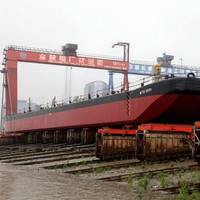
Four new 90-meter oil/deck cargo barges for Canada's Government of the Northwest Territories (GNWT) Marine Transportation Services (MTS) have been launched by Nanjing Jinling Shipyard, in Nanjing, China.The first barge MTS 3501 was launched on June 16, followed by barge MTS 3502 launched on June 22 and barges MTS 3503 and MTS 3504 launched on June 28.The barges will undergo final testing and touch-up work in preparation for the 400-kilometer tow down the Yangtse River to Shanghai where they will be loaded onto a semi-submersible heavy lift vessel and transported to Tuktoyaktuk…
Canada Recommends Mariners Wear Face Coverings
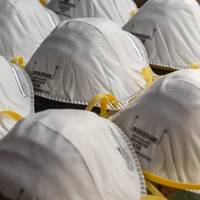
Canada's Transport Minister Marc Garneau announced he is expanding the requirements for the use of face coverings by workers and others involved in the country's transportation industry to reduce the risk of COVID-19 transmission.Transport Canada and the transportation industry had already implemented measures such as increased sanitization, health checks for passengers, and allowing passengers to remain in their vehicles on ferries. The new measures requiring face masks are aimed at points in the transportation system where workers must be in close proximity to co-workers and travelers…
FMC to Investigate Alleged Discriminatory Canadian BWMS Regulations
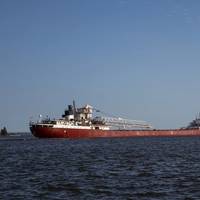
The U.S. Federal Maritime Commission (FMC) said it will initiate an investigation into whether ballast water regulations proposed by the Government of Canada discriminate against U.S. flag vessel operators in the Great Lakes and St. Lawrence River.The FMC commissioners voted unanimously to accept a petition filed by trade group the Lake Carriers’ Association (LCA) asking the commision to perform the investigation and examine the detriment and harm to the U.S. flag fleet resulting…